Skip to content

Southern Fried Science

Over 15 years of ocean science and conservation online

  • Home
  • About SFS
  • Authors
  • Support SFS

Category: Science

A Shark Week 2013 retrospective…with memes!

Posted on August 12, 2013August 14, 2013 By David Shiffman 7 Comments on A Shark Week 2013 retrospective…with memes!
Conservation, Popular Culture, Science

davesquare

As Shark Week 2013 comes to a close, I wanted to take a look back at which part of my outreach strategy worked (and didn’t work), as well as what I liked and disliked about Shark Week as a whole. Ever since my “15 important shark conservation and management terms explained with memes” post, I’ve been looking for an opportunity to incorporate more internet humor into a blog post, so here goes…
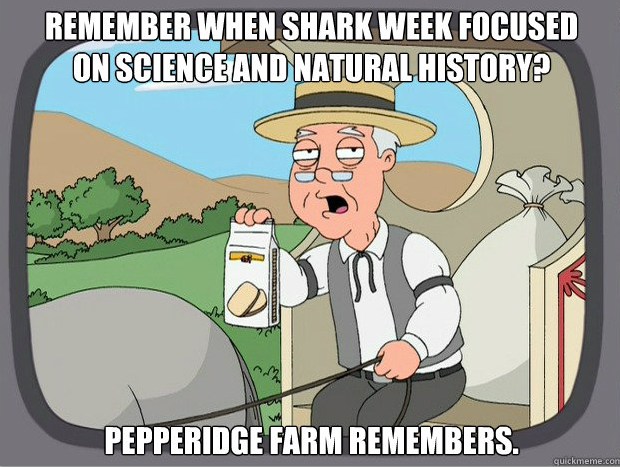
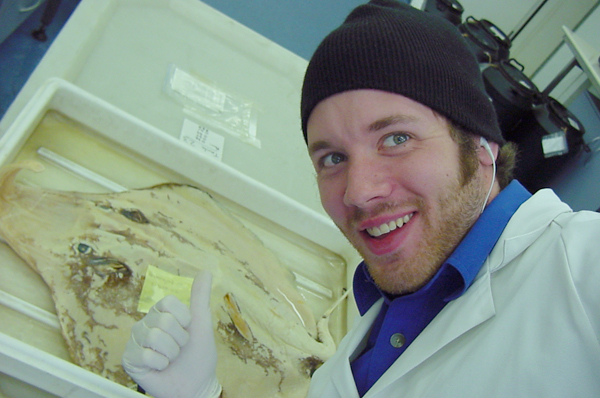
While this Shark Week allowed scientists  like myself to reach the public on a large scale, most of the content was...troubling.
While this Shark Week allowed scientists like myself to reach the public on a large scale, most of the content was…troubling.

Read More “A Shark Week 2013 retrospective…with memes!” »

DiveTracks: because we can’t talk underwater

Posted on August 6, 2013August 5, 2013 By Andrew Thaler
Science

We’re happy to announce a new experiment in our ongoing effort with casual video adventures. We take short videos from one of our SCUBA diving adventures, watch them together, and do a running commentary about whatever issues, topics, and stories emerge during the video. There’s just two rules – neither of us can have watched … Read More “DiveTracks: because we can’t talk underwater” »

Two weeks left to Support the OpenCTD and help us build an oceanographic tool for everyone!

Posted on August 5, 2013October 27, 2013 By Andrew Thaler 1 Comment on Two weeks left to Support the OpenCTD and help us build an oceanographic tool for everyone!
Science

Wow! Since we launched the OpenCTD we’ve raised nearly $4,000 to help develop an oceanographic tool the anyone can build. But $4,000 is only 40% of our funding goal, and we’ve got 12 days left to fund the rest of the project. If you believe in open source oceanography, think to tools of scientific research … Read More “Two weeks left to Support the OpenCTD and help us build an oceanographic tool for everyone!” »

So, Manta Rays Aren’t a Thing Anymore…

Posted on July 29, 2013October 28, 2013 By Guest Writer 21 Comments on So, Manta Rays Aren’t a Thing Anymore…
Science

Neil_HexatrygonNeil Aschliman is an Assistant Professor of Biology at St. Ambrose University by day, a freelance artist by night. He earned his PhD in Biology from FSU by recovering the “Tree of Life” for rays, skates and their relatives, and is broadly trained in vertebrate biology and evolution. His personal website can be found at www.iceandshadows.com.

So mantas aren’t a thing anymore… – paraphrase, David Shiffman’s liveblog of my talk at the recent meeting of the American Elasmobranch Society.

Wow, is that going to require some explanation! Did I steal these guys away under cover of night? Did they pull a “so long, and thanks for all the fish” on us? No, this is a story about the power of naming, and one that may have serious implications for the conservation of these amazing animals and their close relatives.

Human beings love to name things. We do it vigorously and redundantly: a single fish species may be christened with a dozen or more common names by people in different geographic areas, times, or even marketing departments! It helps to have an international-standard system of naming animals to give this enterprise some consistency. It doesn’t matter if you know it as Chilean Sea Bass or the Patagonian Toothfish, people worldwide will be happy to confirm for you that Dissostichus eleginoides is indeed one ugly customer.

This system of precise identification in which scientists apply a formal code to name organisms is called binominal nomenclature (“two-part name”). This is often incorrectly called “binomial” nomenclature (“two number,” a mathematical expression), even by professionals! The first part of the name is the genus, which can apply to between one and many species that are closely related and resemble each other. The second part of the name is the specific epithet, which applies to one and only one species. These names are usually derived from Greek and Latin. For example, Batrachognathus volans translates as “flying frog-jawed” one, an apt appellation for an odd pterosaur from the Late Jurassic.

Read More “So, Manta Rays Aren’t a Thing Anymore…” »

Tweets from the Society for Conservation Biology: Student Networking Workshop

Posted on July 29, 2013 By David Shiffman
Science

davesquare

SCB logoThe Society for Conservation Biology’s International Congress for Conservation Biology took place July 21-25 in Baltimore, MD. Over 1,500 scientists and conservationists from more than 60 countries participated. Below are selected tweets from the student networking workshop, in which experienced professionals gave students their networking advice.

Read More “Tweets from the Society for Conservation Biology: Student Networking Workshop” »

What does an OpenCTD mean to marine ecologists?

Posted on July 26, 2013July 25, 2013 By Kersey Sturdivant 1 Comment on What does an OpenCTD mean to marine ecologists?
Science

kerseysquaeThe OpenCTD–a conductivity-temperature-depth (or CTD) sonde is considered the ‘work-horse’ of oceanography. Three relatively simple probes constitute the CTD and allow researchers to make basic water quality measurements. These fundamental measurements are the foundation upon which marine science is built.  As was aptly stated by Dr. Thaler, “Rare is the scientific expedition–whether it be coastal work in shallow estuaries or journeys to the deepest ocean trenches–that doesn’t begin with the humble CTD cast.” CTD’s are commercially produced by a number of companies, but the associated cost of purchasing one of these instruments (ranging from $5,000 to $25,000) is an unacceptable barrier of entry into marine science. Thus the OpenCTD project—an attempt to construct a low-cost CTD that is scientifically applicable—was born.. Our goal is to produce free blue-prints, instructions, and schematics for the physical construction and calibration of a low-cost, open-source CTD.  The final cost of the device will be low enough (~$200) to be readily accessible to those interested in constructing one, regardless of financial limits.

Read More “What does an OpenCTD mean to marine ecologists?” »

Herring Wars: Quotas, Conflicts, and Climate Change in the North Atlantic

Posted on July 25, 2013October 27, 2013 By Andrew Thaler 4 Comments on Herring Wars: Quotas, Conflicts, and Climate Change in the North Atlantic
Conservation, Science
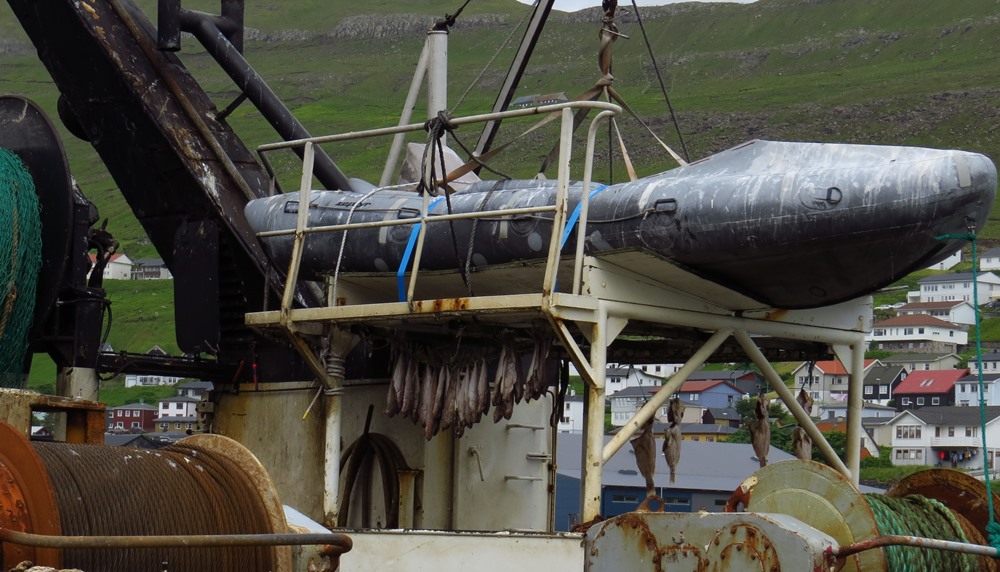
Herring and other fish hung out to dry on a trawler in Klaksvík. Photo by ADT.

A small collection of islands in the North Sea, a few hundred miles south of the Arctic Circle, is preparing for war. The European Union, under the auspices of an international fisheries management agreement, is ready to levy heavy trade sanctions against the Faroe Islands, an independent protectorate of Denmark. The Faroes, with a population of less than 50,000, intends to fight these sanctions, defy EU authority, and defend their economic independence. The object of contention is the right to fish Atlanto-Scandian Herring; the driving force behind this dispute–dramatic shifts in fish distribution brought on by warming seas and altered currents. This may be the first international conflict directly attributable to climate change. It will not be the last. Regardless of the outcome, this confrontation will set a precedent for future climate conflicts. Welcome to the Herring War.

Despite their uninspiring name, herring are a rather handsome fish. Atlantic herring, Clupea harengus, are relatively small with a classically “fishy” (fusiform) body shape. They are among the most abundant fish in the ocean, forming schools that can number in the billions. Along with other planktivorous fishes, such as menhaden, that convert phyto- and zooplankton into higher trophic-level biomass, herring are critical to ocean food-webs. They are considered to be among the most important fish in the sea. Herring are the dominant prey species for many large, pelagic predators like tuna, sharks, marine mammals, salmon, and sea birds, among others. Their dominant predator, unsurprisingly, is us.

Read More “Herring Wars: Quotas, Conflicts, and Climate Change in the North Atlantic” »

It’s not about the Mermaids: Animal Planet’s track record of fabricated reality

Posted on July 19, 2013March 24, 2014 By Andrew Thaler 24 Comments on It’s not about the Mermaids: Animal Planet’s track record of fabricated reality
Popular Culture, Science
The Little Mermaid statue in Copenhagen, of which this post is not about. Photo by ADT.

I have fond memories of Animal Planet. I grew up with Steve Irwin and Jeff Corwin. On the rare occasions when I have caught their recent programming, I’ve enjoyed shows like River Monsters and Monsters Inside Me. These are certainly not high-minded nature documentaries like Planet Earth and Blue Planet, but they manage to be both entertaining and informative. Then came the ghost hunters, pet psychics, bigfoot hunters, and mermaids. I started watching with a cynical eye*, started noticing things that seemed out of place: a catfish that looked already dead before being caught, a multitude of pets that looked surprisingly healthy considering their life in a hoarders house, conversations that seemed awkward, forced, and disjointed. And then there was Mermaids.

I’m not naive to the realities of reality shows**, but I do believe that channels like Animal Planet, channels that bill themselves as educational programming, have a responsibility to present fact-based programming. I also believe the public has a reasonable expectation that Animal Planet’s programming is at least honest in the events it portrays. Whale Wars is not Storage Wars. I’m also not a reality TV hater, and believe that it is possible to create compelling, educational programming in that format. After all, had it aired today, the Underwater World of Jacques Cousteau would have been classified as a reality show.

I’m not even talking about intentionally fake shows, like Lost Tapes or Mermaids: the Body Found, nor am I talking about shows with supernatural premises, like Pet Psychics or The Haunted, although I do have problems with the ways those shows portray the supernatural credulously while marketing them as science-based. I’m talking specifically about shows where Animal Planet stages, distorts, or manufactures scenes and then presents them as being actual events captured by their film crew. I’m talking about outright deception with the intention of misleading the audience.

I’m also talking about evidence. Over the years, I have had hundreds of head-scratching moments while watching Animal Planet shows that I strongly suspect were staged. For some the evidence is there, but, unless someone involved in the production comes forward, most will remain unconfirmed. Instead of wallowing in hearsay, I present to you four cases in which we have convincing evidence–statements from members of the cast, discordance with widely reported events, or witness and expert testimony–that an Animal Planet show is staged.

Read More “It’s not about the Mermaids: Animal Planet’s track record of fabricated reality” »

Tweets from the American Elasmobranch Society: Gruber Award (best student presentation) talks

Posted on July 17, 2013 By David Shiffman
Science

davesquare

AESlogoThe American Elasmobranch Society is a non-profit professional organization of shark, ray, skate, and chimaera scientists. Each year, AES holds an annual conference in a different North American city where members meet and present their research. The 2013 meeting took place in Albuquerque, New Mexico from July 10-15th. The full schedule of talks (including other societies participating in the Joint Meeting of Ichthyologists and Herpetologists) can be found here. 

Below are selected tweets from the Gruber Award (best student presentation) talks.

Read More “Tweets from the American Elasmobranch Society: Gruber Award (best student presentation) talks” »

World’s leading experts say there’s a problem with false balance in conservation journalism; Steve disagrees

Posted on July 4, 2013July 16, 2013 By David Shiffman 20 Comments on World’s leading experts say there’s a problem with false balance in conservation journalism; Steve disagrees
Science

davesquare

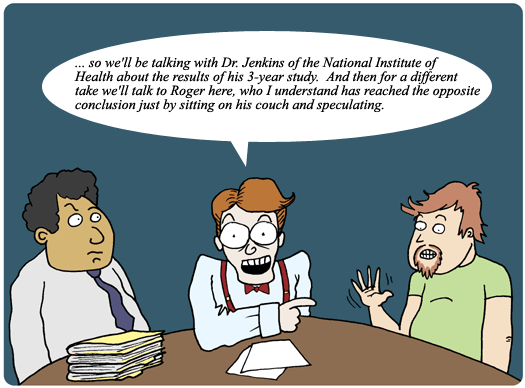
False balance in the media occurs when a journalist  gives equal coverage, and therefore the perception of equal validity, to both sides of a story. While this sounds preferable to today’s hyper-politicized media, sometimes both sides of a story aren’t equally valid. For example, when the overwhelming consensus of the expert medical community says that vaccines do not cause autism but a famous former actress says they do,  giving both sides equal coverage can be not only frustrating, but harmful to public health. The same is true of early reporting on whether cigarettes are bad for you. Giving equal coverage of the global community of expert climate scientists and spokespeople  for the oil and gas industry who claim that climate science isn’t “settled” can also be problematic, as can coverage of other scientific topics.

Image via http://undsci.berkeley.edu/article/sciencetoolkit_04

Though it is discussed less frequently in this context,  overfishing and marine conservation issues can also feature some fairly egregious examples of false balance. Coverage of a proposal to list great hammerhead sharks under the Endangered Species Act in yesterday’s South Florida Sun-Sentinel provides a useful case study.

Read More “World’s leading experts say there’s a problem with false balance in conservation journalism; Steve disagrees” »

Posts pagination

Previous 1 … 33 34 35 … 81 Next

Popular Posts

What Ocean Ramsey does is not shark science or conservation: some brief thoughts on "the Shark Whisperer" documentaryWhat Ocean Ramsey does is not shark science or conservation: some brief thoughts on "the Shark Whisperer" documentaryJuly 2, 2025David Shiffman
That's not a blobfish: Deep Sea Social Media is Flooded by AI SlopThat's not a blobfish: Deep Sea Social Media is Flooded by AI SlopDecember 19, 2025Andrew Thaler
The story of the pride flag made from NASA imagery: Bluesky's most-liked imageThe story of the pride flag made from NASA imagery: Bluesky's most-liked imageSeptember 27, 2024David Shiffman
What can the funniest shark memes on the internetz teach us about ocean science and conservation?What can the funniest shark memes on the internetz teach us about ocean science and conservation?November 8, 2013David Shiffman
The Trouble with Teacup PigsThe Trouble with Teacup PigsOctober 14, 2012Andrew Thaler
Shark of Darkness: Wrath of Submarine is a fake documentaryShark of Darkness: Wrath of Submarine is a fake documentaryAugust 10, 2014Michelle Jewell
I can serve on your graduate thesis committee. Here’s what you can expect of me, and what I expect in return.I can serve on your graduate thesis committee. Here’s what you can expect of me, and what I expect in return.October 16, 2025David Shiffman
Norway and Cook Islands put their deep-sea mining plans on pause.Norway and Cook Islands put their deep-sea mining plans on pause.December 3, 2025Andrew Thaler
Nodules, Lost Mines, and Dark Oxygen: A new documentary on deep-sea mining asks important questions about the future of the industry.Nodules, Lost Mines, and Dark Oxygen: A new documentary on deep-sea mining asks important questions about the future of the industry.July 24, 2025Andrew Thaler
Blackfish: the Science Behind the MovieBlackfish: the Science Behind the MovieSeptember 18, 2013Chris Parsons
Subscribe to our RSS Feed for updates whenever new articles are published.

We recommend Feedly for RSS management. It's like Google Reader, except it still exists.

Southern Fried Science

  • Home
  • About SFS
  • Authors
  • Support SFS


If you enjoy Southern Fried Science, consider contributing to our Patreon campaign.

Copyright © 2025 Southern Fried Science.

Theme: Oceanly Premium by ScriptsTown