Skip to content

Southern Fried Science

Over 15 years of ocean science and conservation online

  • Home
  • About SFS
  • Authors
  • Support SFS

Category: Science

On stifling scientific curiosity, in the most egregious way possible.

Posted on May 1, 2013 By Andrew Thaler 7 Comments on On stifling scientific curiosity, in the most egregious way possible.
Science

headshot-thalerSMALLNo doubt you’ve seen the recent news reports of a Florida high school student, by all accounts a model student with a clean disciplinary record, who was not only expelled, but arrested on felony charges, for conducting a relatively innocuous scientific experiment. I don’ t need to rehash the details, Danielle Lee has a good summary, with relevant links, over at Scientific American–Florida teen charged with felony for trying science.

Without a doubt this story is about race as well as the egregious over-reaction of the school administrators. Zero tolerance policies, like the one that forced Kiera Wilmot’s expulsion from Bartow High School, disproportionately affect students of color and Florida has the largest School-to-Prison Pipeline in the country. The punishment is consistent with systemic marginalization of minority students in American public schools. This is not the case of a student willfully endangering her classmates or school. This is a case of an intelligent, curious student performing a perfectly mundane act of independent inquiry, an inquiry that happens in innumerable variations in schools throughout the country. Educators know how to respond to inquisitive (even recklessly inquisitive) students, and that response is never prison.

Science is messy. Science in messiest when we just start learning how to turn our curiosity into something testable. For many people, high school is the time when we learn to harness that curiosity.  Many young scientists have a brush with danger due to a combination of curiosity and experimentation. High school programs should be nurturing that curiosity and fostering responsible experimentation, not punishing it. I asked my twitter followers, many of whom are practicing scientists, whether they, during high school, had accidentally caused an explosion in the course of scientific curiosity:

Read More “On stifling scientific curiosity, in the most egregious way possible.” »
10 Reasons why Great and Scalloped Hammerhead Sharks Deserve Endangered Species Act Protections

Posted on May 1, 2013January 8, 2024 By David Shiffman 7 Comments on 10 Reasons why Great and Scalloped Hammerhead Sharks Deserve Endangered Species Act Protections
10 Reasons why Great and Scalloped Hammerhead Sharks Deserve Endangered Species Act Protections
Conservation, Science

davesquare

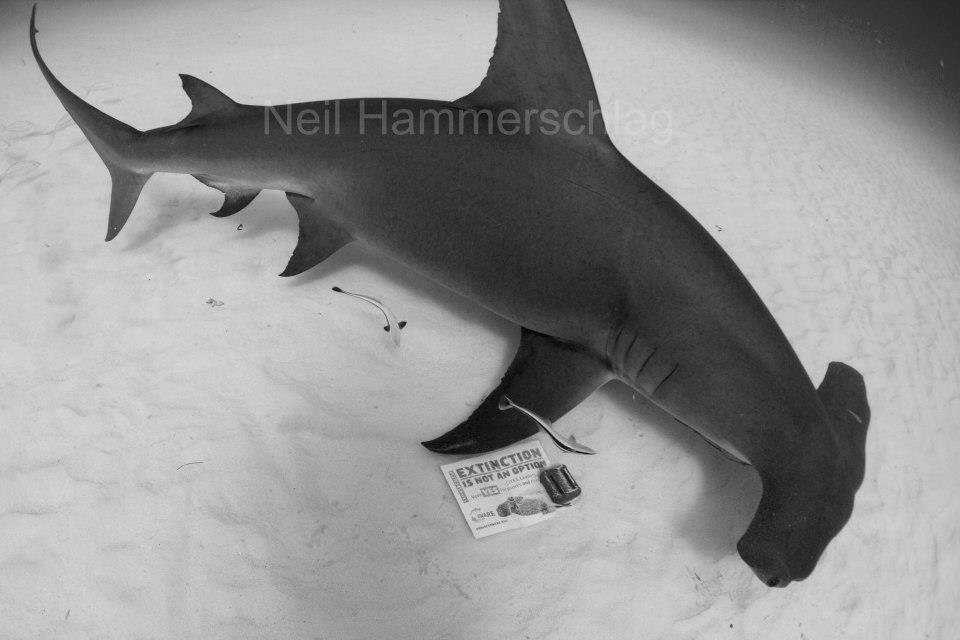
A great hammerhead shark swims by a Project AWARE "Extinction is NOT an Option" sign, Bimini, Bahamas. Photo credit: Neil Hammerschlag
A great hammerhead shark swims by a Project AWARE “Extinction is NOT an Option” sign, Bimini, Bahamas. Photo credit: Neil Hammerschlag

The Endangered Species Act is one of the strongest conservation laws on the planet, and to date, no shark has ever been given ESA protections. In recent weeks, however, the National Marine Fisheries Service has responded to a series of NGO petitions requesting ESA protections for two species of hammerhead sharks. NMFS proposes to list 2 “distinct” population segments”  (DPS) of scalloped hammerhead sharks as endangered and 2 as threatened, with 2 DPS’s listed as “not warranted”. The response to the great hammerhead petition is not as developed (the petition itself is more recent), but notes that “the petitioned action may be warranted”.

I strongly believe that both of these species of hammerhead sharks need and qualify for Endangered Species Act protections. If you agree, I encourage you to submit an official public comment in support of listing both under the ESA following the instructions below. Failure to follow all instructions to the letter will result in your comment not  being considered. Commenting on this blog post does not count as submitting a public comment, and neither does commenting on a Facebook post about this blog post. Online petitions will not be considered. This process is open to the public, but requires that we follow basic instructions.

To submit a public comment in support of great hammerhead ESA listings, click on the “comment now” button on this page and fill in the required information. To submit a public comment in support of scalloped hammerhead ESA listings, click on the “comment now” button on this page and fill in all the required information. You can also submit written comments via the mail to “Office of Protected Resources,NMFS, 1315 East-West Highway, Silver Spring, MD 20910 or by fax to 301-713-4060 attn: Maggie Miller. Please note that if you submit a comment by mail or fax, you need to include code NOAA-NMFS-2013-0046 for great hammerheads and code NOAA-NMFS-2011-0261 for scalloped hammerheads.

To help craft your public comment, I’ve written a list of 10 reasons why these sharks qualify for Endangered Species Act protections. Please do not just quote this post word-for-word, if you do then your comment will be considered a “form letter” and not an individual comment.

Read More “10 Reasons why Great and Scalloped Hammerhead Sharks Deserve Endangered Species Act Protections” »

The Incredible Shrinking Cups: Farewell from the World’s Deepest Pig

Posted on April 29, 2013April 4, 2013 By Andrew Thaler 2 Comments on The Incredible Shrinking Cups: Farewell from the World’s Deepest Pig
Science

It’s the final cup in our series. Posting these images has been a fun way to reminisce about our adventures in the Cayman Abyss and hopefully give you a small glimpse into the more whimsical side of deep-sea research. To finish of the series, here is my favorite cup: That’ll do, pig, that’ll do.  

The Incredible Shrinking Cups: on the absence of giant tube worms

Posted on April 26, 2013April 5, 2013 By Andrew Thaler
Science

It’s true! There are no giant tube worms (Riftia pachyptila) at the Mid-Cayman Spreading Center (but there are smaller tube worms). What all this about?

The Incredible Shrinking Cup: Majestic Vents

Posted on April 24, 2013April 4, 2013 By Andrew Thaler
Science

We visited some truly majestic hydrothermal vents. What’s all this about, anyway?

The Incredible Shrinking Cups: Geology is pretty cool, too

Posted on April 22, 2013April 4, 2013 By Andrew Thaler
Science

There’s some seriously cool geology down at the world’s deepest known hydrothermal vents. What’s this all about?

The Incredible Shrinking Cups: Into the Cayman Abyss

Posted on April 18, 2013April 4, 2013 By Andrew Thaler
Science

We’re going into the Cayman Abyss! What’s this all about?

Five more marine organisms that put their superhero counterparts to shame

Posted on April 17, 2013January 27, 2015 By Andrew Thaler
Popular Culture, Science

Evolution is the most creative force on the planet. Everywhere we look, we find species with novel and phenomenal adaptations that put their comic book brethren to shame. In no ecosystem is this more apparent than in the vast and unfathomable ocean. Marine species, especially those in the deep sea, have evolved to survive in a environment that is completely alien to us. Several months ago, I unveiled “Five organisms with real super powers that rival their comic book counterparts“, but that was just the beginning. Without further adieu, I give you 5 more marine organisms that put their superhero counterparts to shame (and one bonus critter).

The blind shrimp with super senses

Rimicaris exoculata – http://eol.org/data_objects/13231836

In the deep sea, eyes are not among the most useful sense organs. While many deep-sea species have extremely reduced eyes, some have abandoned these organs entirely. Rimicaris exoculata is a shrimp endemic to deep-sea hydrothermal vents in the mid-Atlantic that is completely eyeless. Its carapace is smooth, without even a hint of reduced, vestigial eyes. This, unfortunately, is a problem because Rimicaris exoculata is a farmer. The blind shrimp grows bacteria in its gill chamber, bacteria that can convert the chemical-rich hydrothermal vent fluid into food for the shrimp.

For lack of a more descriptive adjective, hydrothermal vents are hot. Some can exceed 400°C. Rimicaris exoculata needs to get close to this hot vent fluid to feed its crop of bacteria, but not so close as to become a hydrothermal hors d’oeuvre. And so, the blind shrimp evolved a completely new light-sensitive organ mounted on the top of its carapace–the rhodopsin-rich dorsal eyespot.

The dorsal eyespot of Rimicaris exoculata doesn’t “see” in the normal sense, there is still almost no light in the deep sea. Rather, this shrimp is adapted to detect the black body radiation emitted by the hydrothermal vent. For Rimicaris exoculata, the deep sea glows with the light of super-heated hydrothermal fluid, allowing it to both find food for its bacterial crop and avoid getting cooked itself.

It should be no surprise that Rimicaris exoculata is undoubtedly the favorite deep sea organism of another blind champion with super senses–Daredevil.

Read More “Five more marine organisms that put their superhero counterparts to shame” »

The Incredible Shrinking Cups: Just checking out some vents.

Posted on April 16, 2013April 4, 2013 By Andrew Thaler
Science

Isis checking out the Beebe Vent Field. Or Piccard, if you drive on the right side of the road. Whats this all about?

Conservation Conversations: Sustainable Seafood

Posted on April 12, 2013 By David Shiffman
Conservation, Science

davesquare

I’d like to introduce you to a new series I’ve been working on called “Conservation Conversations”.  Each discussion, which will take place first on twitter, will focus on a particular marine conservation issue. I will then Storify and share selected responses here on the blog, allowing the conversation to continue.

The first conservation conversation focused on sustainable seafood. A new paper showed that many fisheries scientists and conservationists believe that the Marine Stewardship Council’s “sustainable seafood” certification process is too lenient, a topic I’ve written about before. I wanted to know how my twitter followers decide what seafood is sustainable. I also asked whether they choose to avoid seafood entirely or focus on sustainable seafood.

Read More “Conservation Conversations: Sustainable Seafood” »

Posts pagination

Previous 1 … 35 36 37 … 81 Next

Popular Posts

What Ocean Ramsey does is not shark science or conservation: some brief thoughts on "the Shark Whisperer" documentaryWhat Ocean Ramsey does is not shark science or conservation: some brief thoughts on "the Shark Whisperer" documentaryJuly 2, 2025David Shiffman
That's not a blobfish: Deep Sea Social Media is Flooded by AI SlopThat's not a blobfish: Deep Sea Social Media is Flooded by AI SlopDecember 19, 2025Andrew Thaler
The story of the pride flag made from NASA imagery: Bluesky's most-liked imageThe story of the pride flag made from NASA imagery: Bluesky's most-liked imageSeptember 27, 2024David Shiffman
What can the funniest shark memes on the internetz teach us about ocean science and conservation?What can the funniest shark memes on the internetz teach us about ocean science and conservation?November 8, 2013David Shiffman
Shark of Darkness: Wrath of Submarine is a fake documentaryShark of Darkness: Wrath of Submarine is a fake documentaryAugust 10, 2014Michelle Jewell
The Trouble with Teacup PigsThe Trouble with Teacup PigsOctober 14, 2012Andrew Thaler
I can serve on your graduate thesis committee. Here’s what you can expect of me, and what I expect in return.I can serve on your graduate thesis committee. Here’s what you can expect of me, and what I expect in return.October 16, 2025David Shiffman
Nodules, Lost Mines, and Dark Oxygen: A new documentary on deep-sea mining asks important questions about the future of the industry.Nodules, Lost Mines, and Dark Oxygen: A new documentary on deep-sea mining asks important questions about the future of the industry.July 24, 2025Andrew Thaler
Norway and Cook Islands put their deep-sea mining plans on pause.Norway and Cook Islands put their deep-sea mining plans on pause.December 3, 2025Andrew Thaler
Blackfish: the Science Behind the MovieBlackfish: the Science Behind the MovieSeptember 18, 2013Chris Parsons
Subscribe to our RSS Feed for updates whenever new articles are published.

We recommend Feedly for RSS management. It's like Google Reader, except it still exists.

Southern Fried Science

  • Home
  • About SFS
  • Authors
  • Support SFS


If you enjoy Southern Fried Science, consider contributing to our Patreon campaign.

Copyright © 2025 Southern Fried Science.

Theme: Oceanly Premium by ScriptsTown