Skip to content

Southern Fried Science

Over 15 years of ocean science and conservation online

  • Home
  • About SFS
  • Authors
  • Support SFS

Category: Uncategorized

Fun Science Friday – BP Oil Spill Impacts Dolphins

Posted on January 3, 2014January 7, 2014 By Kersey Sturdivant 2 Comments on Fun Science Friday – BP Oil Spill Impacts Dolphins
Uncategorized

Happy Fun Science Friday!

Though this post does not present such a happy story, given the recent discussion about dolphin photobombing, this week’s FSF is topically related.  In the spring of 2010 the Deepwater Horizon oil rig experienced catastrophic failure resulting in the worst oil spill in human history. The Gulf of Mexico (GoM) was the unfortunate host of this catastrophe and the GoM community is still feeling the ecological, social, and economic consequences of this disaster.

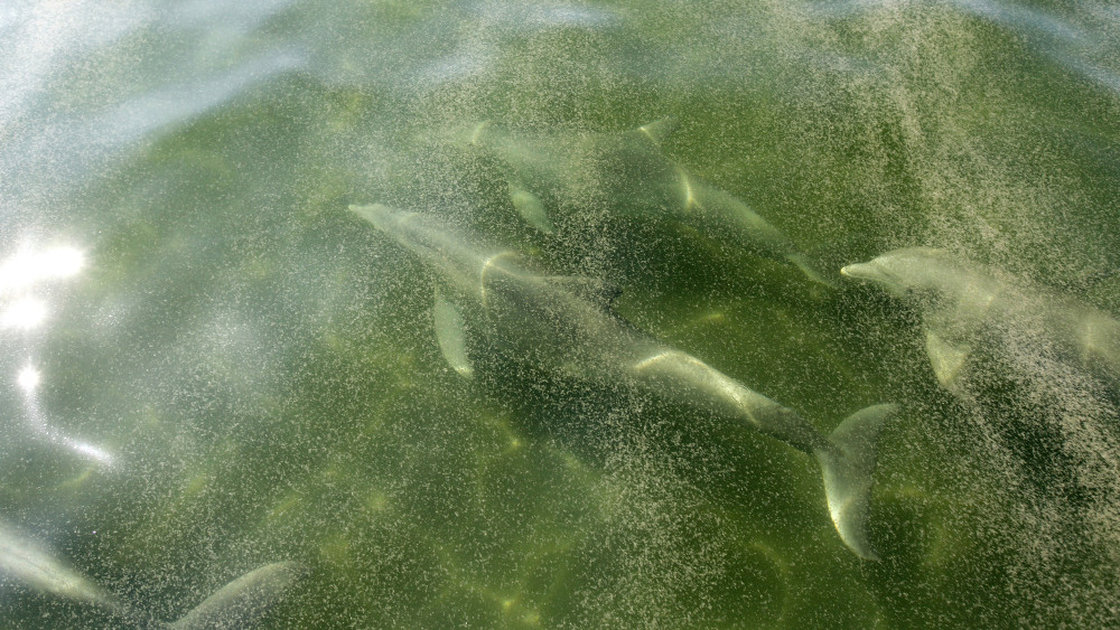
Pod of bottlenose dolphins swimming underneath oily water of Chandeleur Sound, La., May 6, 2010. Photo Credit: Alex Brandon/AP
Pod of bottlenose dolphins swimming underneath oily water of Chandeleur Sound, La., May 6, 2010.
Photo Credit: Alex Brandon/AP

One such impact that received little TV coverage during the spill was the uncharacteristic spike in dolphin deaths. A few months following the BP spill there was an unprecedented spike in dead dolphins washing ashore along the Gulf Coast; 67 dead dolphins by February of 2011, with more than half (35) of the dead dolphins being calves. This is in stark contrast to years preceding the spill when one or two dead dolphins per year were normally documented to wash ashore.  Despite the spike in dolphin deaths, there was no definitive evidence linking the dead cetaceans to the oil spill as a number of other factors could have been responsible for the deaths, including infectious disease or the abnormally cold winter proceeding the spill.

Read More “Fun Science Friday – BP Oil Spill Impacts Dolphins” »

The ups and downs of 2013 shark conservation policy, and a forecast for the new year

Posted on January 1, 2014 By Guest Writer
Uncategorized
Sonja Fordham President, Shark Advocates International
Sonja Fordham
President, Shark Advocates International

SAISonja Fordham founded Shark Advocates International as a project of The Ocean Foundation in 2010 based on her two decades of shark conservation experience at  Ocean Conservancy.  She is Deputy Chair of the IUCN Shark Specialist Group and Conservation Committee Chair for the American Elasmobranch Society, has co-authored numerous publications on shark fisheries management, and serves on most of the U.S. federal and state government advisory panels relevant to sharks and rays.  Her awards include the U.S. Department of Commerce Environmental Hero Award, the Peter Benchley Shark Conservation Award, and the IUCN Harry Messel Award for Conservation Leadership.

It’s been another exciting year in shark and ray conservation policy!  Once again, there’s a lot to herald, quite a bit to regret, and much work yet to be done.  Here’s my take on the year’s high and low points as well as a preview of key opportunities in 2014.  This post obviously reflects my perspective, and is therefore focused on science-based limits on shark and ray fishing and trade.  While the work has sometimes been exhausting, and this review is quite long, the scope is by no means exhaustive.

Read More “The ups and downs of 2013 shark conservation policy, and a forecast for the new year” »

More than 100 shark scientists, including me, oppose the cull in Western Australia

Posted on December 23, 2013December 23, 2013 By David Shiffman 10 Comments on More than 100 shark scientists, including me, oppose the cull in Western Australia
Uncategorized
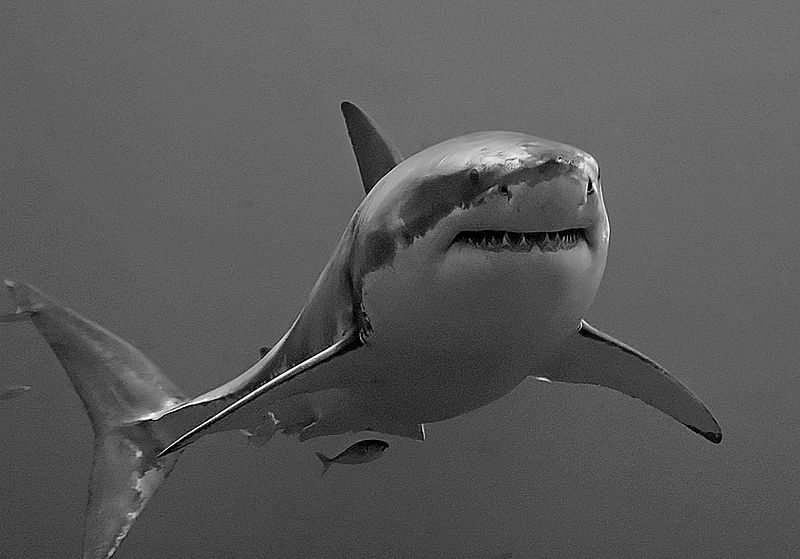
Image via Terry Goss, Wikimedia Commons

Following the tragic fatal bite of surfer Chris Boyd, the government of Western Australia has again proposed a misinformed policy that would harm populations of threatened animals without making surfers or swimmers safer. By targeting any large shark that swims within a specific area, including endangered species and species not considered a safety risk to humans, this policy is essentially a cull. The family of one of the victims of a fatal shark bite opposes the cull, as do scientific experts,  local surfers and thousands of concerned environmentalists around the world.

Dr. Ryan Kempster, shark biologist and founder of Support Our Sharks, provided a brief statement on this issue:

There is no denying that each and every shark fatality is a tragedy and our sympathy is, of course, with the family and friends of the victims. However, based on statistical data, the number of shark related fatalities is negligible when you consider the vast and increasing number of swimmers entering our coastal waters every year.

So often the argument in favour of a cull comes down to the emotional question of who is more important: a human or a shark. Rather, we need to ask the question, will culling sharks actually reduce the risk of an attack?

The answer is likely to be no. In fact, when shark culling was carried out in Hawaii, between 1959 and 1976, over 4,500 sharks were killed and yet there was no significant decrease in the number of shark bites recorded. We need to invest in more research to better understand the movement patterns of sharks and learn more about the cues that entice sharks to bite people in the first place so that we can avoid these situations in the future.

Dr. Kempster also drafted an open letter to the government of Western Australia. This letter, which has been co-signed by more than 100 shark scientists from all over the world (including me), is reproduced below. It highlights why a shark cull is ineffective at reducing shark bites and why culls harm threatened species, in addition to proposing alternative suggestions. Additionally, shark biologist Dr. Barbara Wueringer started an online petition, which currently has over 34,000 signatures.

I urge the government of Western Australia to enact the alternative policies proposed by Dr. Kempster and other experts. Culls do nothing to help make people safer, and they can do great harm to populations of threatened (and legally protected) species.

Read More “More than 100 shark scientists, including me, oppose the cull in Western Australia” »

Submit your short marine science or conservation films to the Beneath the Waves Film Festival

Posted on December 17, 2013 By David Shiffman
Uncategorized

The Beneath the Waves Film Festival, a student run film festival that brings scientists, filmmakers, and the interested public together,  is now accepting submissions for the 2014 season! Any short film (less than 15 minutes) about a marine or coastal topic is welcome, including shorts by professional filmmakers, video abstracts by researchers, student films, and … Read More “Submit your short marine science or conservation films to the Beneath the Waves Film Festival” »

Happy Fun Science Friday – Ice Cream!?

Posted on November 22, 2013November 22, 2013 By Kersey Sturdivant
Uncategorized

I scream, you scream, we all scream for ICE CREAM!!!!

Photo Credit: Sherbert Photography (from WikiCommons)

That’s right ladies and gentlemen, this FSF is about a childhood (or for some, adulthood) favorite, Ice Cream!

Some rather ingenious… or mad scientist-esque ice cream makers have invented a glow-in-the-dark ice cream flavor. That is correct, you heard right, glow-in-the-dark ice cream, welcome to reality! 🙂

Read More “Happy Fun Science Friday – Ice Cream!?” »

On being an ally and being called out on your privilege

Posted on November 19, 2013January 15, 2014 By Andrew Thaler 13 Comments on On being an ally and being called out on your privilege
Uncategorized

Privilege — within any given community, whether formal or ad hoc, social or professional, members will express varying levels of privilege. Some people will be playing the game on easy mode, others will be struggling with subtle and overtly oppressive societal and institutional structures. If you are a person of privilege who recognizes the reality of this imbalance and strives to make your community a more accessible and welcoming place to those who aren’t as privileged, you might identify yourself as an ally.

You are wrong.

Being an ally is not something you are, it’s something you do. “Ally” is not an identity, it is a set of behaviors that help acknowledge and promote underprivileged members of your community. But you have privileges that they do not and not all of your words and actions will fall under the banner of “being an ally”. Even if you consider yourself well-versed in your understanding of oppression and privilege, you will, eventually do or say something that reveals your privilege and is offensive, insensitive, or callous, if not outright cruel. The whole point of privilege is that it’s largely invisible to those who have it — including you. If you have colleagues that respect you, if people in the broader community value the work you do, if you are recognized as an important voice, people will call you out on your privilege.

How you respond to that criticism makes the difference between self-identifying as an ally, and actually being an ally.

Read More “On being an ally and being called out on your privilege” »

Halloween Science: Fear Makes the Ocean Go Around

Posted on October 30, 2013 By Chuck Bangley
Uncategorized

Halloween, in a lot of ways, is a celebration of fear.  We dress like ghosts, goblins, and movie serial killers to give ourselves a sense of control over the things we’re afraid of.  It’s also a good time of year to indulge in horror movies, where we can watch ghosts, goblins, and serial killers terrorize other people from the apparent safety of our own homes.

From an ecological standpoint, we have it pretty good.  We’ve more or less tamed most environments on land and only make short forays into the oceans under conditions where we still have quite a few advantages.  Most of the time we have more in common with Jason than his hapless victims.  Imagine being a member of a school of menhaden or a seal that has to make daily trips through Shark Alley.  It would be like spending your whole life as a camp counselor at Crystal Lake, constantly looking over your shoulder and getting picked off the second you let your guard down.  If mortal terror was a regular part of your life, you’d better believe it would affect your daily habits.  And if every member of your species lived with that same fear, there would be places no one in their right mind would go and choices between death by starvation and possible death by being eaten.  After all, fish are always eating other fish.  Let’s take a journey through the low end of the food web and see what horror can teach us about marine ecology.

Read More “Halloween Science: Fear Makes the Ocean Go Around” »

Climate Change is Moving Fish Around

Posted on September 30, 2013October 27, 2013 By Chuck Bangley 2 Comments on Climate Change is Moving Fish Around
Uncategorized

Back in the day, I worked as an intern at Rhode Island Marine Fisheries, where my job was basically to provide general field work help with whatever survey needed an extra pair of hands (yes, it was an awesome job).  One of these was a beach seining survey looking at juvenile fishes using Rhode Island’s coastal salt ponds as nursery habitat.  Among the usual silversides, mummichogs, and juvenile flounder, two of the ponds were also home to entire schools of something that I was only familiar with due to having relatives in Virginia: spot.  These little Scianids, a member of the same family as Atlantic croaker and red drum, are caught in droves in the waters of Virginia and the Carolinas but traditionally have been rare north of the Chesapeake Bay.  They were one of the more common species we caught in these two Rhode Island salt ponds, and occurred so consistently that we could actually observe them growing over the course of the summer.  It isn’t unheard of for stray tropical fishes to get swept into Narragansett Bay on Gulf Stream eddies, where they’re either collected by aquarists or die during their first winter.  However, these were populations of spot that we were seeing.  I don’t know if these fish survived their first winter or have come back since I moved down to North Carolina, but even at the very beginning of my interest in fisheries ecology I knew this was odd.

Read More “Climate Change is Moving Fish Around” »

The season finale of Blue Pints: Sea States and Lovable Monsters

Posted on June 10, 2013October 27, 2013 By David Shiffman
Uncategorized

httpv://www.youtube.com/watch?v=cxULreg4A1o

Blue Pints Episode 10: Lionfish and Turtle Tales

Posted on June 3, 2013October 27, 2013 By Andrew Thaler
Uncategorized

httpv://www.youtube.com/watch?v=ZCDgPjz9dv0

Posts pagination

Previous 1 … 33 34 35 … 119 Next

Popular Posts

What Ocean Ramsey does is not shark science or conservation: some brief thoughts on "the Shark Whisperer" documentaryWhat Ocean Ramsey does is not shark science or conservation: some brief thoughts on "the Shark Whisperer" documentaryJuly 2, 2025David Shiffman
Shark of Darkness: Wrath of Submarine is a fake documentaryShark of Darkness: Wrath of Submarine is a fake documentaryAugust 10, 2014Michelle Jewell
What is a Sand Shark?What is a Sand Shark?November 12, 2017Chuck Bangley
Why would a serious scientist agree to participate in a nonsense Shark Week show?Why would a serious scientist agree to participate in a nonsense Shark Week show?July 15, 2025David Shiffman
Save the seals.  Congress is trying to shoot its way to salmon recoverySave the seals.  Congress is trying to shoot its way to salmon recoveryJuly 22, 2026Southern Fried Science
What can the funniest shark memes on the internetz teach us about ocean science and conservation?What can the funniest shark memes on the internetz teach us about ocean science and conservation?November 8, 2013David Shiffman
That's not a blobfish: Deep Sea Social Media is Flooded by AI SlopThat's not a blobfish: Deep Sea Social Media is Flooded by AI SlopDecember 19, 2025Andrew Thaler
I turned my woodshop into a personal solar farm.I turned my woodshop into a personal solar farm.June 21, 2021Andrew Thaler
The most preventable shark attack of all time?The most preventable shark attack of all time?February 19, 2013David Shiffman
Jumping the shark: New study reviews the breaching behavior of sharks and raysJumping the shark: New study reviews the breaching behavior of sharks and raysSeptember 19, 2024David Shiffman
Subscribe to our RSS Feed for updates whenever new articles are published.

We recommend Feedly for RSS management. It's like Google Reader, except it still exists.

Southern Fried Science

  • Home
  • About SFS
  • Authors
  • Support SFS


If you enjoy Southern Fried Science, consider contributing to our Patreon campaign.

Copyright © 2026 Southern Fried Science.

Theme: Oceanly Premium by ScriptsTown