Watch Episode 2 here:
httpv://www.youtube.com/watch?v=ijPEW7x93N0
Over 15 years of ocean science and conservation online
Watch Episode 2 here:
httpv://www.youtube.com/watch?v=ijPEW7x93N0

 Sunday night at 7:30, David Shiffman and myself will host the first, of what we hope will be many, Blue Pints on Google+. The two of us will get together via Google Hangouts and broadcast a 45-minute-to-one-hour program discussing recent important issues in ocean science, while enjoying a pint of what-cures-you. We’ll provide a link to the live stream (and subsequent YouTube video) here, in this post, as well as announce it over our various social media platforms. We’ll be monitoring the comment thread on the Google+ post, so feel free to ask questions and join the discussion during the hangout.

This week, we’ll be discussing shark fishing, shark finning, and finding common ground in shark conservation. Tune in Sunday at 7:30!
Watch the video here:
httpv://www.youtube.com/watch?v=uQ_8ZtKKfjk
It’s that time of the week again. Please use this space to ask questions, share links, start a discussion, or just say hi. Today’s thread brought to you by the boarding ladder on the Scripps research pier. What was your most eventful boat launch?
Another week and another open thread. Here is a space where you can ask questions, share links, or just say hi. This week’s open thread sponsored by Polymerase Chain Reaction, our very skeptical chicken. A couple weeks ago, lots of people were talking about Rayfish, a hoax website claiming to produce genetically modified stingray sneakers. … Read More “Wednesday Morning Open Thread – skeptical chicken” »
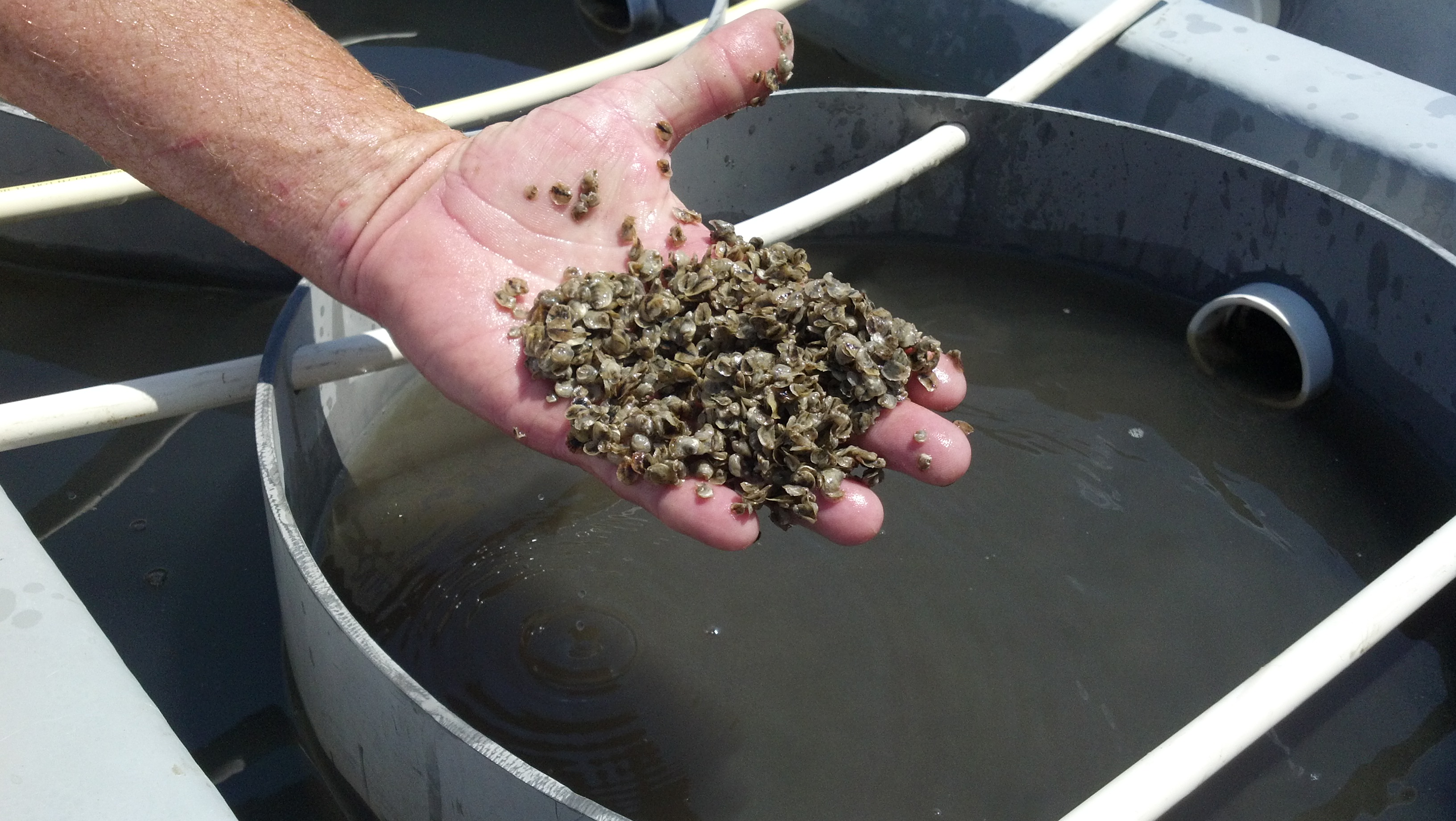 Jimmy Morris is the only hatchery in North Carolina, serving aquaculture operations all along the East Coast and the state’s oyster restoration program. The process would he easy, he says, except that crops of larvae die periodically – for a variety of unknown reasons. Figuring out how to cater to the sensitivities of these shelly babies is a skill few-and-far between in the world of aquaculture and that makes his operation one of the most important businesses in both the region and the industry.
Today, June 8th, is World Oceans Day! Get out there and let the world know how much the ocean just makes you want to dance in celebration! The Smithsonian set a fairly high bar last year with its dancing flash mob in the Sant Ocean Hall. For the less rhythmically inclined, check out what events are … Read More “Happy World Oceans Day!” »
I’m going to try something new this summer. Every Wednesday we’ll post an open thread where you can ask questions, start discussions, post links to interesting articles, or just say “Hi”. Today’s open thread sponsored by Luna, the Nigerian Dwarf Goat.
 As part of my ongoing community-based research on water quality in coastal North Carolina, I ended up tasked with answering what I thought would be a very basic question: what is the predominant pesticide used in my county? The largest farm and by far the largest amount of cropland is occupied by a traditional corn/soy rotation with the occasional cotton thrown in. Given the multitude of American acres donated to corn/soy, I figured I could easily find out the basics of that crop’s chemistry. Not so. My little information adventure has made me realize why there are so many rumors surrounding farming’s impact on water quality in the region. Rumors are easier to find than facts.
Read More “Chemistry of the Great Big Blue: A Pesticide Mystery” »
Food is a tricky. For some people, food choice is an essential component of cultural heritage and national identity. For others, food choice is a statement of philosophical or moral principles. For many, being able to reject food is an unobtainable luxury. One thing is certain: food is so central to the human experience that when we question our food choices, when we are forced (or force others) to change them, when we discover that the choices we make are not what we think they are, it is impossible to separate our food ethics from our social structure. Which is why seemingly trivial revelations–bugs in your coffee, meat made slime, or a fish by any other name–often result in major outrage and structural changes. Eating is simultaneously a deeply personal experience and one in which, for much of the developed world, we are completely detached from the source.
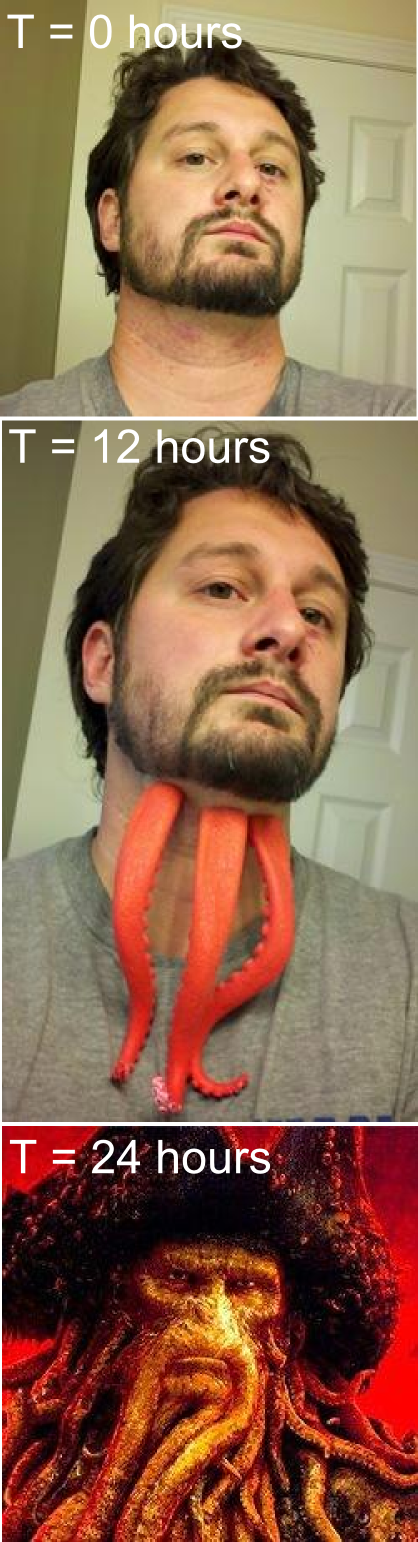
I am what most people would consider a “well-bearded” individual. According to this graph, I fall rather appropriately into the category of “Sea Captain”. Despite my proud embeardedness, I also play host to a horrifying parasite frequently referred to as a “neck beard”–a foul nest of bristles with a coarseness and consistency that lies somewhere between steel wool and dermal denticles. This means that, appearances aside, I still need to shave, sometimes twice, daily.
If you’re like most American men, this means using either disposable razors or cartridge razors, both of which result in discarded plastic and steel. Cartridge razors, commonly found with an increasingly horrifying numbers of blades, vibrators, laser pointers, and PEZ dispensers, produce less waste but are also more expensive. The average price for the three-bladed monster at my local pharmacy runs about $4.00 a cartridge, and those things don’t last very long–I’m lucky if I can get 2 weeks out of a single cartridge, often less (although, somehow, the very last cartridge in each pack seems to last 3 times longer than the others). In addition to wasting plastic and steel in the actual cartridges, and plastic and cardboard in the packaging, I’m burning around $100 per year.
There are a few possible ways to reduce shaving associated waste. The most obvious is switching to an electric razor–which is what our other beardly blogger did until recently (he now reports that “My beard used to destroy electrics in less than a year.“)–but the cutting heads need to be replaced and they will, eventually wear out. I’m also not a fan of electric razors, I don’t particularly like the shave I get with them. Next on the list are single-blade safety razors, the classic standard of the 1930’s through 80’s. These have the advantage of no plastic, and allegedly get you a closer, cleaner shave than disposables (though I suspect that has more to do with the brush/lather and spending more time on getting a good shave), but the blades are still disposable. So, it appears as though, if I truly want to eliminate as much waste as possible from my shaving routine, I need to take a more traditional approach.
Read More “Personal Sustainability Challenge May Edition – ditching the disposable razors” »