Skip to content

Southern Fried Science

Over 15 years of ocean science and conservation online

  • Home
  • About SFS
  • Authors
  • Support SFS

Category: Uncategorized

State of the Field: A New Type of Policy Analysis

Posted on March 22, 2011March 22, 2011 By Bluegrass Blue Crab
Uncategorized

The focus on community and informal rules that were found to frequently structure successful commons management made apparent that the word ‘policy’ needed to be expanded. Policy scholars now look beyond the official written laws, reports, and regulations that are often written by a central government to multi-scalar rules that govern the structure and behavior in a system (Ostrom 2005). They include non-written cultural norms, religious prescriptions, and community ethics that are often more strongly followed that written, formal rules (Berkes 2008). Along with a more broadly defined concept of policy, commons scholars also introduced a more broad definition of institution within which these policies are made and enforced. Much like policies, institutions can be governmental as well as religious, moral, or cultural. Hanna and Jentoft (1996) give an appropriately broad definition for natural resource institutions: “institutions represent the arrangements which people devise to control their use of the natural environment”. Ostrom (2005) promotes an institutional analysis in order to encompass these new conceptions of policy and institution. Her work recently earned the Nobel prize and is rapidly becoming the most used framework for policy analysis.

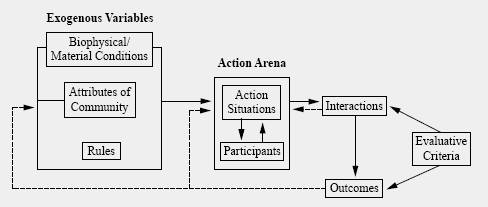
Ostrom’s Institutional Analysis and Design (IAD) Framework is not specific for natural resources or even commons problems, but serves as a place to begin policy analysis for all sorts of policy problems, including education, gender relations, crime, and natural resources. A short description here does not fully describe the IAD framework – for that, refer to Ostrom’s 2005 book. To highlight a few pertinent features, the framework is centered around a decision-making arena called the action arena rather than on the formation of a particular policy. Inputs to the action arena include exogenous variables describing the biophysical characteristics, community factors, and existing rules relating the action arena in play. This action arena then interacts with action arenas at other levels of governance (operational, collective choice, constitutional, and super-constitutional) to form an outcome. The outcome is evaluated by some defined set of criteria and the process feeds back to become iterative. The main benefit of the framework is to allow for comparative studies between empirical studies by scholars around the world in many disciplines.

Read More “State of the Field: A New Type of Policy Analysis” »

Weekly dose of TED – Robert Full on engineering and evolution

Posted on March 18, 2011March 4, 2011 By Andrew Thaler
Uncategorized

We see so many powerful designs in nature, yet when we design our own structure we tend to build rigid, fixed, industrial beasts. What designs in nature inspire you? How do we break away from a culture of hard edges and inflexible machines?

SFS Gear Review: Chacos

Posted on March 17, 2011March 15, 2011 By Bluegrass Blue Crab
Uncategorized

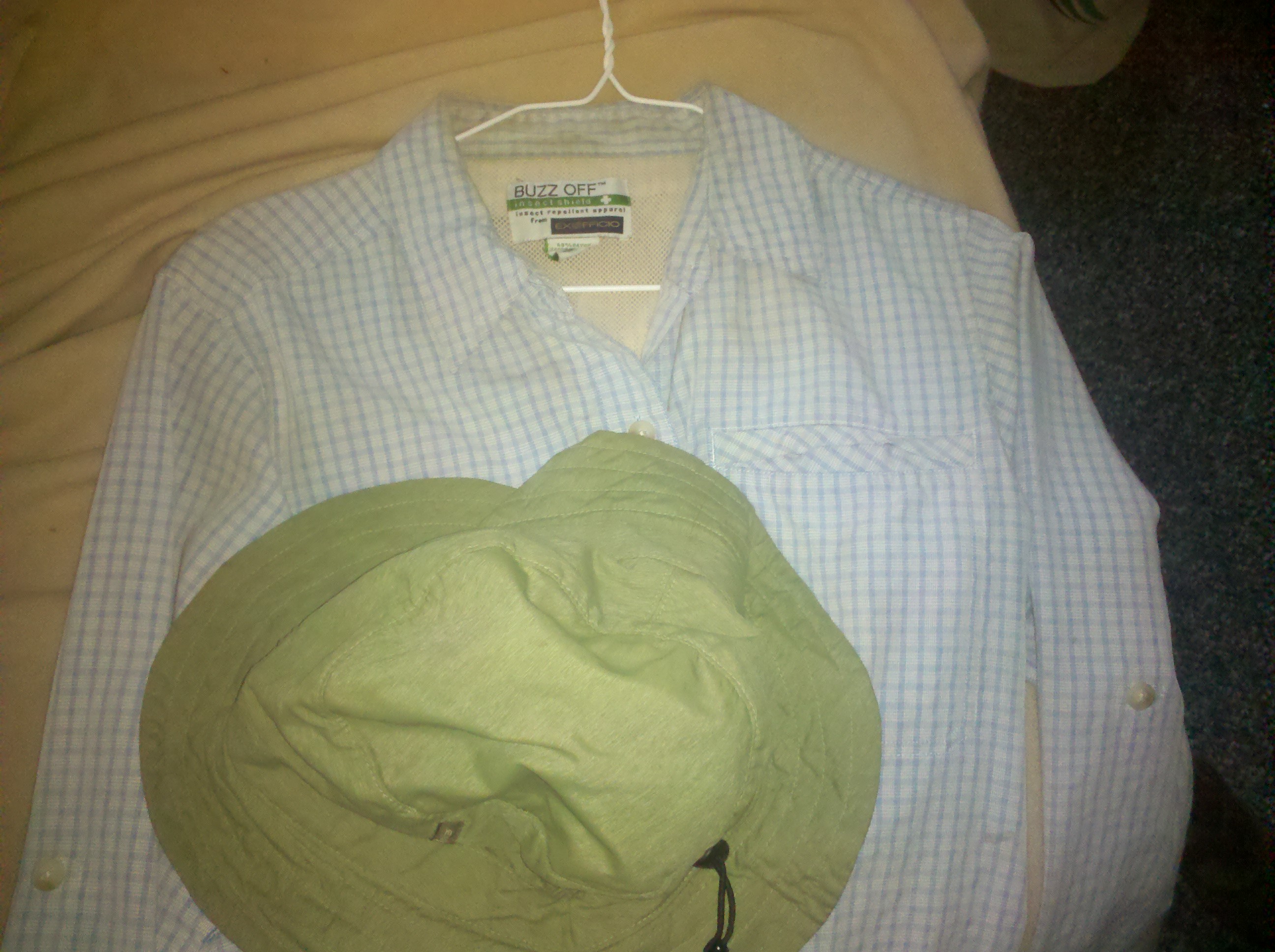
At the end of each summer, I generally have a distinctive “z” shaped tan on my feet from wearing Chacos almost every day. I originally got a pair upon the suggestion of a friend on my field crew while working in Olympic National Park and that pair lasted me almost 5 years. They became my best friend as a sandal in which I could walk up fairly large hills and with which I could backpack in the summers. Much like many of my shoes, they also work well around town or while traveling since they look fairly nice as well.

Read More “SFS Gear Review: Chacos” »

Beneath the Waves Film Festival starts tomorrow!

Posted on March 16, 2011March 16, 2011 By David Shiffman
Uncategorized

The Beneath the Waves Film Festival begins tomorrow night. The lineup includes films by students, conservation organizations, and professional filmmakers. Topics include overfishing, biodiversity, marine mammals, sharks, and more. In the coming weeks, we’ll post some of our favorite movies on Southern Fried Science. In the meantime, here is the introductory film.  

Biodiversity Wednesday: Under the Sea Ice

Posted on March 16, 2011 By Bluegrass Blue Crab
Uncategorized
http://www.arcodiv.org/SeaIce.html

A few years back I attended a mid-field season gathering of researchers working on International Polar Year projects. We were lucky enough to have collected the marine biologists, recently returned from a short cruise out of Barrow, AK with the mission to describe the biota living on the underside of the sea ice that is so critical to terrestrial Arctic ecology. It was absolutely stunning to me to realize that there is a whole ecosystem associated with the bottom of the ice, an ephemeral, threatened resource.

Depending on the time of year, sea ice covers 3-7% of the planet, making this relatively unexplored ecosystem fairly important to global biogeochemical processes. The algae trapped in and under sea ice, for example, accounts for 25% of the Arctic’s and 20% of the Antarctic’s primary productivity. This productivity trickles up the food web to the more well-known ice dwellers, such as polar bears and seals.

Read More “Biodiversity Wednesday: Under the Sea Ice” »

State of the Field: First World or Third World?

Posted on March 15, 2011March 21, 2011 By Bluegrass Blue Crab 1 Comment on State of the Field: First World or Third World?
Uncategorized

Ever stop to think what divides the first from the third world? Why don’t we ever hear about the second and why don’t countries move between categories as they develop? Well, because the categories are historical – the second world is reserved for post-soviet countries attempting to rebuild governance. The first world is reserved for those who shone through as leaders at the end of World War 2. The third world – everybody else. But what does that mean for development research? And what about those places within our own country without running water and electricity?

This post was chosen as an Editor's Selection for ResearchBlogging.orgLooking inward to the researcher’s own countries means questioning the benefit of some institutions that are part of the dominant narrative of success in those countries. Before any differences are made explicit between investigation of the First and Third World, there is the question of outsider/insider position that must be attended to. Identifying and challenging assumptions as an insider may prove much more difficult than analysis of a foreign society as an outsider (Perin 1977). For example, community forestry in Canada was assumed to not exist because Canada is fully embedded in a capitalist economy, but was discovered to be successfully functioning in British Columbia, largely due to a regional difference in values diverging from capitalism (McCarthy 2006).

Perin (1977) suggests analyzing controversies to identify such assumptions that may also inherently be part of the inside researcher’s worldview. First World political ecologists have focused on controversies, largely looking at land use or resource management controversies. In the process, they have identified different processes at work in the First World than the Third World. These differences add a few key concepts to the political ecology toolbox: a need to explicitly recognize heterogeneity in a seemingly unified nation (St. Martin 2001), the role of a strong central state (Walker 2003), the role of larger capitalist economy and culture (Escobar 2004), and the process of rural gentrification (Schroeder 2005).

Read More “State of the Field: First World or Third World?” »

Shark Science Monday: How you can help WhySharksMatter tag sharks!

Posted on March 14, 2011September 6, 2017 By David Shiffman 7 Comments on Shark Science Monday: How you can help WhySharksMatter tag sharks!
Uncategorized

EDITOR’S NOTE: THIS OPPORTUNITY IS FROM 2011, AND IS NO LONGER VALID 

Those of you who follow me on twitter know that in addition to being a grad student, I work with the South Carolina Department of Natural Resources coastal shark survey. This summer, we will be catching and tagging sharks, and we need your help!  From mid-May through August, we’ll take the boat out 2-4 times a week for single-day surveys. We leave around 6 or 7 in the morning and return mid to late afternoon. There is often room for a volunteer or two, and the help is always appreciated.

Since I started advertising this opportunity last week, I’ve received over 150 e-mails inquiring about it. Many of you are asking the same questions, and while I”m always happy to answer questions about sharks, I’m instead going to answer the most common questions in this post.

Read More “Shark Science Monday: How you can help WhySharksMatter tag sharks!” »

SFS Gear Review: The Vehicle

Posted on March 11, 2011March 11, 2011 By Bluegrass Blue Crab 1 Comment on SFS Gear Review: The Vehicle
Uncategorized

A field vehicle can be just a means of shuttling gear or a home away from home. Most people think of a rough and tumble truck tackling aged logging roads, but depending on your needs and your discipline, something different might play the role. For instance, I work relatively close to home as all of my field sites are less than three hours away by highway and any sample collecting occurs on the water, generally in a borrowed boat (something this series will come to later).

Read More “SFS Gear Review: The Vehicle” »

Weekly dose of TED – Janine Benyus: Biomimicry in action

Posted on March 11, 2011March 4, 2011 By Andrew Thaler
Uncategorized

The theme this month is design in nature. Last week we posted a video that discusses how we can use nature to design our cities. This week, Janine Benyus talks about using nature to inspire technology. I don’t have a bigger point to make this week. Biology is cool and we can learn a lot … Read More “Weekly dose of TED – Janine Benyus: Biomimicry in action” »

Light bulbs on the Colbert Report

Posted on March 10, 2011March 11, 2011 By David Shiffman 2 Comments on Light bulbs on the Colbert Report
Uncategorized

Last year, we wrote about the bizarre “save the light bulb” movement. The issue hasn’t gone away. Far Right politicians continue to actively resist energy efficiency. This Wednesday’s episode of the Colbert Report covered the light bulb “controversy”.

Read More “Light bulbs on the Colbert Report” »

Posts pagination

Previous 1 … 51 52 53 … 119 Next

Popular Posts

Playing God - How the ESA "God Squad" just voted for the extinction of a uniquely American whalePlaying God - How the ESA "God Squad" just voted for the extinction of a uniquely American whaleApril 9, 2026Southern Fried Science
The story of the pride flag made from NASA imagery: Bluesky's most-liked imageThe story of the pride flag made from NASA imagery: Bluesky's most-liked imageSeptember 27, 2024David Shiffman
Here's how to join my IMCC8 symposium, "Ocean Science Communication: What's New and What's Next?"Here's how to join my IMCC8 symposium, "Ocean Science Communication: What's New and What's Next?"April 22, 2026David Shiffman
What Ocean Ramsey does is not shark science or conservation: some brief thoughts on "the Shark Whisperer" documentaryWhat Ocean Ramsey does is not shark science or conservation: some brief thoughts on "the Shark Whisperer" documentaryJuly 2, 2025David Shiffman
Our favorite sea monsters – Ningen (#4)Our favorite sea monsters – Ningen (#4)September 7, 2010Andrew Thaler
Join Me at Upwell: A Wave of Ocean Justice — Our Fourth Year!Join Me at Upwell: A Wave of Ocean Justice — Our Fourth Year!March 24, 2026Angelo Villagomez
On the clarity of animals: the art and science of clearing and stainingOn the clarity of animals: the art and science of clearing and stainingDecember 17, 2013Guest Writer
Shark of Darkness: Wrath of Submarine is a fake documentaryShark of Darkness: Wrath of Submarine is a fake documentaryAugust 10, 2014Michelle Jewell
What can the funniest shark memes on the internetz teach us about ocean science and conservation?What can the funniest shark memes on the internetz teach us about ocean science and conservation?November 8, 2013David Shiffman
That's not a blobfish: Deep Sea Social Media is Flooded by AI SlopThat's not a blobfish: Deep Sea Social Media is Flooded by AI SlopDecember 19, 2025Andrew Thaler
Subscribe to our RSS Feed for updates whenever new articles are published.

We recommend Feedly for RSS management. It's like Google Reader, except it still exists.

Southern Fried Science

  • Home
  • About SFS
  • Authors
  • Support SFS


If you enjoy Southern Fried Science, consider contributing to our Patreon campaign.

Copyright © 2026 Southern Fried Science.

Theme: Oceanly Premium by ScriptsTown