Skip to content

Southern Fried Science

Over 15 years of ocean science and conservation online

  • Home
  • About SFS
  • Authors
  • Support SFS

Category: Uncategorized

Building Policies for Stewardship

Posted on March 10, 2011February 22, 2011 By Bluegrass Blue Crab
Uncategorized
A dream? tomschlueter.blogspot.com

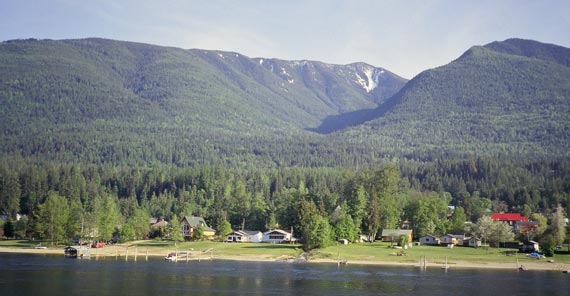
We as humans and especially here at SFS like to picture an ideal government and hope that as we learn more about science and political theory, government can take steps in that direction. By any measure, governance within the United States is far from meeting the theoretical ideal. Implementation and enforcement are often pointed at as more important factors than policy design in terms of effectiveness in meeting policy goals. But if we ever had the chance to change the design, here’s four principles that will help make sure we move in the right direction.

Addressing Scale: Appropriate information gathering

If scale is unified at the ecosystem level – bounded by hydrological and geophysical boundaries – then information about the system must also represent the ecosystem scale. Fisheries management, for example, requires information on all the potential factors that could affect stock size – habitat, water quality, fishing pressure, competition with other native and nonnative species, productivity of the food web, etc. Furthermore, the total fishery stock in an area would have to be considered together – total biomass of market species, for example. These types of measurements will delineate threats to conservation to a particular species versus threats to the health of the whole system.

Read More “Building Policies for Stewardship” »

Help protect sharks in the Bahamas

Posted on March 9, 2011March 8, 2011 By David Shiffman
Uncategorized

Last week, I summarized shark conservation laws and policies from around the world. In the wake of recent successes,  several shark conservation NGOs are hoping to get similar laws passed in the Bahamas. Guy Harvey is heavily involved in this project, and explained why protecting sharks in the Bahamas is so important:

“These magnificent animals have been admired for years by divers visiting The Bahamas and revered by people around the world as one of the great wonders of the ocean.”

Read More “Help protect sharks in the Bahamas” »

Biodiversity Wednesday: The Skeleton Coast

Posted on March 9, 2011November 7, 2011 By Andrew Thaler
Uncategorized

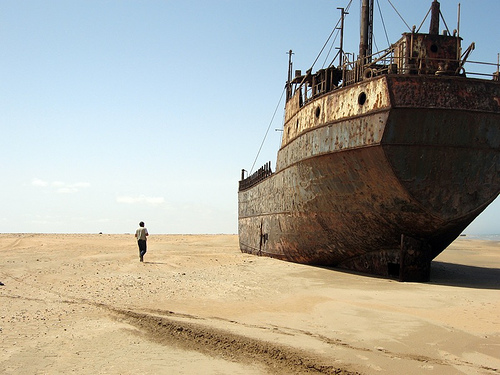
Image from http://www.safari-namibia.co.uk/

A 900-mile coastline runs perpendicular to the border of Angola and Namibia. The cold water carried up from the antarctic by the Benguela Current meets the warm, dry air of the Namib Desert and the resulting depression forms a cold, dense fog that extends out into the sea. The currents and wind combine to produce a force pushing inexorably towards shore. These conditions led mariners to christen this seemingly desolate and inhospitable stretch of sand the Skeleton Coast.

Read More “Biodiversity Wednesday: The Skeleton Coast” »

State of the Field: Playing with Policy

Posted on March 8, 2011February 22, 2011 By Bluegrass Blue Crab
Uncategorized

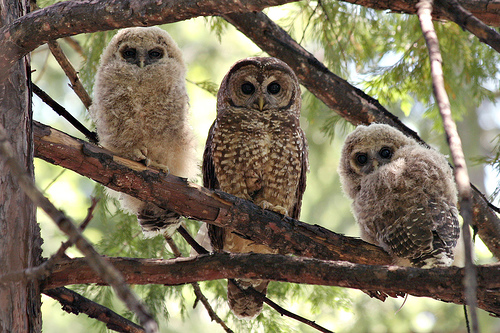
Successful owl populations in CA are credited to adaptive management, from ceplacer.ucdavis.edu

Following our discussion of scale, management boundaries must match ecological processes which are now recognized to be dynamic and complex. This means that management must manage not for a known equilibrium, but a dialectic system full of uncertainty (Berkes 2008). Instead of attempting to predict from the instigation of a policy what the effects may be, governance should be structured to constantly evaluate the system and incorporate feedbacks. This process, known as adaptive management (also check out statements on the subject from the Resilience Alliance and US Department of Interior), provides for the co-evolution of the system and its governance to ensure that they remain an effective match.

Under adaptive management, episodes of disturbance are learning opportunities, not a signal of policy failure. Berkes (2008) describes this phenomenon: “’conservation’ is not a state of being. It is a response to a people’s perceptions about the state of their environment and its resources, and a willingness to modify their behaviors to adjust to new realities”. He goes on to say that disturbances are not only opportunities for learning, but that they are necessary for that learning to occur. Gunderson and Carpenter (2006) add that disturbance is necessary for transformational learning – the type of learning that allows for the emergence of novelty. Therefore, disturbances should be allowed to occur in order to foster community and governmental innovation.

Read More “State of the Field: Playing with Policy” »

Weekly dose of TED: Reviving New York’s rivers with oysters!

Posted on March 4, 2011 By Andrew Thaler 3 Comments on Weekly dose of TED: Reviving New York’s rivers with oysters!
Uncategorized

Kate Orff, is not a biologist, she’s an architect. I love the idea of using natural systems to design human systems. The idea that construction should work with the landscape is not new, all you have to do is visit Falling Water to see that, but it’s an idea that hasn’t taken off like it … Read More “Weekly dose of TED: Reviving New York’s rivers with oysters!” »

SFS Gear Review: Keen Hybrid Life

Posted on March 3, 2011March 3, 2011 By Bluegrass Blue Crab 2 Comments on SFS Gear Review: Keen Hybrid Life
Uncategorized

Everyone’s seen the Keen sandals – the ones that characterize the feet of kayakers all over and arguably create their own style. Keen, however, also offers shoes more in line with their motto of “hybrid life” – that is, they are supposed to be good for a life on-the-go for someone who only wants to carry one pair of shoes.

I received such a pair as a birthday gift from my mother – the source of most shoes in my life. She bought them because they were “cute” and because they came in green, a color that pervades my wardrobe. So they’ve passed the mom test on style. How’d they do on function?

Read More “SFS Gear Review: Keen Hybrid Life” »

Biodiversity Wednesday: Three Gorges

Posted on March 2, 2011March 3, 2011 By David Shiffman 3 Comments on Biodiversity Wednesday: Three Gorges
Uncategorized

The Three Gorges region of Central China has one of the most striking landscapes on Earth. Steep cliffs covered in lush greenery rise right from the shores of the Yangtze (Yellow) river. Despite the harshness of the terrain, millions of people and numerous species of unique plants and animals call this region home.

One of the three Gorges. Photo Credit: David Shiffman, 2007

The Yangtze is the third largest river in the world (after the Nile and the Amazon). The river and it’s shores are home to iconic Chinese species such as the Dawn Redwood tree, the tiger, the pangolin, the Chinese sturgeon and the Chinese river dolphin. All told, 570 species of vertebrates and almost 2,100 species of plants live in this region according to UNESCO. The area also has thousands of archaeological sites, including rare evidence of the Ba and Damaio peoples. This entire ecosystem is in big trouble because of one of the largest engineering projects of all time- the Three Gorges Dam.

Read More “Biodiversity Wednesday: Three Gorges” »

Political Ecology at Home – Lessons from Abroad?

Posted on February 28, 2011February 22, 2011 By Bluegrass Blue Crab
Uncategorized

Political ecology within the First World came from a gradual realization that the definition of the field did not only apply to exotic cultures abroad, but had resonance domestically. As first defined by Blaikie and Brookfield (1987), political ecology combines “the concerns of ecology and a broadly defined political economy. Together this encompasses the constantly shifting dialectic between society and land-based resources, and also within classes and groups within society itself” (17). Scholars returning from research in the Third World observed this shifting dialectic in their own countries, complete with struggles over power and access between sectors of society.

The first call to the political ecology community to consider applying their principles to the First World came from Louise Fortmann (1996) in her article “Bonanza! The unasked questions: Domestic land tenure through international lenses.” Although she admitted there are vast differences between home and abroad, she identifies six lessons from the international land tenure debate that could have traction in the United States: property as social process, customary tenures, common property and community management of resources, gender, the complexity of tenancy relationships, and land concentration.

Read More “Political Ecology at Home – Lessons from Abroad?” »

Weekly dose of TED – Greg Stone: Saving the ocean one island at a time

Posted on February 25, 2011 By Andrew Thaler
Uncategorized

Kiribati is perhaps one of the most remote countries in the world. Despite its distance from the sources of environmental degradation, it will probably be the very first country to be destroyed by climate change. Most of the country, a collection of small islands spanning an area almost as large as the United States, lies … Read More “Weekly dose of TED – Greg Stone: Saving the ocean one island at a time” »

SFS Gear Review: ExOfficio anti-microbial Underwear

Posted on February 24, 2011February 23, 2011 By Andrew Thaler 3 Comments on SFS Gear Review: ExOfficio anti-microbial Underwear
Uncategorized

There’s a reason I wrote this free form poem, and that reason is Exoficio’s anti-bacterial boxer shorts. Yes, today we’re talking about underwear. Let’s face it, a bad pair of underpants can make a field season miserable, while a decent pair will make you, and everyone around you, much more comfortable. Life is messy, especially while doing field work.

Read More “SFS Gear Review: ExOfficio anti-microbial Underwear” »

Posts pagination

Previous 1 … 52 53 54 … 119 Next

Popular Posts

Playing God - How the ESA "God Squad" just voted for the extinction of a uniquely American whalePlaying God - How the ESA "God Squad" just voted for the extinction of a uniquely American whaleApril 9, 2026Southern Fried Science
The story of the pride flag made from NASA imagery: Bluesky's most-liked imageThe story of the pride flag made from NASA imagery: Bluesky's most-liked imageSeptember 27, 2024David Shiffman
Here's how to join my IMCC8 symposium, "Ocean Science Communication: What's New and What's Next?"Here's how to join my IMCC8 symposium, "Ocean Science Communication: What's New and What's Next?"April 22, 2026David Shiffman
What Ocean Ramsey does is not shark science or conservation: some brief thoughts on "the Shark Whisperer" documentaryWhat Ocean Ramsey does is not shark science or conservation: some brief thoughts on "the Shark Whisperer" documentaryJuly 2, 2025David Shiffman
Our favorite sea monsters – Ningen (#4)Our favorite sea monsters – Ningen (#4)September 7, 2010Andrew Thaler
Join Me at Upwell: A Wave of Ocean Justice — Our Fourth Year!Join Me at Upwell: A Wave of Ocean Justice — Our Fourth Year!March 24, 2026Angelo Villagomez
On the clarity of animals: the art and science of clearing and stainingOn the clarity of animals: the art and science of clearing and stainingDecember 17, 2013Guest Writer
Shark of Darkness: Wrath of Submarine is a fake documentaryShark of Darkness: Wrath of Submarine is a fake documentaryAugust 10, 2014Michelle Jewell
What can the funniest shark memes on the internetz teach us about ocean science and conservation?What can the funniest shark memes on the internetz teach us about ocean science and conservation?November 8, 2013David Shiffman
That's not a blobfish: Deep Sea Social Media is Flooded by AI SlopThat's not a blobfish: Deep Sea Social Media is Flooded by AI SlopDecember 19, 2025Andrew Thaler
Subscribe to our RSS Feed for updates whenever new articles are published.

We recommend Feedly for RSS management. It's like Google Reader, except it still exists.

Southern Fried Science

  • Home
  • About SFS
  • Authors
  • Support SFS


If you enjoy Southern Fried Science, consider contributing to our Patreon campaign.

Copyright © 2026 Southern Fried Science.

Theme: Oceanly Premium by ScriptsTown