Skip to content

Southern Fried Science

Over 15 years of ocean science and conservation online

  • Home
  • About SFS
  • Authors
  • Support SFS

Category: Uncategorized

Biodiversity Wednesday: Shortgrass Prairie

Posted on February 23, 2011February 23, 2011 By Bluegrass Blue Crab
Uncategorized
from www.tarleton.edu/

The middle of America boasts some of the best soils in the world, making it “the breadbasket of America”, if not the world. However, that soil is both a blessing and a curse – native species of grasses and the birds, bugs, and bison that depended on the area have been pushed out in favor of human food production. The ecosystem of middle America looks today like miles upon miles of rows of corn and soy, not the shortgrass prairie that once inhabited the area.

Read More “Biodiversity Wednesday: Shortgrass Prairie” »

State of the Field: Pay for that Particulate!

Posted on February 22, 2011February 22, 2011 By Bluegrass Blue Crab
Uncategorized
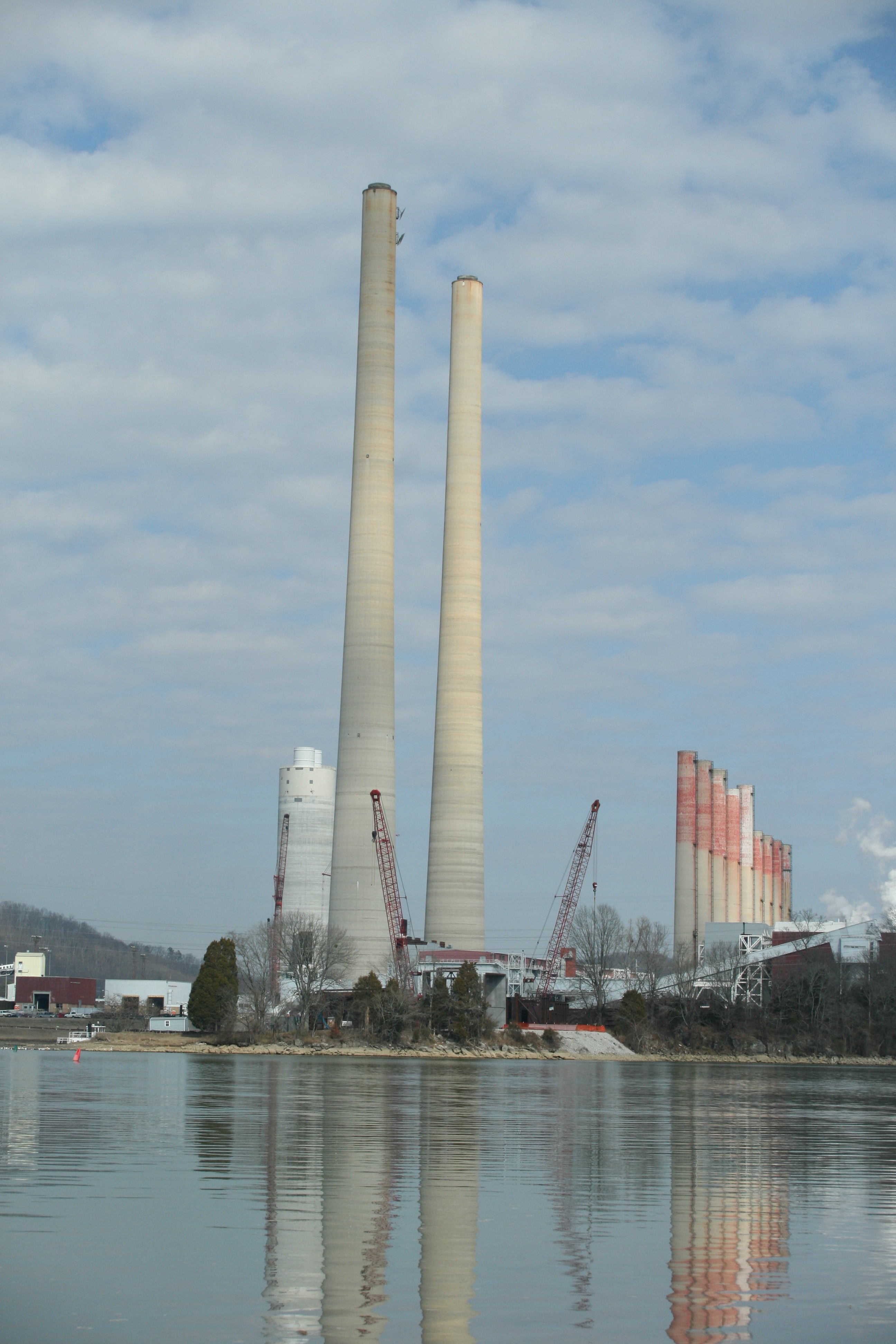
What are the true costs of power? photo by author

Ever wonder why coal-fired power is so much cheaper than the alternatives? Coal-producing communities aren’t paid for their personal health impacts, the environment is not paid for streams turned acid, and mountains are not paid for their removal. More subtle costs are also passed on: rising rates of asthma from particulates in the air, introduction of malaria into previously unaffected areas from a warming world, and the relocation of whole countries due to sea level rise.

Pollution is a classic example of an economic externality – companies choosing not to sequester chemicals in their effluent pass the cost of pollution and remediation on to those downstream. Therefore the cost of production signaled by price does not represent the true cost of production. The contradiction is deeper, however, and forms one of the main critiques of capitalism – the “second contradiction of capitalism”. Capitalism relies on the continual growth of the market, costs determined by the raw material and labor inputs. However, these costs assume limitless availability of what Marx calls “conditions of production” – the infrastructure and environmental services that are required for production. These, however, are not limitless and therefore not cost-free. Rising costs will eventually outpace price and production will therefore cease (O’Connor 1998).

Read More “State of the Field: Pay for that Particulate!” »

Reader Survey: Who reads Southern Fried Science?

Posted on February 21, 2011 By Andrew Thaler 6 Comments on Reader Survey: Who reads Southern Fried Science?
Uncategorized

Introduction

Who are our readers? That is the question we wanted to answer at the beginning of this year. Are you scientists, students, or interested laypeople? Where are you from? What do you like and what don’t you like? Is anybody out there?

So last month we launched a survey to help us find out.

Read More “Reader Survey: Who reads Southern Fried Science?” »

Finding Melville’s Whale: Hark! (Chapter 43)

Posted on February 20, 2011February 21, 2011 By Andrew Thaler
Uncategorized

Hark! A noise in the hold like a cough do you Imagine ghosts aboard? Or men, lying in the darkness.

Weekly dose of TED – Kristina Gjerde: Making law on the high seas

Posted on February 18, 2011February 17, 2011 By Andrew Thaler
Uncategorized

The high seas are a black hole for ocean conservation. They lie beyond the jurisdiction of any single country and are largely open for unregulated exploitation. Even as we begin moving towards a pragmatic high seas conservation framework, we should keep in mind that many territorial waters are still left unprotected and open to illegal … Read More “Weekly dose of TED – Kristina Gjerde: Making law on the high seas” »

Call to Agendize

Posted on February 17, 2011February 17, 2011 By Bluegrass Blue Crab
Uncategorized

According to the National Science Foundation, social scientists might be useful in a multitude of new ways, especially in long-term research. Following on the heels of astronomy and astrophysics, NSF recently sought suggestions for planning the research agenda of social scientists for the next decade. Working on a relatively short time frame, there were three guiding principles for setting this new agenda:

– “big underlying questions” that thus far have been underappreciated

– capacity issues: which stages of the educational process need the most help?

– infrastructure issues, eg. setting up longitudinal surveys on important topics

In response to this challenge, a team at Harvard came up with the “top ten social science research issues“, recently published in Nature. A few of us sitting on the social-ecological divide have noted that there is a distinct lack of environmental issues in the list. In all fairness, the original challenge emphasized that existing research programs would be supported and showcased recent funding for the social aspects of environmental issues as a prime example of ways this research is already headed in a favorable direction. The more optimistic of this bunch note that each of the ten social issues is actually intricately linked with the need for a healthy environment and therefore the environmental link is  an underlying grand challenge, if you will.

Read More “Call to Agendize” »

SFS Gear Reviews: ScottEVest Travel Pants

Posted on February 17, 2011February 17, 2011 By Andrew Thaler 2 Comments on SFS Gear Reviews: ScottEVest Travel Pants
Uncategorized

I have a confession to make. Targeted advertising works. There I was, planning out a long trip to India, thinking, I need some new pants. I get progressively wider with each passing year, and I was not looking forward to flying for 36 hours in a pair of 32-inch pants on a 34-inch waist. And then, like a primal scream from the ether, on the sidebar of The Thoughtful Animal, was an ad for Scott E Vest travel clothes. And, in my shame, I clicked it.

Read More “SFS Gear Reviews: ScottEVest Travel Pants” »

Biodiversity Wednesday: Flesh eaters of the Savanna

Posted on February 16, 2011February 16, 2011 By Andrew Thaler
Uncategorized

Red-cockaded Woodpecker in Croatan Forest. Photograph by Andrew David Thaler.

The wet, temperate understory of a longleaf pine savanna, is not the first place one would thing to search for some of nature’s most fearsome predators. These maritime ecosystems stretch down the Atlantic seaboard, from southern Virginia to northern Georgia, but are most common in North and South Carolina. Boomerang-shaped bays, called Carolina bays, formed behind ancient sand dunes, provide the foundation for these biodiversity rich regions. More than 50 endangered species are native to the Carolina lonfleaf pine savannas, including the Cape Fear Threetoothed land snail and the iconic Red-cockaded Woodpecker, but among the most evocative inhabitants of these pocosin wild-lands are the many-jawed monsters of the the understory – the Venus Flytrap.

Read More “Biodiversity Wednesday: Flesh eaters of the Savanna” »

Finding Melville’s Whale: The Whiteness of the Whale (Chapter 42)

Posted on February 13, 2011 By Andrew Thaler
Uncategorized

After reading some of the reviews from our Readers’ Survey, many people list these among their favorite posts, while many others consider them their least favorite. So, we’ve decided to change the posting schedule for Finding Melville’s Whale. From now on, one or two new entries will appear every Sunday, instead of Tuesdays and Thursdays. We … Read More “Finding Melville’s Whale: The Whiteness of the Whale (Chapter 42)” »

Nothing to plunder – the evolution of Somalia’s pirate nation

Posted on February 11, 2011February 17, 2011 By Andrew Thaler 12 Comments on Nothing to plunder – the evolution of Somalia’s pirate nation
Uncategorized

The droughts that shook the east African nations in the mid-1970’s and again in the 1980’s decimated the traditional nomadic clans of Somalia, leaving them without live stock to feed their families. Tens of thousands of the dispossessed, primarily of the Hawiye clan, were relocated to coastal areas. Fishing communities took root and began to flourish. With over 3000 km of coastline, rich with rock lobster and large pelagic fish, these communities grew, perhaps even thrived. Then, as is often the narrative of African nations, came civil war.

Read More “Nothing to plunder – the evolution of Somalia’s pirate nation” »

Posts pagination

Previous 1 … 53 54 55 … 119 Next

Popular Posts

Playing God - How the ESA "God Squad" just voted for the extinction of a uniquely American whalePlaying God - How the ESA "God Squad" just voted for the extinction of a uniquely American whaleApril 9, 2026Southern Fried Science
The story of the pride flag made from NASA imagery: Bluesky's most-liked imageThe story of the pride flag made from NASA imagery: Bluesky's most-liked imageSeptember 27, 2024David Shiffman
Here's how to join my IMCC8 symposium, "Ocean Science Communication: What's New and What's Next?"Here's how to join my IMCC8 symposium, "Ocean Science Communication: What's New and What's Next?"April 22, 2026David Shiffman
What Ocean Ramsey does is not shark science or conservation: some brief thoughts on "the Shark Whisperer" documentaryWhat Ocean Ramsey does is not shark science or conservation: some brief thoughts on "the Shark Whisperer" documentaryJuly 2, 2025David Shiffman
Our favorite sea monsters – Ningen (#4)Our favorite sea monsters – Ningen (#4)September 7, 2010Andrew Thaler
Join Me at Upwell: A Wave of Ocean Justice — Our Fourth Year!Join Me at Upwell: A Wave of Ocean Justice — Our Fourth Year!March 24, 2026Angelo Villagomez
On the clarity of animals: the art and science of clearing and stainingOn the clarity of animals: the art and science of clearing and stainingDecember 17, 2013Guest Writer
Shark of Darkness: Wrath of Submarine is a fake documentaryShark of Darkness: Wrath of Submarine is a fake documentaryAugust 10, 2014Michelle Jewell
What can the funniest shark memes on the internetz teach us about ocean science and conservation?What can the funniest shark memes on the internetz teach us about ocean science and conservation?November 8, 2013David Shiffman
That's not a blobfish: Deep Sea Social Media is Flooded by AI SlopThat's not a blobfish: Deep Sea Social Media is Flooded by AI SlopDecember 19, 2025Andrew Thaler
Subscribe to our RSS Feed for updates whenever new articles are published.

We recommend Feedly for RSS management. It's like Google Reader, except it still exists.

Southern Fried Science

  • Home
  • About SFS
  • Authors
  • Support SFS


If you enjoy Southern Fried Science, consider contributing to our Patreon campaign.

Copyright © 2026 Southern Fried Science.

Theme: Oceanly Premium by ScriptsTown