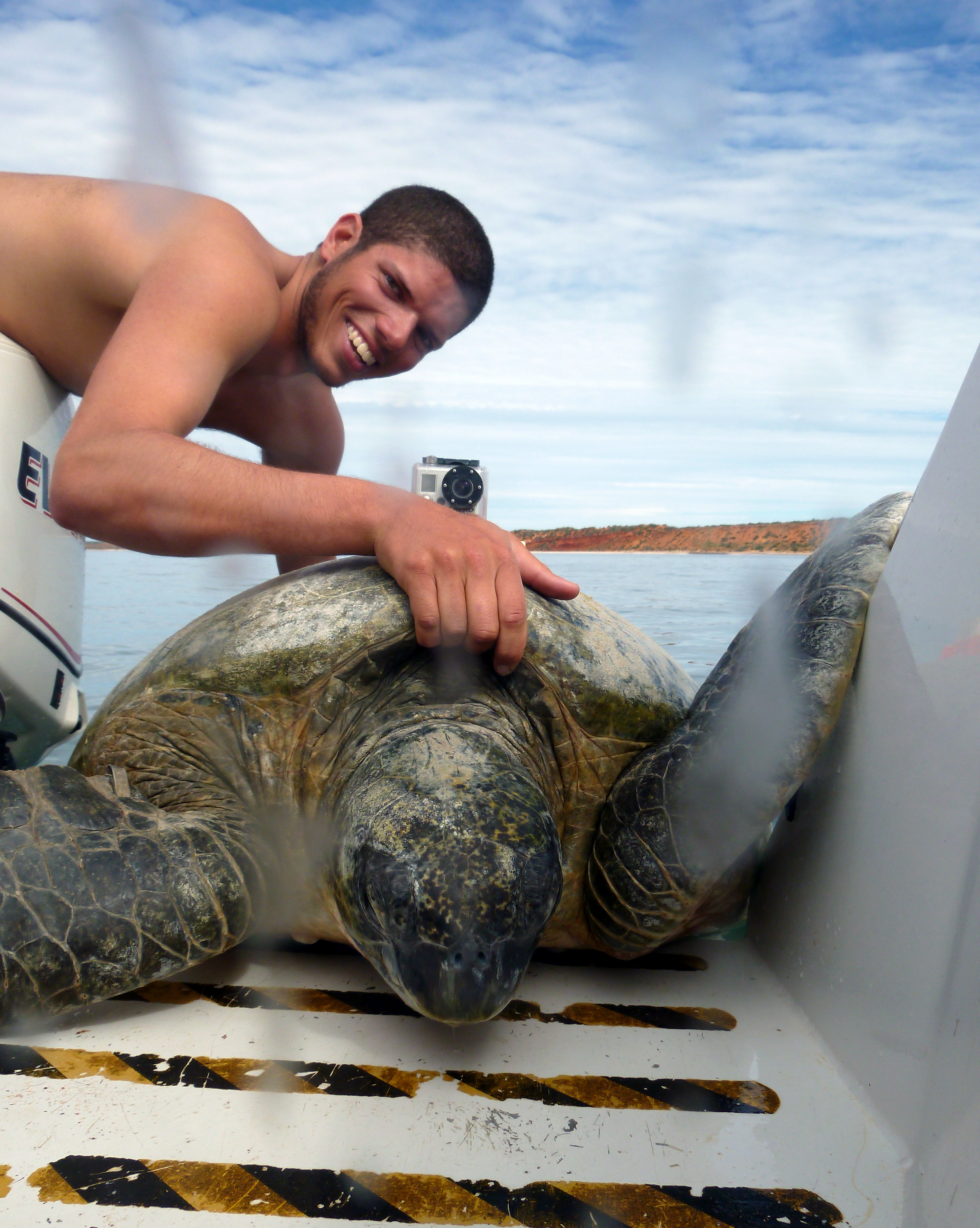
 Brendan Talwar is a graduate student at the Florida State University Coastal & Marine Lab studying Ecology and Evolution. Hispast experiences in diverse marine ecosystems have led to his current research interests in deep sea fisheries management. His thesis work will take place in the Gulf of Mexico and Exuma Sound while working closely with collaborators at the Cape Eleuthera Institute and The Island School, where he will use this project to teach an Applied Research course.
Imagine it is a crisp, sunny, warm spring day and you’re out on the flats hoping a trout rips your topwater minnow to pieces. Out of a deep pocket fringed by oyster bars, a fish erupts from the mirrored surface and engulfs your bait. You win the fight, measure and bag the yellow-mouthed speckled trout, and repeat.
An hour later, you snag an undersized mackerel near the gills and reel it in for a few photos before throwing it back under the assumption that it will survive, grow, and eventually reproduce. You keep fishing and hope for the best, but find yourself wondering if it truly survived until the end of the day. What if it didn’t? Well, you didn’t mean to catch the fish. You didn’t mean for it to experience a fight-or-flight response, for its blood pH to drop, or for its lactic acid to build up. You were targeting 15” trout, and catching the mackerel was an accident. If the fish didn’t survive, then your daily catch represents a greater impact on local fish populations than the simple number you took home for supper.
Now imagine a fishing fleet operating on a large scale in the deep ocean. While targeting tilefish or grouper, vessels inevitably catch other species on accident (called bycatch species). Among them are deep sea sharks, which are particularly vulnerable to overfishing due in part to their slow life histories. In fact, the average fishing pressure that it would take to drive a deep sea chondrichthyan extinct is 58% of that for a continental shelf species. On top of that, the deeper you go, the more vulnerable they are to the stress associated with fishery capture, primarily due to their slow metabolic rates and decreased energy stores.
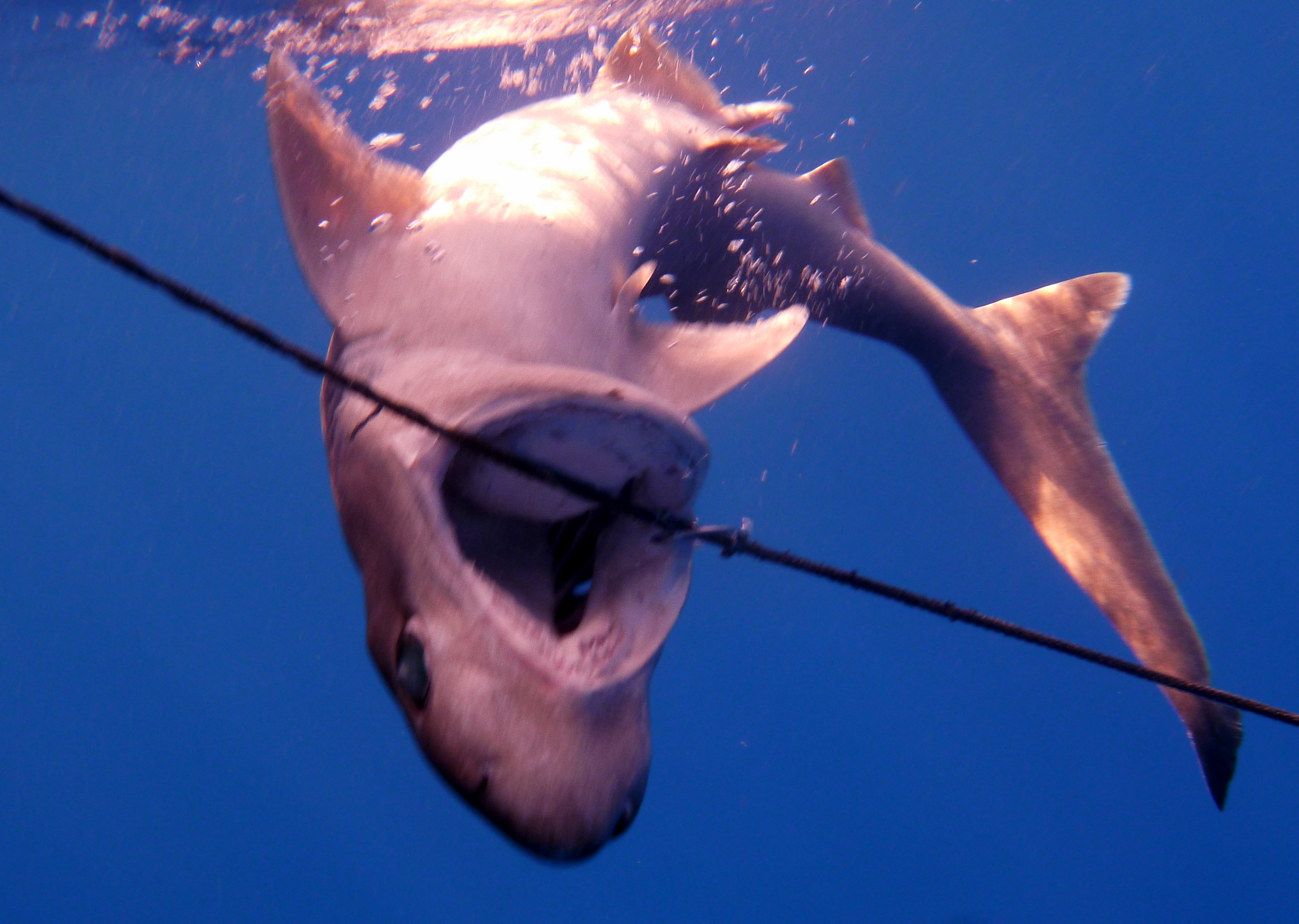
As these species are hauled aboard, the live individuals are either killed immediately or released alive depending on the method of capture. Longline and trawling fleets generally assume one of two extremes: that all individuals will survive, in which case they are released; or that all individuals will die, in which case they are selectively harvested.
In reality, we don’t have estimates of post-release survivorship for most deep sea sharks, particularly for small ones that haven’t been extensively tracked with satellite tags. As you can imagine, this leads to a troubling realization. Vessels are either harvesting sharks that might survive post-release, or, alternatively, releasing sharks that will probably perish. As such, it’s likely that our fisheries models are inaccurately estimating the effects of fishing effort in the deep sea.
My collaborators and I are trying to improve these models by determining the post-release survivorship probabilities for gulper and Cuban dogfish sharks in the warm Gulf of Mexico and Tropical Western Atlantic. To do so, we need custom-built equipment that will allow us to work in the extreme pressures and temperatures of the deep sea.
To learn about how we’ll generate these survivorship estimates, please check out this project page and share it in any way you can. If every visitor donates at least $5 (less than the cost of a McDonalds Filet-O-Fish meal) we’ll meet our goal!