Skip to content

Southern Fried Science

Over 15 years of ocean science and conservation online

  • Home
  • About SFS
  • Authors
  • Support SFS

First systematic threat analysis reveals that 1/4 of sharks, rays, and chimaeras are threatened with extinction

Posted on January 21, 2014 By David Shiffman
Conservation, Science

It took a team of over 300 scientists nearly two decades, but the first systematic analysis of the conservation status of chondrichthyans (sharks, rays and chimaeras) has been completed. The results, published today (open access) in a paper titled “Extinction risk and conservation of the world’s sharks and rays,” are chilling.

“Our unprecedented analysis shows that sharks and their relatives – which make up one of the earth’s oldest and most ecologically diverse groups of animals  —  are facing an alarmingly elevated risk of extinction,” said Dr. Nick Dulvy, IUCN SSG Co-Chair and Professor at Simon Fraser University in British Columbia.

As of the writing of this paper, the IUCN Shark Specialist Group recognized 1,041 species of chondrichthyans. However,  a new species is described, on average, every two or three weeks! Out of these 1,041 species of chondrichthyans, approximately one in four are considered “Threatened” by IUCN Red List criteria;  113 species are Vulnerable, 43 are Endangered, and 25 species are Critically Endangered. 487 species are considered Data Deficient, but the IUCN Shark Specialist Group estimates that 68 of them are likely to be Threatened as well! Most alarmingly, only 23% of known chondrichthyan species are considered Least Concern, the lowest percentage out of any group of vertebrates on land or sea!
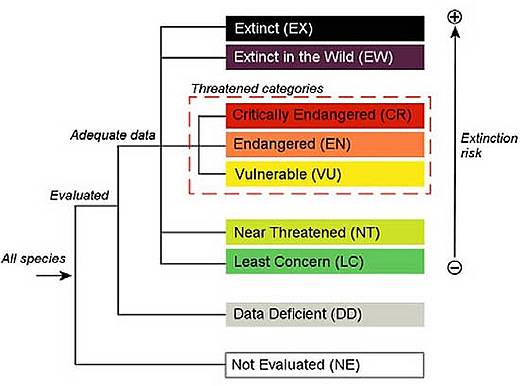
A hierarchy of IUCN Red List categories. Note that "Threatened" includes Vulnerable, Endangered, and Critically Endangered
A hierarchy of IUCN Red List categories. Note that “Threatened” includes Vulnerable, Endangered, and Critically Endangered

One of the two main factors influencing Threatened status is the size of the animal. Larger bodied species are sensitive to overfishing because they typically have a life history with slow growth, late age at maturity, and relatively few offspring. Additionally, living in coastal habitats (in other words, close to humans) makes a species more likely to be Threatened.

Though much of the attention of the conservation activism community has focused on sharks, this paper shows that of the 7 families of chondrichthyans with the highest percentage of Threatened species, 5 are rays (including wedgefish, numbfish/sleeper rays), and sawfish).
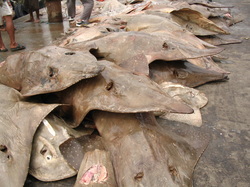
Wedgefish for sale in Jakarta. Photo credit: Will White, Australian National Fish Collection, CSIRO, used with permission.

“While public, media, and government attention to the plight of sharks is growing, the widespread depletion of closely related rays is proceeding largely unnoticed,” said Dr. Colin Simpfendorfer, IUCN SSG Co-Chair and professor at James Cook University.
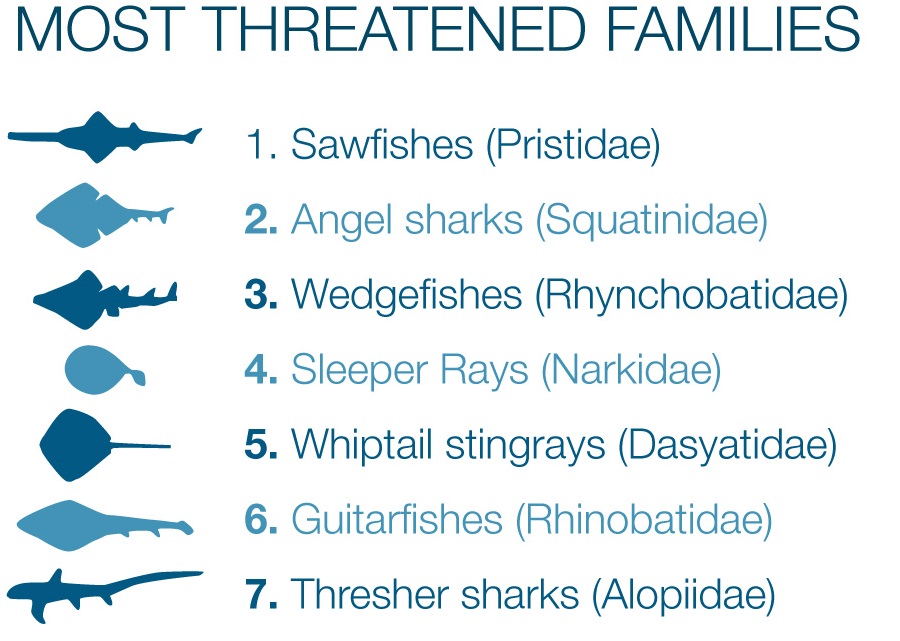
Figure 6B from Dulvy et al 2014

The largest drivers of population declines in chondrichthyans is overfishing, including both targeted fisheries and bycatch. Habitat destruction, climate change, and persecution (i.e. culls) are other major threats facing many species. The paper notes that although the global shark fin trade is a major threat, less-recognized threats include trade in shark and ray meat, manta ray gill rakers, and liver oil.
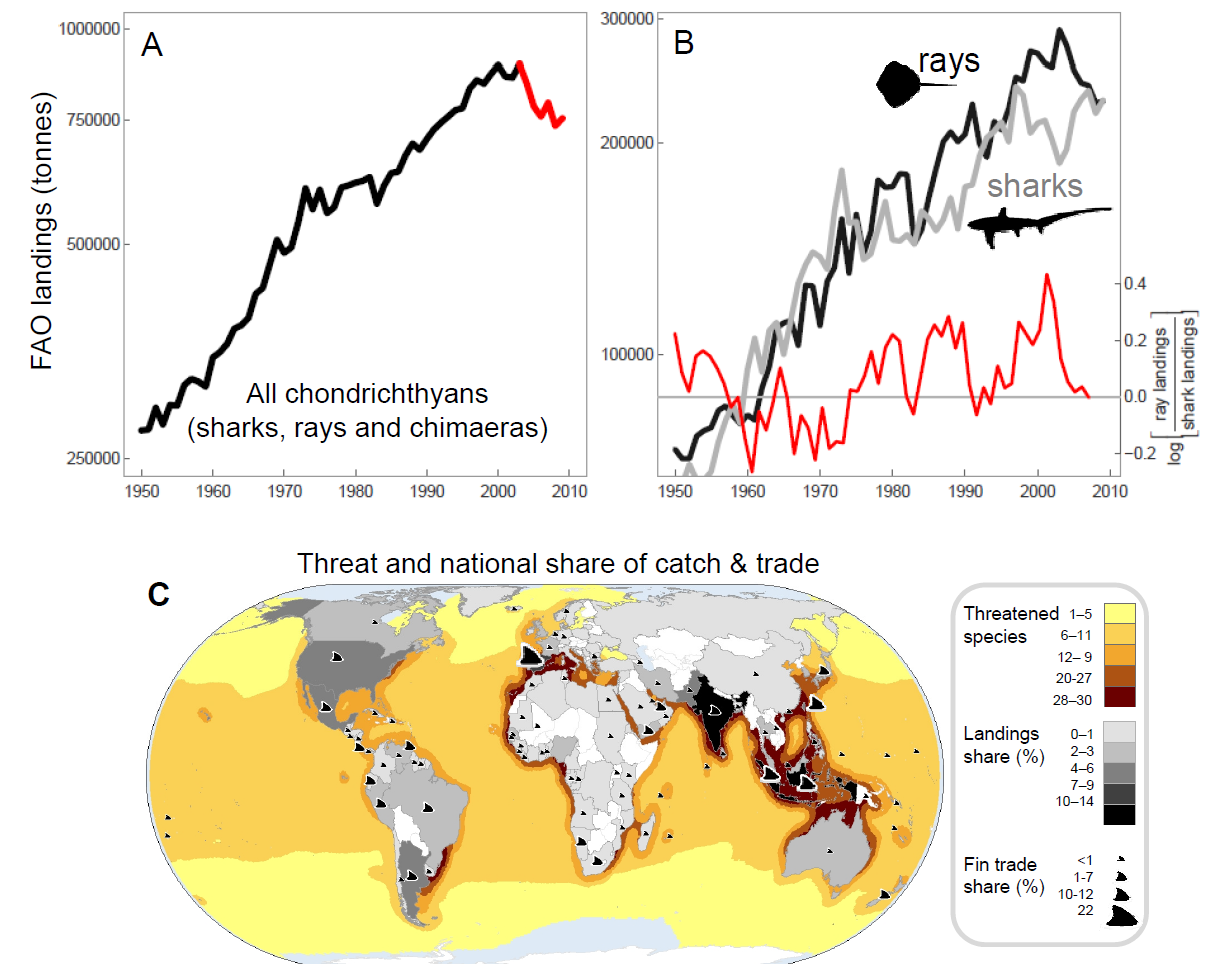
Figure 1 from Dulvy et al. 2014 shows shark and ray landings over time, as well as which nations are the largest contributors to the catch and trade of chondrichthyans.

To combat this threat and conserve these species for the future, the authors recommend a series of policies. One of the challenges is that more than 150 species regularly migrate across national boundaries, and one quarter of Threatened species have a range that includes at least 18 nations! International cooperation through regional fisheries management organizations, CITES, the Convention on Migratory Species, and other groups is critical.

“Significant policy strides have been made over the last two decades, but effective conservation requires a dramatic acceleration in pace as well as an expansion of scope — to include all shapes and sizes of these exceptional species.  Our analysis clearly demonstrates that the need for such action is urgent,” said Sonja Fordham, IUCN SSG Deputy Chair and President of Shark Advocates International.

Suggested solutions include “research, data collection, population assessment, fishing limits based on science and the precautionary approach, prohibitions on particularly vulnerable species, bans on at-sea fin removal, protection of key habitats, improved enforcement, and international initiatives through various wildlife treaties and regional fisheries bodies.”

httpv://www.youtube.com/watch?v=7z-JfpDmLdw&feature=c4-overview&list=UUvBSpQazDfdW05o6mtf5LJQ

 

IUCN SSG infographic


Author’s note: Lead author Dr. Nick Dulvy is a member of my Ph.D. dissertation committee. Additionally, I am a member of the IUCN Shark Specialist Group’s “Cross-Cutting Group”, and my role includes helping the SSG with communications and social media.

Share this:

  • Click to share on Bluesky (Opens in new window) Bluesky
  • Click to share on Facebook (Opens in new window) Facebook
  • Click to share on Reddit (Opens in new window) Reddit
  • Click to share on Threads (Opens in new window) Threads
  • Click to share on WhatsApp (Opens in new window) WhatsApp
  • Click to share on Mastodon (Opens in new window) Mastodon

Related

Tags: colin simpfendorfer iucn shark specialist group nick dulvy ray conservation sawfish conservation shark bycatch shark conservation shark conservation policy shark finning shark overfishing sonja fordham

Post navigation

❮ Previous Post: Quick Tips for Graduate Student Life – Invest in a Good Navy Blazer
Next Post: Quick Tips for Graduate Student Life – Ask for Free Textbooks ❯

You may also like

Conservation
One year of “Why Sharks Matter:” What’s different in shark science and conservation now?
May 24, 2023
Conservation
Introducing the Summer SharkTakular photo contest!
July 2, 2010
Conservation
Hawaii’s shark fin bill: Public comment period closes Monday
March 6, 2010
Conservation
A scientifically accurate list of the most endangered sharks in the world
November 2, 2017

Popular Posts

Shark scientists want their research to help save threatened species, but don’t know how. Our new paper can help.Shark scientists want their research to help save threatened species, but don’t know how. Our new paper can help.December 1, 2025David Shiffman
Norway and Cook Islands put their deep-sea mining plans on pause.Norway and Cook Islands put their deep-sea mining plans on pause.December 3, 2025Andrew Thaler
What Ocean Ramsey does is not shark science or conservation: some brief thoughts on "the Shark Whisperer" documentaryWhat Ocean Ramsey does is not shark science or conservation: some brief thoughts on "the Shark Whisperer" documentaryJuly 2, 2025David Shiffman
The Trouble with Teacup PigsThe Trouble with Teacup PigsOctober 14, 2012Andrew Thaler
What we know we don't know: impacts of deep-sea mining on whales, dolphins, sharks, turtles, and other migratory species.What we know we don't know: impacts of deep-sea mining on whales, dolphins, sharks, turtles, and other migratory species.November 20, 2025Andrew Thaler
2025: My year in writing, public speaking, and media interviews2025: My year in writing, public speaking, and media interviewsDecember 3, 2025David Shiffman
Urea and Shark OsmoregulationUrea and Shark OsmoregulationNovember 15, 2010David Shiffman
Shark of Darkness: Wrath of Submarine is a fake documentaryShark of Darkness: Wrath of Submarine is a fake documentaryAugust 10, 2014Michelle Jewell
How tiny satellites are tracking marine wildlifeDecember 1, 2025Andrew Thaler
Build a dirt cheap, tough-as-nails field computer in a Pelican caseBuild a dirt cheap, tough-as-nails field computer in a Pelican caseJuly 21, 2015Andrew Thaler
Subscribe to our RSS Feed for updates whenever new articles are published.

We recommend Feedly for RSS management. It's like Google Reader, except it still exists.

Southern Fried Science

  • Home
  • About SFS
  • Authors
  • Support SFS


If you enjoy Southern Fried Science, consider contributing to our Patreon campaign.

Copyright © 2025 Southern Fried Science.

Theme: Oceanly Premium by ScriptsTown