Skip to content

Southern Fried Science

Over 15 years of ocean science and conservation online

  • Home
  • About SFS
  • Authors
  • Support SFS

Fun Science FRIEDay – The Moby Dick of Sperm Whale Encounters

Posted on April 17, 2015 By Kersey Sturdivant
Uncategorized

Happy FSF Folks!

So this news has been making the rounds, and it is too amazing not to include for FSF. So if you missed it, you are in luck because we highlight it again here. A giant sperm whale was captured by a remotely operated vehicle (ROV) piloted as part of Bob Ballard and the Corps of Exploration’s Nautilus cruise. The whale was captured by the ROV Hercules at 598 meter (1,962 ft) below the sea surface in the Gulf of Mexico off the coast of Louisiana.
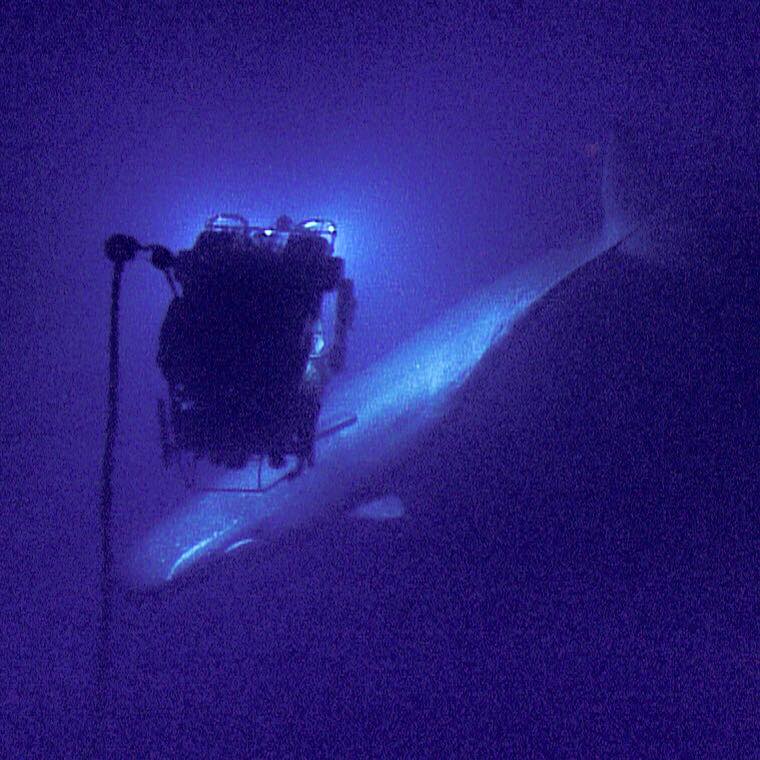
Sperm whale captured at 598 meter (1,962 ft) depth by the ROV Hercules. (Photo Credit: Ocean Exploration Trust)

You can view the amazing video and commentary here.
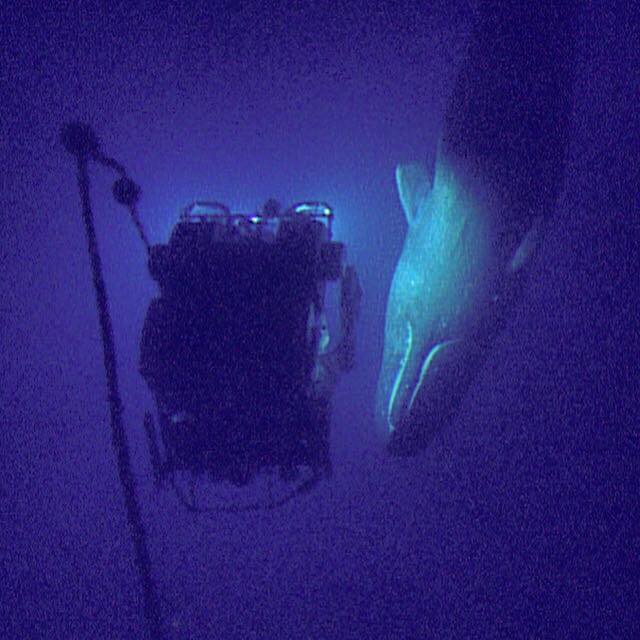
 

Sperm whale captured at 598 meter (1,962 ft) depth by the ROV Hercules. (Photo Credit: Ocean Exploration Trust)


A bit of background, Sperm whales are the largest of the toothed whales and also have the largest brains of any animal on Earth. Their geographic range is anywhere in the open ocean. The Sperm whale gets its name from the spermaceti organ which fills most of its huge head. In the 18th and 19th centuries, whalers sought out the Sperm whale for the spermaceti oil, which apparently was quite valuable. You may also recognize their anatomy as the primary antagonist in the classical book, Moby Dick – “Call me Ishmael!”  Fortunately, like most whales, they are now protected against whaling, and this observation did not end in tragedy. 😉
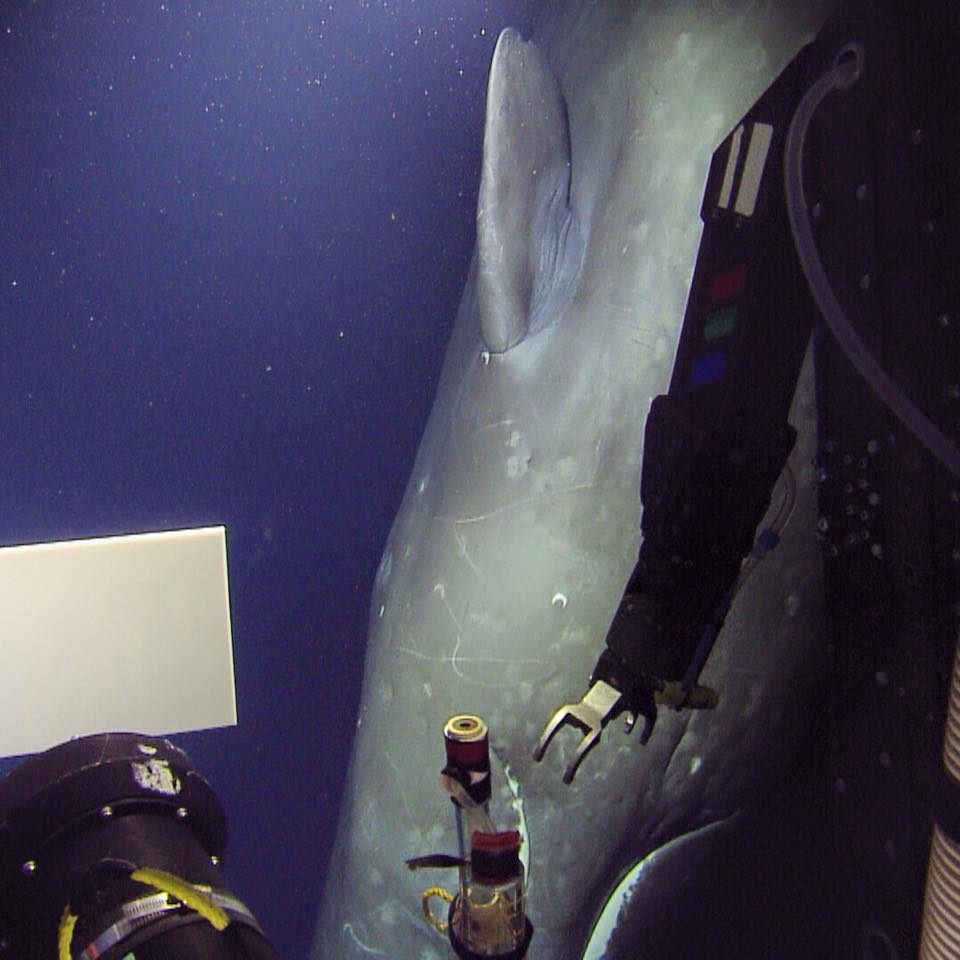
 

Sperm whale captured at 598 meter (1,962 ft) depth by the ROV Hercules. (Photo Credit: Ocean Exploration Trust)


Dr. Bob Ballard and his group, the Ocean Exploration Trust, have been exploring the mysteries of the ocean deep since 2008. Their goal is to engage in pure ocean exploration and educate about the wonders of the ocean. The vivid imagery they collect, and chance encounters such as this, continues to inspire the imagination of fledgling ocean scientists and senior scientists alike. The current 6-month expedition will be dedicated to exploring sites ranging from the Gulf of Mexico to British Columbia, along the way mapping the Galapagos Rift and the site of the first hydrothermal vent discovery in 1977.

You can follow the exploits of the Ocean Exploration Trust live, at their website.

There is also an amazing Q&A with cetacean experts regarding this Sperm whale encounter that can be accessed here.

Happy FSF!!

Share this:

  • Click to share on Bluesky (Opens in new window) Bluesky
  • Click to share on Facebook (Opens in new window) Facebook
  • Click to share on Reddit (Opens in new window) Reddit
  • Click to share on Threads (Opens in new window) Threads
  • Click to share on WhatsApp (Opens in new window) WhatsApp
  • Click to share on Mastodon (Opens in new window) Mastodon

Related

Tags: cachalot exploration nautilus ocean Physeter macrocephalus ROV Hercules

Post navigation

❮ Previous Post: Watch James Cameron’s Deepsea Challenge and tweet along with us Tuesday at 8 p.m.!
Next Post: You say you need to incorporate the social sciences? Which kind? ❯

You may also like

Uncategorized
Core Themes for 2012: A renewed sense of wonder
January 27, 2012
Uncategorized
Technocracy and the Sea
January 28, 2016
Weekly Salvage
The Ocean Cleanup has an ocean of problems, whales, KISS, and more! Weekly Salvage: October 7, 2019
October 7, 2019
Weekly Salvage
Space whales. Space. Whales. SPAAAAACE WHAAAAALES! Weekly Salvage: October 21, 2019
October 21, 2019

Popular Posts

What Ocean Ramsey does is not shark science or conservation: some brief thoughts on "the Shark Whisperer" documentaryWhat Ocean Ramsey does is not shark science or conservation: some brief thoughts on "the Shark Whisperer" documentaryJuly 2, 2025David Shiffman
Shark of Darkness: Wrath of Submarine is a fake documentaryShark of Darkness: Wrath of Submarine is a fake documentaryAugust 10, 2014Michelle Jewell
That's not a blobfish: Deep Sea Social Media is Flooded by AI SlopThat's not a blobfish: Deep Sea Social Media is Flooded by AI SlopDecember 19, 2025Andrew Thaler
Reflections on the Boundary of Science and PolicyJune 20, 2016Bluegrass Blue Crab
Here's how to help identify Important Shark and Ray Areas in North America!Here's how to help identify Important Shark and Ray Areas in North America!January 19, 2026David Shiffman
10 Myths About Social ScienceOctober 6, 2011Bluegrass Blue Crab
Marine Biology Career AdviceMarine Biology Career AdviceMay 30, 2025David Shiffman
What can the funniest shark memes on the internetz teach us about ocean science and conservation?What can the funniest shark memes on the internetz teach us about ocean science and conservation?November 8, 2013David Shiffman
My "Follow ocean science and conservation experts on Bluesky and Instagram" assignmentMy "Follow ocean science and conservation experts on Bluesky and Instagram" assignmentNovember 19, 2024David Shiffman
No, we didn't find the Loch Ness Monster with Apple MapsNo, we didn't find the Loch Ness Monster with Apple MapsApril 18, 2014Andrew Thaler
Subscribe to our RSS Feed for updates whenever new articles are published.

We recommend Feedly for RSS management. It's like Google Reader, except it still exists.

Southern Fried Science

  • Home
  • About SFS
  • Authors
  • Support SFS


If you enjoy Southern Fried Science, consider contributing to our Patreon campaign.

Copyright © 2026 Southern Fried Science.

Theme: Oceanly Premium by ScriptsTown