Skip to content

Southern Fried Science

Over 15 years of ocean science and conservation online

  • Home
  • About SFS
  • Authors
  • Support SFS

Fun Science FRIEDay – The Origin of HIV

Posted on November 14, 2014November 25, 2014 By Kersey Sturdivant
Blogging, Science

Happy Fun Science FRIEDay


After a hiatus, I hope to get back to regularly writing these pieces. This week I was particular inspired to focus on an article I read about the discovery of the origins of the human immunodeficiency virus (HIV) and subsequently the origins of AIDS.
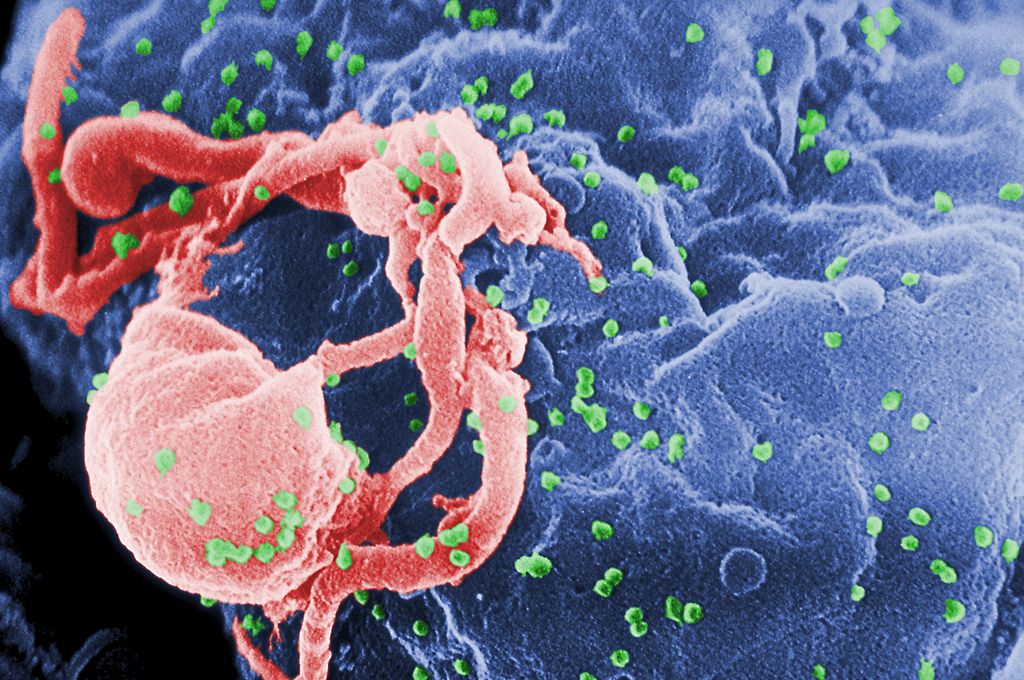
Scanning electron micrograph of HIV-1 (in green) budding from cultured lymphocyte. Multiple round bumps on cell surface represent sites of assembly and budding of virions. Photo Credit: Centers for Disease Control (CDC)
Scanning electron micrograph of HIV-1 (in green) budding from cultured lymphocyte. Multiple round bumps on cell surface represent sites of assembly and budding of virions.
Photo Credit: Centers for Disease Control (CDC)

AIDS burst onto the scene like a bat out of hell, wreaking havoc on an unsuspecting human population. First recognized in the early 1980s by the Centers for Disease Control and Prevention, better known as the CDC), AIDS went on to cause approximate 36 million deaths globally becoming one of the most devastating diseases in human history. But where did this affliction come from and what were the chain of events that led to the pandemic?

Through research findings in the late 1990s and mid 2000s, it is now commonly known that HIV originated somewhere in central Africa due to contamination from Apes. However, recently Nuno Faria from the University of Oxford, and an international research team, pinpointed exactly where in Africa HIV originated, when this occurred, and how the global pandemic resulted.
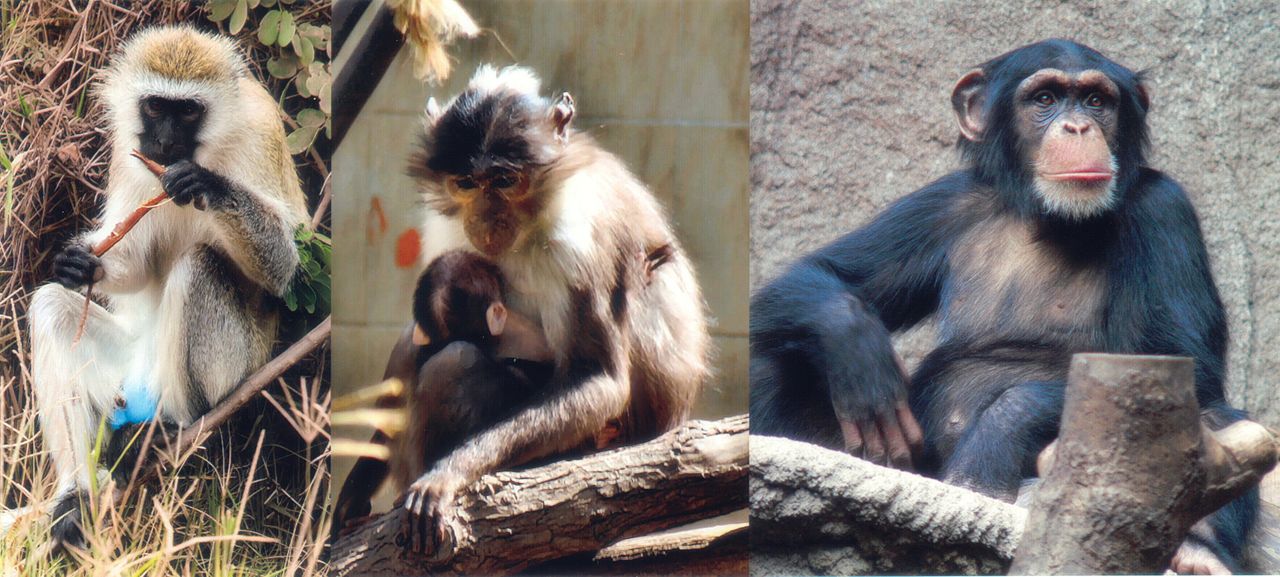
Left to right: the African green monkey source of SIV, the sooty mangabey source of HIV-2 and the chimpanzee source of HIV-1 Photo Credit:  Graham Colm
Left to right: the African green monkey source of SIV, the sooty mangabey source of HIV-2 and the chimpanzee source of HIV-1
Photo Credit: Graham Colm


Faria et al. recreated the genetic history of the epidemic using gene sequencing and phylogeographic techniques, determining that the scourge broke out in 1920 in Kinshasa, the capital of what is now the Democratic Republic of the Congo. They then compared this result with historical data to explain how from a single contamination by a chimpanzee HIV spread globally to humans, as the urbanization and the development of transport, particularly railways, made Kinshasa one of the most connected cities in Central Africa. At the end of the 1940s, over a million people passed through Kinshasa each year, and with the rise of prostitution in the city (some estimates purport that as many as 45% of female residents in Kinshasa were prostitutes) the conditions were ripe for the spread of the disease throughout the continent of Africa, and eventually the globe.

You can read more about this interesting history of the rise and dominance of HIV/AIDS in the official article that Faria and her colleague published in Science.

Happy FSF!!
Share this:

  • Share on Bluesky (Opens in new window) Bluesky
  • Share on Facebook (Opens in new window) Facebook
  • Share on Reddit (Opens in new window) Reddit
  • Share on Threads (Opens in new window) Threads
  • Share on WhatsApp (Opens in new window) WhatsApp
  • Share on Mastodon (Opens in new window) Mastodon

Related

Tags: Africa AIDS health HIV pandemic

Post navigation

❮ Previous Post: Marine Ecology via Remote Observation: an update from #ROV2PNG
Next Post: Agents of seal: stealthy seals use subsurface structures to sneak by sharks ❯

You may also like

Uncategorized
Fun Science FRIEDay – Cure for HIV?
May 19, 2017
Weekly Salvage
Climate change denial, open-science hardware, some missing pink dolphins, and more! Monday Morning Salvage: May 1, 2017
May 1, 2017
Uncategorized
Weekly dose of TED – Elizabeth Pisani: Sex, drugs and HIV — let’s get rational
May 14, 2010
Weekly Salvage
Eat hagfish, work at LUMCON, clone Vaquita, question floating trash collectors, and more! Monday Morning Mega-Salvage: August 13, 2018
August 13, 2018

Popular Posts

The story of the pride flag made from NASA imagery: Bluesky's most-liked imageThe story of the pride flag made from NASA imagery: Bluesky's most-liked imageSeptember 27, 2024David Shiffman
"Why Sustainable Seafood Matters" is now available for preorder! Here's what it's about, and why I decided to write it."Why Sustainable Seafood Matters" is now available for preorder! Here's what it's about, and why I decided to write it.June 8, 2026David Shiffman
I just told 850 shark scientists a hard truth: We’re not communicating shark conservation correctly.I just told 850 shark scientists a hard truth: We’re not communicating shark conservation correctly.June 1, 2026David Shiffman
What Ocean Ramsey does is not shark science or conservation: some brief thoughts on "the Shark Whisperer" documentaryWhat Ocean Ramsey does is not shark science or conservation: some brief thoughts on "the Shark Whisperer" documentaryJuly 2, 2025David Shiffman
Deep-sea Mining, Domestic Cats, Star Trek, and Ocean Exploration: Andrew's mid-year podcast round-up.Deep-sea Mining, Domestic Cats, Star Trek, and Ocean Exploration: Andrew's mid-year podcast round-up.June 6, 2026Andrew Thaler
Shark of Darkness: Wrath of Submarine is a fake documentaryShark of Darkness: Wrath of Submarine is a fake documentaryAugust 10, 2014Michelle Jewell
Why ocean science is still one of the worst-funded scientific fields worldwideWhy ocean science is still one of the worst-funded scientific fields worldwideJune 3, 2026Chris Parsons
That's not a blobfish: Deep Sea Social Media is Flooded by AI SlopThat's not a blobfish: Deep Sea Social Media is Flooded by AI SlopDecember 19, 2025Andrew Thaler
What is a Sand Shark?What is a Sand Shark?November 12, 2017Chuck Bangley
Here's how to join my IMCC8 symposium, "Ocean Science Communication: What's New and What's Next?"Here's how to join my IMCC8 symposium, "Ocean Science Communication: What's New and What's Next?"April 22, 2026David Shiffman
Subscribe to our RSS Feed for updates whenever new articles are published.

We recommend Feedly for RSS management. It's like Google Reader, except it still exists.

Southern Fried Science

  • Home
  • About SFS
  • Authors
  • Support SFS


If you enjoy Southern Fried Science, consider contributing to our Patreon campaign.

Copyright © 2026 Southern Fried Science.

Theme: Oceanly Premium by ScriptsTown