Skip to content

Southern Fried Science

Over 15 years of ocean science and conservation online

  • Home
  • About SFS
  • Authors
  • Support SFS

Misunderstood Marine Life # 6 – Jellyfish

Posted on October 3, 2011October 1, 2011 By Bluegrass Blue Crab 3 Comments on Misunderstood Marine Life # 6 – Jellyfish
Popular Culture, Science
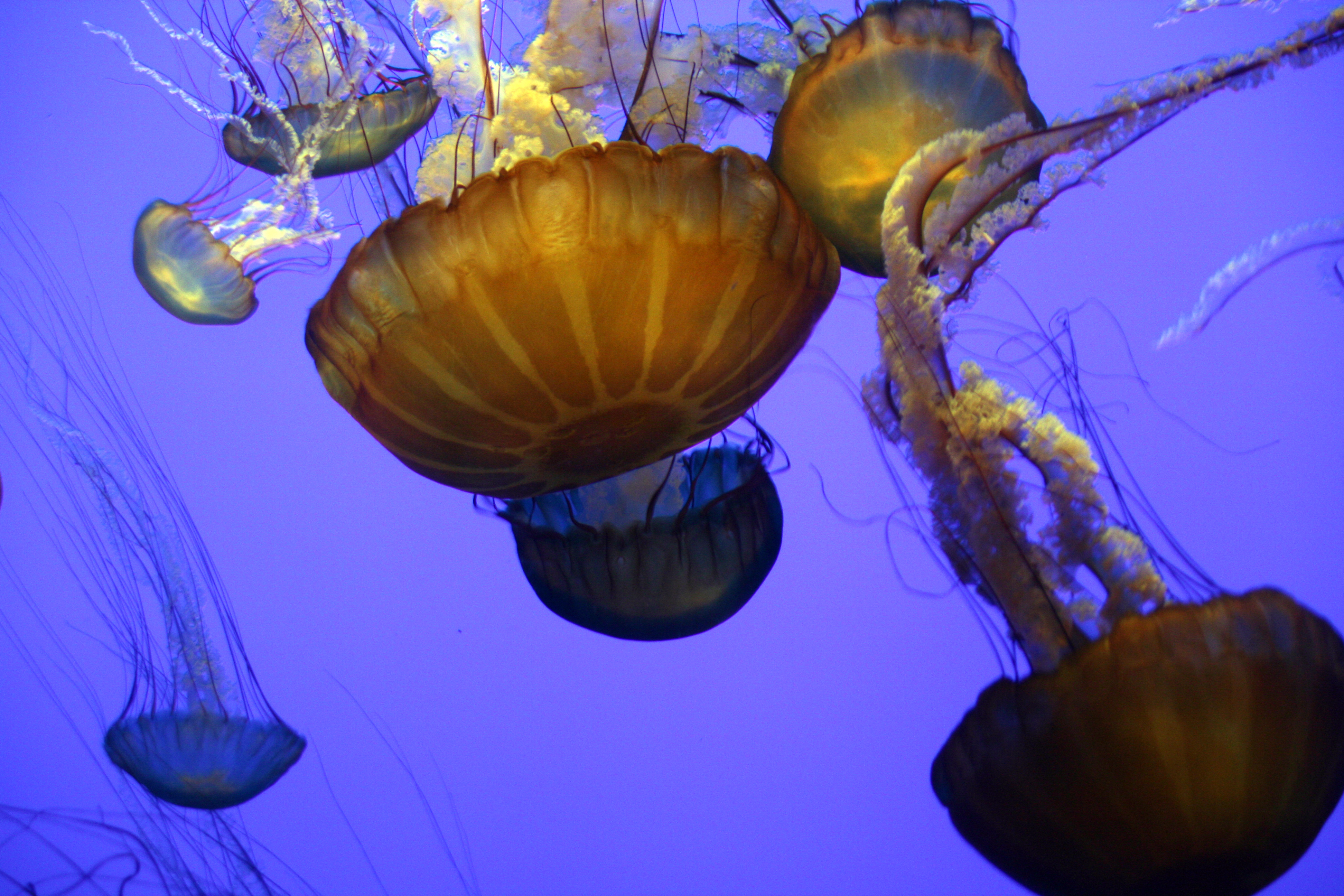
photo by Amy Freitag

“Yikes! It’s a jellyfish, get out of the water!”

I can’t remember how many times I heard this shriek from my friends as a kid around the end of July, when loads of comb jellies washed ashore, the casualties of their massive breeding efforts. Like most kids with a good poking toe, however, I figured out that these jellies couldn’t hurt me. For a number of reasons, not all jellyfish equal a painful sting.

Furthermore, like many sea creatures, they are symbolic of a beautiful greater ecosystem at work but often lead to squeaks and squeals of fear rather than smiles of appreciation. I’ll go so far to say that jellyfish are a good candidate to be a charismatic creature of the sea.

Jellyfish are the primary food source for the enigmatic sea turtle, and as such already part of the charismatic fauna of the ocean; it’s just a question of whether they receive credit for their support of the ecosystem. Besides providing a platform at the base of the ecosystem, jellyfish may also increase productivity of marine systems by stirring the water through their water-propelled swimming. And in many places, they enter the human food chain as well in the form of traditional Chinese and Japanese dishes such as the jellyfish salad often served at Chinese weddings. And their popularity as food is spreading.

Jellies are beautiful in their own right, not just because of the ecosystem services they provide. Watching their bells balloon rhythmically in and out propelling the jellyfish like ballerinas can keep my eyes glued to an aquarium for hours. In fact, the Georgia aquarium includes jellyfish t-shirts, stuffed animals, and other memorabilia in their gift shop so you can bring a piece of that beauty home along with your stuffed turtle or dolphin. The Monterey Bay aquarium has popular paperweight and window decoration (some glow-in-the-dark) containing glass jellyfish designs from local glassblowers. Proof that jellyfish can be the subject of some great art.

The number of jellyfish have been on the rise in recent years, though, theoretically linked to ocean acidification. As the pH of ocean water falls, shellfish and other competitors have a hard time building shells out of calcium that dissolves more easily in more acidic water. Therefore, the jellies are gaining an advantage and have resulted in annual summer blooms of jellyfish in many parts of the world, predominantly in warm, productive coastal and bay waters. Because of their rising numbers and rising position in popular culture, Smithsonian has dubbed them “The Next King of the Sea”. So next time you see one in your swimming hole, say hi, don’t run in fear.

Share this:

  • Click to share on Bluesky (Opens in new window) Bluesky
  • Click to share on Facebook (Opens in new window) Facebook
  • Click to share on Reddit (Opens in new window) Reddit
  • Click to share on Threads (Opens in new window) Threads
  • Click to share on WhatsApp (Opens in new window) WhatsApp
  • Click to share on Mastodon (Opens in new window) Mastodon

Related

Tags: charasmatic jellies misunderstood Smithsonian sting

Post navigation

❮ Previous Post: 10 misrepresentations about climate change
Next Post: Deep Fried Sea: The Lithodid Invasion ❯

You may also like

Uncategorized
365 days of Darwin: December 3, 2009
December 3, 2009
Uncategorized
365 days of Darwin: December 7, 2009
December 7, 2009
Uncategorized
365 days of Darwin: December 6, 2009
December 6, 2009
Uncategorized
365 days of Darwin: December 9, 2009
December 9, 2009

3 thoughts on “Misunderstood Marine Life # 6 – Jellyfish”

  1. AV Flox says:
    October 3, 2011 at 8:25 pm

    Jelly fish are my favorite creatures. When I was a child I found one washed ashore in the island where I grew up. Refusing to admit defeat, I fished it out in a bowl, named it Lakitu and proclaimed it my boyfriend. I eventually realized it was dead and buried it at sea, but the lover affair, so to speak, was just beginning.

  2. Ted says:
    October 4, 2011 at 12:39 pm

    I’ve never had a chance to eat a jellyfish. How are they fished? Do they reproduce fast enough to be widely used as a food source, or will it remain a more gourmet thing?

  3. Bluegrass Blue Crab says:
    October 4, 2011 at 1:17 pm

    I’m not sure how they’re fished, so can’t speak to that part of the question but I know it takes many individual jellies, generally dried for sale in the market, to really make a snack or meal. I’m guessing it’ll remain a gourmet thing.

Comments are closed.

Popular Posts

Shark scientists want their research to help save threatened species, but don’t know how. Our new paper can help.Shark scientists want their research to help save threatened species, but don’t know how. Our new paper can help.December 1, 2025David Shiffman
Norway and Cook Islands put their deep-sea mining plans on pause.Norway and Cook Islands put their deep-sea mining plans on pause.December 3, 2025Andrew Thaler
What Ocean Ramsey does is not shark science or conservation: some brief thoughts on "the Shark Whisperer" documentaryWhat Ocean Ramsey does is not shark science or conservation: some brief thoughts on "the Shark Whisperer" documentaryJuly 2, 2025David Shiffman
What we know we don't know: impacts of deep-sea mining on whales, dolphins, sharks, turtles, and other migratory species.What we know we don't know: impacts of deep-sea mining on whales, dolphins, sharks, turtles, and other migratory species.November 20, 2025Andrew Thaler
2025: My year in writing, public speaking, and media interviews2025: My year in writing, public speaking, and media interviewsDecember 3, 2025David Shiffman
The Trouble with Teacup PigsThe Trouble with Teacup PigsOctober 14, 2012Andrew Thaler
Urea and Shark OsmoregulationUrea and Shark OsmoregulationNovember 15, 2010David Shiffman
How tiny satellites are tracking marine wildlifeDecember 1, 2025Andrew Thaler
Shark of Darkness: Wrath of Submarine is a fake documentaryShark of Darkness: Wrath of Submarine is a fake documentaryAugust 10, 2014Michelle Jewell
Build a dirt cheap, tough-as-nails field computer in a Pelican caseBuild a dirt cheap, tough-as-nails field computer in a Pelican caseJuly 21, 2015Andrew Thaler
Subscribe to our RSS Feed for updates whenever new articles are published.

We recommend Feedly for RSS management. It's like Google Reader, except it still exists.

Southern Fried Science

  • Home
  • About SFS
  • Authors
  • Support SFS


If you enjoy Southern Fried Science, consider contributing to our Patreon campaign.

Copyright © 2025 Southern Fried Science.

Theme: Oceanly Premium by ScriptsTown