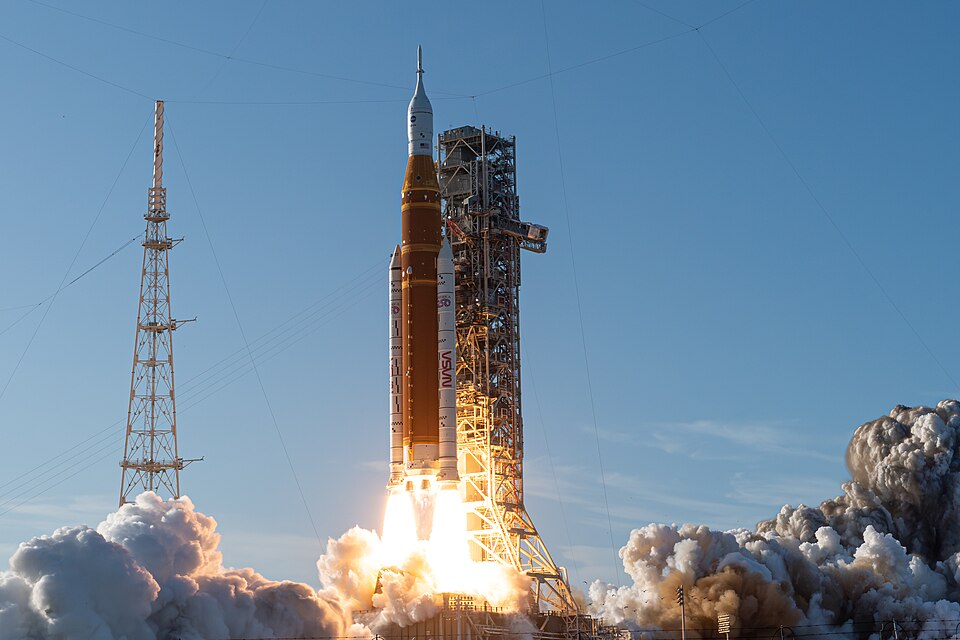
My social media this week was full of space. When Artemis I splashed down, the world watched in awe. When the James Webb Space Telescope unrolled its golden mirrors, it felt like a win for humanity. NASA has mastered the art of making space science matter to the public.
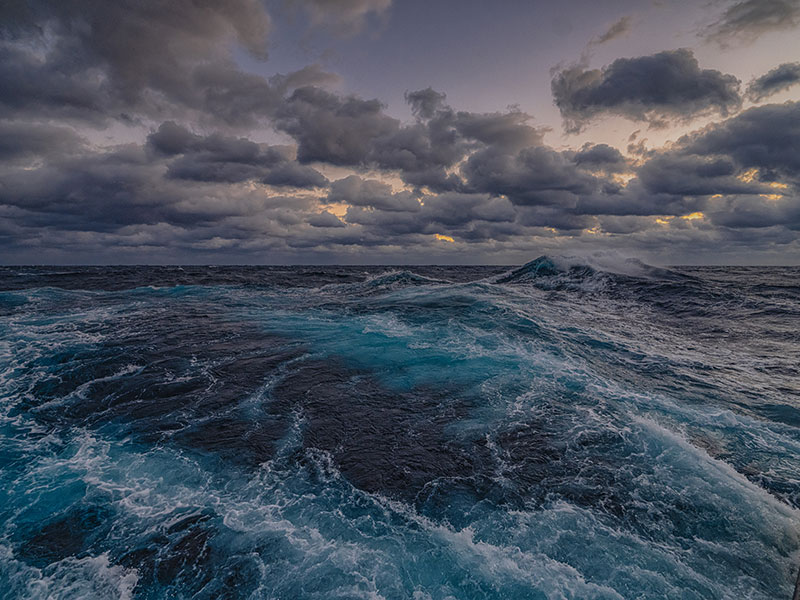
Meanwhile, ocean science (the study of the 70% of our own planet that keeps us alive) struggles to break out of the “Shark Week” bubble.
If we want to save the oceans, we need to stop acting like a niche academic field and start acting like a space agency to get the wider public to care about, and root for, scientific exploration.
Here’s how ocean science can borrow from NASA’s playbook …
We need our “Martian” moment
Space has The Martian, Interstellar, The Expanse and For All Mankind. These aren’t just hits; they are love letters to physics and space science. They make “doing the math” look cool. Even Project Hail Mary turns orbital mechanics into a page-turner.
In contrast, ocean movies are often scientific train wrecks. We get Sharknado or the fun, but physics-defying, Aquaman. While Avatar 2 gets a round of applause for visual splendor wrapped around a whale conservation message, we lack a grounded, gritty “hard sci-fi” equivalent for the deep sea.
The Fix: Oceanographers need to become consultants for the next big streaming hit. We need a show where a leak in a submersible at 4,000 meters is treated with the same tension as an oxygen scrub failure on the ISS. We need to show the world that the deep ocean isn’t just a place for monsters, it’s a high-stakes, high-tech laboratory.
Branding the unexplored
NASA doesn’t just “go to space.” They go to Mars. They go to Europa. They name their missions: Perseverance, Curiosity, Artemis.
Ocean science tends to name missions after the ships or the funding grants. “Cruise AT42-12” doesn’t capture the public imagination. “Project Poseidon: Journey to the Hadal Zone” does.
The Fix: Every major submersible dive to an unexplored trench should be framed as a “Voyage to an Alien World.” We need to stop talking about “data collection” and start talking about exploration.
The “launch” mentality
When NASA launches a rocket, it is a timed, televised event with a countdown. It creates a “where were you when” moment.
Deep-sea deployments are just as dramatic. Dropping a tethered ROV into a midnight-zone canyon involves immense engineering and nerves of steel. But usually, the only people watching are three grad students and a sleepy technician on a 2:00 AM watch.
The Fix: We need NASA-style mission control livestreams for every major expedition. We need professional communicators narrating the descent, explaining the pressure, and highlighting the stakes in real-time.
Science vs. spectacle
We have a “shark problem.” The public thinks ocean science is either:
- Tagging great whites.
- Sad polar bears on ice caps.
NASA highlights the weirdness of space, e.g., black holes, exoplanets, and shimmering nebulas. The ocean has hydrothermal vents, iridescent siphonophores, and brine pools that look like underwater lakes.
The Fix: We need to pivot our outreach from just throwing out scientific facts towards “to boldy go where no one has gone before”. Let’s highlight the extremophiles that could redefine how we look for life on Enceladus.
The unbearable lightness of the ocean science communications budget
The deep ocean is the most accessible “alien” environment we have. It is high-pressure, low-light, and filled with biological wonders that defy imagination.
NASA spends $40-$60 million on their public communications office. Also, an additional 1-2% of mission costs generally goes to outreach and publicity. This may not sound much, but for a $93 billion mission like Artemis, that is close to a billion dollars.
In comparison, in recent days NSF’s Geosciences office (which includes ocean and polar sciences) had just three communications staff. The whole agency had just two staff working on all of the social media platforms.
But ocean science doesn’t necessarily need NASA’s multi-billion dollar budget to win … although it would help … it needs NASA’s narrative and its willingness to try new and innovative outreach campaigns.
Instead of relying upon the poor grad student who’s pretty good at social media, with a budget that’s as deep as a moist tissue, the ocean science field need to get serious about funding outreach and selling ocean science as exciting, groundbreaking and inspirational.
We don’t need to reinvent the wheel, we just need to learn from NASA.