Skip to content

Southern Fried Science

Over 15 years of ocean science and conservation online

  • Home
  • About SFS
  • Authors
  • Support SFS

Recent Posts

small boy holding Miss Abyss Dumbo Octopus
Please Help This Little Dumbo Octopus Travel Across America
August 3, 2026
Isn’t ironic, don’t you think: dismantling the Ocean Observatories Initiative on World Oceans Day
June 9, 2026
My Journey Into Researching Historical Erasure on Public Lands
July 31, 2026
The next OpenCTD is here!
June 22, 2026
humpback whale in Antarctica
The evolution of the International Whaling Commission – from  whaling quotas to whale conservation
June 10, 2026
“Why Sustainable Seafood Matters” is now available for preorder! Here’s what it’s about, and why I decided to write it.
June 8, 2026

How much shark fin soup could you make from an adult megalodon?

Posted on April 26, 2014 By David Shiffman
Blogging

Carcharocles megalodon, commonly known as the megalodon, was likely the largest shark that ever lived. I say “was”, because despite claims by certain Discovery Channel “documentaries”, there is absolutely no doubt whatsoever that the megalodon is extinct and has been for millions of years.

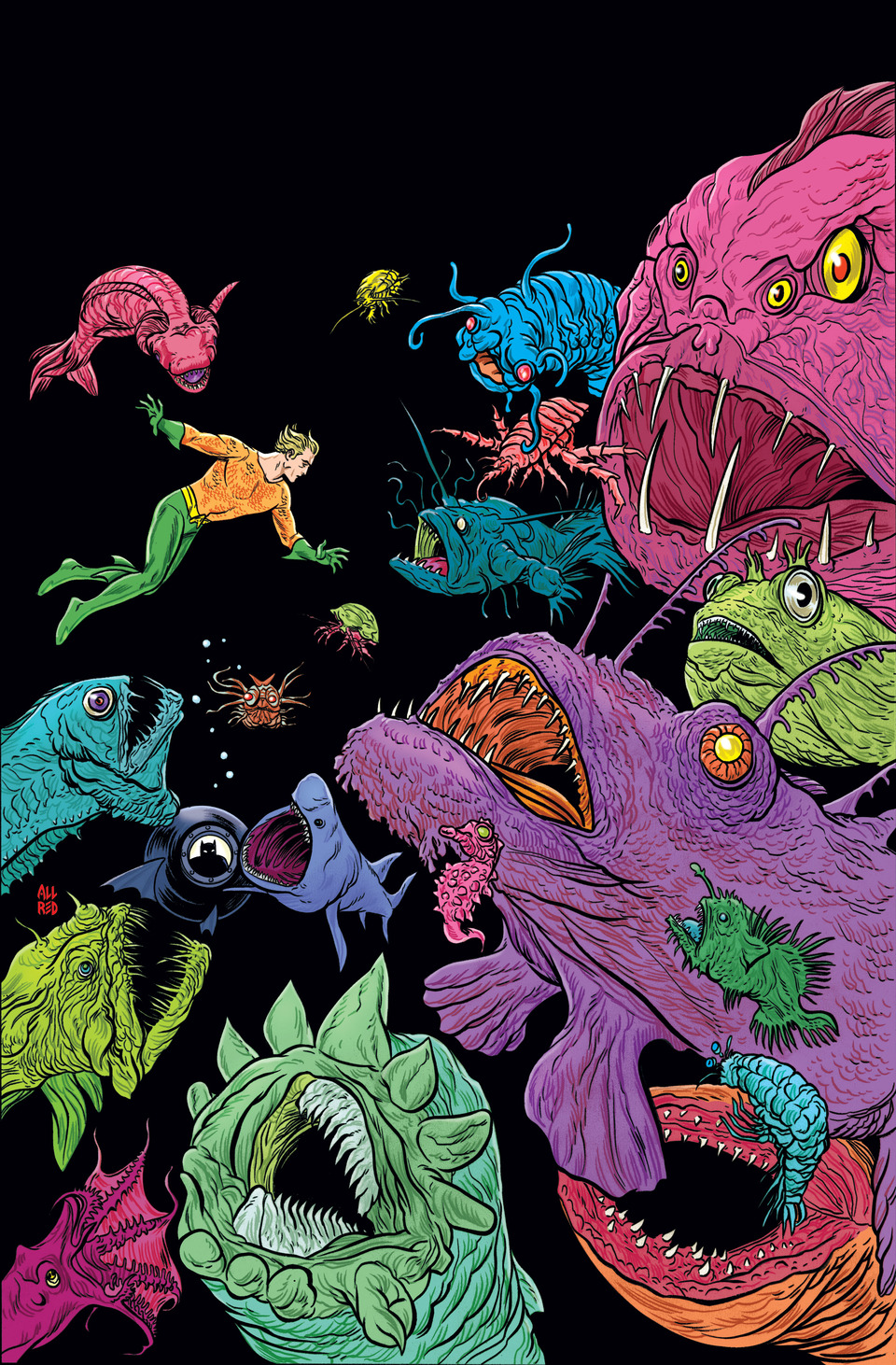
It isn’t surprising, though, that the largest shark that ever lived has such an impact on pop culture. Recently, we watched the latest in the spectacular “mega shark vs.” science fiction series, one of my favorite movie series based on extinct giant sharks coming back to life and wreaking havoc on the modern world.  The Southern Fried Scientist, who recently calculated how much Old Bay seasoning you’d need to properly cook the latest Aquaman villain,  asked me how much shark fin soup you could get from an adult megalodon.

Based on my calculations, the answer is about 70,000 bowls of shark fin soup, more than enough for everyone who lives in Greenland to have a bowl. Explaining where this number comes from can tell us a lot abTTout one of the most important ocean conservation issues facing the world today.

Read More “How much shark fin soup could you make from an adult megalodon?” »

It’s illegal for anglers to land hammerheads in Florida. It’s time that media coverage pointed that out.

Posted on April 24, 2014May 5, 2014 By David Shiffman 18 Comments on It’s illegal for anglers to land hammerheads in Florida. It’s time that media coverage pointed that out.
Conservation, Science

On January 1st, 2012, new Florida Fish and Wildlife Conservation Commission regulations came into effect, making it illegal for fishermen to land great, smooth, or scalloped hammerhead sharks in Florida waters. The legal term “land” is clearly defined in the Florida Code:

“Land,” when used in connection with the harvest of marine organisms, means the physical act of bringing the harvested organism ashore”

“Harvest” means the catching or taking of a marine organism by any means whatsoever, followed by a reduction of such organism to possession. Marine organisms that are caught but immediately returned to the water free, alive, and unharmed are not harvested”

 Florida code section 68B-44  (emphasis mine)

In other words, if a fish is brought out of the water, it is “landed”. If anglers stop the act of releasing a fish to measure it or take a photo, it is not “immediately released.”  If a fish isn’t  “immediately returned alive and unharmed” (and if the extremely physiologically stressful act of bringing a hammerhead out of the water results in it dying after release, it was not released “unharmed,”)  it is harvested. If you drag the shark out of the water and leave it there until it stops moving long enough that you feel safe to approach it, that is not an “immediately released” animal, and it isn’t an animal that is “released unharmed.”  Landing and/or harvesting hammerhead sharks is illegal. This is clear under the law, and has been confirmed by numerous consultations with an FWC Law Enforcement official.

Read More “It’s illegal for anglers to land hammerheads in Florida. It’s time that media coverage pointed that out.” »

Watch Mega Shark vs. Mecha Shark on Netflix Wednesday at 10 p.m., and tweet along with us!

Posted on April 22, 2014 By David Shiffman
Blogging

Mega Shark vs. Mecha Shark, the third installment of the amazing “Mega Shark vs.” series, is now on Netflix streaming! In 2009’s Mega Shark vs. Giant Octopus, a megaladon and a giant octopus were accidentally released by climate change, which led to a path of destruction around the world… until a scientific team involving Debbie Gibson … Read More “Watch Mega Shark vs. Mecha Shark on Netflix Wednesday at 10 p.m., and tweet along with us!” »

My five favorite responses to the Loch Ness Debunking.

Posted on April 21, 2014April 21, 2014 By Andrew Thaler 1 Comment on My five favorite responses to the Loch Ness Debunking.
Blogging

I didn’t expect a throw-away post I made last Friday debunking an alleged image of the Loch Ness Monster to go viral, but this is the internet and these things happen. As you might expect, my inbox, social media accounts, and this website have been inundated with comments about that post, how wrong I must be, what’s really going on, and why X theory is clearly the correct one. For the record, it’s still a boat wake, but in light of the amount of attention the post received, I updated it with a bit more information about how that image could occur.

With that out of the way, here are my five favorite responses to the latest Loch Ness Monster sighting:

Read More “My five favorite responses to the Loch Ness Debunking.” »

Collecting organisms to save their species

Posted on April 21, 2014April 21, 2014 By Guest Writer 3 Comments on Collecting organisms to save their species
Blogging, Conservation, Science

 ProsantaDr.Prosanta Chakrabarty is an Assistant Professor at Louisiana State University and an ichthyologist and evolutionary biologist. He is also Curator of Fishes at LSU’s Museum of Natural Science. You can learn more about him from his website www.prosanta.net and follow him on Twitter @LSU_FISH.

A recent piece in Science (Minteer et al. 2014) titled “Avoiding (Re)extinction” advocated avoiding collecting specimens for the sake of confirming the existence of a species. In lieu of killing and collecting the animal the authors suggest using “high-resolution photography, audio recording, and nonlethal sampling.” As a natural history curator of fishes I found this to be a pretty bad idea.

My PhD students (Bill Ludt and Caleb McMahan) in Costa Rica collecting specimens for their thesis projects. These guys better not just come back with pictures.

I don’t like killing animals, I was a strict vegetarian for 10 years (now I just eat sustainable seafood – hey, I live in Louisiana). I certainly wouldn’t want to endanger a species by over collecting it. I know of no scientific collectors who kill rare animals just so he or she can say they have it in their collections. We collect for a few simple reasons: because specimens are not available otherwise via loan, or additional specimens are needed for a comparative study, or because we need vouchers as evidence of the existence of the taxon.

I’ve collected rare species in the past, particularly some of the cavefishes I work on. For one of these species, Typhleotris mararybe, we collected the only two specimens we or anyone ever saw. We were in a very remote part of Madagascar and we were only allowed to collect two specimens from any given locality. I knew these individuals were part of a species new to science as soon as I looked at them. Did removing two samples place this species at risk of extinction? Guessing the population was much larger than what we found just at the surface, I would suppose not. What were we to do? Not collect them and just take pictures? We wouldn’t have been able to do the necessary comparative descriptive analysis to actually prove their novelty required by the ICZN (International Commission of Zoological Nomenclature). We collected these specimens so that we could formally describe this new and fantastic new species so that the world can be aware of their existence and so that measures can be put in place to conserve them and study them further.

Read More “Collecting organisms to save their species” »

Fun Science Friday – First Female Penis

Posted on April 18, 2014 By Kersey Sturdivant
Uncategorized

Happy Fun Science Friday.

You did not mistakenly read the title, today we bring you the discovery of the first female penis in the animal kingdom.

Mating insects of the genus Neotrogla. Photo Credit: Current Biology / Yoshizawa et al.
Mating insects of the genus Neotrogla.
Photo Credit: Current Biology / Yoshizawa et al.

Yoshizawa, from Hokkaido University in Japan, and his team of researchers documented this phenomenon of sexual role reversal in 4 species of rather unassuming insects in Brazil’s Peruaçu River Valley.  When insects of the genus Neotrogla mate, the female mounts the male and penetrates his vagina-like opening with her penis.

Read More “Fun Science Friday – First Female Penis” »

No, we didn’t find the Loch Ness Monster with Apple Maps

Posted on April 18, 2014April 21, 2014 By Andrew Thaler 30 Comments on No, we didn’t find the Loch Ness Monster with Apple Maps
Uncategorized

It’s been a long time since we’ve had a good debunking-random-monster-sighting post. The ready availability of global satellite image databases is a powerful tool for exploration and monitoring but has also led to a boom in pseudoscience “discoveries” by people not familiar with how these images are produced or just willing to suspend disbelief for their pet woo.

This morning my inbox exploded with articles about the definitive Loch Ness monster sighting. The accompanying image is a low-resolution satellite image of a boat wake, available, apparently, only on Apple Maps. There’s really no deconstruction needed, it’s a boat wake. Compare this image from Loch Ness:

Nessie? No.
Nessie? No.

Read More “No, we didn’t find the Loch Ness Monster with Apple Maps” »

Help the producers of SharkNado 2 support our shark conservation research!

Posted on April 9, 2014 By David Shiffman
Uncategorized

Last fall, I received an e-mail from a representative of one of my favorite companies: the Asylum, the film studio that brought you such cinematic masterpieces as “MegaShark vs. Giant Octopus,” “MegaShark vs. Crocosaurus,” and, of course, “SharkNado.” Following the spectacular success of SharkNado, they were interested in supporting shark science and conservation. After months … Read More “Help the producers of SharkNado 2 support our shark conservation research!” »

Distracted by abstracts: Tips for writing a good abstract for a scientific conference

Posted on April 7, 2014September 2, 2014 By Chris Parsons 4 Comments on Distracted by abstracts: Tips for writing a good abstract for a scientific conference
Blogging, Science

ParsonsDr. Chris Parsons has been involved in whale and dolphin research for over two decades and has been involved in research projects in every continent except Antarctica. Dr. Parsons is an Associate Professor at George Mason University as well as the undergraduate coordinator for their environmental science program. He’s a member of the scientific committee of the International Whaling Commission (IWC), has been involved in organizing the International Marine Conservation Congress (IMCC) (the world’s  largest academic marine conservation conference) and is currently the Conference Chair and a Governor of the Society for Conservation Biology. In addition, Dr. Parsons has published over 100 scientific papers and book chapters and has written a textbook on marine mammal biology & conservation.

I have just read and reviewed through close to 100 scientific abstracts for a conference, and my main conclusion is that ” ‘abstract’ – this does not mean what you think it means!”

An abstract is supposed to be a concise summary of your entire paper or study. Basically a written version of the 30 second “elevator pitch”. In these days of information overload there is so much emphasis on publishing, and so many journals willing to accommodate, the number of articles in scientific fields has increased rapidly. As a result, academics are increasingly reading no further than the abstract, and often only reading the title. To test this I looked at some of my papers where the website they were hosted by kindly provided statistics on abstract page views and actual download rates. The download rates were approximately only 10% that of the abstract views across the papers (and I am naively hopeful that at least some of a downloaded paper will be read). The figures were similar for other articles, so it wasn’t just my papers. So 90% of people who see your work probably won’t go beyond your abstract. This makes it vitally important that all the information you want to convey about your work is in the abstract.

However, in a frighteningly high proportion of abstracts the key results and conclusions of studies are not even mentioned. One of the abstracts I read in this latest batch noted that the methods, results  and the conclusions of the study “would be discussed”. As an abstract this is useless. Too frequently place holder abstracts are submitted to conferences, with the assumption that results will magically appear before the meeting. But if you don’t manage to get that analysis done, you’ll be giving a presentation that will be lacking, will embarrassing you and damage your career. Moreover, a lot more people will see your abstract than will actually get to your presentation, so professional opinions may be made on you by the quality of your abstract rather than the final presentation. Plus abstract books are physical entities, whether electronic or hard copy, and will be around a lot longer than your 10 minute presentation.   So for your professional image and also for the sake of communicating your study it is in your interests to produce a good abstract.

With that in mind, here are some suggestions on abstract structure.

Read More “Distracted by abstracts: Tips for writing a good abstract for a scientific conference” »

Deep sea sharks: Do they survive?

Posted on April 2, 2014 By Guest Writer
Conservation, Science

BrendanBrendan Talwar is a graduate student at the Florida State University Coastal & Marine Lab studying Ecology and Evolution. Hispast experiences in diverse marine ecosystems have led to his current research interests in deep sea fisheries management. His thesis work will take place in the Gulf of Mexico and Exuma Sound while working closely with collaborators at the Cape Eleuthera Institute and The Island School, where he will use this project to teach an Applied Research course. 

Imagine it is a crisp, sunny, warm spring day and you’re out on the flats hoping a trout rips your topwater minnow to pieces. Out of a deep pocket fringed by oyster bars, a fish erupts from the mirrored surface and engulfs your bait. You win the fight, measure and bag the yellow-mouthed speckled trout, and repeat.

An hour later, you snag an undersized mackerel near the gills and reel it in for a few photos before throwing it back under the assumption that it will survive, grow, and eventually reproduce. You keep fishing and hope for the best, but find yourself wondering if it truly survived until the end of the day. What if it didn’t? Well, you didn’t mean to catch the fish. You didn’t mean for it to experience a fight-or-flight response, for its blood pH to drop, or for its lactic acid to build up. You were targeting 15” trout, and catching the mackerel was an accident. If the fish didn’t survive, then your daily catch represents a greater impact on local fish populations than the simple number you took home for supper.

Read More “Deep sea sharks: Do they survive?” »

Posts pagination

Previous 1 … 110 111 112 … 275 Next

Popular Posts

What Ocean Ramsey does is not shark science or conservation: some brief thoughts on "the Shark Whisperer" documentaryWhat Ocean Ramsey does is not shark science or conservation: some brief thoughts on "the Shark Whisperer" documentaryJuly 2, 2025David Shiffman
Zombie ideas in conservation: trophy hunting and conservationZombie ideas in conservation: trophy hunting and conservationAugust 6, 2026Ali Gaster
What is a Sand Shark?What is a Sand Shark?November 12, 2017Chuck Bangley
Ten very bad, no good things the latest Trump Administration has done to the oceansTen very bad, no good things the latest Trump Administration has done to the oceansAugust 14, 2026Ali Gaster
Shark of Darkness: Wrath of Submarine is a fake documentaryShark of Darkness: Wrath of Submarine is a fake documentaryAugust 10, 2014Michelle Jewell
Is Academic Publishing is breaking conservation science?Is Academic Publishing is breaking conservation science?August 10, 2026Chris Parsons
Considering writing a popular science book? Here's my adviceConsidering writing a popular science book? Here's my adviceJuly 7, 2025David Shiffman
How the Bluespotted Ribbontail Stingray got its SpotsHow the Bluespotted Ribbontail Stingray got its SpotsMarch 28, 2024David Shiffman
That's not a blobfish: Deep Sea Social Media is Flooded by AI SlopThat's not a blobfish: Deep Sea Social Media is Flooded by AI SlopDecember 19, 2025Andrew Thaler
Emergency room conservation: why waiting for the Endangered Species Act to save a species is a fiscal disasterEmergency room conservation: why waiting for the Endangered Species Act to save a species is a fiscal disasterAugust 11, 2026Ali Gaster

squishy

Subscribe to our RSS Feed for updates whenever new articles are published.

We recommend Feedly for RSS management. It's like Google Reader, except it still exists.

Southern Fried Science

  • Home
  • About SFS
  • Authors
  • Support SFS


If you enjoy Southern Fried Science, consider contributing to our Patreon campaign.

Copyright © 2026 Southern Fried Science.

Theme: Oceanly Premium by ScriptsTown