
Uncategorized
Yes, we’re excited. httpv://www.youtube.com/watch?v=7USRlfofMPs
Over 15 years of ocean science and conservation online
Yes, we’re excited. httpv://www.youtube.com/watch?v=7USRlfofMPs
I am really excited to announce that our friends over at the Beneath the Waves Film Festival have made their official selections for the 2012 event to be held this Friday at the 41st Benthic Ecology Meeting in Norfolk, Virginia.Now in its third consecutive year, this unique student run science communication event solicits films from … Read More “Beneath the Waves Film Festival is this Friday, check out the official list of films” »
Speechless. httpv://www.youtube.com/watch?v=vrvg33vkdFI Open thread to discuss… whatever this is. Related – Truax, a flooring company’s bizarre re-interpretation of the Lorax.
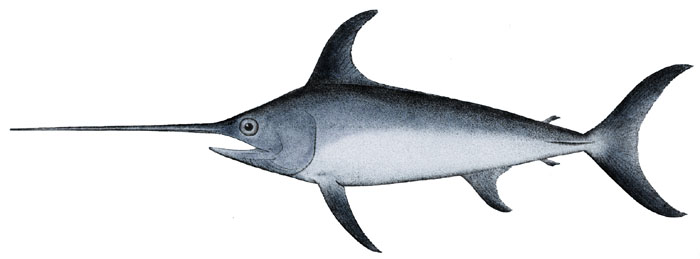
A press release circulating on Twitter, which claims that a “deadly expansion” of a California fishery will negatively affect critically endangered leatherback sea turtles, has been making waves in the marine conservation and fisheries communities, inspiring a series of interesting discussions. Is it better to buy US-caught seafood with some bycatch than foreign-caught seafood from fleets with less strict environmental regulations? Is the current “Pacific leatherback conservation area”, a large region of the ocean where no fishing is allowed, too much of a restriction on U.S. fisheries? Can there be a balance between fisheries and conservation? I invited Jonathan Gonzalez, a California graphic designer with a strong interest in marine conservation issues, to write a guest post about the swordfish fishery in question. You can follow him on Twitter here, and he’s happy to answer your questions about this issue in the comments section of this post. In addition to his graphic design work, Jonathan has served as the assistant director of the Santa Barbara Marine Mammal center, and has worked with the California Shark Coalition to gather support from fishermen for the state’s recent ban on shark fins.
by Jonathan Gonzalez
Fisheries are complicated and often misunderstood. We often see conflicting information about what fish we should or should not eat and we see general statements about certain gear types that over simplify an extremely complex issue. But don’t be discouraged, learning about fisheries can be very fun and can lead to eating seafood with confidence, free of any guilt or confusion. One particular fishery I want to talk about that is not only complicated, but in my opinion it is California’s most misunderstood fishery. I’m talking about the drift gillnet (DGN) fishery for swordfish and common thresher sharks (CTS). Swordfish, CTS and mako sharks caught in Hawaiian set longlines are also landed in California, but I am not going to talk about that here. I am going to focus on the DGN fishery because this fishery has been in the headlines a bit lately because of recent motions that were voted on at a Pacific Fisheries Management Council (PFMC) meeting. Here is a press release you may have seen that in my opinion is full of factual errors and a few downright slanderous statements. I’m not going to point them all out and I’m not going to try to tell you what to do. Instead I am going to give you some background about the fishery and provide you with information that will hopefully help you to make an informed decision for yourself.
Read More “Good intentions and negative transfer effects: The California swordfish fishery” »
 What do you think of when you picture a fish dinner? A fancy anniversary meal atop a seaside bluff at sunset? Or a staple food, eaten daily as part of the subsistence diet of coastal community members? Seafood is a strange commodity because depending on how you answered that question, you’re right. Seafood occupies multiple rungs of the economic ladder. But the most common consumer is the middle-class, which is shrinking in the US but growing worldwide. So what does a changing seafood consumer base mean for which types of seafood we should increase through aquaculture? Here’s a few thoughts from the keynote speaker at the NC Aquaculture Development Conference, Travis Larkin from Seafood Exchange.
Read More “Aquaculture in NC: Providing for the rich or the masses?” »
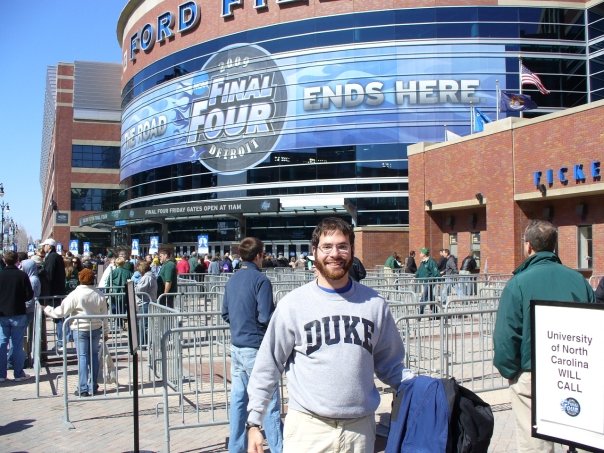
 This weekend was Selection Sunday, the annual revealing of brackets for the NCAA men’s basketball tournament and the official start of “March Madness”. This year’s field of 68 teams features some incredible basketball talent, some heartwarming stories of individuals and teams overcoming adversity… and quite a few schools which use threatened or endangered species as mascots. As I am a huge college basketball fan in addition to being a conservationist, I couldn’t resist a quick tour.
South region:
#11 Colorado
Mascot: Buffaloes. Considered “Near Threatened” by the IUCN Red List, American bison are iconic of the U.S. conservation movement.
First game: Thursday at 9:57 vs. the #6 UNLV Running Rebels
Expected outcome: Though 6/11 games are often popular picks for upsets, we can expect that not too long from now, Colorado’s fans will speak fondly about the time that their team used to roam the plains of the NCAA tournament in huge numbers.
#3 Baylor
Mascot: Bears (specifically black bears), which Baylor University keeps several of in captivity. According to the bear program’s website, ” Texas [where Baylor University is located] has a population of 50 North American Black Bears, and is an endangered species within the state of Texas. Nationally, bears are not endangered and have a strong, viable population.”
First game: Thursday at 7:27 vs the South Dakota State Jackrabbits (species not specified, though most North American jackrabbits are IUCN “Least Concern”.
Expected outcome: About what you’d expect from a fight between a bear and a rabbit (when running away isn’t an option).
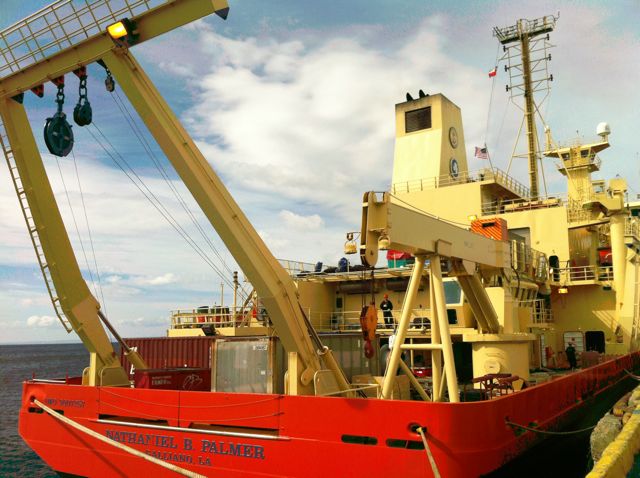
Megumi Shimizu is a graduate student studying microorganisms in marine sediment. She is currently on board the RVIB Nathaniel B. Palmer exploring seafloor communities in a once ice-covered region beneath the Larsen Ice Shelf. Over the next month, she will be updating us from the field.

I’m a PhD student interested in microorganisms and biogeochemistry of marine sediments; how the metabolisms of microorganisms interacting with the surrounding environment, the chemical components in sediments. Microorganisms in subseafloor are universally important because of its large biomass. It is said 50% of prokaryotes are living under the seafloor. This biomass makes large carbon and nutrients reservoir, which are important in biogeochemical cycle. For example, microorganisms play the role of organic carbon decomposition in sediments, as a result, carbon dioxide and methane are produced. In contrast, carbon dioxide and methane are also consumed by microorganisms called chemolithotrophs and methanotrophs in sediments. Therefore, understanding microorganisms in sediments; who they are, what are they doing, is important to reveal the details of global biogeochemical cycle and accurate estimate of budgets (amount of elements converted to different forms of chemicals for example, amount of carbon dioxide converted into organic carbon by carbon fixation). In addition, how microbial community response to environmental changes such as climate warming is also important in terms of the influence of global elemental cycles.
In which James Cameron makes my week awesome: httpv://www.youtube.com/watch?v=0mBG0LbAoqk&feature=player_embedded Also covered at Deep Sea News and Sea Monster.
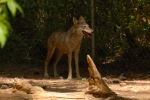
The recently-released movie “The Grey” tells the story of a pack of wolves that hunts the survivors of a plane crash. In addition to both being the subject of inaccurate and negative media portrayals, wolves and sharks share many ecological similarities (sharks have been called “the wolves of the sea”). A panel of wolf scientists and conservation experts agreed to answer my questions about these animals and their thoughts on how “The Grey” might impact their conservation.
Dr. Sylvia Fallon is a senior scientist with the Natural Resources Defense Council. She has worked for the American Association for the Advancement of Science, the Environmental Protection Agency, and the National Park Service.
DeLene Beland is an independent science writer whose work has been featured by the Charlotte Observer, Earth Magazine, and Wildlife in North Carolina. She blogs at Wild Muse, and is the author of an upcoming book about wolves in the Eastern United States.
Cristina Eisenberg is a Ph.D. student at Oregon State University. Her dissertation focuses on the ecological effects of the loss of wolves from forest ecosystems.
 Last week I flew out to Salt Lake City for the bi-annual Ocean Sciences meeting, bringing together 4300 scientists from around the world to discuss the current state of the ocean and present their latest findings. To mark the occasion and pass the time on a series of long flights, I loaded my kindle with my latest addiction, Amazon singles – short form ebooks, longer than a standard article, but shorter than a full book (and really convenient for an hour layover). In honor of the Oceans meeting, the flavor of the downloaded books was disaster and survival at sea.