


Skip to content

Southern Fried Science

Over 15 years of ocean science and conservation online

  • Home
  • About SFS
  • Authors
  • Support SFS

Recent Posts

We Asked IMCC7 Attendees What Ocean Conservation Needs. Here’s What They Said.
November 5, 2026
Researching Historical Erasure on Public Lands
July 31, 2026
5 things I learned helping to reassess the global conservation status of every species of tuna and billfish
September 15, 2026
Key takeaways from my Convention on Migratory Species report on fish aggregating devices in the Mediterranean Sea
September 3, 2026
Jabberwocks and Snallygasters: teaching environmental education with monsters, mayhem, and dice.
August 31, 2026
The conservation impacts of recreational fishing
August 25, 2026

America’s lust for gigantic breasts leads to impotence: the population genetics of captive-reared turkeys

Posted on November 23, 2011November 27, 2013 By Andrew Thaler 2 Comments on America’s lust for gigantic breasts leads to impotence: the population genetics of captive-reared turkeys
Conservation, Science

Gobble? image from http://www.public-domain-image.com

The noble turkey, a centerpiece of the American Thanksgiving supper. It looms large from its prominent position on the dining room table. The master of ceremonies – or, in my case, the guy who keeps slicing himself open with various sharp objects yet is inexplicably the one people call on when there’s knife-work needs doing – draws a set of fine, honed knives, set aside for this particular task, and carves, delicately yet firmly, into the hefty white meat of the turkey’s breast. Sure, some favor the dark, rich meat around the legs, but this white meat, soaked in gravy and topped with cranberry sauce or stuffing, that is what we crave.

“We give thanks,” the benediction may begin, “to Charles Darwin, for determining the underlying mechanism by which a theropod may, over the course of 65 million years, through a process of gradual change by means of the retention of beneficial traits through successive generations, evolve into this delicious, delicious bird.” And then, perhaps, that surly teenager, the one determined to point out the social inequalities inherent in the holiday and the colonialist attitudes which led to the wholesale extermination of America’s native peoples – every family has at least one – will chime in to quip “you know, evolution didn’t shape the turkey. The modern Thanksgiving turkey is the product of an extensive selective breeding program that began in the 1940’s. Commercial turkeys can’t even reproduce naturally, they have to be artificially inseminated.” At which point the older members of your family may blush and/or faint at such an unseemly turn of phrase.
Read More “America’s lust for gigantic breasts leads to impotence: the population genetics of captive-reared turkeys” »

Rise of the Shark Whisperer

Posted on November 23, 2011December 9, 2011 By Andrew Thaler
Uncategorized

Another day dawns and David Shiffman remains in first place, though his lead is rapidly shrinking! Go vote for David Shiffman! Go vote for sharks! Go vote for more hilariously embarrassing pictures of the man many would call Shark Whisperer!

European Union officials propose stronger finning ban, sign UN migratory shark initiative

Posted on November 22, 2011December 9, 2011 By David Shiffman
Science

Two pieces of good news for European sharks were announced yesterday.  The European Union signed the UN Convention on Migratory Species (CMS) Memorandum of Understanding for sharks. This MOU was established last year to support the conservation of seven shark species which regularly migrate between national boundaries, a list which includes great whites and whale sharks. … Read More “European Union officials propose stronger finning ban, sign UN migratory shark initiative” »

Because you love the way we science for science…

Posted on November 22, 2011December 9, 2011 By Andrew Thaler 5 Comments on Because you love the way we science for science…
Uncategorized

…David has regained the first place position, with a small but comfortable lead over second place (who, by the way, also writes a fantastic immunology blog). As an added incentive to keep it that way, here’s a wholly inexplicable picture of David: Remember to vote here every 24 hours.

#SciFund Ocean Update

Posted on November 21, 2011December 9, 2011 By Andrew Thaler
Uncategorized

In case you were worried that in the wake of David’s quest for a blogging scholarship has distracted us from other philanthropic adventures, fear not, #SciFund is alive and well (and halfway done). For those just tuning in #SciFund is a month-and-a-half long initiative to raise funds for a variety of scientific research projects. Project leaders post a project … Read More “#SciFund Ocean Update” »

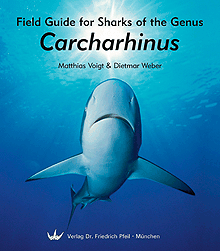
Guest Post: A review of the Field Guide for Sharks of the Genus Carcharhinus

Posted on November 21, 2011December 9, 2011 By Guest Writer
Science

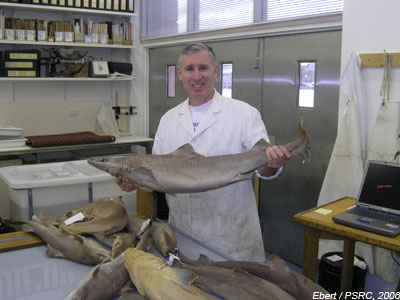
Dr. David Ebert is the Director of the Pacific Shark Research Center at Moss Landing Marine Laboratories. He is one of the world’s leading experts on shark taxonomy, and has described new species of sharks, skates, rays, and chimaeras. Dr. Ebert has written over 100 publications, five books, and dozens of IUCN Red List assessments. He generously agreed to review a new taxonomy guide, Field Guide for Sharks of the Genus Carcharhinus, for Southern Fried Science. He has provided a thorough list of citations backing up his points, but all opinions are his own. 

The shark genus Carcharhinus is one of the largest and perhaps most important genera of sharks, with many common and wide-ranging species. These sharks are mostly marine occurring from close inshore to the outer continental shelf and upper slope, but a few species inhabit estuaries and freshwater rivers and lakes. This group is by far one of the most important shark genera for fisheries globally, with various species being taken in commercial and sport fisheries, and in artisanal fisheries. Given the high profile and importance of this genus and the associated problems in identifying them to individual species in the field, an identification guide to the group would be most welcomed.

The book, “Field Guide for Sharks of the Genus Carcharhinus” by Matthias Voigt and Dietmar Weber, could have been that guide, with an exceptionally nice layout, beautiful illustrations, and tooth plates, but unfortunately the text does not stand up to the same high quality of the illustrations. The book cover is quite attractive and eye-catching, and upon initially thumbing through the illustrations and layout of the individual species accounts, I thought wow this looks to be an interesting and possibly useful guide to this shark group, even though I was unfamiliar with the authors, whom to be candid I had never heard of before.

Read More “Guest Post: A review of the Field Guide for Sharks of the Genus Carcharhinus” »

David Shiffman is not in the lead…

Posted on November 21, 2011December 9, 2011 By Andrew Thaler
Uncategorized

…and that needs to change. If you haven’t voted for David yet today, go vote now. You know you want to see hilariously embarrassing pictures of him. Until then, enjoy this semi-fictional mini-biopic of David’s love affair with the shark: httpv://www.youtube.com/watch?v=92yHyxeju1U

Conservation and the American Ginseng

Posted on November 20, 2011December 9, 2011 By Andrew Thaler 2 Comments on Conservation and the American Ginseng
Conservation

Ginseng, the ubiquitous, all-encompassing darling of the alternative medicine and natural health movements, itself a stocky, unassuming root, is in trouble. Prized as a curative additive in everything from sports drinks to dietary supplements, the vast majority of commercial ginseng is farmed in two Canadian provinces and Wisconsin. While commercial stocks remain robust, it is wild ginseng that fetches the highest market price, up to $1,200 a pound, and is used in some high-end ginseng containing products and traditional and alternative medicines. The leading exporter of wild ginseng is the United States, where 85,000 pounds are legally harvested and exported primarily to Hong Kong every year.

Read More “Conservation and the American Ginseng” »

Important blogging scholarship update: All votes reset to zero and you can now vote every day!

Posted on November 18, 2011December 9, 2011 By David Shiffman 2 Comments on Important blogging scholarship update: All votes reset to zero and you can now vote every day!
Uncategorized

Earlier tonight, I received an e-mail from the Blogging Scholarship organizers indicating that there have been some irregularities with the voting. In response, they have reset all votes to zero and have changed the rules. Everyone may now vote once every day, and the voting period has been extended one full week until November 30th. … Read More “Important blogging scholarship update: All votes reset to zero and you can now vote every day!” »

Vote for me in the blogging scholarship and support our shark conservation research!

Posted on November 17, 2011December 9, 2011 By David Shiffman 4 Comments on Vote for me in the blogging scholarship and support our shark conservation research!
Uncategorized

Yesterday, I asked for your support and vote in the 2011 Blogging Scholarship. Since that time, over 7,000 of you have voted for me, and as of this writing, I am in the lead! Thanks for your help and encouragement. Andrew announced earlier today that for every day I’m in the lead, he’ll post an embarrassing picture of me. For many of you, that’s incentive enough to vote for me. However, I also want to tell you what I would use the $10,000 scholarship for if I won.

In addition to boring stuff like tuition, supplies, and travel support, for my own dissertation (assessing the ecological importance of sharks to coral reefs) , I will use the money to support our lab’s ongoing shark conservation research. My lab, the RJ Dunlap Marine Conservation Program at the University of Miami, has many shark research projects taking place. Yesterday, some of that research was used by the Florida Fish and Wildlife Conservation Commission as background in their decision to make hammerheads (great, smooth, and scalloped) and tiger sharks protected species in Florida waters- a proud moment for us and for the Abess Center for Ecosystem Science and Policy, which we are affiliated with.

Read More “Vote for me in the blogging scholarship and support our shark conservation research!” »

Posts pagination

Previous 1 … 157 158 159 … 277 Next

Popular Posts

Getting a sense of porpoiseJanuary 20, 2009Andrew Thaler
This is the worst academic presentation in the world ... tributeApril 23, 2015Chris Parsons
That's not a blobfish: Deep Sea Social Media is Flooded by AI SlopThat's not a blobfish: Deep Sea Social Media is Flooded by AI SlopDecember 19, 2025Andrew Thaler
Have we found the city of Atlantis?Have we found the city of Atlantis?September 1, 2026Chris Parsons
Shark of Darkness: Wrath of Submarine is a fake documentaryShark of Darkness: Wrath of Submarine is a fake documentaryAugust 10, 2014Michelle Jewell
What Ocean Ramsey does is not shark science or conservation: some brief thoughts on "the Shark Whisperer" documentaryWhat Ocean Ramsey does is not shark science or conservation: some brief thoughts on "the Shark Whisperer" documentaryJuly 2, 2025David Shiffman
Soon may the explainer come: Everything you’ve always wanted to know about sea shanties but were afraid to askSoon may the explainer come: Everything you’ve always wanted to know about sea shanties but were afraid to askNovember 22, 2022David Shiffman
The 45 most influential female ecologists alive today according to twitterThe 45 most influential female ecologists alive today according to twitterFebruary 10, 2014Guest Writer
No, harassing a shark for fun is not ethically equivalent to scientific research that helps conserve a speciesNo, harassing a shark for fun is not ethically equivalent to scientific research that helps conserve a speciesMarch 26, 2014David Shiffman
Our favorite sea monsters – Ningen (#4)Our favorite sea monsters – Ningen (#4)September 7, 2010Andrew Thaler

squishy

Subscribe to our RSS Feed for updates whenever new articles are published.

We recommend Feedly for RSS management. It's like Google Reader, except it still exists.

Southern Fried Science

  • Home
  • About SFS
  • Authors
  • Support SFS


If you enjoy Southern Fried Science, consider contributing to our Patreon campaign.

Copyright © 2026 Southern Fried Science.

Theme: Oceanly Premium by ScriptsTown