
Skip to content

Southern Fried Science

Over 15 years of ocean science and conservation online

  • Home
  • About SFS
  • Authors
  • Support SFS

Recent Posts

small boy holding Miss Abyss Dumbo Octopus
Please Help This Little Dumbo Octopus Travel Across America
August 3, 2026
Isn’t ironic, don’t you think: dismantling the Ocean Observatories Initiative on World Oceans Day
June 9, 2026
My Journey Into Researching Historical Erasure on Public Lands
July 31, 2026
The next OpenCTD is here!
June 22, 2026
humpback whale in Antarctica
The evolution of the International Whaling Commission – from  whaling quotas to whale conservation
June 10, 2026
“Why Sustainable Seafood Matters” is now available for preorder! Here’s what it’s about, and why I decided to write it.
June 8, 2026

Biodiversity Wednesday: Flesh eaters of the Savanna

Posted on February 16, 2011February 16, 2011 By Andrew Thaler
Uncategorized

Red-cockaded Woodpecker in Croatan Forest. Photograph by Andrew David Thaler.

The wet, temperate understory of a longleaf pine savanna, is not the first place one would thing to search for some of nature’s most fearsome predators. These maritime ecosystems stretch down the Atlantic seaboard, from southern Virginia to northern Georgia, but are most common in North and South Carolina. Boomerang-shaped bays, called Carolina bays, formed behind ancient sand dunes, provide the foundation for these biodiversity rich regions. More than 50 endangered species are native to the Carolina lonfleaf pine savannas, including the Cape Fear Threetoothed land snail and the iconic Red-cockaded Woodpecker, but among the most evocative inhabitants of these pocosin wild-lands are the many-jawed monsters of the the understory – the Venus Flytrap.

Read More “Biodiversity Wednesday: Flesh eaters of the Savanna” »

Japan temporarily suspends Antarctic whale hunt

Posted on February 16, 2011February 16, 2011 By Andrew Thaler 8 Comments on Japan temporarily suspends Antarctic whale hunt
Conservation, Popular Culture

From the Guardian: Japan has temporarily suspended its annual whale hunt in the Antarctic after anti-whaling activists obstructed its fleet’s mother ship. Officials in Tokyo have conceded that this year’s mission, which had again been the target of international criticism, had not gone as well as hoped and the fleet may be called home early, … Read More “Japan temporarily suspends Antarctic whale hunt” »

State of the Field: Satellite tagging sharks

Posted on February 15, 2011 By David Shiffman 2 Comments on State of the Field: Satellite tagging sharks
Science

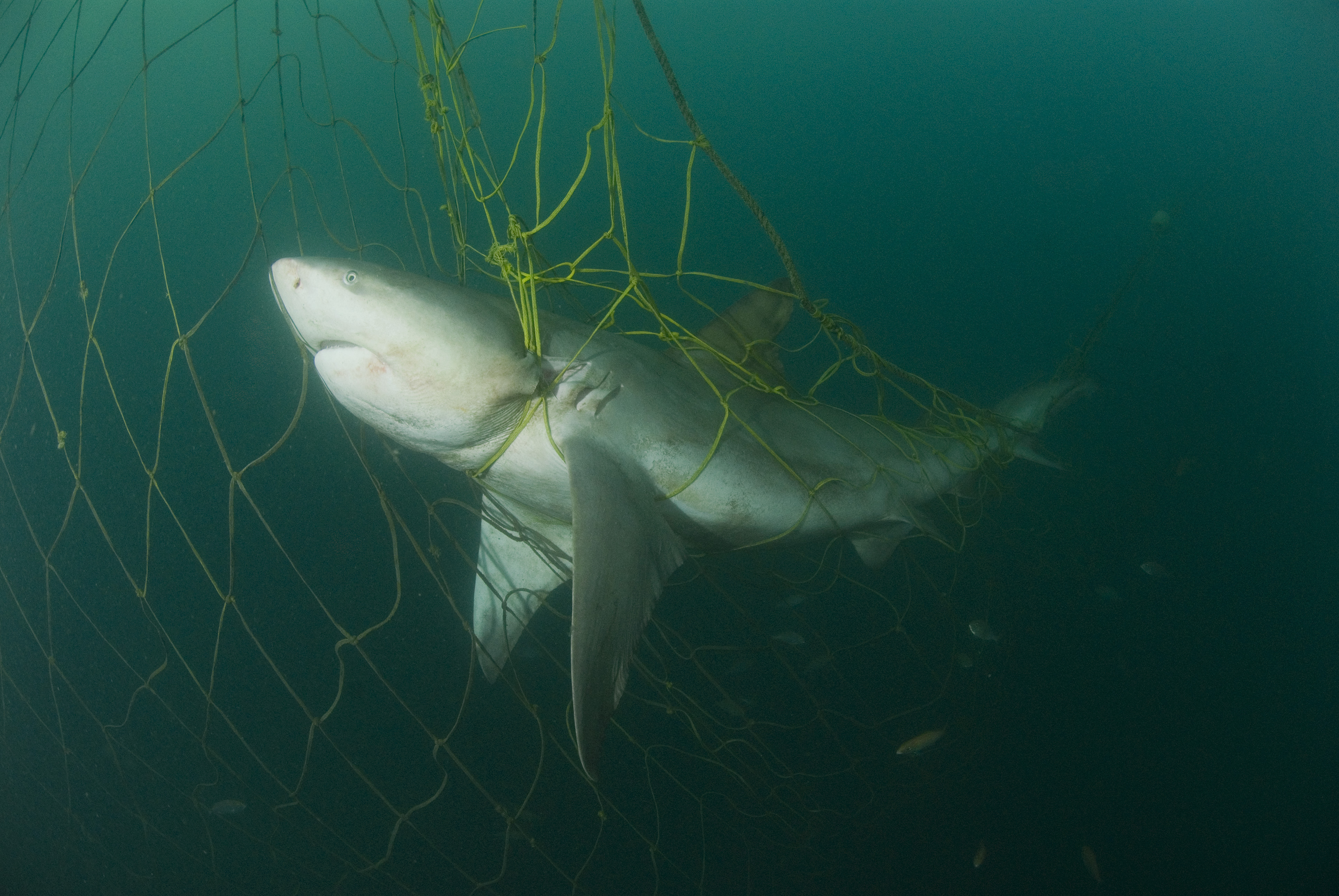
Modern shark researchers have access to a variety of high-tech tools. Acoustic tags with noises specific to each individual shark signal a receiver (or network of receivers) every time the shark passes nearby. Some tags have three-dimensional accelerometers, allowing researchers to study the small scale movement patterns and behaviors of sharks. Others, which are placed in the stomach, measure pH before, during, and after digestion. The most advanced technology on the market, however, is undoubtedly the satellite tag.

Image from SurfThereNow.com

Read More “State of the Field: Satellite tagging sharks” »

Shark Science Monday: Sonja Fordham explains international shark conservation and management policies

Posted on February 14, 2011February 14, 2011 By David Shiffman
Conservation

In this week’s edition of Shark Science Monday, Shark Advocates International President Sonja Fordham explains international conservation and management policies. If you have a question for Sonja, please leave it as a comment and I’ll make sure it gets to her.

Finding Melville’s Whale: The Whiteness of the Whale (Chapter 42)

Posted on February 13, 2011 By Andrew Thaler
Uncategorized

After reading some of the reviews from our Readers’ Survey, many people list these among their favorite posts, while many others consider them their least favorite. So, we’ve decided to change the posting schedule for Finding Melville’s Whale. From now on, one or two new entries will appear every Sunday, instead of Tuesdays and Thursdays. We … Read More “Finding Melville’s Whale: The Whiteness of the Whale (Chapter 42)” »

Nothing to plunder – the evolution of Somalia’s pirate nation

Posted on February 11, 2011February 17, 2011 By Andrew Thaler 12 Comments on Nothing to plunder – the evolution of Somalia’s pirate nation
Uncategorized

The droughts that shook the east African nations in the mid-1970’s and again in the 1980’s decimated the traditional nomadic clans of Somalia, leaving them without live stock to feed their families. Tens of thousands of the dispossessed, primarily of the Hawiye clan, were relocated to coastal areas. Fishing communities took root and began to flourish. With over 3000 km of coastline, rich with rock lobster and large pelagic fish, these communities grew, perhaps even thrived. Then, as is often the narrative of African nations, came civil war.

Read More “Nothing to plunder – the evolution of Somalia’s pirate nation” »

Weekly does of TED – Mike Rowe celebrates dirty jobs

Posted on February 11, 2011February 17, 2011 By Andrew Thaler 2 Comments on Weekly does of TED – Mike Rowe celebrates dirty jobs
Uncategorized

This is a major departure from the type TED talks we usually post, but it touches on many themes I think about all the time. We talk a lot about regulations, safety protocols, and best practices. But regulations and protocols are not always the best, safest, or most humane methods available and the people actually … Read More “Weekly does of TED – Mike Rowe celebrates dirty jobs” »

SFS Gear Reviews: When the current changes, you have to adapt – Digipower Universal Travel Adapter

Posted on February 10, 2011February 10, 2011 By Andrew Thaler
Uncategorized

Digipower

For a prolonged tour in the field, the little things matter just as much as the big things. And nothing is smaller or more easily forgettable than the lowly travel adapter. I picked mine up in an airport somewhere in Japan as an afterthought, like many travelers, once I got to my destination and realized I had no way to charge up my netbook.

The travel adapter seems inconsequential, but choosing the wrong one can be fatal. I got lucky, because the only one in stock turned out to be a workhorse, but horror stories abound of the unsuspecting graduate student plugging their vital equipment into a suspect outlet and frying a computer, blowing a critical sensor, or setting their shack on fire. Electricity is not to be taken lightly.

Read More “SFS Gear Reviews: When the current changes, you have to adapt – Digipower Universal Travel Adapter” »

Biodiversity Wednesday: Ngorongoro Crater

Posted on February 9, 2011February 9, 2011 By David Shiffman
Uncategorized

Located in the East African nation of Tanzania, Ngorongoro Crater (pronounced just like it’s spelled, 😉 ) is one of the coolest places I’ve ever had the privilege to visit. Technically a caldera, the remnants of a collapsed volcano, the floor of Ngorongoro provides over 100 square miles of habitat surrounded by steep walls to more than 25,000 animals.

Ngorongoro Crater- what looks like mountains in the distance actually surrounds the habitat. Photo credit: David Shiffman, 2001

Read More “Biodiversity Wednesday: Ngorongoro Crater” »

State of the Field: Is catch-and-release fishing harmful to sharks?

Posted on February 8, 2011February 2, 2011 By David Shiffman 10 Comments on State of the Field: Is catch-and-release fishing harmful to sharks?
Conservation, Science

In the wake of the new Marianas Islands shark conservation law, a debate has been raging on the shark  listservs. The law wouldn’t have been possible without support from several local recreational fishermen- people who often take tourists catch-and-release fishing for sharks.

“When I heard of your effort in Hawaii to ban the sale,trade and possession of shark fins I knew if the CNMI was to follow someone with inside connections to the fishing world there had to espouse it and grow it.  They do not like being told what to do from outsiders.  I was not an outsider, and I fished alongside two of the very top level fishermen who happened to be upper level politicians whom I respected.  Rep. Diego Benevente was one of them.  I spoke with him and asked him to introduce a bill which replicated Hawaii’s law, and he did so. I kept constant contact with him and his staff in the effort to see this bill become law.”- Captain William McCue

Image from FishingDestin.info

Many shark conservationists support catch-and-release fishing, claiming that it allows fishermen the thrill of catching a large animal without killing it. Captain McCue reports that in the last 20 years:

“I’ve caught over 300 sharks in the that time a killed four- and if you include spiny dogfish it’s caught well over 2000 sharks and still killed only four- two of which were promptly eaten.”

However, some (such as “My Sunset Rendezvous” author Ila France Porcher) claim that even when a shark is released, the stress from being caught often still causes long-term damage or even death.

“As a shark ethologist, I have personally witnessed sharks who were hooked and fought, and who broke the line, emerge from the ordeal with a jaw so damaged that they lost weight and died over the following weeks or months. A high fraction of sharks caught suffered this fate, and they suffered greatly as a result of this enjoyable passtime pursued by sports fishermen. It would be great news to hear that you switched from a blood sport to a sport that celebrates the life that still remains in our seas, such as diving and photography.” – Ila France Porcher

Read More “State of the Field: Is catch-and-release fishing harmful to sharks?” »

Posts pagination

Previous 1 … 181 182 183 … 275 Next

Popular Posts

What Ocean Ramsey does is not shark science or conservation: some brief thoughts on "the Shark Whisperer" documentaryWhat Ocean Ramsey does is not shark science or conservation: some brief thoughts on "the Shark Whisperer" documentaryJuly 2, 2025David Shiffman
Zombie ideas in conservation: trophy hunting and conservationZombie ideas in conservation: trophy hunting and conservationAugust 6, 2026Ali Gaster
What is a Sand Shark?What is a Sand Shark?November 12, 2017Chuck Bangley
Shark of Darkness: Wrath of Submarine is a fake documentaryShark of Darkness: Wrath of Submarine is a fake documentaryAugust 10, 2014Michelle Jewell
Is Academic Publishing is breaking conservation science?Is Academic Publishing is breaking conservation science?August 10, 2026Chris Parsons
How the Bluespotted Ribbontail Stingray got its SpotsHow the Bluespotted Ribbontail Stingray got its SpotsMarch 28, 2024David Shiffman
Considering writing a popular science book? Here's my adviceConsidering writing a popular science book? Here's my adviceJuly 7, 2025David Shiffman
Emergency room conservation: why waiting for the Endangered Species Act to save a species is a fiscal disasterEmergency room conservation: why waiting for the Endangered Species Act to save a species is a fiscal disasterAugust 11, 2026Ali Gaster
That's not a blobfish: Deep Sea Social Media is Flooded by AI SlopThat's not a blobfish: Deep Sea Social Media is Flooded by AI SlopDecember 19, 2025Andrew Thaler
Ten very bad, no good things the latest Trump Administration has done to the oceansTen very bad, no good things the latest Trump Administration has done to the oceansAugust 14, 2026Ali Gaster

squishy

Subscribe to our RSS Feed for updates whenever new articles are published.

We recommend Feedly for RSS management. It's like Google Reader, except it still exists.

Southern Fried Science

  • Home
  • About SFS
  • Authors
  • Support SFS


If you enjoy Southern Fried Science, consider contributing to our Patreon campaign.

Copyright © 2026 Southern Fried Science.

Theme: Oceanly Premium by ScriptsTown