

Skip to content

Southern Fried Science

Over 15 years of ocean science and conservation online

  • Home
  • About SFS
  • Authors
  • Support SFS
Latest News
  • Norway and Cook Islands put their deep-sea mining plans on pause

Recent Posts

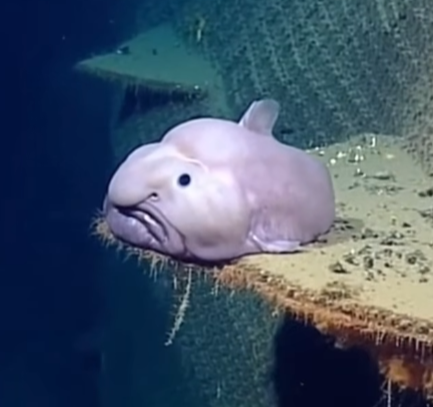
That’s not a blobfish: Deep Sea Social Media is Flooded by AI Slop
December 19, 2025
What we know we don’t know: impacts of deep-sea mining on whales, dolphins, sharks, turtles, and other migratory species.
November 20, 2025
Norway and Cook Islands put their deep-sea mining plans on pause.
December 3, 2025
Beyoncé is Right: History Can’t Be Erased
October 23, 2025
Teaching with D&D: My favorite source books for running a great Dungeons & Dragons campaign.
September 23, 2025
9 Quick Questions About Deep-Sea Mining from My Congressional Briefing
September 22, 2025

Shark Conservation: What’s New and What’s Next? The text of my UN Early Career Ocean Professionals Day talk

Posted on June 1, 2021June 3, 2021 By David Shiffman 1 Comment on Shark Conservation: What’s New and What’s Next? The text of my UN Early Career Ocean Professionals Day talk
Uncategorized

On June 1, 2021, I was invited to speak at Early Career Ocean Professionals Day, part of the kickoff for the United Nations Decade of the Ocean. The text of my remarks, with links to relevant references, is provided below.

Greetings to everyone watching virtual Early Career Ocean Professionals Day around the world! My name is Dr. David Shiffman, and I’m an interdisciplinary marine conservation biologist based in Washington, DC. I study threatened species of sharks, and how to effectively protect them. I also study the causes and consequences of public misunderstanding of these issues. In addition to research and teaching, I am a public science educator, and I invite you to follow me on twitter, Instagram, and Facebook @ WhySharksMatter, where I’m always happy to answer any questions anyone has about sharks.

Today I’d like to talk to you a little bit about my work on why we should protect sharks, how we can most effectively do that, what people think about this issues, and why all of this is important. First of all, no, sharks are not a threat to you or your family, despite what you may hear in inflammatory fearmongering news reports. Hundreds of millions of humans enter the ocean every year, and a few dozen are bitten—more people are killed by flowerpots falling on their heads from above in a typical year than are killed by sharks. Sharks also play vital roles in the healthy functioning of marine and coastal ecosystems, ecosystems that humans depend on for food security, livelihoods, and recreation. In short, people are better off with healthy shark populations off our coasts than we are without them.

Read More “Shark Conservation: What’s New and What’s Next? The text of my UN Early Career Ocean Professionals Day talk” »

The day they arrived: a story of Bitcoin, terraforming, and invasion.

Posted on May 25, 2021May 25, 2021 By Andrew Thaler
The day they arrived: a story of Bitcoin, terraforming, and invasion.
Popular Culture

The day they arrived, atmospheric CO2 held steady at 1600 parts per million and the coin traded at #75,236,808.

The coin had surged in the years after the Majority War, when a single miner locked down enough processing power to strip the supply cap from the Core. The Battle for Hard Fork was the bloodiest day in the long history of cryptocurrency. But we won, and the minority nodes now burn endlessly, hashing memes in obscurity while we determined the financial future of the human race.

At least, that’s what I thought.

I awoke in a haze. Still a little drunk from the night before. Sweating in the heat of from the midnight sun. Greenland-3 was the largest mining campus in the Northern Hemisphere and we knew how to keep the evenings lively. Once again, my past self had betrayed my present by signing me up for first shift. 

I crawled down the shaft into the main hub and checked my servers. Everything looked fine. A few GPUs were burned but we had plenty to spare. They were older and power hungry, anyway. The new batch would get us twice the hashes per joule.

I grabbed a few GPUs off the rack and climbed down into the bowels of the machine.

It was hot. Hotter than it should be for 15:15 Beijing time. Someone, somewhere, is having a very good day. I crawled through the server racks, scanning for the dead cards. They were clustered, in the back corner, on the same control board. Must’ve been a local surge.

As I swapped out the old cards, I felt someone behind me. I turned, expecting one of the techs from last shift on their way out.

It wasn’t.

Read More “The day they arrived: a story of Bitcoin, terraforming, and invasion.” »

To Achieve 30% Ocean Protection Governments Can Look Beyond Conventional Tools

Posted on May 18, 2021May 18, 2021 By Angelo Villagomez
To Achieve 30% Ocean Protection Governments Can Look Beyond Conventional Tools
Uncategorized

Although understanding of the most effective design and implementation of MPAs has evolved in recent decades, decision-makers are only just starting to consider OECMs as a marine conservation tool. If properly delivered, OECMs could be a powerful means of improving ocean health.

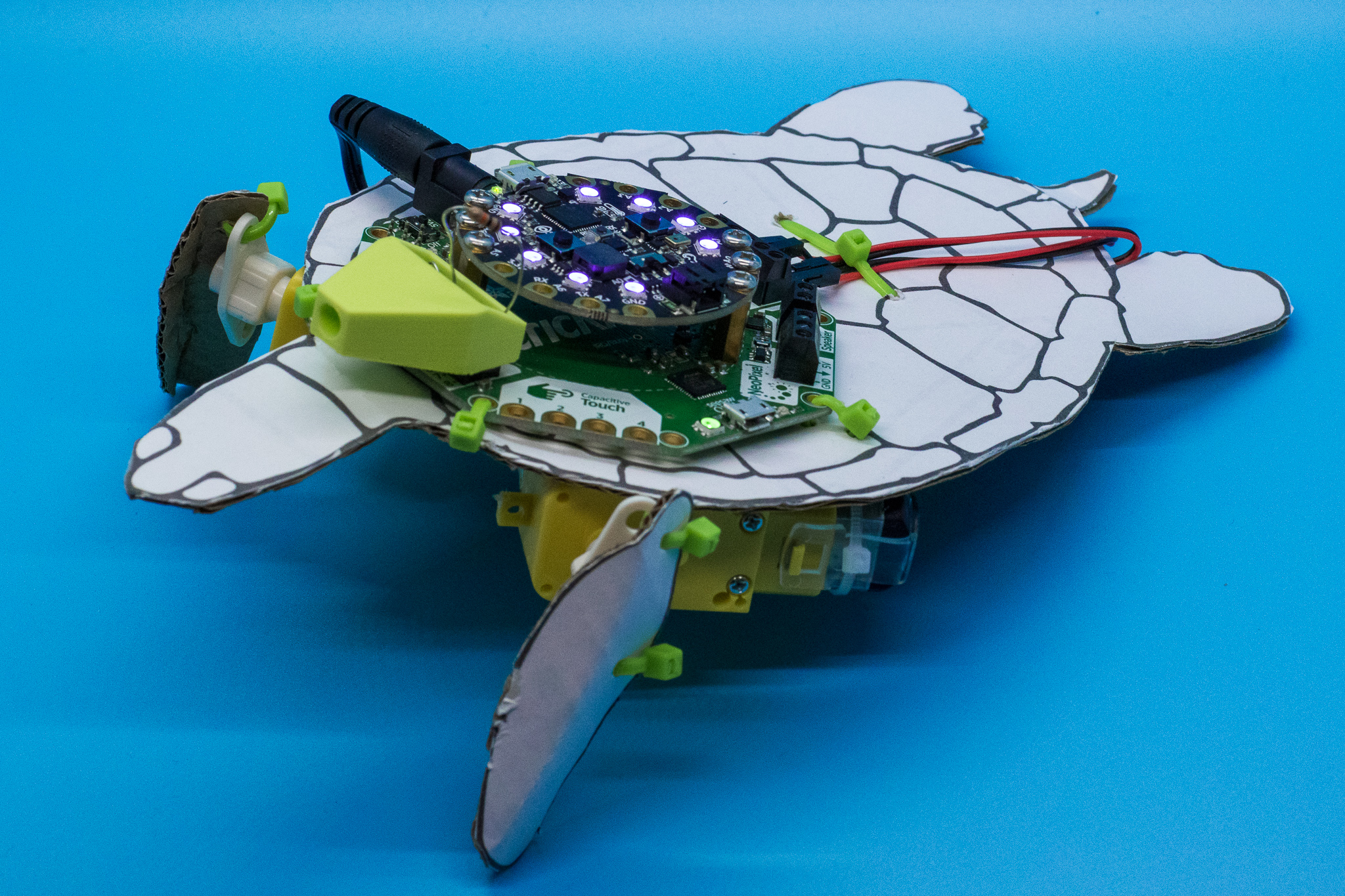
I built a horrifying cyborg sea turtle hatchling so you can learn a little bit about behavioral ecology

Posted on April 22, 2021April 22, 2021 By Andrew Thaler
I built a horrifying cyborg sea turtle hatchling so you can learn a little bit about behavioral ecology
Science

Sea turtles, in case you didn’t know, are pretty great. These giant marine reptiles have been chilling out in the ocean for over 100 million years, largely unchanged. But their evolutionary foray onto land along with the rest of the tetrapods (a move largely regarded as a mistake by most extant species) left them with one one critical vulnerability: they have to return to land to lay their eggs, and their hatchlings must survive a grueling march to the sea within minutes of emerging into the world.

To find their way back to the sea, sea turtle hatchlings emerge from their nests in the darkness and track light cues on the horizon, tracking the glow of starlight on waves. This becomes a huge problem when the beach is littered with the pollution of artificial lights, leading hatchlings away from the sea and towards streets, resorts, and beachfront bars. Light pollution is such a serious problem for sea turtle survival, that many municipalities which host turtle nesting beaches ban the use of superfluous lighting during nesting season. 

Protecting sea turtle nests and nesting sea turtles, particularly the massive, primordial leatherback sea turtle, is a core mission of the Dominica Sea Turtle Conservation Organization (DomSetCO). Leatherbacks are exceptionally sensitive to light. On the top of their heads is a translucent patch of skin directly above the pineal gland. This window to the turtle’s brain serves as a rudimentary third eye which can sense how light changes.

You can help support DomSetCO by donating to our campaign to build the Rosalie Conservation Center, a hybrid rum distillery, fish hatchery, and conservation center in Dominica. Drink rum, save turtles. 

Read More “I built a horrifying cyborg sea turtle hatchling so you can learn a little bit about behavioral ecology” »

The most massive ‘massive sardine’ discovered in the deep waters of Japan

Posted on March 8, 2021March 8, 2021 By Andrew Thaler
Science

This article originally appeared in the February 2021 issue of the Deep-sea Mining Observer. It is reprinted here with permission. For the latest news and analysis about the development of the deep-sea mining industry, subscribe to DSM Observer here: http://dsmobserver.com/subscribe/

Featured image: Colossal Slickhead, from Fujiwara et al. 2021

Even with the intense research focus of the last twenty years, the deep sea is still almost entirely unexplored. New species are par for the course every time a fresh sample is recovered from the abyssal plain. The vast biodiversity of the deep seafloor is offset by a biomass deficit; the denizens of the deep sea, with a few notable exceptions, are few and far between, their size often limited by the paucity of food available to them. While giants like the Japanese King Crab or the Giant Deep-sea Isopod do occur, the vast majority of deep-sea species are relatively small. 

The discovery of new species in the deep ocean is common, but the discovery of new giants in the deep sea is extremely rare. 

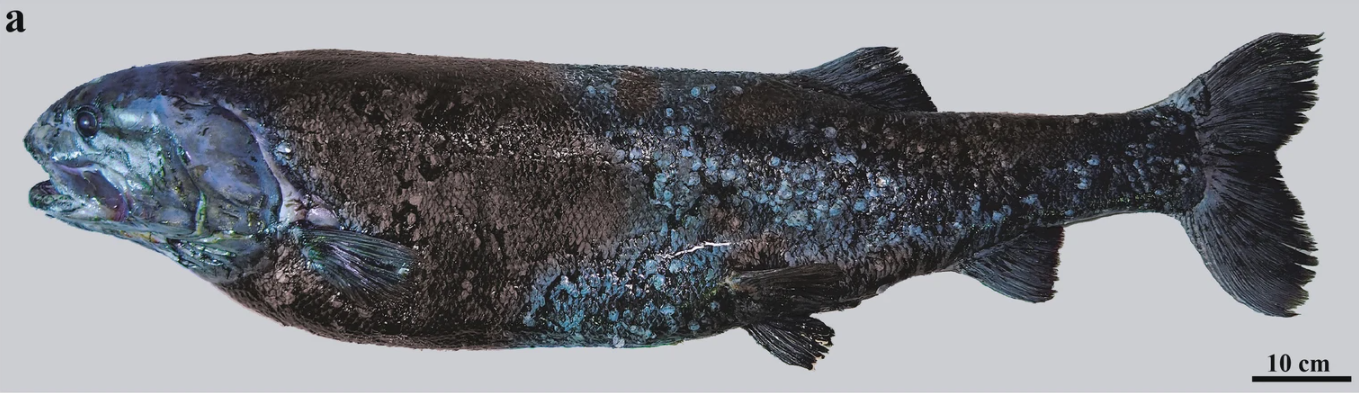
Last month, a research team from the Japan Agency for Marine-Earth Science and Technology (JAMSTEC) led by Dr. Yoshihiro Fujiwara and the Deep-sea Biodiversity Research Group announced the discovery of a new species of slickhead from the deep waters around Suruga Bay. Weighing in at 25 kilograms and measuring 140 centimeters, the Colossal Slickhead, described from four specimens recovered from depths greater than 2000 meters, is the largest species of slickhead (a group of deep-sea fishes found in waters deeper than 1,000 meters) yet described. 

In Japan, slickheads are commonly called sekitori iwashi–’massive sardines’. In recognition of its immense size, the researchers gave this most massive of massive sardines the common name yokozuna iwashi, after the title given to champion sumo wrestlers. 

Read More “The most massive ‘massive sardine’ discovered in the deep waters of Japan” »

Saving sea turtles in Dominica with a conservation-first Rum Distillery

Posted on February 18, 2021November 15, 2024 By Andrew Thaler 1 Comment on Saving sea turtles in Dominica with a conservation-first Rum Distillery
Saving sea turtles in Dominica with a conservation-first Rum Distillery
Conservation

In the hours before dawn on one mid-October morning, I climbed into the jumpseat of a C-131 cargo plane, and began a long, complicated journey to the island of Dominica. It was 2017 and Hurricane Maria had cut a swath of destruction across much of the Caribbean, but it was Dominica that first bore the full force of the storm as it roared into the Americas.

When I began working with Jake Levenson (Oceans Forward) early the year before, we were developing a marine conservation and robotics program to bring to students on the Island, but the storm changed everything. Though my first trip to Dominica was far different from what we had planned, it was the beginning of a long partnership with Levenson, the Dominica Sea Turtle Conservation Organization, and friends and colleagues from Dominica and around the world committed to marine conservation and answering the big question: can a small island create a model for financially sustainable marine conservation that is resilient to both the changing climate and the ever-shifting winds of ecotourism?

From that question, and over many conversations with stakeholders, experts, funders, and community leaders, the Rosalie Conservation Center–a center of learning and research as well as a fish hatchery and a rum distillery–was born.

Read More “Saving sea turtles in Dominica with a conservation-first Rum Distillery” »

Build Your Own 3D-printed Ring Light to Upgrade Your Remote Meetings

Posted on February 9, 2021February 9, 2021 By Andrew Thaler 1 Comment on Build Your Own 3D-printed Ring Light to Upgrade Your Remote Meetings
Build Your Own 3D-printed Ring Light to Upgrade Your Remote Meetings
Uncategorized

We are entering year two of pandemic lockdowns and remote meetings, teach from home classes, and teleconferences are hear to stay. Early last year we addressed some of the basics of perfecting a decent space for teaching from home: The true, essential, and definitive guide to looking like a professional while teaching from home.

But some folks want a little extra edge, a little something that dramatically improves how you look in the camera while teaching your class, giving a talk, or holding a meeting. And not just because of vanity. The better and clearer your camera image, the easier it is for your audience to see and understand you (though vanity is a perfectly fine reason too, we have all spent far too much time this year staring at ourselves in the little Zoom box).

You could buy a ring light to provide the best possible light source for looking good on a webcam, but why buy something when you can spend several hours soldering and coding your own custom, addressable, RGBW ring light.

The good nerds at Southern Fried Science are here for you. I spent the last month polishing up my coding, soldering, design, and 3D-printing skills to bring you a 3D-printed, DIY ring light that you can build and code yourself.

Is it cheaper than a commercial ring light? No.

Does it work better than a ring light designed and manufactured by a professional team of engineers? Also no.

Can you independently control each color channel so it looks like you’re in the Matrix, under water, of cosplaying the This Is Fine dog via a large, bulky box that sits on you desk? Yes.

Does it come with a panic button that lets you bail out of Zoom calls by pretending that you’re being pulled over by the police? You better believe it does.

View this post on Instagram

A post shared by Andrew David Thaler (@drandrewthaler)

Read More “Build Your Own 3D-printed Ring Light to Upgrade Your Remote Meetings” »

What Johnny Mnemonic got right about 2021: we keep trying to build housing out of old shipping containers.

Posted on January 25, 2021January 25, 2021 By Andrew Thaler 1 Comment on What Johnny Mnemonic got right about 2021: we keep trying to build housing out of old shipping containers.
Uncategorized
Internet 2021 from Johnny Mnemonic

From a global pandemic to information overload to out-of-control drug prices, 1995’s Johnny Mnemonic made a lot of bold predictions about 2021 that landed a bit too hard. Among the hits that landed hardest? The rise of containerized housing and a chaotic kludge of weird construction welded together in a way that doesn’t exactly scream stability and permanence.

The year is 2021. Can we put to rest the idea that a shipping container home is anything but an aesthetic choice?

Read More “What Johnny Mnemonic got right about 2021: we keep trying to build housing out of old shipping containers.” »

Inauguration-induced landsickness: what you feel when the shaky world beneath your feet suddenly stabilizes, and how to feel better

Posted on January 22, 2021January 22, 2021 By David Shiffman 1 Comment on Inauguration-induced landsickness: what you feel when the shaky world beneath your feet suddenly stabilizes, and how to feel better
Blogging

For the past few days I, like many of you, have felt a variety of intense emotions. First and foremost I’ve felt an overwhelming sense of relief. No matter what happens next, Donald Trump is no longer President of the United States, and he and his enablers can no longer work to destroy so much of what we love and value (at least not as easily). We can start the hard work of fixing so many things that have been awful and growing worse every day. I’ve felt hope that we can start to make things better, and I’ve even felt a little bit of joy at the noteworthy progress that’s already been made. All of this was expected, but one thing I haven’t expected is how much of a particular sensation I’m feeling, and have seen other people report feeling as well. For some of my friends it was a totally unfamiliar sensation, but as a marine scientist I recognized it immediately: many of us are basically experiencing landsickness, also called “dock rock” or “mal de debarquement syndrome”.

Read More “Inauguration-induced landsickness: what you feel when the shaky world beneath your feet suddenly stabilizes, and how to feel better” »

Where is the Biden Ocean Team?

Posted on January 18, 2021January 18, 2021 By Andrew Thaler
Where is the Biden Ocean Team?
Science

In forty-eight hours, and amidst the largest peacetime deployment of a military force in any nation’s capitol, President Joe Biden will be sworn in as the 46th President of the United States of America. Biden will inherit a civil service bureaucracy that has been deconstructed by the twice-impeached President Trump. To build back a federal government that has been decimated and demoralized, President-Elect Biden has begun rolling out nominees for critical agencies throughout the federal government. And though these appointments have been met will enthusiasm from the environmental and scientific community, a nagging question lingers among America’s Ocean Stakeholders:

Where is the Biden Ocean Team?

Read More “Where is the Biden Ocean Team?” »

Posts pagination

Previous 1 … 21 22 23 … 269 Next

Popular Posts

What Ocean Ramsey does is not shark science or conservation: some brief thoughts on "the Shark Whisperer" documentaryWhat Ocean Ramsey does is not shark science or conservation: some brief thoughts on "the Shark Whisperer" documentaryJuly 2, 2025David Shiffman
I can serve on your graduate thesis committee. Here’s what you can expect of me, and what I expect in return.I can serve on your graduate thesis committee. Here’s what you can expect of me, and what I expect in return.October 16, 2025David Shiffman
That's not a blobfish: Deep Sea Social Media is Flooded by AI SlopThat's not a blobfish: Deep Sea Social Media is Flooded by AI SlopDecember 19, 2025Andrew Thaler
The story of the pride flag made from NASA imagery: Bluesky's most-liked imageThe story of the pride flag made from NASA imagery: Bluesky's most-liked imageSeptember 27, 2024David Shiffman
What can the funniest shark memes on the internetz teach us about ocean science and conservation?What can the funniest shark memes on the internetz teach us about ocean science and conservation?November 8, 2013David Shiffman
Shark of Darkness: Wrath of Submarine is a fake documentaryShark of Darkness: Wrath of Submarine is a fake documentaryAugust 10, 2014Michelle Jewell
The Trouble with Teacup PigsThe Trouble with Teacup PigsOctober 14, 2012Andrew Thaler
I turned my woodshop into a personal solar farm.I turned my woodshop into a personal solar farm.June 21, 2021Andrew Thaler
Norway and Cook Islands put their deep-sea mining plans on pause.Norway and Cook Islands put their deep-sea mining plans on pause.December 3, 2025Andrew Thaler
Nodules, Lost Mines, and Dark Oxygen: A new documentary on deep-sea mining asks important questions about the future of the industry.Nodules, Lost Mines, and Dark Oxygen: A new documentary on deep-sea mining asks important questions about the future of the industry.July 24, 2025Andrew Thaler

squishy

Subscribe to our RSS Feed for updates whenever new articles are published.

We recommend Feedly for RSS management. It's like Google Reader, except it still exists.

Southern Fried Science

  • Home
  • About SFS
  • Authors
  • Support SFS


If you enjoy Southern Fried Science, consider contributing to our Patreon campaign.

Copyright © 2025 Southern Fried Science.

Theme: Oceanly Premium by ScriptsTown