

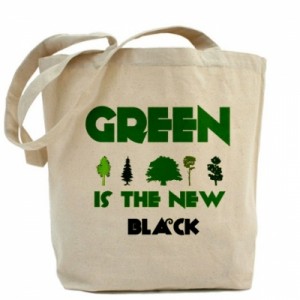
Did you ever meet that gear-head who had a shelf full of Nalgenes or a trunk full of those reusable shopping bags? At the time, did you stop and think about the environmental impact of these eco-friendly products? In honor of Earth Day, I’d like to take a moment to step back and evaluate the state of our environmental movement.
Yes, at some level these things reduce your personal environmental impact. They save millions of plastic bags and cups from entering the waste stream and therefore our biosphere. At the same time, they promote the consumer culture that created many of our environmental issues in the first place.
Census of Marine Life (CoML) recently released this awesome video of some of the smallest and most beautiful creatures in the ocean. Hat tip @DrCraigMC. Check out the rest of CoML’s YouTube Channel. ~Southern Fried Scientist

 When presented with a threatened population in need of conservation, the simplest and most basic question a manager can ask is “how big is it?” Unfortunately, this is one of the most challenging questions to answer. Determining the number of individuals in a population is fundamental to effective management. Small, concentrated populations can be destroyed in a single sweep, while large, broadly distributed populations require more resources and complex management involving many stakeholders.
A population that is easy to sample is rare. Animals move – sometimes over enormous distances. Habitats are difficult or impossible to access. Entire popualtions may be adept at avoiding capture. For most populations, it is impossible to count every individual. In marine ecosystems populations can span the entire globe, and the cost of mounting an expedition to systematically sample all members is huge. In order to get accurate estimates of the number of individuals, ecologists have had to devise statistical techniques to estimate the size of a population.
Read More “Crowdsourcing ConGen – Effective size of a population in flux” »
Charlie and the orchid family
 When I first moved to coastal North Carolina, my garden yielded miniature sweet potatoes, a handful of blueberries, and an abundance of mustard greens. That’s it. After trying pretty much every vegetable under the sun. Turns out, not many plants like to grow in our soil… wait, I mean sand.
Coastal gardening and farming presents some unique challenges that I thought would mean the end of my quest to become a locavore. But after a year of learning and connecting with our local farms, which aren’t necessarily the type to market to the local buyer, I have resumed my quest. And I think I’ve succeeded, at least for today.
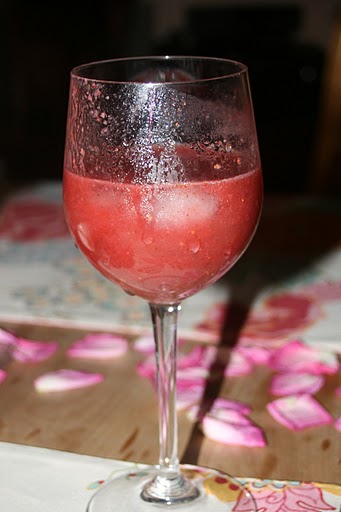
My dinner included only a few things not from the coast: champagne vinegar, olive oil, gin, and avocado.
Catching you up with all the Southern Fried Fun this weekend. This morning, Grrlscientist terrified my Reader Feed with this awesome new species of nose dwelling leech. But hey, ugly, spineless blood suckers are people too. @kzelnio tweet a couple of pics from two of our ongoing top secret projects: the mysterious Project S and … Read More “Monday Morning Blogaerobics” »