
Skip to content

Southern Fried Science

Over 15 years of ocean science and conservation online

  • Home
  • About SFS
  • Authors
  • Support SFS

Recent Posts

Isn’t ironic, don’t you think: dismantling the Ocean Observatories Initiative on World Oceans Day
June 9, 2026
“Why Sustainable Seafood Matters” is now available for preorder! Here’s what it’s about, and why I decided to write it.
June 8, 2026
Here’s how to join my IMCC8 symposium, “Ocean Science Communication: What’s New and What’s Next?”
April 22, 2026
Deep Sea Mining Symposium Announcement
April 21, 2026
Join Me at Upwell: A Wave of Ocean Justice — Our Fourth Year!
March 24, 2026
How close did the world’s first deep-sea mining come to the dredging the world’s largest cold-water coral reef?
March 17, 2026

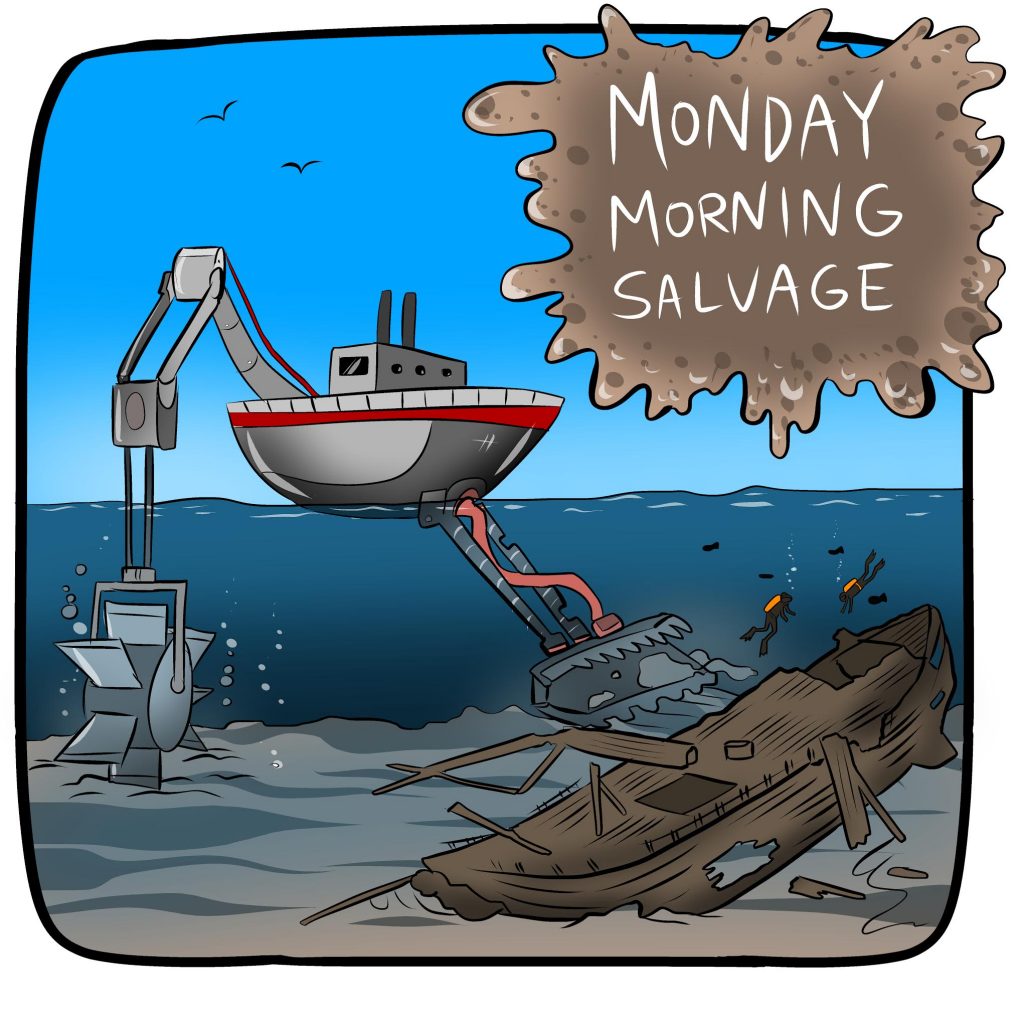
Fish feel pain, mining feels the pressure, sea lions feel excluded, and science publishing feels like an old boys club. It’s the Monday Morning Salvage: January 8, 2018!

Posted on January 8, 2018January 7, 2018 By Andrew Thaler
Weekly Salvage

Fog Horn (A Call to Action)

  • Abstract submission open for the 2018 International Marine Conservation Congress in Kuching, Sarawak this summer! Get your abstracts in early!

Flotsam (what we’re obsessed with right now)

  • This is a pretty big deal: The Year Climate Change Began to Spin Out of Control. The loop is closing fast and if we don’t break the cycle, things will get much worse much faster.

Jetsam (what we’re enjoying from around the web)

  • Fish Feel Pain. Now What? New research raises big questions about humane treatment of sea life.
  • The final first-of-year Bluefin Tuna auction at the Tsukiji Fish Market marks the end of an era. It sold for $323,000, far below historic highs.

https://english.kyodonews.net/news/2018/01/7d362d3cdd9b-tsukiji-fish-market-holds-final-new-year-auction.html

Read More “Fish feel pain, mining feels the pressure, sea lions feel excluded, and science publishing feels like an old boys club. It’s the Monday Morning Salvage: January 8, 2018!” »

Join us as we read and discuss a research paper every week! Introducing #SharkScienceMonday

Posted on January 2, 2018 By David Shiffman
Uncategorized

Be sure to follow #SharkScienceMonday on twitter every Monday morning of 2018 (starting January 8th)! Each week, a team of researchers* will be discussing a different scientific paper related to shark and ray biology, behavior, ecology, or management.

Some papers will be new and cutting edge, while others will be classics. They’ll all have one thing in common: a member of the Dulvy lab thought that they had an interesting or important result that significantly contributed to our various areas of expertise. Whenever possible, we will share a link to an open access copy of the paper so everyone can read along.

After we summarize the key takeaways from each paper, we’ll take questions. We’ll also start a discussion about that specific paper and the discipline that it is a part of, including suggesting various experts you can follow on twitter.

We hope that you’ll follow along with us, and that you’ll learn some interesting and important things about elasmobranch research and management!

Read More “Join us as we read and discuss a research paper every week! Introducing #SharkScienceMonday” »

How to support your favorite Southern Fried Science writers in 2018

Posted on January 2, 2018 By Andrew Thaler
Blogging

Southern Fried Science is growing! Thanks to Patreon and a few passive income streams, for the first time in almost a decade, we’re able to begin paying our volunteer writers for their outreach efforts. This year, we’ve established the Southern Fried Science Writers’ Fund to begin paying out compensation for all the incredible work that … Read More “How to support your favorite Southern Fried Science writers in 2018” »

Bone-eating zombie worms, octopus overlords, old wooden ships and new woes for deep-sea mining. It’s the Monday Morning Salvage! January 1, 2018.

Posted on January 1, 2018January 6, 2018 By Andrew Thaler
Weekly Salvage

Fog Horn (A Call to Action)

  • Stop. Breathe. Take a step back. This can all be incredibly overwhelming. Pick the fight that matters most to you and take a few days deciding what success looks like, what strategies will work, and what tactics are available to you. And then hoist your flag and get to work.

  • And when you meet someone fighting a different fight, remember to support them. There are already enough fronts to advance without taking friendly fire from our flanks.

Flotsam (what we’re obsessed with right now)

  • Maybe it’s time to seriously consider just giving control of the world to the cephalopods. A New Species of Giant Octopus Has Been Hiding in Plain Sight.

The frilled giant Pacific octopus. Photo Courtesy D. Scheel

  • The most depressing annual run-down on the environmental science web: The Animals That Went Extinct in 2017.

Read More “Bone-eating zombie worms, octopus overlords, old wooden ships and new woes for deep-sea mining. It’s the Monday Morning Salvage! January 1, 2018.” »

A year of snot-oozing, carcass-scavenging, slime eels: Hagfish Science in 2017.

Posted on December 27, 2017December 27, 2017 By Andrew Thaler
Science

Hagfish. You love them. I love them. The owner of this sedan has no choice but to love them:

Photo courtesy Oregon State Police.

2017 was a big year for hagfish science.

Big Ideas (the ecologic paradigms that hagfish shifted) 

Heincke’s law is one of those ecologic principles that more often acts as a foil for rejecting the null hypothesis than as a consistent pattern in ecology. It’s most basic summary is: The further from shore and the deeper dwelling a fish is, the bigger it grows. Heincke’s law does not appear to be true for hagfish, whose size appear to have no relation to the depth at which they occur. On the other hand, phylogenetic relationships do seem to play some role in regulating body size in hagfish.

  • Schumacher and friends (2017) No support for Heincke’s law in hagfish (Myxinidae): lack of an association between body size and the depth of species occurrence. DOI: 10.1111/jfb.13361.

Defense and Behavior (how hagfish do the things that they do)

Hagfish are master escape artists, capable of squeezing in and out of tight spaces barely half the width of their body. This great for getting in an out of rotting whale carcasses on the sea floor, creeping into crevices, and avoiding predators. But how do they accomplish this incredible feat? Hagfish have a flaccid sinus under their skin which allows them to control the distribution of venous blood and alter their body width as they wriggle through narrow passages. Freedman and Fudge identified 9 distinct behaviors which take advantage of this adaptation, including anchoring, forming tight loops to push the body through an opening, and bending the hagfish head 90 degrees to force it through a slit. And there are videos!

  • Freedman and Fudge (2017) Hagfish Houdinis: biomechanics and behavior of squeezing through small openings. DOI: 10.1242/jeb.151233.

The Fudge lab has been busy this year, cranking out some of the most noteworthy work on the incredible behavior of hagfish. In addition to examining hagfish motility, Boggett and friends looked into how those flaccid sinuses aid predator avoidance. The team build wee little guillotines loaded with shark teeth to see how hagfish skin protects the animal from vicious bites. In a year when a truckload of hagfish spectacularly crushed a car, the fact that this research was the biggest breakout sensation in hagfish pop culture says everything you need to know about the compelling results of this study. You can read more about this study at The Verge, Futurity, Popular Science, and plenty of other outlets.

  • Boggett and friends (2017) Flaccid skin protects hagfishes from shark bites. DOI: 10.1098/rsif.2017.0765.

Read More “A year of snot-oozing, carcass-scavenging, slime eels: Hagfish Science in 2017.” »

Southern Fried Science year-in-review, Palau’s Giant, a new challenge for deep-sea mining, Porgs are Puffins, and more! Monday Morning Salvage: December 25, 2017.

Posted on December 25, 2017December 25, 2017 By Andrew Thaler
Weekly Salvage

Happy Holidays from the Southern Fried Science Team!

Fog Horn (A Call to Action)

  • The Saipan Blog’s Angelo Villagomez put together a list of extraordinary Indigenous Pacific Conservationists to Follow on Twitter in 2018. Go. Follow them. Learn what’s really happening in Pacific Conservation.

Flotsam (what we’re obsessed with right now)

  • Do-it-yourself science is taking off. A growing movement seeks to make the tools of science available to everyone (including you). I love that The Economist now has a “Punk Science” heading.
  • Palau now requires all tourists to sign an environmental pledge when they enter the country. All flights in now feature this delightful short film.

https://www.youtube.com/watch?v=KhuY8eNLzBM

  • Arlo Guthrie was right! Cool short video of bipedal “walking” in gastropods. Clamzo boys, Clamzo!

Read More “Southern Fried Science year-in-review, Palau’s Giant, a new challenge for deep-sea mining, Porgs are Puffins, and more! Monday Morning Salvage: December 25, 2017.” »

17 amazing and important things about sharks and rays that scientists discovered in 2017

Posted on December 22, 2017December 22, 2017 By David Shiffman 1 Comment on 17 amazing and important things about sharks and rays that scientists discovered in 2017
Science

2017 was… yeah. Of all the years I’ve lived through, 2017 was definitely one of them. Anyway, some interesting things happened in the world of shark research. Here, in no particular order, are 17 amazing and important things that scientists discovered about sharks and rays over the last year.


1 Sharks can switch between sexual and asexual reproduction. We’ve known that several shark species can reproduce asexually for over a decade now, but this year, Dudgeon and friends showed an individual shark switching between sexual and asexual reproduction for the first time!

Noteworthy media coverage: CNN, National Geographic, Gizmodo

Read More “17 amazing and important things about sharks and rays that scientists discovered in 2017” »

Everything about hagfish is the best thing about hagfish, the battle for the deep-sea heats up, parasitic butt snails, and more! Monday Morning Salvage: December 17, 2017

Posted on December 18, 2017December 18, 2017 By Andrew Thaler
Weekly Salvage

Fog Horn (A Call to Action)

  • The CDC was given a list of seven banned words for their upcoming budgets. Among the censored words are “science-based” and “evidence-based”, which, of course, are concepts central to the CDC’s mission. I have some thoughts about why this list has appeared at this time. If you think the CDC shouldn’t be censored in their mission to safeguard public health, call your representatives.

Flotsam (what we’re obsessed with right now)

  • Bird and Moon author Rosemary Mosco is this week’s Hagfish Lover of note: Feeling Sick and Snotty?

  • Underwater robots reveal the all-you-can-eat-buffet of the deep sea.

Read More “Everything about hagfish is the best thing about hagfish, the battle for the deep-sea heats up, parasitic butt snails, and more! Monday Morning Salvage: December 17, 2017” »

Narwhal stress and coral disease: Thursday Afternoon Dredging, December 14th, 2017

Posted on December 14, 2017December 14, 2017 By David Shiffman
Uncategorized

Cuttings (short and sweet): 

  • Watch this amazing scene from Blue Planet 2!
  • Follow Cat Horswill, a PostDoc studying the life history of marine predators, on twitter!
  • In the Arctic, at least, diplomacy works. Bloomberg Editorial.
  • Mysterious “white plague” threatens South Florida coral reefs. By the Associated Press.
  • Climate change and overfishing are pushing seabirds to extinction. By Matthew Taylor, for the Guardian.
  • Not all that glitters is gold, some is plastic. By George Leonard, for the Ocean Conservancy Blog.

Read More “Narwhal stress and coral disease: Thursday Afternoon Dredging, December 14th, 2017” »

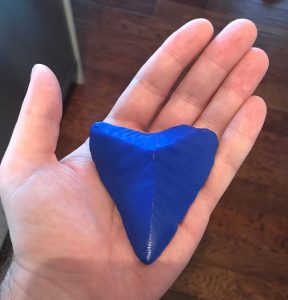
Galeophobia, Shark Teeth, and Non-Expert Awareness Campaigns: Dear Shark Man, Volume 5

Posted on December 13, 2017December 14, 2017 By David Shiffman 1 Comment on Galeophobia, Shark Teeth, and Non-Expert Awareness Campaigns: Dear Shark Man, Volume 5
Uncategorized

Welcome to Volume #5 of Dear Shark Man, an advice column inspired by a ridiculous e-mail I received. You can send your questions to me via twitter (@WhySharksMatter) or e-mail (WhySharksMatter at gmail).


Dear Shark Man,

What’s the history of the shark’s cultural image as a sneaky aggressive predator? Do other cultures see it differently?

Sincerely,
Imaginative in Irvine

Dear imaginative,

Much of the large-scale public fear of sharks we see today can be traced to the movie “Jaws” (read my Gizmodo article about this here). Shark conservation biologists actually use the term “the Jaws effect” in peer reviewed scientific literature. Terror of sharks resulting from that movie is fairly common even among people you wouldn’t expect; for example, both of my parents are outdoorsy and have post-graduate degrees, and yet both reported being afraid to go swimming in pools or lakes the summer after Jaws came out. Personally, I don’t think that modern shark b-movies like “SharkNado” or “Two-Headed Shark Attack” inspire the same level of public misunderstanding because they’re obviously silly, but others disagree.

Media coverage of shark bites also plays a major role. If someone gets bitten by a shark anywhere in the world, it’s headline news everywhere even if the bite isn’t severe enough to require more than a band-aid. In Australia, 38% of reported “shark attacks” didn’t even involve any injury at all. This is part of why I, along with many other shark scientists, have called on the popular press to avoid the inflammatory and inaccurate term “shark attack” in favor of a typology of other terms (shark sighting, shark encounter, shark bite, fatal shark bite).

Other cultures absolutely see sharks differently. Where I now live in western Canada, coastal First Nations have stories about a supernatural being called the Dogfish Woman. In some South Pacific cultures, sharks are seen as spirits of ancestors called aumakua (briefly referenced in Moana, see below), and there are even shark gods like Dakuwaqa.

Maui in the form of a shark, from Moana. You’re welcome.

Read More “Galeophobia, Shark Teeth, and Non-Expert Awareness Campaigns: Dear Shark Man, Volume 5” »

Posts pagination

Previous 1 … 50 51 52 … 273 Next

Popular Posts

The story of the pride flag made from NASA imagery: Bluesky's most-liked imageThe story of the pride flag made from NASA imagery: Bluesky's most-liked imageSeptember 27, 2024David Shiffman
"Why Sustainable Seafood Matters" is now available for preorder! Here's what it's about, and why I decided to write it."Why Sustainable Seafood Matters" is now available for preorder! Here's what it's about, and why I decided to write it.June 8, 2026David Shiffman
What Ocean Ramsey does is not shark science or conservation: some brief thoughts on "the Shark Whisperer" documentaryWhat Ocean Ramsey does is not shark science or conservation: some brief thoughts on "the Shark Whisperer" documentaryJuly 2, 2025David Shiffman
Tackling the least important debate in deep-sea mining: the desultory hyphenTackling the least important debate in deep-sea mining: the desultory hyphenJune 8, 2026Andrew Thaler
Deep-sea Mining, Domestic Cats, Star Trek, and Ocean Exploration: Andrew's mid-year podcast round-up.Deep-sea Mining, Domestic Cats, Star Trek, and Ocean Exploration: Andrew's mid-year podcast round-up.June 6, 2026Andrew Thaler
Shark of Darkness: Wrath of Submarine is a fake documentaryShark of Darkness: Wrath of Submarine is a fake documentaryAugust 10, 2014Michelle Jewell
What is a Sand Shark?What is a Sand Shark?November 12, 2017Chuck Bangley
I just told 850 shark scientists a hard truth: We’re not communicating shark conservation correctly.I just told 850 shark scientists a hard truth: We’re not communicating shark conservation correctly.June 1, 2026David Shiffman
That's not a blobfish: Deep Sea Social Media is Flooded by AI SlopThat's not a blobfish: Deep Sea Social Media is Flooded by AI SlopDecember 19, 2025Andrew Thaler
Why ocean science is still one of the worst-funded scientific fields worldwideWhy ocean science is still one of the worst-funded scientific fields worldwideJune 3, 2026Chris Parsons

squishy

Subscribe to our RSS Feed for updates whenever new articles are published.

We recommend Feedly for RSS management. It's like Google Reader, except it still exists.

Southern Fried Science

  • Home
  • About SFS
  • Authors
  • Support SFS


If you enjoy Southern Fried Science, consider contributing to our Patreon campaign.

Copyright © 2026 Southern Fried Science.

Theme: Oceanly Premium by ScriptsTown