
Skip to content

Southern Fried Science

Over 15 years of ocean science and conservation online

  • Home
  • About SFS
  • Authors
  • Support SFS

Recent Posts

Here’s how to join my IMCC8 symposium, “Ocean Science Communication: What’s New and What’s Next?”
April 22, 2026
Deep Sea Mining Symposium Announcement
April 21, 2026
Join Me at Upwell: A Wave of Ocean Justice — Our Fourth Year!
March 24, 2026
How close did the world’s first deep-sea mining come to the dredging the world’s largest cold-water coral reef?
March 17, 2026
Here are some ocean conservation technologies that I’m excited about
February 19, 2026
Walking Backwards Into the Future: Applying Indigenous Knowledge to Deep Sea Mining
February 5, 2026

Ocean Noise, Parasite Extinction, and Jellyfish Blooms: Thursday Afternoon Dredging: November 9th, 2017

Posted on November 9, 2017 By David Shiffman
Uncategorized

Cuttings (short and sweet): 

  • Watch this manta ray (or should I say mobula ray) at the Georgia Aquarium

    Video by Georgia Aquarium
  • Follow Serena Wong, a graduate student at SFU studying shark and ray respiratory physiology, on twitter!
  • 9 reasons you can’t help but love manatees. By Katie Hogge, for the Ocean Conservancy blog


Read More “Ocean Noise, Parasite Extinction, and Jellyfish Blooms: Thursday Afternoon Dredging: November 9th, 2017” »

Shark protections, shark careers, and sharky grammar: Dear Shark Man, Volume 1

Posted on November 8, 2017November 8, 2017 By David Shiffman
Uncategorized

Welcome to volume #1 of Dear Shark Man, an advice column inspired by a ridiculous e-mail I received. You can send your questions to me via twitter (@WhySharksMatter) or e-mail (WhySharksMatter at gmail).


Dear Shark Man,

Have you seen this New Scientist article (“Sharks now protected no matter whose waters they swim in?)
Is this good news? It seems too good to be true.

Sincerely,
Skeptical in Seattle

Dear Skeptical,

You are correct to be, um, skeptical. At best, this article is an oversimplification of a very complex problem. Many shark species migrate through the territorial waters of multiple nations, which complicates any conservation and management plans for these species. The Convention on Migratory Species, which is what the New Scientist article is about, is an attempt to help. However, a CMS listing is only the first step, and it does not inherently require any legal protections. Thus far, CMS listings for sharks have not resulted in any concrete legal protections for these species. The World Wildlife Fund’s shark expert, Ian Campbell, has written a great summary of why this CMS news is not the be-all end-all solution that many seem to believe, check it out here:

Read More “Shark protections, shark careers, and sharky grammar: Dear Shark Man, Volume 1” »

One weird trick for improving the outcome of your PhD defense.

Posted on November 6, 2017November 6, 2017 By Andrew Thaler 1 Comment on One weird trick for improving the outcome of your PhD defense.
Academic life

Feed your committee.

At the very least, make sure your committee is fed. A hungry committee is a grumpy committee. A grumpy committee is just a little bit less likely to let you pass your defense. Sure, you can prep, polish your thesis to perfection, run through a half-dozen practice defenses. You can even invest in some serious snake-fighting lessons. But all of those solutions are practical, pragmatic, and belie a commitment to success that suggests a work ethic, expertise, and discipline. All of which you need, but don’t ignore the obvious, easy stuff, either.

Wait, Andrew, you’re serious?

If you’ve learned anything from reading this blog for the last 9 years, it’s that I am always serious. Humor is anathema to me. Let’s talk about the science.

In a 2011 paper, Danziger and friends looked at extraneous factors in judicial decisions. In short, they looked at how often judges granted parole to inmates as a function of when the decision was made. Parole judges often hear dozens of cases in a day with few breaks. What Danziger and friends found was that, immediately after a judge had eaten, favorable parole outcomes were much more frequent and that, as parolees got further and further from mealtime, their chance of getting out plummeted. Those whose hearings fell right before a meal break had a 0% chance of parole. The pattern was clear: never appear before a hungry judge.

Proportion of rulings in favor of the prisoners by ordinal position. Circled points indicate the first decision in each of the three decision sessions; tick marks on x axis denote every third case; dotted line denotes food break. Because unequal session lengths resulted in a low number of cases for some of the later ordinal positions, the graph is based on the first 95% of the data from each session. Danziger and friends, 2011.

Simple.

Well, not quite.

Read More “One weird trick for improving the outcome of your PhD defense.” »

Surviving a Double Hurricane (a first person report of the Puerto Rico disaster by Heather Cooke)

Posted on November 6, 2017November 6, 2017 By Guest Writer
Uncategorized

Heather Cooke graduated with an environmental science degree from George Mason University and studied marine biology. She is now a dive instructor and runs Culebra Divers on Culebra Island. This article was written during brief moments of power on Culebra Island.


As General Manager of Culebra Divers in Culebra, Puerto Rico for the last 2.5 years, I have enjoyed our semi-arid island with its brief storms. Known for one of the safer harbors in the Caribbean, my husband and I watched tropical storm after tropical storm and hurricane after hurricane pass us by. What I am writing is based on our experiences and what others around me have experienced or shared from their families on our sister islands.

Culebra the smallest of 3 islands that make up what you know as Puerto Rico (the “mainland”, Vieques, and us) and we’re 17 miles from the mainland itself.  To get here you fly from San Juan or take a ferry from the mainland’s east coast. We get all our food and fuel via that same ferry system. Our water and power travel under the ocean from the mainland through Vieques and then to us so if anything happens to either of those islands, we are screwed.  The island has a rag tag rental generator and no desalination plant.

As I write this, it has been 34 days since Maria and 48 since Irma and we still lack non-generator power, reliable daily water, and cell service not provided by some other island.

Read More “Surviving a Double Hurricane (a first person report of the Puerto Rico disaster by Heather Cooke)” »

See a Great White Shark from the inside with OpenROV, Vaquita, Narwhals, and more! Monday Morning Salvage: November 6, 2017

Posted on November 6, 2017November 6, 2017 By Andrew Thaler
Weekly Salvage

Fog Horn (A Call to Action)

  • Science Communication folks! Are you ready for OceanDotComm? Register now!

Flotsam (what we’re obsessed with right now)

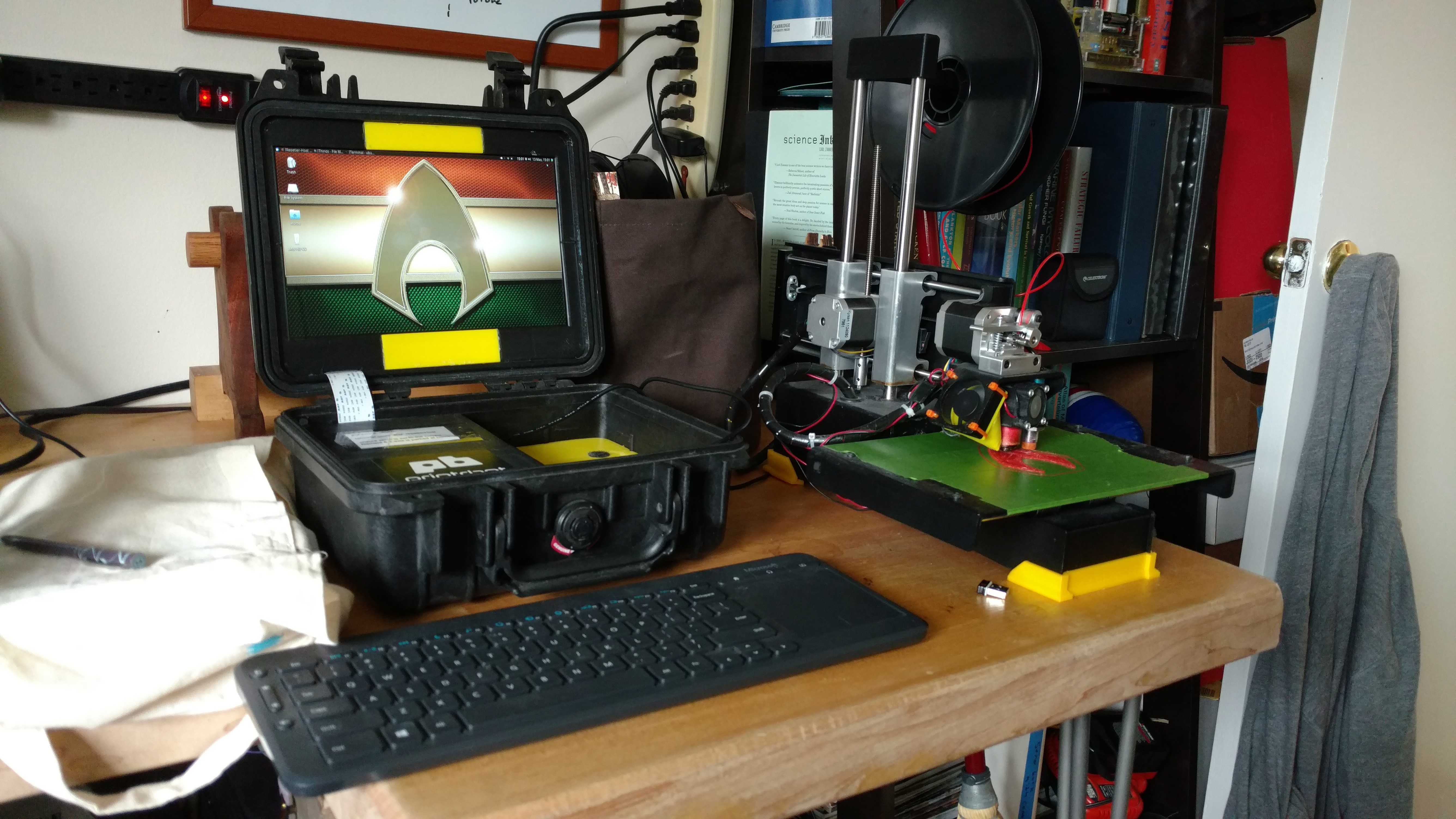
  • Go shark diving with OpenROV Trident and maybe get a bit too close an personal with a great white shark.
  • Yes, that is the esophagus of a great white shark, in the wild. No, you should not attempt to replicate this experience.

Read More “See a Great White Shark from the inside with OpenROV, Vaquita, Narwhals, and more! Monday Morning Salvage: November 6, 2017” »

A scientifically accurate list of the most endangered sharks in the world

Posted on November 2, 2017November 2, 2017 By David Shiffman 5 Comments on A scientifically accurate list of the most endangered sharks in the world
Conservation, Science

One of the most common questions I get during my “ask me anything” sessions on twitter is “which species of sharks are the most endangered?” Whenever I can’t completely answer a question in a single tweet, I like to link to more information from a reliable source.

However, I’ve struggled to easily answer this question with a link, because much of the information out there about this particular question is incomplete, misleading, or just wrong.  Several online lists of the most endangered species of sharks* don’t actually include the most endangered species of sharks. Many of these lists could be re-titled as “the conservation status of some species of sharks I’ve heard of and could easily find pictures of” or “some random information I heard out of context about shark conservation.” Since there isn’t an easily accessible source of accurate information about this important shark science and conservation topic, I’ll make one myself. ( I should note here that I am referring only to true sharks, not to other chondrichthyans, even though other chondrichthyans in many cases face similar or worse threats. )

Read More “A scientifically accurate list of the most endangered sharks in the world” »

Seagrass restoration, seabirds, and sea turducken! Thursday Afternoon Dredging: November 2, 2017

Posted on November 2, 2017November 2, 2017 By David Shiffman
Uncategorized

Cuttings (short and sweet): 

  • Watch this skate seen on a SCUBA dive in Scotland! Video by Catherine Hollingdale

    Video by Catherine Hollingdale
  • Follow fish parasitologist Isaure de Buron on twitter!
  • Judge halts Hawaii aquarium fishing until environmental review. By the AP.
  • There are more fish in the sea, because the Magnusson-Stevens Act is working. By George Leonard, for the Ocean Conservancy blog.

Read More “Seagrass restoration, seabirds, and sea turducken! Thursday Afternoon Dredging: November 2, 2017” »

A new Gulf oil spill, opposition to deep-sea mining, DIY drop cameras, and more! Massive Monday Morning Salvage: October 30, 2017

Posted on October 30, 2017October 29, 2017 By Andrew Thaler
Weekly Salvage

I’ve been away for 2 weeks, so it’s a super-massive edition of the Monday Morning Salvage!

Fog Horn (A Call to Action)

  • There’s still an unimaginable amount of work to do in Dominica and across the Caribbean. Support the Rebuild Dominica Hurricane Relief fund or any of the other funds from our list: How to help our island colleagues in the wake of total devastation.

Flotsam (what we’re obsessed with right now)

  • This is such a cool story: A Trail of Rocks Traces Historical Steamship Routes. We can track old steamship routes from rocks scraped out of the furnaces and tossed overboard.
  • Former Papua New Guinea Attorney General attacks deep sea mining project. They always pick pictures for these articles that don’t show how much life is right around the vents.

Sampling SMS under the sea Photo: Nautilus Minerals

  • Whose ecological footprint is bigger: Medics, economists, or environmentalists? Spoilers: conservationists still have an impact, but they sure ain’t number 1.

Jetsam (what we’re enjoying from around the web)

  • There’s a fresh oil spill in the Gulf of Mexico, and it’s pretty darn huge:
    • Coast Guard Responding to 300,000 Gallon Crude Oil Spill in Gulf of Mexico.
    • Gulf of Mexico Oil Spill May Be Biggest Since 2010.
    • New Estimate Doubles the Size of Last Week’s Oil Spill in the Gulf of Mexico.
  • Some fun from Deep Sea News: When real-life marine biologist and mom goes to sea, she takes the octonauts with her.

  • This is fine: Report on U.S. Marine Sanctuary Oil Drilling Sent to White House, Not Released to Public. This is totally fine: Trump Administration Proposes Largest Oil and Gas Lease Sale in U.S. History.
  • Alaska’s Oyster Farmers Are Filling an Acidification-Driven Void. The state’s oyster farming industry is gaining ground as growers elsewhere struggle. From Hakai Magazine, which is great.
  • Nature is one of the most under-appreciated tools for reigning in carbon. From Anthropocene, which is fast becoming my favorite environmental print magazine. Sorry, Orion.
  • Thousands of penguin chicks starve in Antarctica.

Hey, Andrew, how about you give us at least *some* good news today? Ok, fine.

Read More “A new Gulf oil spill, opposition to deep-sea mining, DIY drop cameras, and more! Massive Monday Morning Salvage: October 30, 2017” »

Reducing seabird bycatch, rescuing vaquita, and cod comebacks: Thursday Afternoon Dredging: October 26, 2017

Posted on October 26, 2017 By David Shiffman
Uncategorized

Cuttings (short and sweet): 

  • Watch aquarists at the PPG Aquarium at the Pittsburgh zoo target train a zebra shark so it comes when it’s called

    Video by PennLive.com
  • Follow PNG Sharks and Rays, a twitter account associated with a project studying “one of the last frontiers of marine biodiversity research,” on twitter.
  • 5 things you should know about the Marine Mammal Protection Act. By Katie Hogge, for the Ocean Conservancy blog.
  • First vaquita “rescued” in effort to save the species. By John Cannon, for MongaBay.

Read More “Reducing seabird bycatch, rescuing vaquita, and cod comebacks: Thursday Afternoon Dredging: October 26, 2017” »

The importance of being Aquaman, or how to save the Atlantean from his briny fate

Posted on October 26, 2017 By Andrew Thaler
Popular Culture

This is an update and repost of our follow-up article on the science of Aquaman, revised and expanded. 


Aquaman has an unpleasant lunch. From New 52 Aquaman #1
Aquaman has an unpleasant lunch. From New 52 Aquaman #1 DC Comics.

Yesterday, I challenged you to consider how the greatest hero in the DC Universe would fair if forced to survive in the real world. The result was a hypothermic, brain-dead lump of jerky with brittle bones, forced to suffer through constant screams of agony even as he consumes sea life at a rate that would impress Galactus. In short, the ocean is a rough place, even for Aquaman.

But this is Southern Fried Science, and we’re not here to trash the greatest comic book hero of all time without offering some solutions, too. I went back to my comic books and my textbooks to assemble an Aquaman with a suite of evolutionary adaptations that would allow a largely humanoid organism to rule the waves, trident triumphantly raised.

Essential assumptions

Many people commented that Aquaman is not human, he is Atlantean, and thus is not bound by human limitations. This is wrong on at least two counts. First, in most iterations, Aquaman is half-human, which means that Atlanteans must be similar enough to humans, both physiologically and evolutionarily, to produce a viable hybrid. While there may be some minor differences between us and the children of Atlantis, functionally speaking, we’re the same. Second, these are not issues that plague only humans. Whales get the bends, amphibians freeze to death, fish need to regulate their internal osmolality. These are the problems inherent in being alive in the ocean, Atlantean or otherwise.

Read More “The importance of being Aquaman, or how to save the Atlantean from his briny fate” »

Posts pagination

Previous 1 … 52 53 54 … 272 Next

Popular Posts

Playing God - How the ESA "God Squad" just voted for the extinction of a uniquely American whalePlaying God - How the ESA "God Squad" just voted for the extinction of a uniquely American whaleApril 9, 2026Southern Fried Science
The story of the pride flag made from NASA imagery: Bluesky's most-liked imageThe story of the pride flag made from NASA imagery: Bluesky's most-liked imageSeptember 27, 2024David Shiffman
What Ocean Ramsey does is not shark science or conservation: some brief thoughts on "the Shark Whisperer" documentaryWhat Ocean Ramsey does is not shark science or conservation: some brief thoughts on "the Shark Whisperer" documentaryJuly 2, 2025David Shiffman
Here's how to join my IMCC8 symposium, "Ocean Science Communication: What's New and What's Next?"Here's how to join my IMCC8 symposium, "Ocean Science Communication: What's New and What's Next?"April 22, 2026David Shiffman
Our favorite sea monsters – Ningen (#4)Our favorite sea monsters – Ningen (#4)September 7, 2010Andrew Thaler
Shark of Darkness: Wrath of Submarine is a fake documentaryShark of Darkness: Wrath of Submarine is a fake documentaryAugust 10, 2014Michelle Jewell
On the clarity of animals: the art and science of clearing and stainingOn the clarity of animals: the art and science of clearing and stainingDecember 17, 2013Guest Writer
Join Me at Upwell: A Wave of Ocean Justice — Our Fourth Year!Join Me at Upwell: A Wave of Ocean Justice — Our Fourth Year!March 24, 2026Angelo Villagomez
What can the funniest shark memes on the internetz teach us about ocean science and conservation?What can the funniest shark memes on the internetz teach us about ocean science and conservation?November 8, 2013David Shiffman
That's not a blobfish: Deep Sea Social Media is Flooded by AI SlopThat's not a blobfish: Deep Sea Social Media is Flooded by AI SlopDecember 19, 2025Andrew Thaler

squishy

Subscribe to our RSS Feed for updates whenever new articles are published.

We recommend Feedly for RSS management. It's like Google Reader, except it still exists.

Southern Fried Science

  • Home
  • About SFS
  • Authors
  • Support SFS


If you enjoy Southern Fried Science, consider contributing to our Patreon campaign.

Copyright © 2026 Southern Fried Science.

Theme: Oceanly Premium by ScriptsTown