Fog Horn (A Call to Action)
- 27 National Monuments are under review by the Department of the Interior. Our Nation Monuments are our National Treasures. Don’t let them be sold to the highest bidder! Submit formal public comments on the DOI Monument Review and make your voice heard.
Flotsam (what we’re obsessed with right now)
- This parasitic barnacle, Sacculina carcini, replacing the reproductive organs of a crab.
- Hat tip to Tommy Leung, who’s twitter feed is a gold mine of fantastic parasites and where to find them.
- #BillMeetScienceTwitter. What started as an inquiry into whether science celebrities really engage with practicing scientists on a regular basic morphed into the best way to find new scientists to follow on Twitter. I’m curating a massive list of all the self-identified Ocean Scientists that participated.
Jetsam (what we’re enjoying from around the web)
- Deep-sea mining is gearing up on the high seas, and international regulations is still lagging far behind technology: The Wild West of Deep-Sea Mining.
- oceanbites rolls out an excellent overview of the different kinds of robots used in conducting deep-sea research.
- Beyond drug lords and conservationists: Who is missing in the coverage of the vaquita’s demise? from the legendary team at Deep Sea News.
- Henderson Island is isolated and uninhabited, so why are all its beaches so completely covered in garbage? Spoilers: It’s because the planet is an interconnected global system with impacts felt far beyond the source of insult.
- Bone-eating snot flower worm will never not be my favorite common name. Tiny Zombie Worms Are the Beavers of the Deep.
- The history of the entire world, in one entertaining YouTube video (via Vox):
- Are Ships The Careless Giants Of The Sea? Yes, but they don’t have to be.
- Trump’s EPA Greenlights a Nasty Chemical. A Month Later, It Poisons a Bunch of Farmworkers.
- Trump country is flooding, and climate ideas are shifting.
- The Ocean as the New Frontier of Climate Action.
- The Antarctic Peninsula is 3 degrees warming than is used to be, and that means plants are growing and Antarctica is getting greener.
- The long history of ocean drilling and scientific discovery.
- A tiny anchovy could be a silver bullet for malnutrition in Peru—if only we would let it: The Fish that Smells like Money.
- I talk alot about e-waste and disposable electronics, which is why I’m excited to see modular, open-source smartphone projects finally start to mature. The ZeroPhone looks like on of the most promising additions to this space.
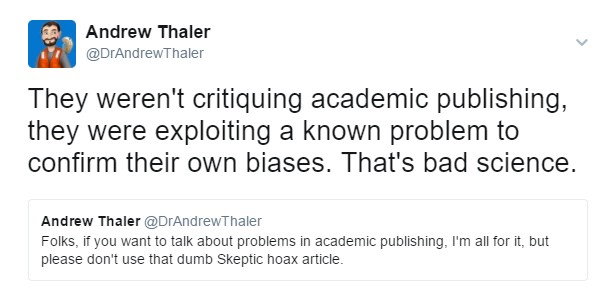
- Skeptic Magazine has a pseudoscience problems. Unfortunately, this time it’s the skeptics promoting some pretty eyebrow-raising junk science. I went a little deeper into this on Twitter.
Lagan (what we’re reading from the peer-reviewed literature)
- Bennet and friends (2017) An appeal for a code of conduct for marine conservation. DOI: 10.1016/j.marpol.2017.03.035. (In related news, San People of South Africa Issue Code of Ethics for Researchers.)
- Mattern and friends (2017) Quantifying climate change impacts emphasises the importance of managing regional threats in the endangered Yellow-eyed penguin. DOI: 10.7717/peerj.3272.
- Amon and friends (2017) Megafauna of the UKSRL exploration contract area and eastern Clarion-Clipperton Zone in the Pacific Ocean: Echinodermata. DOI: 10.3897/BDJ.5.e11794.
- Spalding and friends (2017) Mapping the global value and distribution of coral reef tourism. DOI: 10.1016/j.marpol.2017.05.014.
- Brown and friends (2017) Worldwide exploration of the microbiome harbored by the cnidarian model, Exaiptasia pallida (Agassiz in Verrill, 1864) indicates a lack of bacterial association specificity at a lower taxonomic rank. DOI: 10.7717/peerj.3235.
- Kaim and friends (2017) On which targets should we compromise in Conservation Prioritization Problems? DOI: 10.1111/2041-210X.12812.
Driftwood (what we’re reading on dead trees)
- Drawdown: The Most Comprehensive Plan Ever Proposed to Reverse Global Warming by Paul Hawken. This really is a deep, surprisingly accessible, incredibly valuable resource for anyone working on or worried about climate change. And it’s beautifully produced.
Derelicts (favorites from the deep archive)
- E-waste and the promise of Persistent Technology, from our science fiction series, but still one of my favorites.
Feel free to share your own Foghorns, Flotsam, Jetsam, Lagan, Driftwood, and Derelicts in the comments below. And, of as always, if you enjoy Southern Fried Science, consider contributing to my Patreon campaign to help us keep the servers humming.