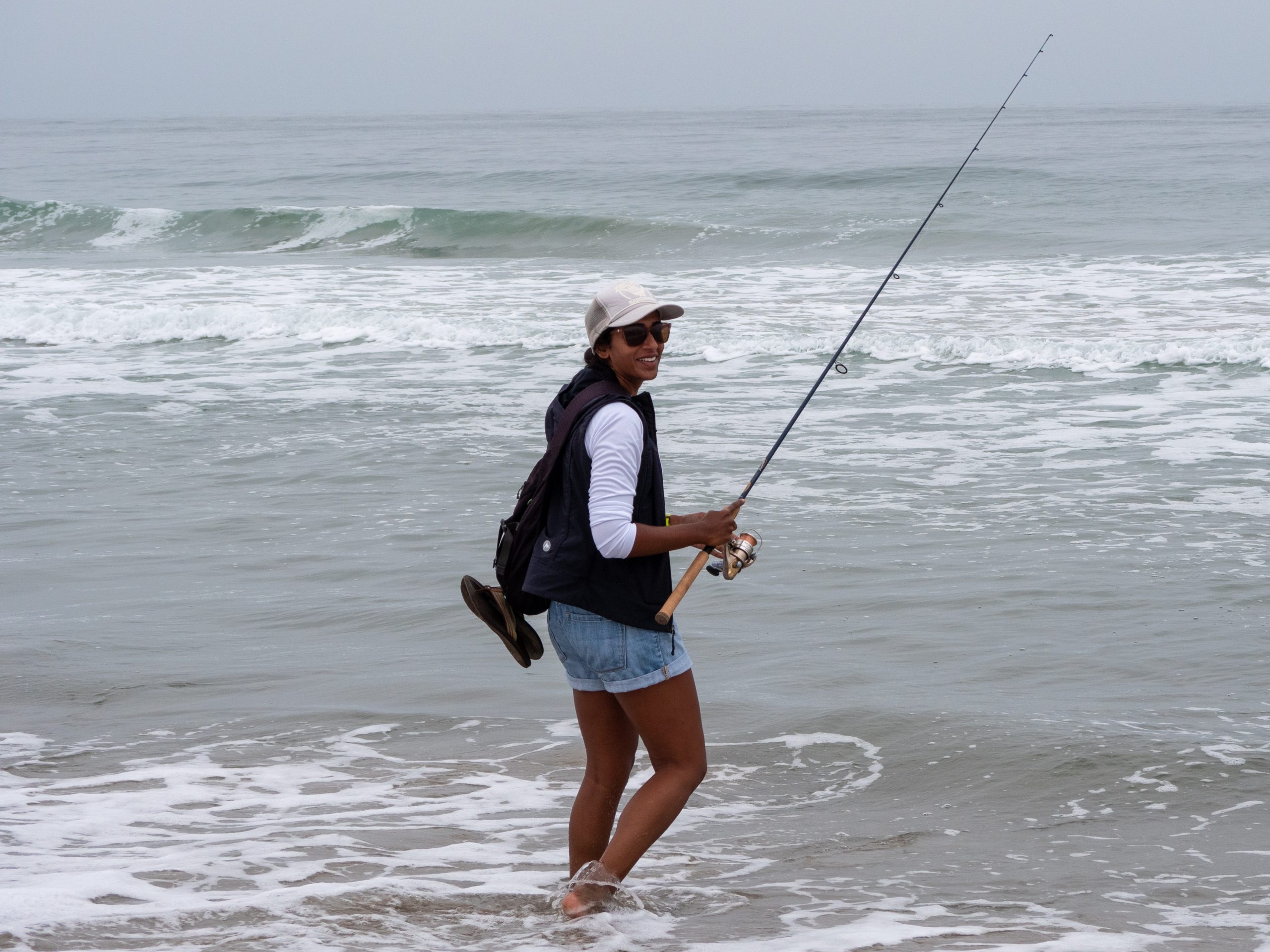
Anupa Asokan, founder and executive director of Fish On—a new fishing interest organization working to advance ocean conservation policy—recently published a peer-reviewed perspective in Frontiers, “Marine Protected Areas as a Tool for Environmental Justice.”
Anupa is a lifelong fisherwoman and has become a passionate advocate for ocean conservation and justice. I’ve known her for several years, and shared the stage with her at the first Upwell conference in Washington, DC in 2023.
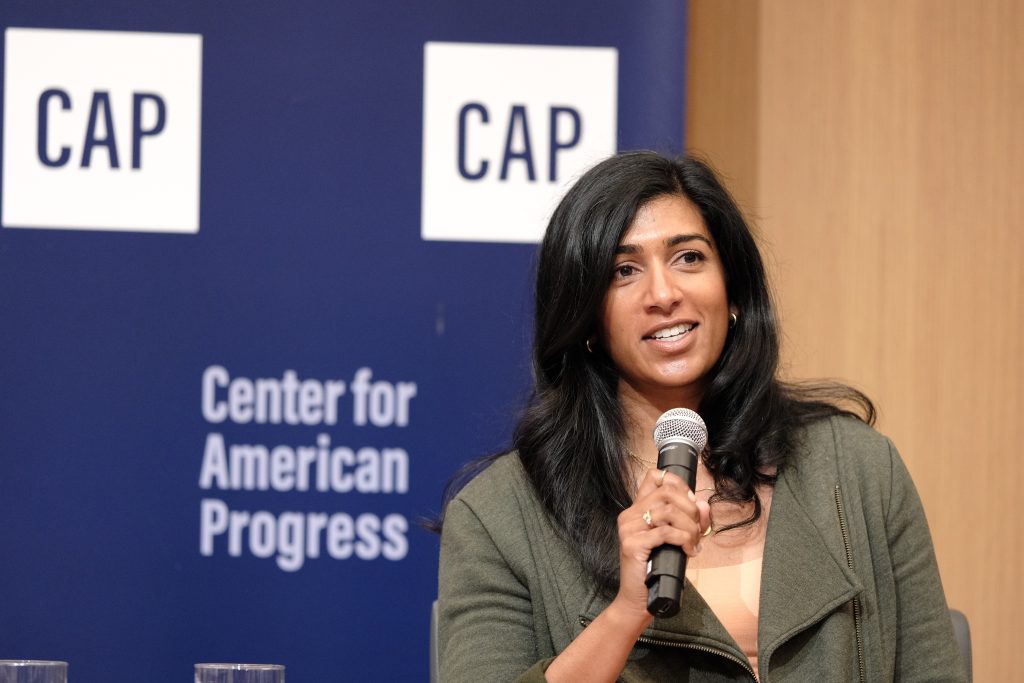
She sat down with me recently to answer 5 questions about her new paper on environmental justice. Here’s a transcript of that conversation (edited for length and clarity):
Angelo Villagomez: Congrats on the paper! What a great way to start the new year. Where does this rank in terms of your career accomplishments?
Anupa Asokan: Thank you! To be honest, while this definitely feels like a highlight worth celebrating, I don’t know that I’ve stopped to think about my career accomplishments in this way. My career has felt more like a winding road (or maybe a rollercoaster!) of discovering how I can best contribute to the issues I care about. For me, this paper helped chip away at an obstacle I felt like I was constantly up against in my advocacy work. It articulates viewpoints I’ve developed through my career and life experiences to date, and (I hope) also offers something we as an ocean conservation community can reference and build on moving forward.
Angelo: I understand this is your first scientific paper. What was going through the peer review process like, and why did you decide to focus on the topic of environmental justice and marine protected areas (MPAs)?
Anupa: My first connection to the ocean was through fishing. I don’t exactly fit the stereotype of a fisher, but it’s something I still do regularly and it has shaped my approach to advocacy. People of color and women are grossly underrepresented in ocean management and I see opportunity to support people that look more like me in the fishing community. MPAs are the quintessential topic that pits fishing against conservation, but as a fisherwoman I see their value, and as a scientist I understand the opportunity MPAs present for conservation.
There is rightful criticism of parachute approaches to conservation. And there is a lot of literature out there discussing the ramifications to communities around the world where this approach has taken place. In the U.S. however, the context of our ocean policy and management is lost in that argument. There are real opportunities to support marginalized communities through meaningful conservation, but not enough research that explores what that looks like. I spent so much time trying to put the ideas in this paper under the U.S. policy context that I missed the potential for these ideas to be relevant in other places. The peer review process helped this emerge and helped me see other gaps and potential opportunities in the ideas presented.
Angelo: A lot of the scientists and ocean advocates I’ve known over the years talk about the importance of using science to make ocean decisions – and I’m assuming most of the readers of this blog accept that as a cornerstone of the conservation movement. You write that “social context is often presented as burdensome.” Can you explain what you mean by that?
Anupa: You once told me that the villains in superhero stories are also science-driven! Science can be used for good or for evil; it’s our values that drive how we interpret and apply that information. Our vision of what the future of the ocean should look like is what ultimately defines our values and underpins the policies we advocate for.
A common argument against conservation policies is that they are a burden to the people that rely on something for their livelihoods. There are examples of outsiders trying to establish a protected area somewhere else in the world without understanding how they will truly impact a local community. But I found this idea repeatedly misrepresented and used by the fishing industry here in the U.S. to undermine potential or existing MPAs that have benefited local communities, including fishing communities. Without understanding the enabling conditions, I think it’s unfair to trivialize all MPAs as burdensome to communities.
Angelo: Some people have been talking about these “enabling conditions” you mention for many years. What are those and why are they important to ocean conservation?
Anupa: In conservation policy, I see the “good vs. evil” trope boiling down to protecting the planet for everyone for the long term, or using up what we have right now. In reality, we have a spectrum of options somewhere in the middle of that. And we have the context that influences which option we choose—data, science, policy, anecdotes, people and their needs, how information is presented to people, political will, and so on. In academic circles, that context is what we call “enabling conditions,” which, essentially, are the circumstances and the details that make an MPA work or not.
Angelo: And what’s the next step for this work, not just for you, but for the national conservation movement?
Anupa: I just started a new conservation organization called Fish On. My goal is to educate and empower other fishers to step into the conservation movement. It’s time to break the stereotype of what a fisherman looks like and more importantly, what we value. I hope that the conservation movement—and the ocean—will be better for it.
To learn more about Anupa’s work you can follow her on Bluesky or LinkedIn.
Angelo Villagomez is a senior fellow with the Center for American Progress, where he focuses on Indigenous-led conservation and ocean justice.