Skip to content

Southern Fried Science

Over 15 years of ocean science and conservation online

  • Home
  • About SFS
  • Authors
  • Support SFS

Sharks aren’t always the top of the food chain

Posted on September 3, 2014 By David Shiffman 1 Comment on Sharks aren’t always the top of the food chain
Blogging, Science

Most people think of sharks as being apex predators, large, fearsome  hunters sitting right at the top of the ocean food chain.  Of course, that isn’t always the case. There are more than 500 known species of sharks, and they vary in size from the size of a pencil to the size of a school bus. In many cases, there’s a larger predator in their environment, which can lead to some surprising and amazing  interactions.

A crocodile ate a bull shark

Brutus, a famous crocodile in Australia, was recently photographed eating a juvenile bull shark. Southern Fried Science writer Sarah Keartes has the full story at EarthTouch.
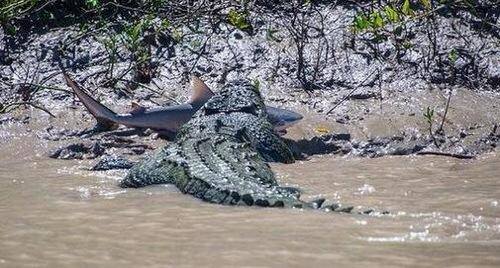
Photo by Andrew Paice

An osprey ate a bonnethead shark.

Florida real estate agent Dragana Connaughton loves birds of prey like ospreys, and goes to the beach regularly to photograph them. This photo, taken right after Hurricane Sandy, is her all time favorite.  “I have never seen a baby bonnethead shark before,  and no less one that ended up in the talons of the osprey for his evening meal,” she told me.
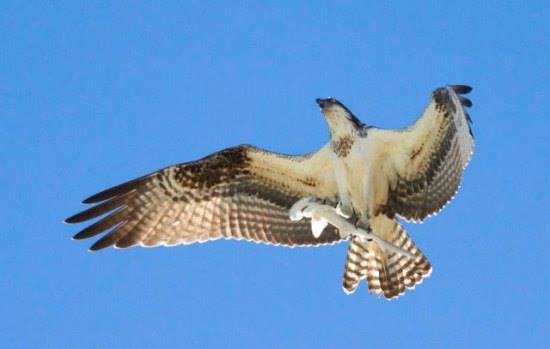
Photo by Dragana Connaughton
Photo by Dragana Connaughton, used with permission


A sea lion ate a leopard shark. 

People think of pinnipeds as being great white shark prey, but they’ve been known to eat smaller sharks like leopard sharks.

httpv://www.youtube.com/watch?v=rhtyzBQcNJc

An octopus ate a dogfish

Though this famous example took place in an aquarium, there’s no reason to suspect it couldn’t also happen in the wild

httpv://www.youtube.com/watch?v=FFOEZh1Lbbg

A moray eel tried to eat a whitetip reef shark

Moray eels can grow pretty large, and they have an incredibly strong bite force. It’s not surprising that they sometimes try (and in this case fail) to eat medium-sized fish like whitetip reef sharks.

httpv://www.youtube.com/watch?v=D05_z1h8uMs

A goliath grouper ate a blacktip shark. 

This recent example has gotten tons of press coverage, but doesn’t surprise those of us lucky enough to have seen these giant and endangered fish in the wild.

httpv://www.youtube.com/watch?v=O37HI_AX9nY

Bonus: a lionfish ate a stingray

Lionfish are perhaps the most famous, or infamous, invasive species in the world. Native to the Info-Pacific, they are now common throughout the Caribbean and Western Atlantic. They’re causing ecological problems by outcompeting native fish for food or directly consuming native fish. This week, though, scientists discovered a new animal inside the stomach of a lionfish killed during the Cayman United Lionfish League tournament in the Cayman Islands: a yellow stingray, close relatives of sharks.
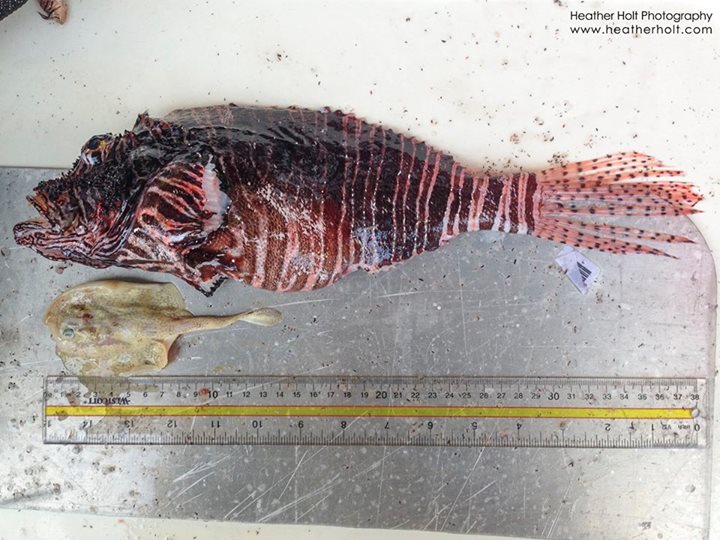
 

Photo credit: Heather Holt, http://heatherholtphotography.blogspot.com/

A great deal of conservation advocacy for sharks stresses that they are ecologically important because of their role as predators. This is true for many species, but others are ecologically important because of a role not often considered for sharks: prey. A more in-depth understanding of shark ecology will lead to an even greater appreciation of their importance to the marine environment.

Share this:

  • Share on Bluesky (Opens in new window) Bluesky
  • Share on Facebook (Opens in new window) Facebook
  • Share on Reddit (Opens in new window) Reddit
  • Share on Threads (Opens in new window) Threads
  • Share on WhatsApp (Opens in new window) WhatsApp
  • Share on Mastodon (Opens in new window) Mastodon

Related

Tags: Lionfish sea lion sharks as prey what eats sharks

Post navigation

❮ Previous Post: Marine Conservation, Inspiration and a Great Big Geek
Next Post: Breaching Blue Chapter 4: Over the Edge ❯

You may also like

Weekly Salvage
Nerds of trust, deep-sea mining, ocean art, and more! Monday Morning Salvage: July 3, 2017
July 3, 2017
Uncategorized
Obama’s ocean monuments, deep diving seals, and sustainable US fisheries: Thursday Afternoon Dredging, May 24th, 2018
May 24, 2018
Weekly Salvage
SeaWorld versus OSHA versus Brett Kavanaugh, sea lions and sucker punches, this dumpster whale is all of us, and more! Monday Morning Salvage: October 1, 2018.
October 1, 2018
Science
Natural history needs more .gifs
September 15, 2014

One thought on “Sharks aren’t always the top of the food chain”

  1. KT Tan says:
    September 3, 2014 at 11:20 pm

    “A more in-depth understanding of shark ecology will lead to an even greater appreciation of their importance to the marine environment.”

    Well said, David. There are a lot of misconception on sharks and unfortunately those with the least knowledge make the most noise.

    Here is the link to my new piece :

    http://www.eurasiareview.com/27082014-western-hypocrisy-sharks-fin-debate-analysis/

Comments are closed.

Popular Posts

I can serve on your graduate thesis committee. Here’s what you can expect of me, and what I expect in return.I can serve on your graduate thesis committee. Here’s what you can expect of me, and what I expect in return.October 16, 2025David Shiffman
Why the new Trump order to shoot wolves is both illegal and a dreadful precedent for endangered speciesWhy the new Trump order to shoot wolves is both illegal and a dreadful precedent for endangered speciesSeptember 5, 2026Ali Gaster
Shark of Darkness: Wrath of Submarine is a fake documentaryShark of Darkness: Wrath of Submarine is a fake documentaryAugust 10, 2014Michelle Jewell
Zombie ideas in conservation: trophy hunting and conservationZombie ideas in conservation: trophy hunting and conservationAugust 6, 2026Ali Gaster
What is a Sand Shark?What is a Sand Shark?November 12, 2017Chuck Bangley
What Ocean Ramsey does is not shark science or conservation: some brief thoughts on "the Shark Whisperer" documentaryWhat Ocean Ramsey does is not shark science or conservation: some brief thoughts on "the Shark Whisperer" documentaryJuly 2, 2025David Shiffman
Reflections on the Boundary of Science and PolicyJune 20, 2016Bluegrass Blue Crab
Aliens, Ridley Scott, and bad scienceAliens, Ridley Scott, and bad scienceSeptember 3, 2026Chris Parsons
Have we found the city of Atlantis?Have we found the city of Atlantis?September 1, 2026Chris Parsons
Your help needed: Oppose a weakened shark finning ban in MarylandYour help needed: Oppose a weakened shark finning ban in MarylandJanuary 26, 2014David Shiffman
Subscribe to our RSS Feed for updates whenever new articles are published.

We recommend Feedly for RSS management. It's like Google Reader, except it still exists.

Southern Fried Science

  • Home
  • About SFS
  • Authors
  • Support SFS


If you enjoy Southern Fried Science, consider contributing to our Patreon campaign.

Copyright © 2026 Southern Fried Science.

Theme: Oceanly Premium by ScriptsTown