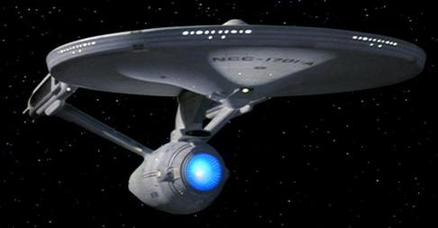
Star Trek is a global phenomenon. There is an entire streaming service that is essentially supported by the franchise. There are massive conventions full of fans wearing Stra Trek uniforms. It has gone from a short-run TV show to a part of our culture. But not only has Star Trek been a huge hit for the fans, it has also inspired generations of viewers to become scientists. Moreover, the technology on the show has also inspired decades of engineering innovation from flip phones, to touch screens and tablets.
But why hasn’t there been a similar Sea Trek for the oceans?
The closest we have got is Seaquest DSV, which I remember watching as a kid. It was an attempt to bring Star Trek to the oceans. It even had the guy from Jaws as the Captain. But it ultimately failed.
The show never decided if it wanted to be a grounded science series, a campy action show, or a gritty military thriller. The first season had potential. It focused on oceanic research and environmentalism. It featured real-world oceanographer Dr. Robert Ballard giving short educational “fact vs. fiction” blurbs after every episode (something that has now been copied by the space TV show For All Mankind).
But the TV executives tried to fill it with cheesy tropes and campy scenarios, to get rid of the science and introduce “hotter, younger” actors and more “action-heavy” scripts. They just didn’t get it.
Then they introduced aliens, psychic powers, and giant sea monsters. They ditched Bob Ballard’s scientific facts and sent two actors to sit in a pool at SeaWorld with dumbed down factoids instead, which alienated fans of the show’s original scientific premise. Then tone shifted to international warfare.
The star, Roy Schneider (of Jaws fame) called the second season “childish trash” and “junk”. It was ultimately “death by studio executive”. Like many of the Star Trek spin offs executives thought they knew what the public wanted (“ditch the science” and “dumb it down”) leading to a dreadful show (e.g. Star Trek Enterprise).
A real Star Trek for the oceans
To truly capture the public’s imagination, the ocean science community needs its own Star Trek. A narrative engine that frames the deep sea not as a scary basement, but as a vast, high-tech frontier ripe for discovery. While Star Trek made “boldly going” a cultural mandate, the ocean equivalent remains trapped in the tropes of horror or fantasy. We need a series where the “United Federation of Oceans” explores the Abyssal Plain with the same sense of wonder, diplomacy, and rigorous engineering seen on the starship Enterprise.
By moving away from “monster of the week” stories like Meg 2 and toward a vision of a technologically advanced, sustainable future underwater, we can shift the public perception of marine biology from a niche hobby to a grand, heroic endeavor. Imagine a show where the “bridge” is a state-of-the-art research submersible travelling between underwater habitats. The “aliens” could be the very real, bioluminescent marvels of the midnight zone. Ocean scientists and the crew could tackle underwater disasters and international maritime diplomacy. The hit sci-fi space show For All Mankind doesn’t haveany aliens. Its drama revolves around the characters, politics and engineering difficulties of space travel.
That’s not to say the adventures shouldn’t discover something weird and wonderful under the oceans – whether it be intelligent deep-sea octopuses or the ruins of Atlantis. But whatever it does should be based on scientific possibilities.
Such a show could transform the deep ocean from a place of fear into a place of infinite possibility.
But … aliens!
There is also the possibility of combining ocean science and space science, by setting a show on one (or all) of the various moons in our solar system that may have oceans: Jupiter’s moons Europa, Ganymede, and Callisto; Saturn’s moons Enceladus and Titan; and Neptune’s moon Triton.
If you set a show in these locations, you could combine oceans science with the possibilities of speculative alien life. Moreover, the different moons could have different ocean environments and evolutionary pathways to add variety. It could still include the submersibles and under ocean habitats, with plots based on real world ocean science, but it could also allow Star Trek-style moral dilemmas. What would humans do if they found alien life that was completely different to us?
Let’s face it, I really want to see a show with an intelligent cephalopod and nudibranch civilizations … and submarines!