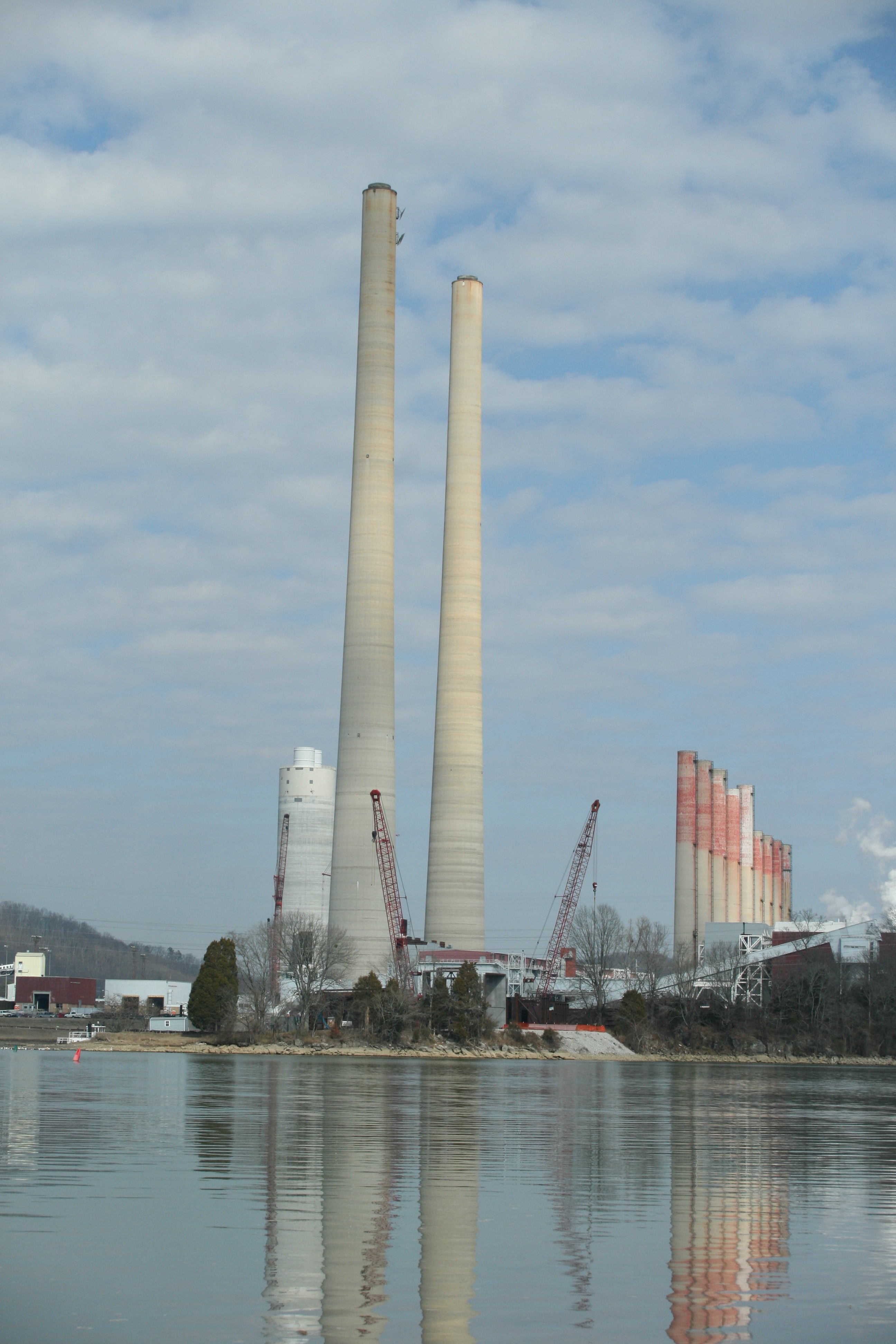
 Ever wonder why coal-fired power is so much cheaper than the alternatives? Coal-producing communities aren’t paid for their personal health impacts, the environment is not paid for streams turned acid, and mountains are not paid for their removal. More subtle costs are also passed on: rising rates of asthma from particulates in the air, introduction of malaria into previously unaffected areas from a warming world, and the relocation of whole countries due to sea level rise.
Pollution is a classic example of an economic externality – companies choosing not to sequester chemicals in their effluent pass the cost of pollution and remediation on to those downstream. Therefore the cost of production signaled by price does not represent the true cost of production. The contradiction is deeper, however, and forms one of the main critiques of capitalism – the “second contradiction of capitalism”. Capitalism relies on the continual growth of the market, costs determined by the raw material and labor inputs. However, these costs assume limitless availability of what Marx calls “conditions of production” – the infrastructure and environmental services that are required for production. These, however, are not limitless and therefore not cost-free. Rising costs will eventually outpace price and production will therefore cease (O’Connor 1998).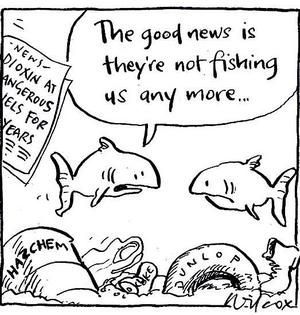 The way of avoiding the contradiction is to fully internalize the cost of environmental services at the site of production. Mansfield (2010) uses the example of toxins in fish such as mercury. Toxins levels are reported to inform consumer choice, but not presented as a problem to be fixed by reducing the number or amount of toxins released into the environment. The polluting industries are therefore passing on the cost of their externality to the consumers in the form of health care costs. Mansfield suggests holding the polluting industries accountable instead. Perhaps the most news-worthy example of this process is global climate change. Carbon dioxide has recently been ruled a pollutant through a lawsuit to the US EPA under the Clean Air Act (Massachusetts v. EPA). Therefore, emissions must be limited to safe levels, currently defined by the goals of the Kyoto Protocol to reduce emissions to 1990 levels. Two market mechanisms have been introduced to internalize the cost of carbon production: a carbon tax and a cap-and-trade system.
The carbon tax would associate a cost with carbon emissions that is set at a price calculated from supply and demand curves, largely for coal-fired power. Theoretically, as price is increased by the inclusion of a tax, power demand would go down accordingly and an appropriate tax can be calculated from the desired drop in demand. This method assumes a direct correlation between price and demand, however – a relationship not often observed in utility provision.
The other means of internalizing the cost of carbon emissions is through a cap-and-trade program like the one in place for sulfur dioxide under the Montreal Protocol. The federal government would set a cap based on Kyoto Protocol targets and allocate permits to existing emitters based on percentage of total carbon they currently produce. Emitters then face a choice of increasing capture technologies or substituting production methods to decrease their emissions to permitted levels or buying additional permits from other emitters. Cap-and-trade seems to be the favored policy by the US Congress (e.g. the McCain-Feingold climate bill).

Even though power and the coal industry have been held up as the typical example of the need to internalize the full cost of production, almost everything produced by today’s consumer culture is guilty of a similar process. Companies feel the need to drop their prices in order to sell consumers their stuff and as a result, there’s no room in the budget for the environment to get paid. On a personal note, I challenge you all to look into the production of some of your favorite items – you might be surprised.