Skip to content

Southern Fried Science

Over 15 years of ocean science and conservation online

  • Home
  • About SFS
  • Authors
  • Support SFS

Tag: Antarctica

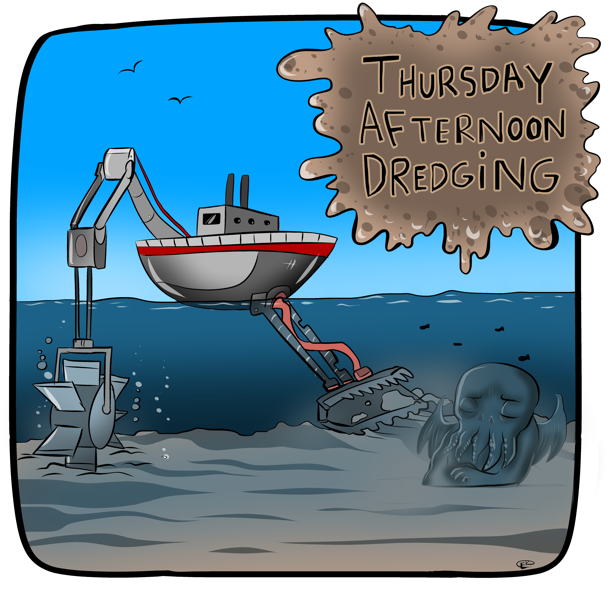
Sinking squid, salmon-eating seals, and rebounding cod: Thursday Afternoon Dredging, January 18th 2018

Posted on January 18, 2018January 19, 2018 By David Shiffman
Uncategorized

Cuttings (short and sweet): 

  • Follow Dr. Toby Daly-Engel’s shark research lab on twitter!
  • Cod catch at an all-time low, but a rebound could be near. By Patrick Whittle, for the Associated Press.
  • Right whale died from fishing gear. From CBC News

Read More “Sinking squid, salmon-eating seals, and rebounding cod: Thursday Afternoon Dredging, January 18th 2018” »

Snot Bots for whale health, critical dolphins, lobster considerations, and more! Monday Morning Salvage: January 15, 2018.

Posted on January 15, 2018January 19, 2018 By Andrew Thaler
Uncategorized, Weekly Salvage

Fog Horn (A Call to Action)

  • 2018 is almost certainly going to be a record year for FOIA requests. Learn how to do them right and get results thanks to Pro Publica: I’ve Sent Out 1,018 Open Records Requests, and This Is What I’ve Learned.

Flotsam (what we’re obsessed with right now)
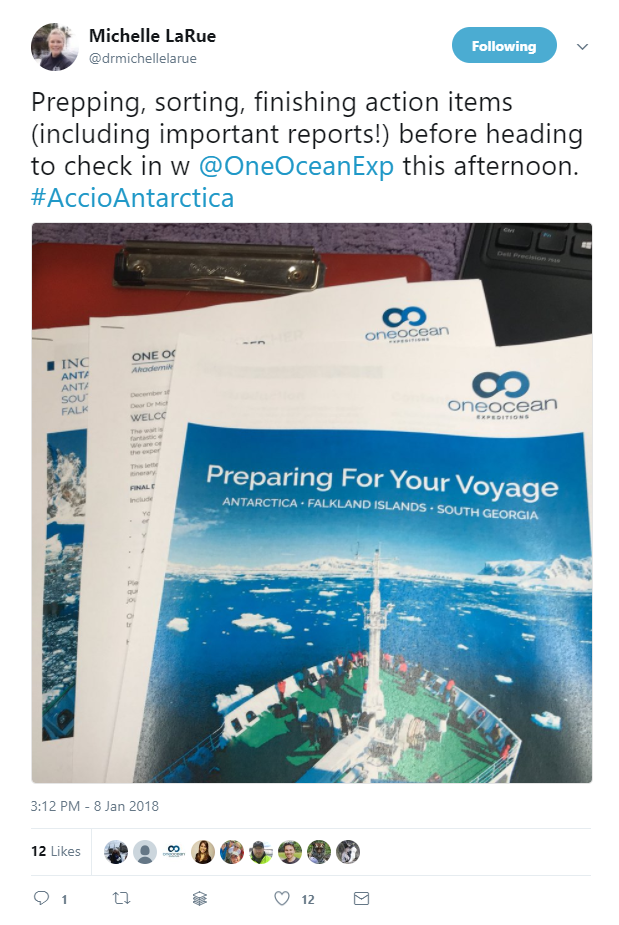
  • Dr. Michelle LaRue is off to Antarctica and you can follow along through the magic of Twitter. #AccioAntarctica!

Screen cap of linked tweet.

  • The Cinematic Legacy of Jacques Cousteau: The man, the myth, the legend, and his persistent influence on screen.
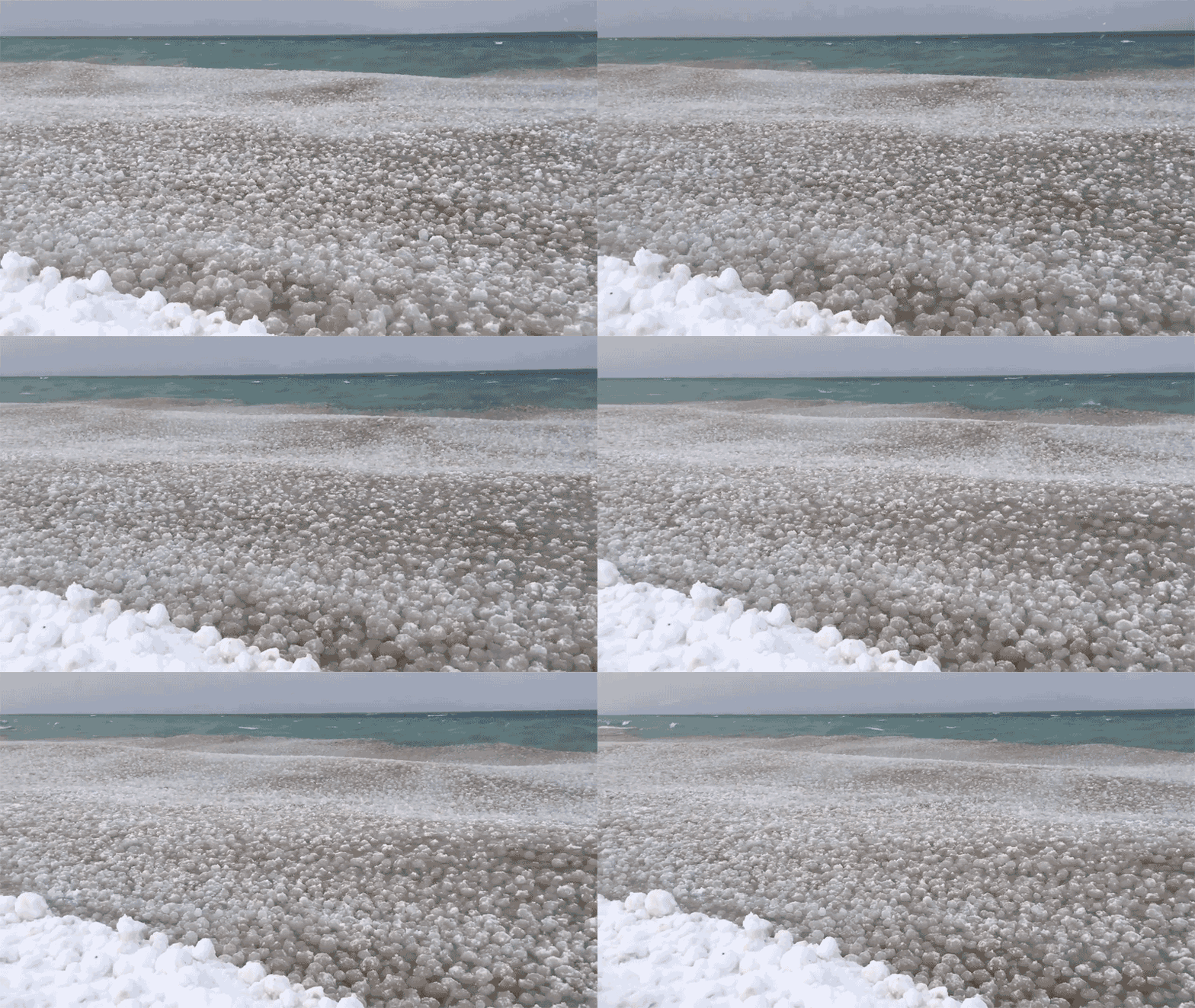
  • Lake Michigan’s Latest Ice Ball Outbreak Was Incredible. Earther has the best GIF game in town.
Ice balls and slush waves.
Paul May via Storyful.

Read More “Snot Bots for whale health, critical dolphins, lobster considerations, and more! Monday Morning Salvage: January 15, 2018.” »

Southern Fried Science year-in-review, Palau’s Giant, a new challenge for deep-sea mining, Porgs are Puffins, and more! Monday Morning Salvage: December 25, 2017.

Posted on December 25, 2017December 25, 2017 By Andrew Thaler
Weekly Salvage

Happy Holidays from the Southern Fried Science Team!

Fog Horn (A Call to Action)

  • The Saipan Blog’s Angelo Villagomez put together a list of extraordinary Indigenous Pacific Conservationists to Follow on Twitter in 2018. Go. Follow them. Learn what’s really happening in Pacific Conservation.

Flotsam (what we’re obsessed with right now)
  • Do-it-yourself science is taking off. A growing movement seeks to make the tools of science available to everyone (including you). I love that The Economist now has a “Punk Science” heading.
  • Palau now requires all tourists to sign an environmental pledge when they enter the country. All flights in now feature this delightful short film.

https://www.youtube.com/watch?v=KhuY8eNLzBM
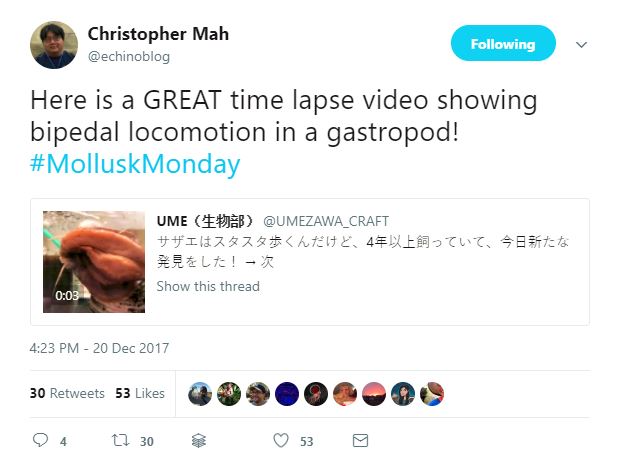
  • Arlo Guthrie was right! Cool short video of bipedal “walking” in gastropods. Clamzo boys, Clamzo!

Read More “Southern Fried Science year-in-review, Palau’s Giant, a new challenge for deep-sea mining, Porgs are Puffins, and more! Monday Morning Salvage: December 25, 2017.” »

Lessons from Puerto Rico, mutant starfish, pictures of ships, and more! Monday Morning Salvage: October 9, 2017.

Posted on October 9, 2017 By Andrew Thaler
Weekly Salvage

Flotsam (what we’re obsessed with right now)
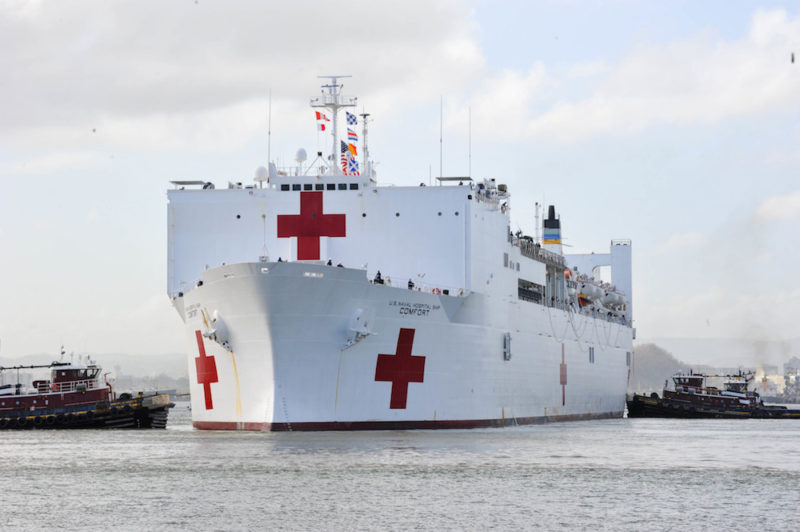
  • A fish scientist’s 10 tips for surviving a hurricane: Lessons learned from Puerto Rico from our friends at the Fisheries Blog.
  • Commentary: For Hurricane-Hit Puerto Rico, an Insider’s Guide to Disaster Management by gCaptain.
The Military Sealift Command hospital ship USNS Comfort (T-AH 20) arrives in San Juan, Puerto Rico, Oct. 3, 2017. U.S. Navy Photo

Read More “Lessons from Puerto Rico, mutant starfish, pictures of ships, and more! Monday Morning Salvage: October 9, 2017.” »

Asian carp, airguns, and cod recoveries: Thursday Afternoon Dredging: June 29th, 2017

Posted on June 29, 2017June 29, 2017 By David Shiffman
Uncategorized


Cuttings (short and sweet):

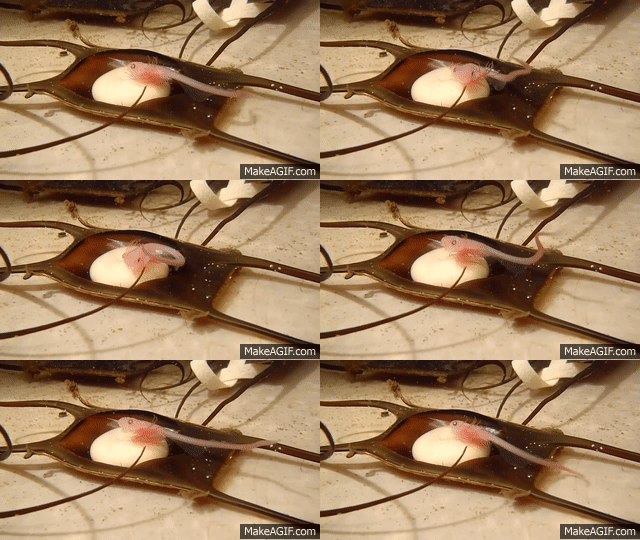
  • Watch what a little skate looks like inside an embryo, from the Gillis Lab at the University of Cambridge

    Little skate embryo, courtesy of Gillis Lab
  • Follow the Fur Bearers, a Vancouver-based mammal conservation organization, on twitter!
  • Invasive Asian carp found in Great Lakes, beyond electrified barrier. By Oliver Milman, for the Guardian.
  • 6 things you’re missing if you’re not watching deep sea research live feeds. By Alexis Baldera, for the Ocean Conservancy Blog.

Read More “Asian carp, airguns, and cod recoveries: Thursday Afternoon Dredging: June 29th, 2017” »
What does your sandwich cost, rare species in the deep, dong worms, and more! Monday Morning Salvage: June 26, 2017

Posted on June 26, 2017June 26, 2017 By Andrew Thaler
Weekly Salvage

Flotsam (what we’re obsessed with right now)

  • NPR did a great breakdown on the full carbon cost of one sandwich.
  • Public Lab was born from the desperate need for unconflicted data during the Deepwater Horizon disaster. Since then, they’ve grown into a global movement for citizen science. They just relaunched their world-changing balloon mapping kit on Kickstarter. Get yours now!

Read More “What does your sandwich cost, rare species in the deep, dong worms, and more! Monday Morning Salvage: June 26, 2017” »

No, there isn’t a UFO sitting in Antarctica.

Posted on February 2, 2017 By Andrew Thaler
Popular Culture

One of my favorite things to do is browse through google maps looking for weird formations and places of historical curiosity. Apparently I’m not alone, as there are hordes of map hunters searching for the bizarre on this increasingly bizarre world. That’s right! It’s time for yet another installment of “this thing on Google maps is not a sea-monster/alien/UFO/ancient pyramid”.
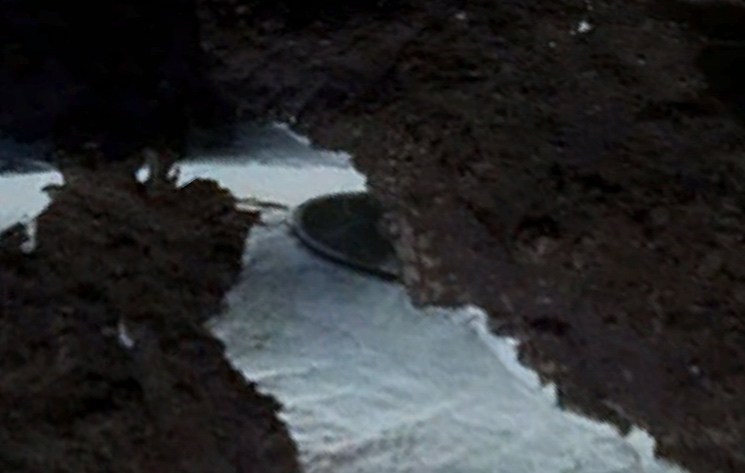
The Object on Google Earth.

This newest discovery comes from Antarctica, where monster hunters have found what looks like a perfect disc sitting on the ice. Could it be a UFO? The image is surprisingly compelling.

It’s very round for one, and it looks like it’s sitting on top of a glacier, partially covered by rock. The 60-foot-wide object looks remarkably like a classic flying saucer.

SPOILERS: It’s not a UFO.

Read More “No, there isn’t a UFO sitting in Antarctica.” »

Did monster hunters find a 120 meter long giant squid on google maps?

Posted on June 17, 2016June 19, 2016 By Andrew Thaler 5 Comments on Did monster hunters find a 120 meter long giant squid on google maps?
Uncategorized

No. No they did not. I awoke this morning to a delightful flood of emails in my inbox pointing to this article: Has a KRAKEN been spotted on Google Earth? Monster hunters claim to have found 120m long giant squid-like creature. In short, while exploring the area around Deception Island on Google Earth, some well-known anomaly hunters … Read More “Did monster hunters find a 120 meter long giant squid on google maps?” »

The Ocean Adventure: mud, robots, and ecosystems

Posted on May 24, 2012May 29, 2012 By Andrew Thaler 2 Comments on The Ocean Adventure: mud, robots, and ecosystems
Science

We traveled to Cape Lookout Bight aboard the R/V Susan Hudson to sample sediment and test our homemade ROV. Along the way, we asked the research team to talk about their favorite marine ecosystems. httpv://www.youtube.com/watch?v=_vpX4XGNjf8 Let us know what your favorite marine ecosystems are in the comments below.

Beneath the Broken Ice: Playing with Mud

Posted on April 18, 2012April 18, 2012 By Guest Writer
Science

Megumi Shimizu is a graduate student aboard the RVIB Nathaniel B. Palmer to collect sediment samples near Antarctic Peninsula as a part of the LARISSA project. She is interested in microorganisms and biogeochemistry of marine sediments; how the metabolism of microorganisms interact with the surrounding environment and the chemical components in sediments. See her first update here.


Are you playing with mud on the research vessel?

Some people on the ship joked when they saw me processing my sediment core. Yes, I’m playing with mud in Antarctica. Sampling sediments can tell us a lot, not only what happened across geologic time scales, but also what kind of organisms are living in the sediment, microbiology, and the geochemical conditions. We are serious about collecting mud and playing with mud.
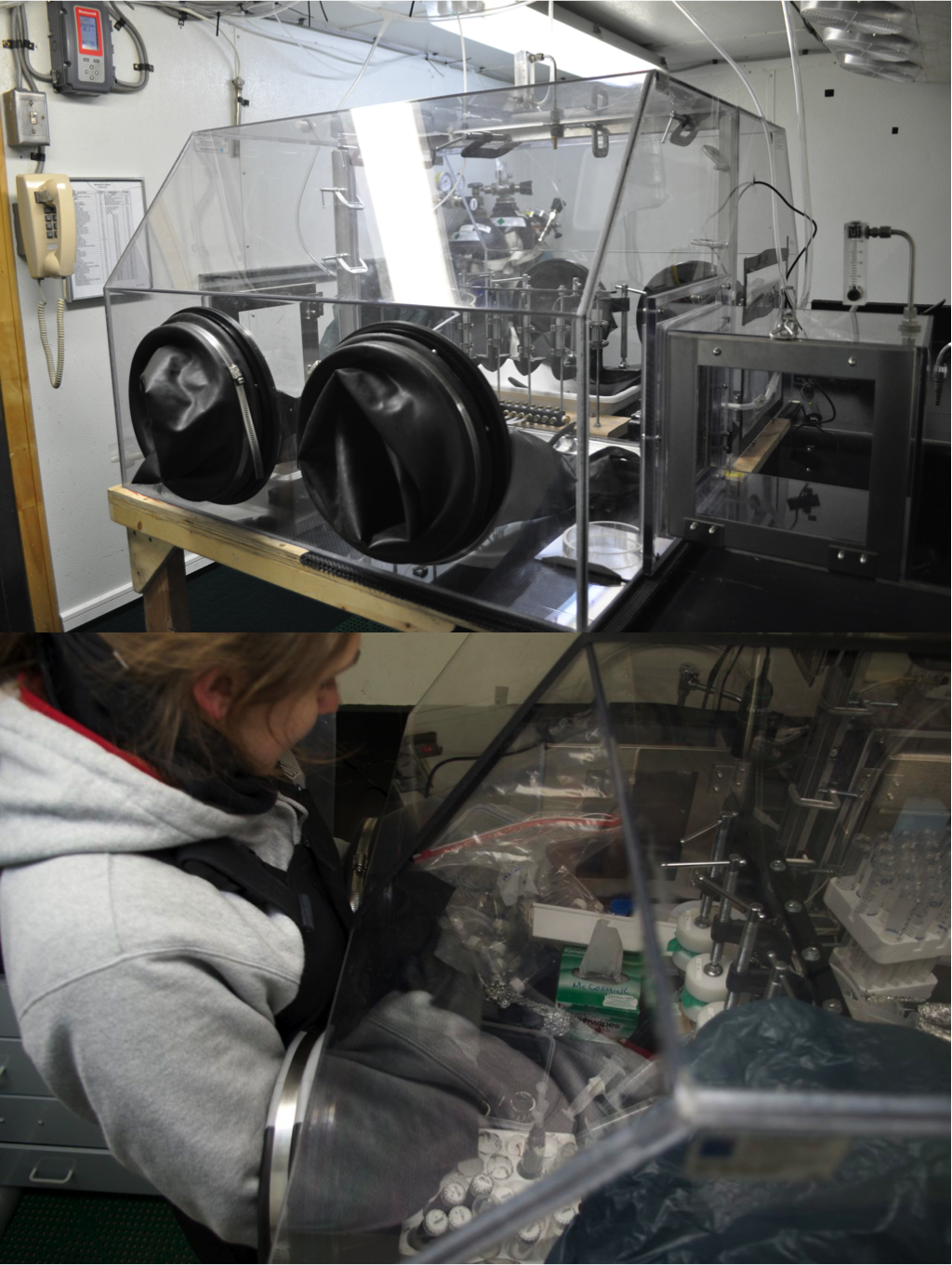
upper panel: the entire view of glove box, lower panel: Liz Bucceri working on sediment sample processing in glove box. Photo by Megumi Shimizu

Nathaniel B. Palmer has three pieces of equipment to collect sediment; the megacore, kasten core, and jumbo piston core. The length you can reach below seafloor is different, 40cm, 1.5 to 6m and 24m respectively. Megacore is more suitable for biological studies since it preserves the sediment-water interface better than kasten core and jumbo piston core. Geological studies prefer Kasten core and jumbo piston core so that they can get older data from the sediment.

For my microbial lipid biomarker study, I’m taking samples from the megacore and kasten core. Along with microbial lipid and DNA, our team is collecting sediment and porewater (the water in pore spaces of sediments) to analyze geochemical properties of sediments, such as methane, sulfate, sulfide, and dissolved inorganic carbon. To maintain the condition of the sediments as close as the real environment, the sediment cores are processed under the condition of cold (~0C degree) and anoxic (no oxygen). How to make that condition? We have a special room called “The Little Antarctica”, on the ship, which is a big refrigerator containing glove box. A glove box is the transparent container with two pairs of gloves. The inside of the box is kept practically anoxic (less than 1% of oxygen. Atmospheric oxygen is ~20%).

Read More “Beneath the Broken Ice: Playing with Mud” »

Posts pagination

Previous 1 2 3 4 Next

Popular Posts

Shark scientists want their research to help save threatened species, but don’t know how. Our new paper can help.Shark scientists want their research to help save threatened species, but don’t know how. Our new paper can help.December 1, 2025David Shiffman
Norway and Cook Islands put their deep-sea mining plans on pause.Norway and Cook Islands put their deep-sea mining plans on pause.December 3, 2025Andrew Thaler
What Ocean Ramsey does is not shark science or conservation: some brief thoughts on "the Shark Whisperer" documentaryWhat Ocean Ramsey does is not shark science or conservation: some brief thoughts on "the Shark Whisperer" documentaryJuly 2, 2025David Shiffman
What we know we don't know: impacts of deep-sea mining on whales, dolphins, sharks, turtles, and other migratory species.What we know we don't know: impacts of deep-sea mining on whales, dolphins, sharks, turtles, and other migratory species.November 20, 2025Andrew Thaler
2025: My year in writing, public speaking, and media interviews2025: My year in writing, public speaking, and media interviewsDecember 3, 2025David Shiffman
The Trouble with Teacup PigsThe Trouble with Teacup PigsOctober 14, 2012Andrew Thaler
Urea and Shark OsmoregulationUrea and Shark OsmoregulationNovember 15, 2010David Shiffman
How tiny satellites are tracking marine wildlifeDecember 1, 2025Andrew Thaler
Shark of Darkness: Wrath of Submarine is a fake documentaryShark of Darkness: Wrath of Submarine is a fake documentaryAugust 10, 2014Michelle Jewell
Build a dirt cheap, tough-as-nails field computer in a Pelican caseBuild a dirt cheap, tough-as-nails field computer in a Pelican caseJuly 21, 2015Andrew Thaler
Subscribe to our RSS Feed for updates whenever new articles are published.

We recommend Feedly for RSS management. It's like Google Reader, except it still exists.

Southern Fried Science

  • Home
  • About SFS
  • Authors
  • Support SFS


If you enjoy Southern Fried Science, consider contributing to our Patreon campaign.

Copyright © 2025 Southern Fried Science.

Theme: Oceanly Premium by ScriptsTown