Skip to content

Southern Fried Science

Over 15 years of ocean science and conservation online

  • Home
  • About SFS
  • Authors
  • Support SFS

Tag: education

“Twitter sucks now and all the cool kids are moving to Bluesky:” Our new survey shows that scientists no longer find Twitter professionally useful or pleasant

Posted on August 19, 2025August 20, 2025 By David Shiffman 3 Comments on “Twitter sucks now and all the cool kids are moving to Bluesky:” Our new survey shows that scientists no longer find Twitter professionally useful or pleasant
“Twitter sucks now and all the cool kids are moving to Bluesky:” Our new survey shows that scientists no longer find Twitter professionally useful or pleasant
Blogging, Education, Featured, Science

My colleague Dr. Julia Wester and I have a new paper out in the journal Integrative and Comparative Biology reporting on the results of a survey distributed to over 800 scientists, science educators, and science communicators. I presented these results at the 2025 Joint Meeting of Ichthyologists and Herpetologists. Our study confirms a trend that’s … Read More ““Twitter sucks now and all the cool kids are moving to Bluesky:” Our new survey shows that scientists no longer find Twitter professionally useful or pleasant” »

10 Tips for Running a Dungeons & Dragons Campaign for Education

Posted on February 26, 2025 By Andrew Thaler
10 Tips for Running a Dungeons & Dragons Campaign for Education
Education, Featured

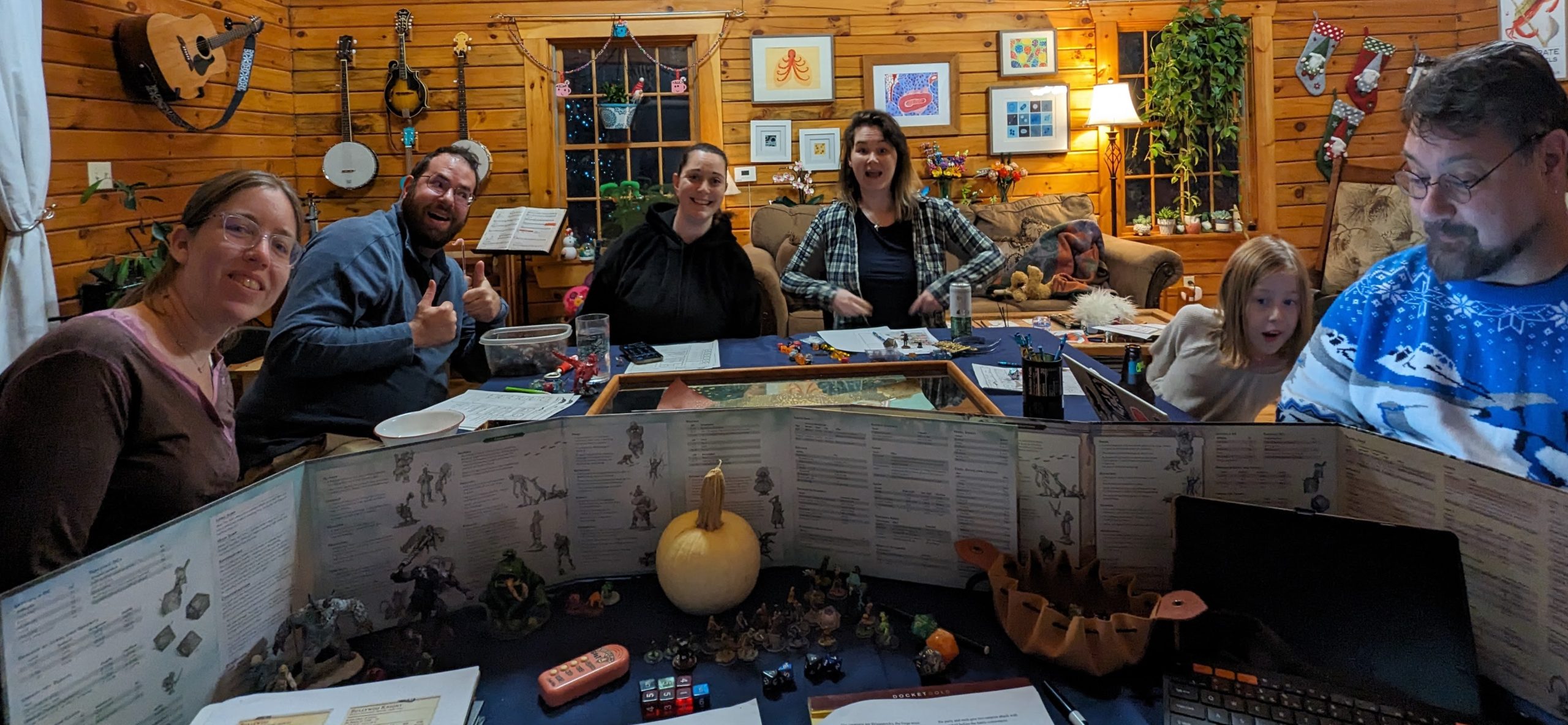
This December, I published The Last Hunt for the Jabberwock: A Feywild Adventure in Ecologic Succession on the Dungeon Master’s Guild. Last Hunt for the Jabberwock is a 12 to 20 hour Dungeons & Dragons campaign with a twist: the adventure, set in a whimsical forest in the midst of tremendous environmental change is complemented … Read More “10 Tips for Running a Dungeons & Dragons Campaign for Education” »

Creating Healthy Working Cultures in Marine Science Education

Posted on April 10, 2020April 10, 2020 By Catherine Macdonald
Academic life, Education

Below you’ll find a document I’ve been thinking about for more than a decade. I teach marine science field skills to undergraduates and graduate students at Field School and the University of Miami, and I’ve had a lot of opportunities to observe science and scientific learning in action. This is my best effort to distill the key principles I’ve learned about creating a healthy, supportive working environment. Starting the year, my students at Field School will all read and sign on to these principles before working with us.

It feels important to add that cultures are the product of choices and actions (or inaction). They don’t create themselves; they are created by the people within them. That means, sadly, that in every toxic organization there are people who choose, and benefit (or think they benefit) from that toxicity. The good news is that it also means we can choose something else. It’s not out of our hands.     

I’ve spent a lot of my time thinking about how to create welcoming, supportive learning environments for all of my students. And no: I don’t believe compassion and acceptance mean you have to sacrifice scientific rigor—in fact, I think students learn and grow more in these settings.

If you are also engaged in looking for solutions to the systemic problems in how we train future marine scientists, please feel free to join me by sharing this, implementing it in your own teaching, or reaching out with suggestions for how it can be improved based on your knowledge and practice. If you are a student who is struggling with these issues and you need advice or a friendly ear, please know that you are not alone, and my inbox is always open to you.

Read More “Creating Healthy Working Cultures in Marine Science Education” »

Popular Posts

Shark scientists want their research to help save threatened species, but don’t know how. Our new paper can help.Shark scientists want their research to help save threatened species, but don’t know how. Our new paper can help.December 1, 2025David Shiffman
Norway and Cook Islands put their deep-sea mining plans on pause.Norway and Cook Islands put their deep-sea mining plans on pause.December 3, 2025Andrew Thaler
What Ocean Ramsey does is not shark science or conservation: some brief thoughts on "the Shark Whisperer" documentaryWhat Ocean Ramsey does is not shark science or conservation: some brief thoughts on "the Shark Whisperer" documentaryJuly 2, 2025David Shiffman
What we know we don't know: impacts of deep-sea mining on whales, dolphins, sharks, turtles, and other migratory species.What we know we don't know: impacts of deep-sea mining on whales, dolphins, sharks, turtles, and other migratory species.November 20, 2025Andrew Thaler
2025: My year in writing, public speaking, and media interviews2025: My year in writing, public speaking, and media interviewsDecember 3, 2025David Shiffman
The Trouble with Teacup PigsThe Trouble with Teacup PigsOctober 14, 2012Andrew Thaler
Urea and Shark OsmoregulationUrea and Shark OsmoregulationNovember 15, 2010David Shiffman
How tiny satellites are tracking marine wildlifeDecember 1, 2025Andrew Thaler
Shark of Darkness: Wrath of Submarine is a fake documentaryShark of Darkness: Wrath of Submarine is a fake documentaryAugust 10, 2014Michelle Jewell
Quick Tips for Graduate Student Life - Write a Book ReviewJanuary 23, 2014Andrew Thaler
Subscribe to our RSS Feed for updates whenever new articles are published.

We recommend Feedly for RSS management. It's like Google Reader, except it still exists.

Southern Fried Science

  • Home
  • About SFS
  • Authors
  • Support SFS


If you enjoy Southern Fried Science, consider contributing to our Patreon campaign.

Copyright © 2025 Southern Fried Science.

Theme: Oceanly Premium by ScriptsTown