Skip to content

Southern Fried Science

Over 15 years of ocean science and conservation online

  • Home
  • About SFS
  • Authors
  • Support SFS

Tag: FAA

Science Flyers: My comment to the FAA regarding proposed new drone regulations.

Posted on April 8, 2015April 8, 2015 By Andrew Thaler
Science

I submitted the following to the FAA regarding docket number FAA-2015-0150: Operation and Certification of Small Unmanned Aircraft Systems. Comments can be filed online, but I also sent an actual, physical letter. If you care about the regulation of drone in US airspace, you have until April 24, 2015 to submit you own.


I am a marine ecologist based in Virginia, with plans to operate small Unmanned Aircraft Systems in the conduct of marine ecologic research.

With regards to the FAA’s recently proposed regulations for the Operation and Certification of Small Unmanned Aircraft Systems, I find that the vast majority of suggested restrictions and requirements to be both reasonable and not particularly onerous for those wishing to operate UAS’s for commercial purposes. I commend the FAA for taking a pragmatic approach to UAS regulation. In particular, I support the requirement for a comprehensive knowledge test, which will be separate from and less expensive than a full pilot’s license. I also appreciate the recognition that UAS technology is advancing so quickly that a certification of airworthiness for specific airframes will place an undue burden on commercial pilots and force them to operate vehicles several generation behind the state of the art. I also approve of a special exemption for “microdrones”, which have significantly a lower safety risk and allow UAS pilots additional freedom in their use of very small vehicles.

I approve of the requirement that operators maintain visual line-of-sight, however, in the proposed regulations, there are make no provisions for autonomous flight. Autonomous flight dramatically changes the relationship between the aircraft and the operator and is an essential component of ecological surveys, allowing drones to fly straight transects and pinpoint sampling sites. This points to a more specific problem with the proposed regulations: in current form, there is little clarity regarding the role of scientists and other researcher in relation to UAS use. Will ecologists fall under the same restrictions as commercial drone pilots, or will they be treated more similar to hobbyist?

I urge the FAA to adopt a “Science Flyer” certification, similar to the American Association of Underwater Scientists “Science Diver” program. To wit, science divers have enhanced training requirements over recreational SCUBA divers, but less than professional commercial divers. A Science Flyer program could span a similar gap, with more training requirements than a hobbyist but fewer restrictions than a commercial UAS operator and could also provide additional training and certification to allow for autonomous operation.

Read More “Science Flyers: My comment to the FAA regarding proposed new drone regulations.” »
How will the FAA’s proposed rules impact drone use for research and conservation?

Posted on February 16, 2015 By Andrew Thaler
Conservation

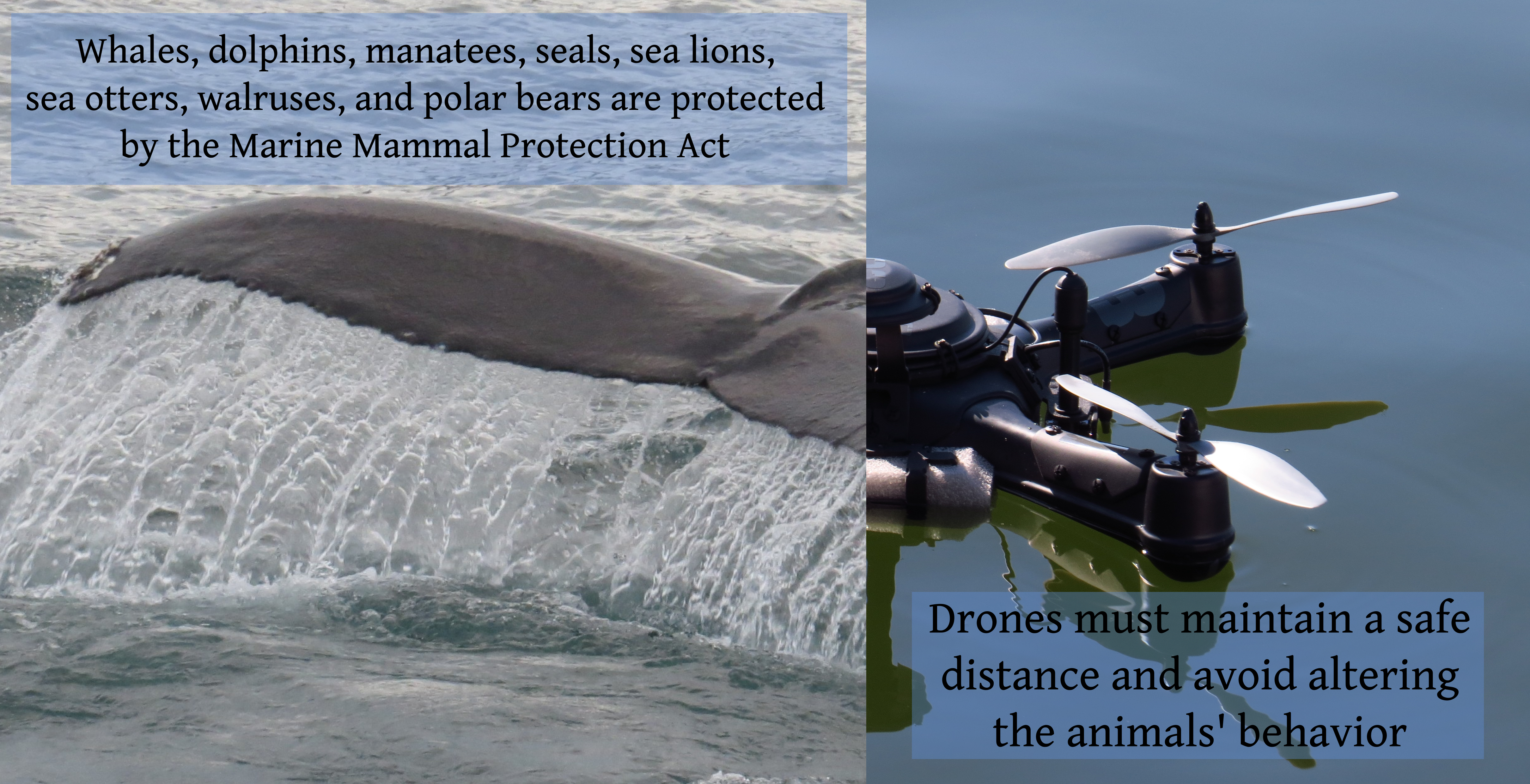
This weekend, the FAA released its proposed rules regulating the use of small Unmanned Aircraft Systems (drones). Today, I worked through the full, 200-page document, so that you don’t have to. These regulations, which are 3 years in the making and soon to be open for public comment, would determine who could fly, what licensing is required, and what limits would be imposed on drone flights. The regulations are pretty fair and leave open plenty of room for amateur enthusiasts while charting a way forward for commercial operators, but there are some glaring oversights and some unnecessary (and ineffective) security steps. I’ve written extensively on the used of drones for marine science, so my big question is: How will these rules impact drone use for research and conservation?

How many times are you going to use this image, Andrew?

Before I get into specific research and conservation applications, here is my general impression of this proposal. Overall, I think it’s good. Most of the suggestions are reasonable and not unnecessarily onerous. I particularly like that there could be a special exemption for microdrones, so your tiny Hubsan x4 wouldn’t be treated like the massive and mighty Aerotestra IVAN. I’m a big proponent of ensuring drone operators have the proper knowledge base, so I actually like the requirement for a comprehensive knowledge test, which will be separate from and less expensive than a full pilot’s license. I like that there’s no requirement to certify the “airworthiness” of drones as if they were 6000+ pound aircraft (the certification process take 3 to 5 years and drone tech moves so fast that by the time one was certified, it would be several generations obsolete).

Read More “How will the FAA’s proposed rules impact drone use for research and conservation?” »

Popular Posts

How close did the world's first deep-sea mining come to the dredging the world's largest cold-water coral reef?How close did the world's first deep-sea mining come to the dredging the world's largest cold-water coral reef?March 17, 2026Andrew Thaler
What Ocean Ramsey does is not shark science or conservation: some brief thoughts on "the Shark Whisperer" documentaryWhat Ocean Ramsey does is not shark science or conservation: some brief thoughts on "the Shark Whisperer" documentaryJuly 2, 2025David Shiffman
That's not a blobfish: Deep Sea Social Media is Flooded by AI SlopThat's not a blobfish: Deep Sea Social Media is Flooded by AI SlopDecember 19, 2025Andrew Thaler
Urea and Shark OsmoregulationUrea and Shark OsmoregulationNovember 15, 2010David Shiffman
Here's what I teach my students about finding jobs in marine biology and conservationHere's what I teach my students about finding jobs in marine biology and conservationApril 10, 2024David Shiffman
I turned my woodshop into a personal solar farm.I turned my woodshop into a personal solar farm.June 21, 2021Andrew Thaler
At least 74 practicing shark researchers: How a silly thing I said online raised thousands for conservationAt least 74 practicing shark researchers: How a silly thing I said online raised thousands for conservationFebruary 26, 2025David Shiffman
Here are some ocean conservation technologies that I'm excited aboutHere are some ocean conservation technologies that I'm excited aboutFebruary 19, 2026David Shiffman
Alberta, Canada is the proud owner of the largest man-made pyramid on the planetAlberta, Canada is the proud owner of the largest man-made pyramid on the planetOctober 16, 2012Andrew Thaler
The story of the pride flag made from NASA imagery: Bluesky's most-liked imageThe story of the pride flag made from NASA imagery: Bluesky's most-liked imageSeptember 27, 2024David Shiffman
Subscribe to our RSS Feed for updates whenever new articles are published.

We recommend Feedly for RSS management. It's like Google Reader, except it still exists.

Southern Fried Science

  • Home
  • About SFS
  • Authors
  • Support SFS


If you enjoy Southern Fried Science, consider contributing to our Patreon campaign.

Copyright © 2026 Southern Fried Science.

Theme: Oceanly Premium by ScriptsTown