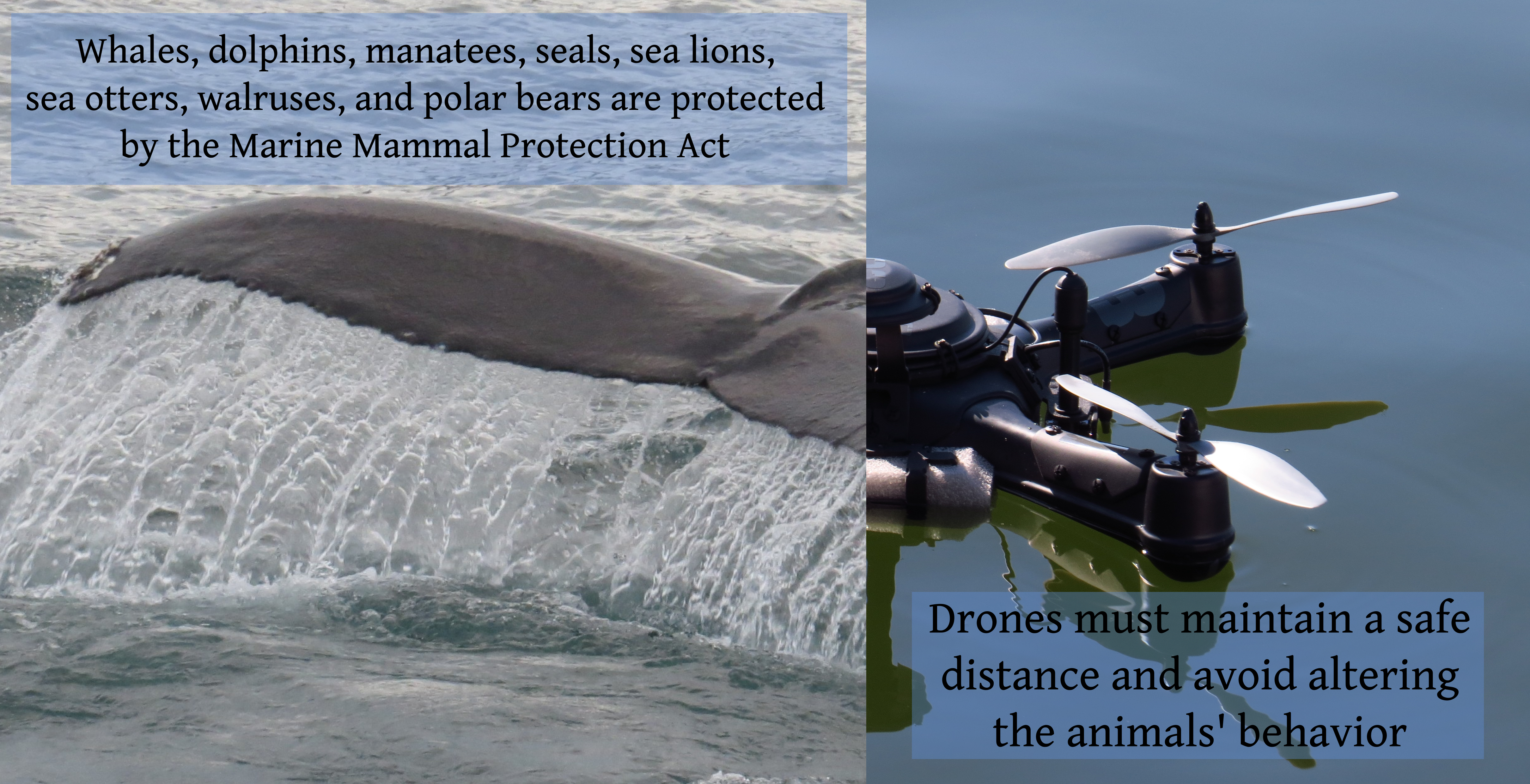
Over the last few months, I’ve been digging into the confusing tangle of laws that protect marine mammals and regulate the use of drones–small, semi-autonomous vehicles used by both researchers and hobbyists to observe whales and other marine mammals. You can check out the outcome of my findings over at Motherboard, where I just published Drones Would Revolutionize Oceanic Conservation, If They Weren’t Illegal. The quick and dirt summary is that there is no legal way to fly drones near whales, at the moment, but there are ways to do it responsibly while we work to catch regulations up with technology.
In working through these guidelines, I’ve spent a lot of time thinking about how we can use this new technology to aid ocean conservation. Below are my top 10 favorite ideas for using drones to save the ocean.
1. Monitor our coastlines for poaching and other illegal activities.
Imagine an array of small hydrophones positioned in sensitive coastal waters or marine protected areas. Upon detecting the gentle hum of a ship’s engine and triangulating the position, they send a signal back to the mainland dispatching a small quadcopter to check things out. Through the drone’s eyes, a user on land can visually inspect the boat, determine if it’s sailing within the bounds of the law or requires further inspection, and send a team to check things out or order the boat to change course, directly through the drone. Enforcement agencies would be able to provide comprehensive coverage to a huge area and the drones would have far less impact on the delicate marine environment than an equivalent boat patrol.
2. Fly ahead of large ships to spot whales before collision.
Imagine you’re the captain of a massive cargo ship. You don’t want to collide with a whale, but in order to change course, you need miles of space and ample time to slow your vessel. Rather than risk harming an endangered species, you launch a tiny fixed-wing drone to survey the path ahead whenever you enter regions known to contain whales. The little flyer spots the animals well ahead of your ship and returns, relaying the necessary geographic information to avoid these magnificent creatures.
3. Track debris from major events.
Tsunami’s happen, and when they do large rafts of debris float across the ocean. A small team of drones flying across known surface currents can watch for these rafts, alerting the necessary authorities to their position and giving them time to prepare for landfall and potential invasive species transfers. At the very least, clean-up crews can be on sight as soon as the debris hits the beach.
4. Aid search and rescue operations.
Search and rescue is a big deal, often involving dozen of vessels and aircraft surveying a wide area. Replacing those vehicles with high-endurance drones will allow rescuers to refine their search patterns, narrow the field, and deploy rescues teams safely and efficiently. This is good for anyone lost at sea and good for fragile ecosystems that could be adversely affected by a major search and rescue operation.
5. Sample oil slicks to determine their origin.
There are natural oil slicks. There are oil spills from poorly maintained boats. There are oil well blow outs. A small autonomous drone could land on a slick wherever it’s spotted, and return samples for analysis, allowing scientists to determine the origin of the slick and responding faster to potential disasters. If BP can use drones to oversee its oil fields in Alaska, why can’t we use drones to oversee BP?
6. Monitor nesting animals without disturbing them.
Here’s a challenge: Monitor a turtle nesting beach, but ensure that you don’t accidentally crush an unmarked nest. It happens. Rather then walking the beach or using an ATV if you have to cover distance, why not fly a tiny hexacopter, outfitted with phenomenal HD cameras along the beach to look for fresh nests each morning? Fewer feet on the ground means less chance of disturbing freshly laid nest.
7. Spot navigational hazards from the air.
Welcome back aboard you massive cargo freighter. The ocean is a dynamic place. Reefs grow, sandbars move, and inlets open and close. You don’t always know what’s up ahead. But a drone, perhaps outfitted with polarized lenses to pierce the water, can fly high above and spot submerged hazards, saving you from a collision and saving the ecosystem from a potential oil spill or fuel leak.
8. Sample water quality, remotely.
This one is close to my heart, because we’re building it right now. A robust, water-capable quadcopter, like the Aerotestra HUGO, outfitted with an array of water quality sensors, can land on a still body of water and take measurements. Thanks to a high resolution GPS, it can return to the exact same sports repeatedly, providing an incredible time series of environmental conditions while minimizing human impact to the system. Everyone wins.
9. Track wetlands restoration efforts in real time.
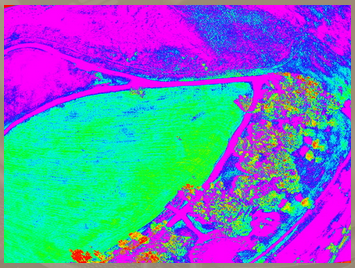
We’re back to the versatile little HUGO, which, when outfitted with near-infrared cameras, can monitor the progress of wetlands restoration without the need for human to trample through the already insulted wetlands. How good is it? In this image you can see mower tracks across the lawn.
10. Instill a love for the ocean in a technically savvy generation.
This is perhaps the single most important thing drones can offer. Not everyone can board a boat, tromp through the marsh, or dive into the deep, but drones give us the ability to bring those moments to an enormous audience. We protect what we love, and drones offer the ability to introduce a whole new generation of technologically sophisticated nature lovers to the wonders of the ocean.
httpv://www.youtube.com/watch?v=Bo_f8mV5khg
You should chat with the Advanced Tech guys at NMFS Southwest Fisheries Science Center – they’ve been using drones for several years to do seal and sea lion observation and counts on the CA coast.
Yup! Wayne Perryman was the first person I interviewed for this project.
Drones do not necessarily have to be autonomous “flying” machines, they can also be long-term deployed swimming machines, of which there are many good examples of drones being used for marine research, and many in development. Imagine something like this https://www.sbir.gov/sbirsearch/detail/113151 that follows alongside any marine species it is programed to! Pretty cool. Great article, one other thing that I think flying drones will also be great at revolutionizing is how we view the sea, its creatures and their migratory events as demonstrated with the clip you have shared above. This has already happened with drones and their use in savanna ecosystems, see https://www.youtube.com/watch?v=GSJGqtHZxCU