Skip to content

Southern Fried Science

Over 15 years of ocean science and conservation online

  • Home
  • About SFS
  • Authors
  • Support SFS

Tag: marine protected areas

Deep-sea mining, marine protected areas, and the eternal struggle to open doors: This Week in Andrew (and Angelo) Doing Podcasts

Posted on May 7, 2025 By Andrew Thaler
Deep-sea mining, marine protected areas, and the eternal struggle to open doors: This Week in Andrew (and Angelo) Doing Podcasts
Blogging, Policy, Science

It’s another podcast round-up! I was on how to Protect the Ocean talking about the most recent developments in deep-sea mining. Angelo and I caught up with Beth Pike of Marine Conservation Institute for Deep Day, to talk about marine protected areas, mining, and fishing. And over on my very silly ocean science Dungeons and … Read More “Deep-sea mining, marine protected areas, and the eternal struggle to open doors: This Week in Andrew (and Angelo) Doing Podcasts” »

How much of the US ocean is protected? It depends who you ask.

Posted on April 12, 2024April 12, 2024 By Angelo Villagomez
How much of the US ocean is protected? It depends who you ask.
Conservation, Featured, Policy

The great strength of 30×30, the national goal to protect 30 percent of the ocean by 2030, is that it sets out a framework wherein there is agreement that our shared use of public lands and waters fall along a spectrum, ranging from sacred places to wise use.

To Achieve 30% Ocean Protection Governments Can Look Beyond Conventional Tools

Posted on May 18, 2021May 18, 2021 By Angelo Villagomez
To Achieve 30% Ocean Protection Governments Can Look Beyond Conventional Tools
Uncategorized

Although understanding of the most effective design and implementation of MPAs has evolved in recent decades, decision-makers are only just starting to consider OECMs as a marine conservation tool. If properly delivered, OECMs could be a powerful means of improving ocean health.

Canada announced new marine protected area standards. Here’s how science and conservation professionals reacted.

Posted on October 22, 2018 By David Shiffman
Science

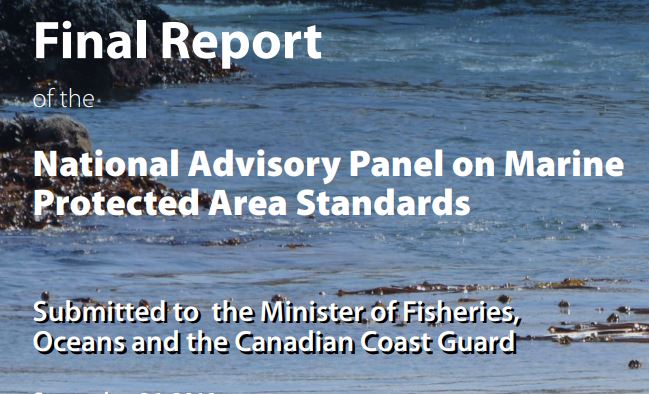
Recently, the Canadian government released the Final Report of the National Advisory Panel on Marine Protected Area Standards. This report is a set of guidelines and goals for the creation of new marine protected areas in Canada, and comes as Canada is hoping to greatly increase the number and quality of MPAs. I reached out to MPA experts and environmental nonprofits to ask what they think.
Read More “Canada announced new marine protected area standards. Here’s how science and conservation professionals reacted.” »

Sinking squid, salmon-eating seals, and rebounding cod: Thursday Afternoon Dredging, January 18th 2018

Posted on January 18, 2018January 19, 2018 By David Shiffman
Uncategorized

Cuttings (short and sweet): 

  • Follow Dr. Toby Daly-Engel’s shark research lab on twitter!
  • Cod catch at an all-time low, but a rebound could be near. By Patrick Whittle, for the Associated Press.
  • Right whale died from fishing gear. From CBC News

Read More “Sinking squid, salmon-eating seals, and rebounding cod: Thursday Afternoon Dredging, January 18th 2018” »

Irma’s Caribbean devastation, aquaculture, and Okeanos education: Thursday Afternoon Dredging: September 7th, 2017

Posted on September 7, 2017September 7, 2017 By David Shiffman
Uncategorized


Cuttings (short and sweet): 

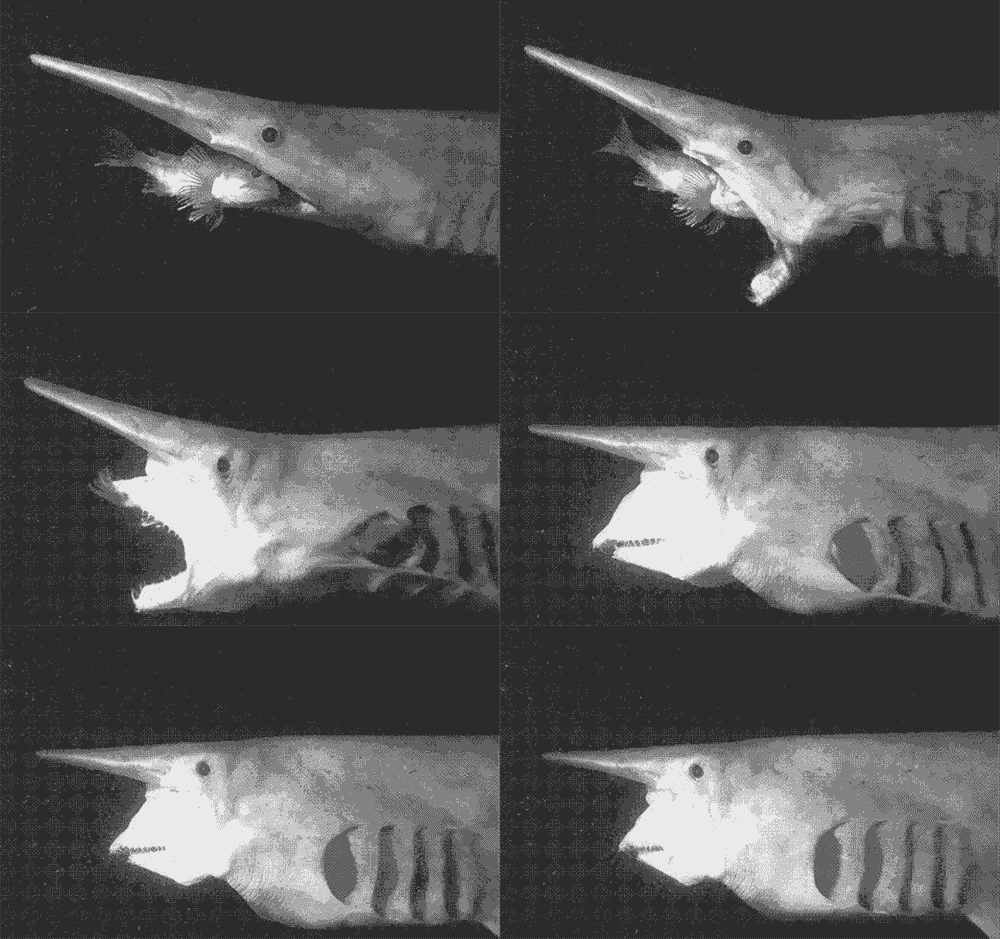
  • Watch how goblin sharks feed
  • Follow the Sawfish Conservation Society on twitter!
  • Sturgeon survives kidnapping, stabbing, and wildfire. By Amelia Templeton, for Oregon Public Broadcasting
  • UK coast haven for seabirds becomes a marine protected area. From The Guardian.

Read More “Irma’s Caribbean devastation, aquaculture, and Okeanos education: Thursday Afternoon Dredging: September 7th, 2017” »

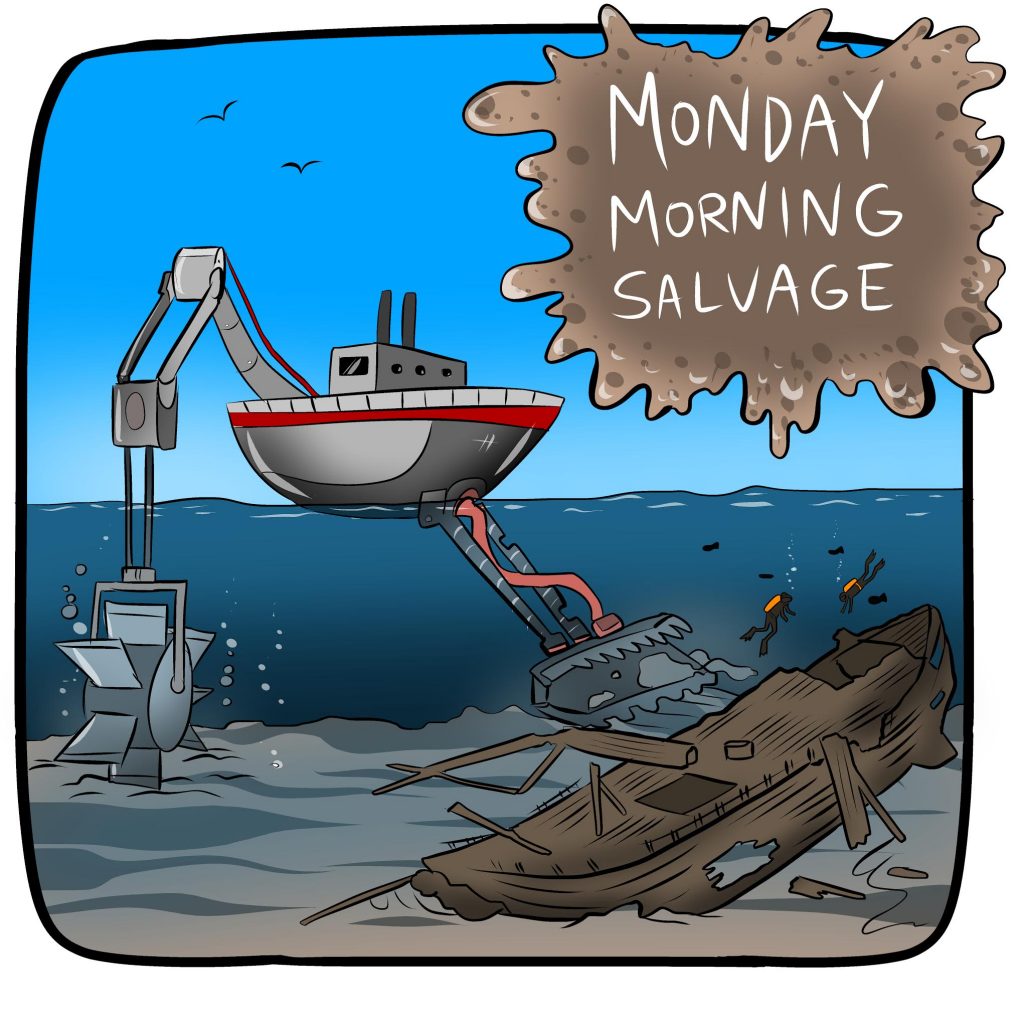
Chasing Genius, aquatic brain blobs, hurricanes, bats, and more! Monday Morning Salvage: September 4, 2017

Posted on September 4, 2017September 3, 2017 By Andrew Thaler
Weekly Salvage

Fog Horn (A Call to Action)

  • Hurricane Harvey has passed, but its impacts will continue to be felt for years to come. There’s lots of great organizations to donate to, but in the immediate aftermath,it’s often best to donate to local relief programs that already have a ground team in place, rather than national groups that will take weeks to build up their infrastructure. I’m a fan of the Texas Diaper Bank and Portlight Inclusive Disaster Strategies, both of which serve communities that tend to be particularly vulnerable during natural disasters.
  • Gratuitous self promotion! The OpenCTD and Oceanography for Everyone has been selected as a finalist in National Geographic’s Chasing Genius Challenge! Please help me win the People’s Choice award by voting for the OpenCTD. Visit http://www.natgeochasinggenius.com/video/776, create or sign into your Chasing Genius account, and click the yellow star to vote on my video. Thank you!

Flotsam (what we’re obsessed with right now)

  • It will take months, if not years, to fully understand the impacts of Hurricane Harvey, which already looks to be the costliest storm in US history. These drone videos give you some idea of the sheer scale of the damage. The Washington Post has an interactive map to help visualize what the equivalent deluge would look like around the world: What the Harvey deluge would look like where you live.

Read More “Chasing Genius, aquatic brain blobs, hurricanes, bats, and more! Monday Morning Salvage: September 4, 2017” »

Thursday Afternoon Dredging: March 23, 2017

Posted on March 23, 2017March 23, 2017 By David Shiffman
Uncategorized

Cuttings (short and sweet):

Logo by Ethan Kocak
  • Watch thousands of blacktip and spinner sharks close to Florida beaches, courtesy FAU Elasmolab.

  • Follow Madeline Cashion, a UBC Marine Conservation Ecology graduate student, on twitter!
  • New research shows that fish may evolve rapidly to take advantage of marine protected areas. By Randy Shore, for the Vancouver Sun.

Read More “Thursday Afternoon Dredging: March 23, 2017” »

Our Gerrymandered Ocean

Posted on January 22, 2016January 12, 2016 By Andrew Thaler
Uncategorized

On January 1, 2016, the Southern Fried Science central server began uploading blog posts apparently circa 2041. Due to a related corruption of the contemporary database, we are, at this time, unable to remove these Field Notes from the Future or prevent the uploading of additional posts. Please enjoy this glimpse into the ocean future while we attempt to rectify the situation.


Three weeks ago, an armed, irritable, and ill-prepared posse of privateers laid claim to the Deepwater Horizon National Marine Sanctuary in the Gulf of Mexico. Their demands–access to the infamous 30-year-old borehole, as well as new fishing quotas and deregulation of the GoMex Tuna Mariculture industry–are as bizarre as they are indefensible. Gulf oil production has slowed to a crawl. Even if the notorious Macondo Deep were reopened, an act that geologist from within the offshore oil and natural gas industry admit would be catastrophic, there would still be no demand for their crude.

Deregulating tuna mariculture would also be an industry disaster, as federal regulations on the import of foreign tuna is the only thing keeping their sea pens afloat. And you can’t raise quotas on fish that no longer exist.

These privateers are just the latest in the oft-parodied march of Entitlement Militias–cranky young men with few marketable skills who, unable to succeed in the free market, demand vast, and vastly disproportionate, government handouts, paradoxically under an anti-government or anti-federalist banner. Often, they take federal property by force (more accurately the illusion of force, as, historically, they have, to a man (and it’s always men) folded like paper dolls at the first hint of confrontation).

Read More “Our Gerrymandered Ocean” »

Tweets from the Society for Conservation Biology: Very Large Marine Protected Areas Symposium

Posted on July 29, 2013 By David Shiffman 1 Comment on Tweets from the Society for Conservation Biology: Very Large Marine Protected Areas Symposium
Conservation

davesquare

SCB logo

The Society for Conservation Biology’s International Congress for Conservation Biology took place from July 21-25th in Baltimore, Maryland. Over 1,500 scientists and conservationists from more than 60 countries participated. Below are selected tweets from the symposium on very large marine protected areas.

Read More “Tweets from the Society for Conservation Biology: Very Large Marine Protected Areas Symposium” »

Posts pagination

1 2 Next

Popular Posts

Shark scientists want their research to help save threatened species, but don’t know how. Our new paper can help.Shark scientists want their research to help save threatened species, but don’t know how. Our new paper can help.December 1, 2025David Shiffman
Norway and Cook Islands put their deep-sea mining plans on pause.Norway and Cook Islands put their deep-sea mining plans on pause.December 3, 2025Andrew Thaler
What Ocean Ramsey does is not shark science or conservation: some brief thoughts on "the Shark Whisperer" documentaryWhat Ocean Ramsey does is not shark science or conservation: some brief thoughts on "the Shark Whisperer" documentaryJuly 2, 2025David Shiffman
The Trouble with Teacup PigsThe Trouble with Teacup PigsOctober 14, 2012Andrew Thaler
What we know we don't know: impacts of deep-sea mining on whales, dolphins, sharks, turtles, and other migratory species.What we know we don't know: impacts of deep-sea mining on whales, dolphins, sharks, turtles, and other migratory species.November 20, 2025Andrew Thaler
2025: My year in writing, public speaking, and media interviews2025: My year in writing, public speaking, and media interviewsDecember 3, 2025David Shiffman
Urea and Shark OsmoregulationUrea and Shark OsmoregulationNovember 15, 2010David Shiffman
Shark of Darkness: Wrath of Submarine is a fake documentaryShark of Darkness: Wrath of Submarine is a fake documentaryAugust 10, 2014Michelle Jewell
How tiny satellites are tracking marine wildlifeDecember 1, 2025Andrew Thaler
Build a dirt cheap, tough-as-nails field computer in a Pelican caseBuild a dirt cheap, tough-as-nails field computer in a Pelican caseJuly 21, 2015Andrew Thaler
Subscribe to our RSS Feed for updates whenever new articles are published.

We recommend Feedly for RSS management. It's like Google Reader, except it still exists.

Southern Fried Science

  • Home
  • About SFS
  • Authors
  • Support SFS


If you enjoy Southern Fried Science, consider contributing to our Patreon campaign.

Copyright © 2025 Southern Fried Science.

Theme: Oceanly Premium by ScriptsTown