Skip to content

Southern Fried Science

Over 15 years of ocean science and conservation online

  • Home
  • About SFS
  • Authors
  • Support SFS

Tag: STEM

Getting your kids started in conservation technology: a quick guide for parents who have no idea where to begin.

Posted on March 16, 2022 By Andrew Thaler
Getting your kids started in conservation technology: a quick guide for parents who have no idea where to begin.
Education

Southern Fried Science has been a bit dormant for the last year, so first, a re-introduction:

I’m Andrew Thaler, I’m an ocean scientist, and I make weird tech things.

Ten years ago I inherited an old mechanical tide gauge from a lab cleanout. For some bizarre reason, I thought: what if, instead of tracking the rising and falling tides in the Beaufort Inlet, it tracked the waxing and waning of conversations about sea level rise on Twitter. And thus, the Sea Leveler was born. 

Meet Sea Leveler: the open source water level gauge that wants you to talk about #sealevelrise

In a lot of ways, the Sea Leveler was the precursor of things to come. It was exhaustively documented and released as an open-source project on GitHub. It merged the digital with the physical, creating an object that allowed you to connect an online conversation to the real-world environment through repurposed technology. It was weird. And it was fun. 

The Sea Leveler itself was passed on to a good friend and champion of ocean outreach, but its legacy lives on in the plethora of projects to follow: Drown Your Town, Dolphin Vision, the reStepper, Turtle Borg, and, of course, the OpenCTD. 
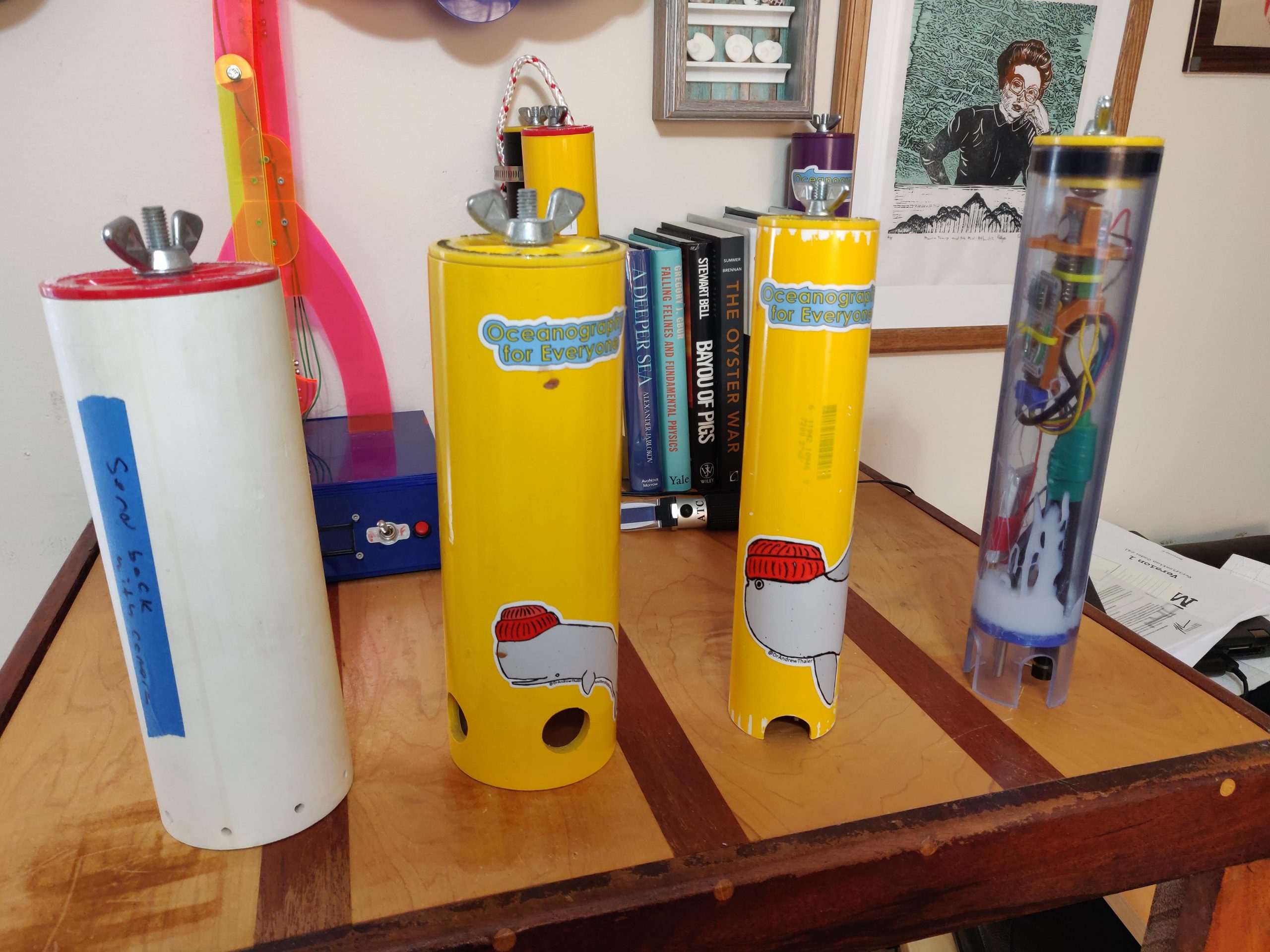
Read More “Getting your kids started in conservation technology: a quick guide for parents who have no idea where to begin.” »

What makes high school girls love sharks but avoid science

Posted on July 25, 2017 By Michelle Jewell
Education, Uncategorized

A shortened – and less ribald – version of this post was published 24-07-2017 in the International Business Times.

Ah, the transition from middle school to high school… the one part of adolescence no one reminisces about fondly.  It’s the time in our lives where mental and physical changes happen at pace without any apparent continuity, and we feel compelled to blend in.  This is the same time when most young girls’ interest in STEM stops, and in my educator/zoologist opinion, these events are related.

What does our culture gear teenage girls to prioritize?  Making varsity teams, growing boobs to the correct size and at the correct time, and completing enough social jostling to earn the superhuman prom date.  Most of the STEM-geared young girls I have worked with couldn’t care less about the above – but the attitude of their peers changes by the end of 8th grade.

https://www.tumblr.com/subtubitles/30828711121

Students of both sexes in 6th grade will happily discuss how rainbows are made and share their mutual wonder if the natural world, but those conversations quickly become “immature” when the puberty plague takes hold.  It’s also in 8th grade when boys enter a race to the bottom of inappropriate jokes fueled by mutual insecurities.  Suddenly, STEM-interested pupils find that their friends are segregating, fashion forward girls to one side and crude boys to the other, leaving a handful who want to discuss the space/time continuum floundering somewhere in the middle.

Then, regardless of where you sit on the social divide, hormones kick in.  This critical time is when young people figure out how to create partnerships, what constitutes a good or bad relationship, and the physics of copulation.  In addition to this, obtaining a socially higher-ranking partner becomes an unconscious priority.  Guess what most young men think is unattractive in women?  Intelligence (unless you’re beautiful enough to compensate).  YOU READ THAT CORRECTLY.

Read More “What makes high school girls love sharks but avoid science” »

Big ideas and little robots: Using the OpenROV in interdisciplinary STEM projects

Posted on May 4, 2016May 3, 2016 By Guest Writer 1 Comment on Big ideas and little robots: Using the OpenROV in interdisciplinary STEM projects
Conservation, Education, Science

portrait-joeyJoey Maier is a biology professor at Polk State College where he uses every possible opportunity to encourage his students to spend time in the water, play with technology, and do #CitizenScience. As an undergraduate, he did a stint as an intern for Mark Xitco and John Gory during their dolphin language experiments.  He then spent the years of his M.Sc. at the University of Oklahoma thawing out and playing with bits of decaying dolphin.  After discovering that computers lack that rotten-blubber smell, Joey became a UNIX sysadmin and later a CISSP security analyst.  
While his pirate game is weak, he is often seen with a miniature macaw on his shoulder. His spare time is spent SCUBA diving and trying to hang out with people who have submersibles.  You can follow him on Twitter or Facebook.


There’s a Klingon bird of prey hanging from the ceiling in my office.

I may teach biology, but at heart I’m a sci-fi nerd.  Naturally, I’m interested in futurism, robots, lasers and all manner of techy paraphernalia.  I’d been watching the OpenROV project for a while, but hadn’t gotten one yet.  They were obviously awesome little machines that gave me a serious case of gadget envy, and I knew that some of our students would love to pilot an ROV.  I needed a much better reason than that, however, to justify getting one.  There’s no line item in our budget for, “Wow, that’s cool!” and I was fairly certain that the college administration would tend to favor lower cost and more familiar forms of student engagement

Photo courtesy Joey Maier.

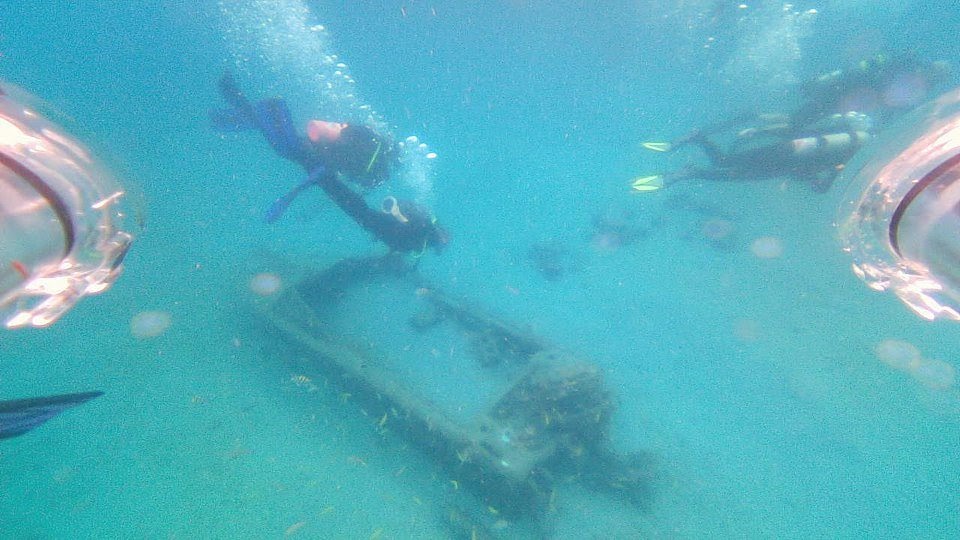
This tweet changed everything.  When I found out that Andrew had designed a mini-Niskin bottle, the wheels in my head started turning.  Assembling an OpenROV would, naturally, be a very STEM-oriented project.  The times our students piloted the ROV could become water sampling field trips, and the kids could analyze their samples back at school as a laboratory activity. If students recorded the process, they could make a short film. I mulled over the possibilities and bounced ideas off of my dive buddies during the hours we spent traveling to and from the coast.

Read More “Big ideas and little robots: Using the OpenROV in interdisciplinary STEM projects” »

Popular Posts

Shark scientists want their research to help save threatened species, but don’t know how. Our new paper can help.Shark scientists want their research to help save threatened species, but don’t know how. Our new paper can help.December 1, 2025David Shiffman
Norway and Cook Islands put their deep-sea mining plans on pause.Norway and Cook Islands put their deep-sea mining plans on pause.December 3, 2025Andrew Thaler
What Ocean Ramsey does is not shark science or conservation: some brief thoughts on "the Shark Whisperer" documentaryWhat Ocean Ramsey does is not shark science or conservation: some brief thoughts on "the Shark Whisperer" documentaryJuly 2, 2025David Shiffman
The Trouble with Teacup PigsThe Trouble with Teacup PigsOctober 14, 2012Andrew Thaler
What we know we don't know: impacts of deep-sea mining on whales, dolphins, sharks, turtles, and other migratory species.What we know we don't know: impacts of deep-sea mining on whales, dolphins, sharks, turtles, and other migratory species.November 20, 2025Andrew Thaler
2025: My year in writing, public speaking, and media interviews2025: My year in writing, public speaking, and media interviewsDecember 3, 2025David Shiffman
Urea and Shark OsmoregulationUrea and Shark OsmoregulationNovember 15, 2010David Shiffman
Shark of Darkness: Wrath of Submarine is a fake documentaryShark of Darkness: Wrath of Submarine is a fake documentaryAugust 10, 2014Michelle Jewell
How tiny satellites are tracking marine wildlifeDecember 1, 2025Andrew Thaler
Build a dirt cheap, tough-as-nails field computer in a Pelican caseBuild a dirt cheap, tough-as-nails field computer in a Pelican caseJuly 21, 2015Andrew Thaler
Subscribe to our RSS Feed for updates whenever new articles are published.

We recommend Feedly for RSS management. It's like Google Reader, except it still exists.

Southern Fried Science

  • Home
  • About SFS
  • Authors
  • Support SFS


If you enjoy Southern Fried Science, consider contributing to our Patreon campaign.

Copyright © 2025 Southern Fried Science.

Theme: Oceanly Premium by ScriptsTown