OpenCTD and Oceanography for Everyone
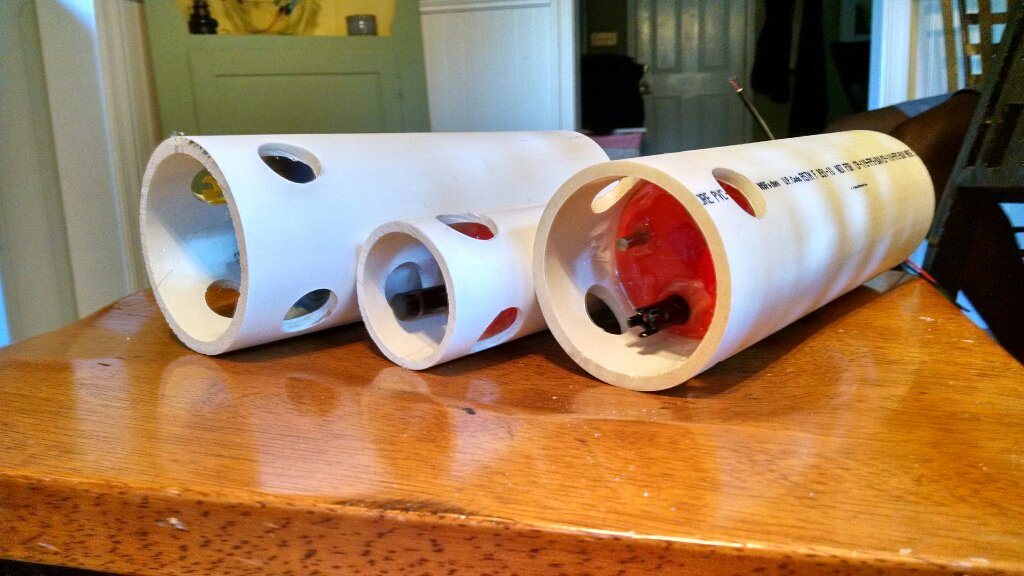
Ten years ago, Kersey, Russell, and I set of on a quixotic quest to make the tools of ocean science more accessible to more knowledge seekers at a price the reflects the reality of research budgets. The OpenCTD, a low-cost, open-source, oceanographic instrument was born. Since that first ambitious announcement, we have made tremendous strides in the quality and capabilities of the OpenCTD. With funding from BOEM, NOAA, the Open Science Hardware Foundation, and others, we’ve been able to transform our kludgey little DIY instrument into a serious piece of oceanographic kit, able to compete with handheld commercial alternatives. And the OpenCTD can be built by the user, with no prior electronics experience, over a long weekend, for a fraction of the cost of commercial alternatives.
So where are we going next? The first OpenCTD validation paper was submitted earlier this year. We are in the process of revising and updating the construction and operation manual to streamline the workshop process for educators and ocean knowledge seekers. We released a standalone manual that guides users through the calibration process and are preparing to release a new guide for deployment and maintenance.
And we were a finalist for the Hackaday Prize, which is pretty neat.
The Oceanography Lab in a Box
Through my work with the OpenCTD, I partnered with the CoLab team to develop an a la carte Oceanography Lab in a Box: a low-cost tool set of open-source and accessible tools to allow ocean knowledge seekers from around the world to access the tools of ocean science. This includes the OpenCTD, as well as a host of other tools, both analog and digital, along with training and support.
One of my collaborators is currently crowdfunding a project in Ghana to bring some of these tools to a training workshop: Tools and training for coastal oceanography in under-resourced countries
Microplastics in the Deep-Sea
Microplastics are now ubiquitous in the world’s oceans. Though they have been found in the tissues of shallow water species and isolated from deep-sea sediment, only a few studies have investigated the extent to which microplastics have accumulated in the tissues of deep sea macrofauna, especially those associated with hydrothermal vents and methane seeps. These ecosystems are not only deep, dark, and diverse, but rely on chemosynthesis for primary production.
I have a unique opportunity to examine an archive of deep-sea animals collected from hydrothermal vents and methane seeps around the world between 2007 and 2020. These samples were preserved for molecular studies and are suitable for the type of destructive sampling necessary to extract microplastics from tissue.
The funding round is closed (thank you to everyone who contributed!) but you can follow along in the Lab Notes section of the project page. We will likely be looking at the first round of organisms next week.
OysterVoltz: Sediment Microbial Batteries
Unlimited power from the poop of an oyster!
Not really, but one of the projects I’m involved in is developing sediment microbial fuel cells to be deployed beneath oyster farms in the Chesapeake Bay. While, yes, these fuel cells could generate a low level current that we might be able to tap into to power very small devices, the real goal it to reduce sulfides that accumulate beneath oyster pens. Sulfides are toxic to estuarine critters and can contribute to anoxic zones in the Bay. Sediment microbial fuel cells take advantage of natural chemicals gradients to reduce those sulfides.
We have the source code for the loggers we built on GitHub (though I’ve been slow about getting them documented).
Deep-sea Mining
Although I sunsetted the Deep-sea Mining Observer at the end of last year, I am still active in the deep-sea mining discussion. I have a handful of research papers in various stages of review, have been engaged by assorted organizations to advise them on the development of the industry and help them determine where their organizational priorities should be, and I am still writing about and lecturing on the environmental impacts of deep-sea mining. And, of course, the microplastics study is connected to understanding the environment around proposed deep-sea mining sites.
Dugongs and Seadragons
Oh, hey, I’m on a podcast now. Join me over on Dugongs and Seadragons as we talk ocean science and conservation while playing Dungeons and Dragons.
Southern Fried Science is free and ad-free. Southern Fried Science and the OpenCTD project are supported by funding from our Patreon Subscribers. If you value these resources, please consider contributing a few dollars to help keep the servers running and the coffee flowing. We have stickers.