Skip to content

Southern Fried Science

Over 15 years of ocean science and conservation online

  • Home
  • About SFS
  • Authors
  • Support SFS

Updated financial model for deep-sea mining makes more sense, fewer dollars

Posted on March 11, 2024March 12, 2024 By Andrew Thaler
Education, Featured

On Friday, I posted about the financial model used to project the potential profits from a hypothetical polymetallic nodule mining model in the Clarion Clipperton Zone. This model, originally commissioned in 2018 and updated in 2021/22, had some puzzling prices for manganese in particular.

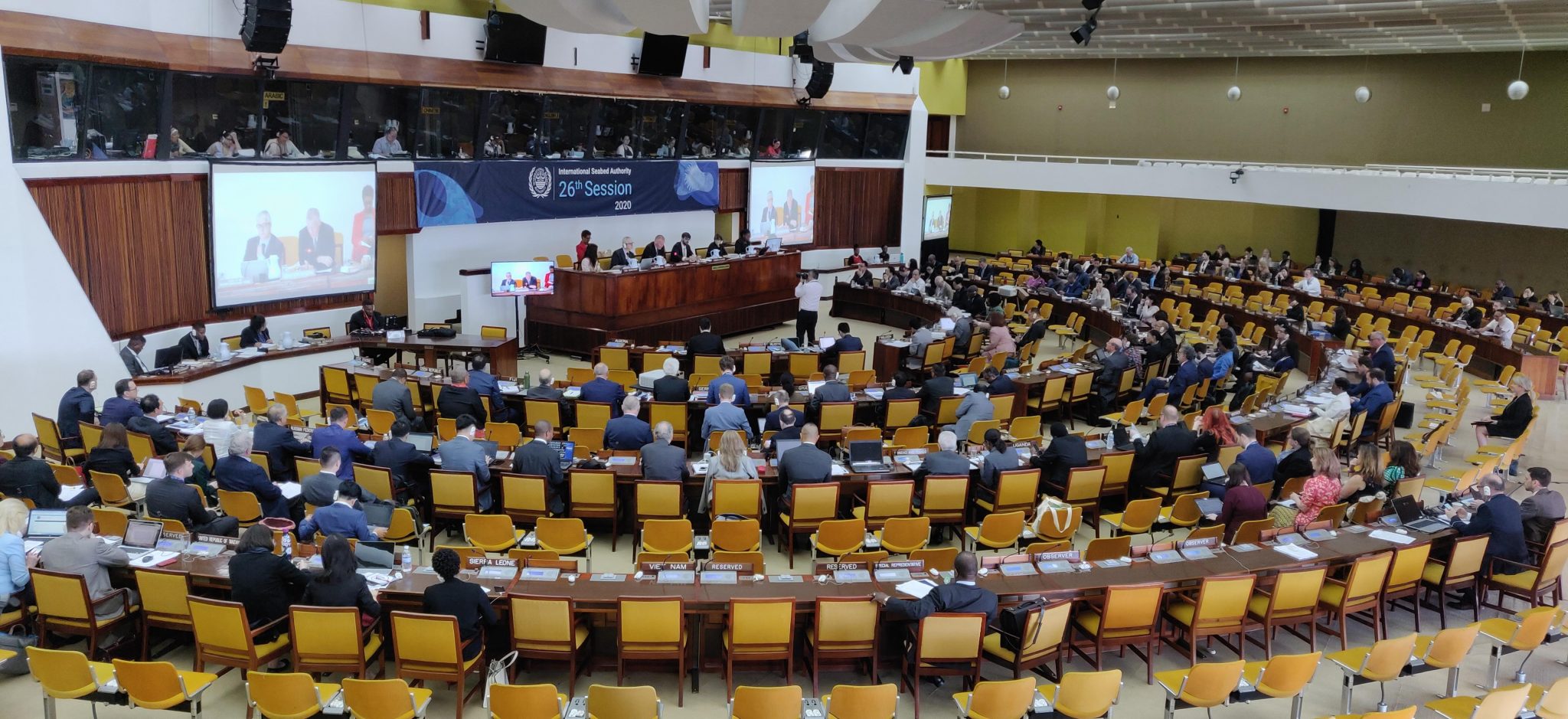
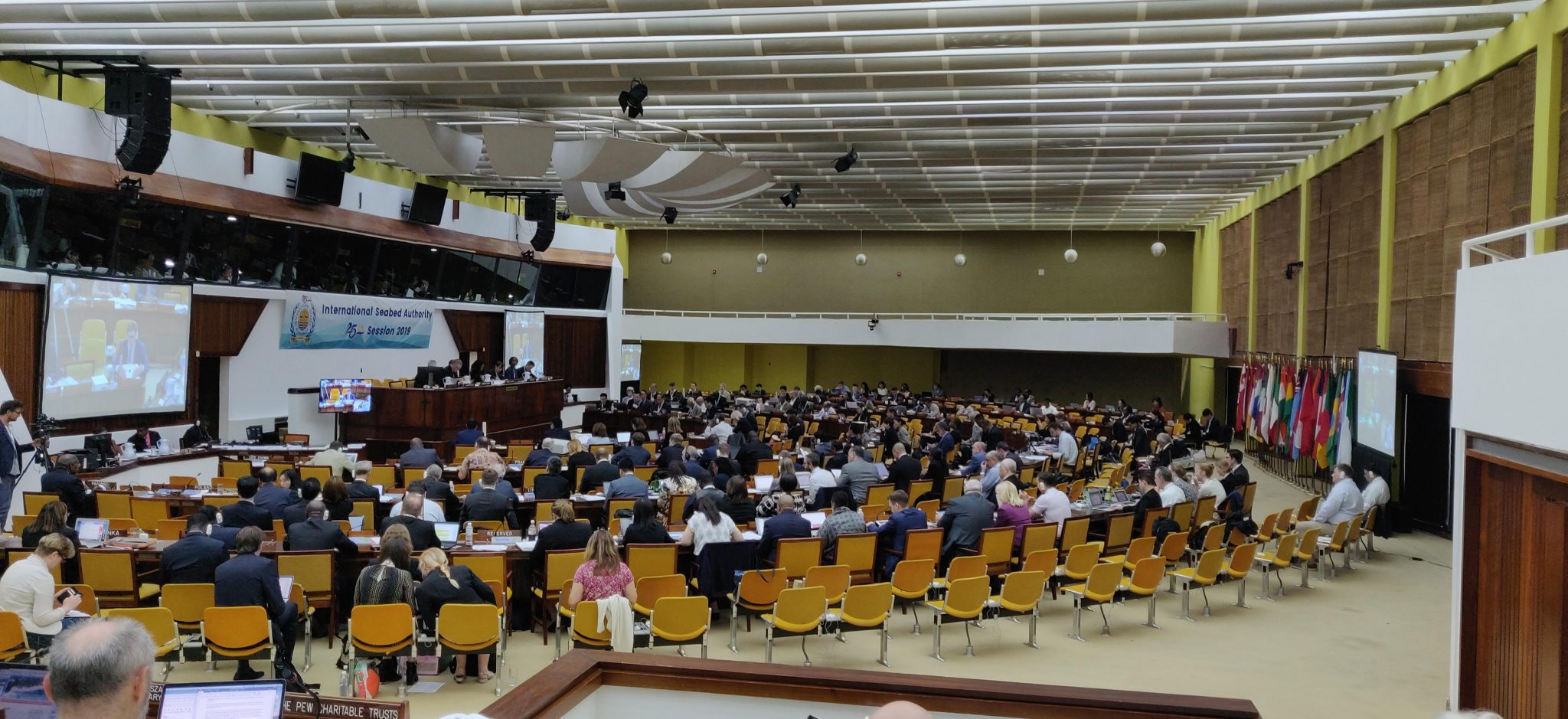
This model is extremely important. Beginning late this month, member states in the International Seabed Authority will continue negotiations on the mining code for the exploitation of deep-sea mineral resources in areas beyond national jurisdiction. Those resources fall under the Common Heritage principle, they belong to you, and they belong to me, and they belong to everyone. Revenue from the mining of these resources is supposed to be distributed to member states and the ISA in a just and equitable manner. How much those royalties will be, how and when they are distributed, how things like the an environmental mitigation and remediation fund are funded, are all currently being negotiated and that negotiation depends on having an accurate understanding of what the resources are actually worth.

In my blog post, I argued that, based on the 2018 model, the value of a deep-sea mine was off by about a billion dollars. I had the chance to chat with a few experts this weekend who helped clear up some those issues. The short answer is that the original model did not make sense when it was proposed in 2018 and does not work today. The value of manganese was extremely inflated based on 100% of recovery going to the electrolytic manganese market, a market that is much, much smaller that the manganese ore market.

Here’s the good news: an updated financial model was released at the last ISA session (warning, link downloads an excel spreadsheet).

They’re no longer using the price for electrolytic manganese, but rather the fractional value of manganese in ore, at $475 per ton. The new model also feature a larger scale mining operation harvesting more nodules.

So where does that put the original 3-megaton nodule mining operation?
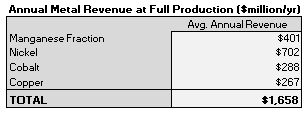
Value of a deep-sea polymetallic nodule mine in the CCZ, from the ISA financial model worksheet and scaled to a 3-megaton operation to compare against the original 2018 projection.

That looks a lot more believable. With the projections from 2023, the original 2018 mine is worth about $1.7 billion. Those projections are still pretty optimistic, with cobalt pinned at $60,000 per ton and nickel at $20,000 per ton. I don’t think we’ll see cobalt climb back up to $60,000 this decade. At current metals prices, we’re looking at a mining site worth about $1.3 billion per year.

The bad news, and the reason I started this whole dive into the financial model to begin with, is that I’m still hearing stakeholders cite the $2.4 billion value as gospel.

All together this means that that original conclusion, that the 2.4 billion dollar per year valuation doesn’t quite make sense, and I wasn’t off based to be confused by it. That $1.2 billion value for electrolytic manganese was the number running through the models when Nauru invoked the 2-year trigger in 2021. That value proposition was off by almost a billion dollars.

Fortunately, the constant refrain of the deep-sea mining negotiations is that “nothing is agreed until everything is agreed” and the financial regime for determining how revenue from deep-sea mining is distributed in accordance with the Common Heritage principle has yet to be finalized.

Share this:

  • Click to share on Bluesky (Opens in new window) Bluesky
  • Click to share on Facebook (Opens in new window) Facebook
  • Click to share on Reddit (Opens in new window) Reddit
  • Click to share on Threads (Opens in new window) Threads
  • Click to share on WhatsApp (Opens in new window) WhatsApp
  • Click to share on Mastodon (Opens in new window) Mastodon

Related

Tags: deep-sea mining International Seabed Authority

Post navigation

❮ Previous Post: Something is bothering me about the Economics of Deep-sea Mining
Next Post: New Deep-sea Mining Bill Introduced in Congress ❯

You may also like

Uncategorized
Japan becomes the first nation to mine a deep-sea hydrothermal vent
September 27, 2017
Weekly Salvage
Fish feel pain, mining feels the pressure, sea lions feel excluded, and science publishing feels like an old boys club. It’s the Monday Morning Salvage: January 8, 2018!
January 8, 2018
Open Science
The rise of low-cost ROVs and community submersibles
September 20, 2018
Uncategorized
Monday Morning Salvage: February 6, 2017
February 6, 2017

Popular Posts

Shark scientists want their research to help save threatened species, but don’t know how. Our new paper can help.Shark scientists want their research to help save threatened species, but don’t know how. Our new paper can help.December 1, 2025David Shiffman
Norway and Cook Islands put their deep-sea mining plans on pause.Norway and Cook Islands put their deep-sea mining plans on pause.December 3, 2025Andrew Thaler
What Ocean Ramsey does is not shark science or conservation: some brief thoughts on "the Shark Whisperer" documentaryWhat Ocean Ramsey does is not shark science or conservation: some brief thoughts on "the Shark Whisperer" documentaryJuly 2, 2025David Shiffman
The Trouble with Teacup PigsThe Trouble with Teacup PigsOctober 14, 2012Andrew Thaler
What we know we don't know: impacts of deep-sea mining on whales, dolphins, sharks, turtles, and other migratory species.What we know we don't know: impacts of deep-sea mining on whales, dolphins, sharks, turtles, and other migratory species.November 20, 2025Andrew Thaler
2025: My year in writing, public speaking, and media interviews2025: My year in writing, public speaking, and media interviewsDecember 3, 2025David Shiffman
Urea and Shark OsmoregulationUrea and Shark OsmoregulationNovember 15, 2010David Shiffman
Shark of Darkness: Wrath of Submarine is a fake documentaryShark of Darkness: Wrath of Submarine is a fake documentaryAugust 10, 2014Michelle Jewell
How tiny satellites are tracking marine wildlifeDecember 1, 2025Andrew Thaler
Build a dirt cheap, tough-as-nails field computer in a Pelican caseBuild a dirt cheap, tough-as-nails field computer in a Pelican caseJuly 21, 2015Andrew Thaler
Subscribe to our RSS Feed for updates whenever new articles are published.

We recommend Feedly for RSS management. It's like Google Reader, except it still exists.

Southern Fried Science

  • Home
  • About SFS
  • Authors
  • Support SFS


If you enjoy Southern Fried Science, consider contributing to our Patreon campaign.

Copyright © 2025 Southern Fried Science.

Theme: Oceanly Premium by ScriptsTown