Skip to content

Southern Fried Science

Over 15 years of ocean science and conservation online

  • Home
  • About SFS
  • Authors
  • Support SFS

We Robot, a horrible hagfish massacre, deep, delicious sandwiches, fish slime harvests, and more! Monday Morning Salvage: September 10, 2018.

Posted on September 10, 2018September 9, 2018 By Andrew Thaler
Weekly Salvage

Foghorn (a call to action)

  • The pending U.S. destruction of Pagan and Tinian islands.

The U.S. is turning a significant portion of Micronesia into live fire and bombing ranges to train Marines. It has plans to completely take over one island for this purpose and has control of two-thirds of another island.

If people in the U.S. mainland understood the military’s plan for Micronesia they might be alarmed. But this is really happening to U.S. citizens living in America’s territories.

(source)

  • We Robot 2019: sign up for one of the best conferences I’ve ever participated in!

Flotsam (what we’re obsessed with right now)

  • How a team of amateur explorers and an underwater robot laid to rest the ‘Ghost of Baker Lake’.
  • Jane Lubchenco: Science in a Post-Truth World. Hat tip: @EmmaJMcIntosh.
  • ‘Slime eel’ massacre caused by Washington man’s boat accident, lawsuit says.

The Levee (news from LUMCON)

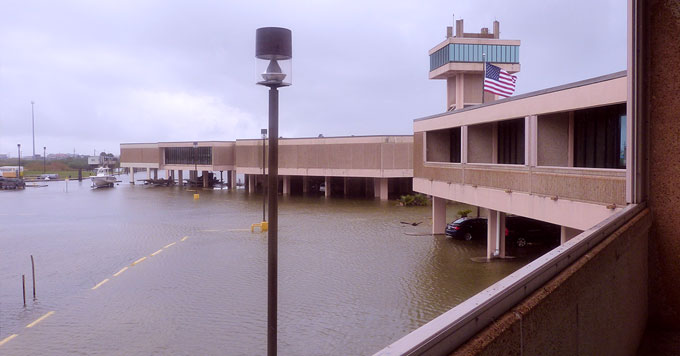
  • Floodwaters are plaguing a lab where scientists study … coastal flooding.
LUMCON’s DeFelice Marine Center, flooded, as seen from a dormitory balcony. (Photo: Courtesy of LUMCON)

Jetsam (what we’re reading from around the web)

  • Negotiations start on a high seas treaty: UN summit will discuss how to protect the open ocean, where 90% of marine life dwells
  • Eating Lunch 14,000 Feet Below Sea Level.
  • Washed away? Torrential rains threaten Bay restoration gains.
  • Navigating historical passages of marine invasive species.
  • Fascinating: Court finds shark diving illegal but says law could be changed.
  • I am all here for Andrew’s map rants. New Map in the News Not Revolutionary, Merely Cool.
  • Robot boat sails into history by finishing Atlantic crossing.
  • Sea slime is being collected and sold by fish farm operators.
  • Mariana Trench Marine National Monument Photo Exhibit Opening.
  • The conservation lesson of dolphins who walked on their tails.
  • What Was Lost in Brazil’s Devastating Museum Fire. Two hundred years of work—and millions of priceless specimens—have been destroyed in a preventable tragedy.

RICARDO MORAES / REUTERS
People watch as a fire burns at the National Museum of Brazil in Rio de Janeiro, Brazil September 2, 2018. REUTERS/Ricardo Moraes
  • Spix’s Macaw heads list of first bird extinctions confirmed this decade.

Lagan (what we’re reading from the peer-reviewed literature)

  • Herzog and friends (2018) Two new species of Sympagella (Porifera: Hexactinellida: Rossellidae) collected from the Clarion-Clipperton Zone, East Pacific. DOI: 10.11646/zootaxa.4466.1.12.
  • de Mitcheson and friends (2018) Out of control means off the menu: The case for ceasing consumption of luxury products from highly vulnerable species when international trade cannot be adequately controlled; shark fin as a case study. DOI: 10.1016/j.marpol.2018.08.012.
  • Lehman (2018) Marine Cultural Heritage: Frontier or Centre? DOI: 10.1111/issj.12155.
  • Halliday and friends (2018) Tourist vessel traffic in important whale areas in the western Canadian Arctic: Risks and possible management solutions. DOI: 10.1016/j.marpol.2018.08.035.
  • Zwerschke and friends (2018) Competition between co‐occurring invasive and native consumers switches between habitats. DOI: 10.1111/1365-2435.13211.
  • Gooday and friends (2018) Micro-CT 3D imaging reveals the internal structure of three abyssal xenophyophore species (Protista, Foraminifera) from the eastern equatorial Pacific Ocean. DOI: 10.1038/s41598-018-30186-2.
  • Abo and friends (2018) Quantifying the Fate of Captured Carbon: From Seagrass Meadows to the Deep Sea. DOI: 10.1007/978-981-13-1295-3_9.
  • Bellec and friends (2018) A nematode of the Mid-Atlantic Ridge hydrothermal vents harbors a possible symbiotic relationship. DOI: 10.3389/fmicb.2018.02246.
  • Hori and friends (2018) Blue Carbon: Characteristics of the Ocean’s Sequestration and Storage Ability of Carbon Dioxide. DOI: 10.1007/978-981-13-1295-3_1.

Feel free to share your own Foghorns, Flotsam, Jetsam, Lagan, Shipping News, Driftwood, and Derelicts in the comments below. If you enjoy Southern Fried Science, consider contributing to our Patreon campaign. For just $5 per month, you can support the SFS Writers Fund, which helps compensate your favorite ocean science and conservation bloggers for their efforts.

Share this:

  • Click to share on Bluesky (Opens in new window) Bluesky
  • Click to share on Facebook (Opens in new window) Facebook
  • Click to share on Reddit (Opens in new window) Reddit
  • Click to share on Threads (Opens in new window) Threads
  • Click to share on WhatsApp (Opens in new window) WhatsApp
  • Click to share on Mastodon (Opens in new window) Mastodon

Related

Tags: Alvin Brazil Chesapeake Bay climate change dolphins erosion flood food hagfish high seas invasive species Jane Lubchenco LUMCON maps Mariana Trench OpenROV Pagan sea level rise shark diving slime slime eel Tinian Trident We Robot

Post navigation

❮ Previous Post: Scallops, barnacles, and oysters- oh my! Thursday Afternoon Dredging, September 6th, 2018
Next Post: Cleaning beaches and saving right whales: Thursday Afternoon Dredging, September 13, 2018 ❯

You may also like

Science
#SciFund Returns: Coping with stress: Coral reefs in Kiribati
May 4, 2012
Uncategorized
Imaginary islands, lobster pain, porgs and puffins: Thursday Afternoon Dredging, January 25th, 2018
January 25, 2018
Weekly Salvage
Monday Morning Salvage: January 9, 2017
January 9, 2017
Blogging
Ocean Outreach in an Evolving Online Ecosystem: Transforming the Narrative
August 10, 2016

Popular Posts

Shark scientists want their research to help save threatened species, but don’t know how. Our new paper can help.Shark scientists want their research to help save threatened species, but don’t know how. Our new paper can help.December 1, 2025David Shiffman
Norway and Cook Islands put their deep-sea mining plans on pause.Norway and Cook Islands put their deep-sea mining plans on pause.December 3, 2025Andrew Thaler
What Ocean Ramsey does is not shark science or conservation: some brief thoughts on "the Shark Whisperer" documentaryWhat Ocean Ramsey does is not shark science or conservation: some brief thoughts on "the Shark Whisperer" documentaryJuly 2, 2025David Shiffman
The Trouble with Teacup PigsThe Trouble with Teacup PigsOctober 14, 2012Andrew Thaler
What we know we don't know: impacts of deep-sea mining on whales, dolphins, sharks, turtles, and other migratory species.What we know we don't know: impacts of deep-sea mining on whales, dolphins, sharks, turtles, and other migratory species.November 20, 2025Andrew Thaler
2025: My year in writing, public speaking, and media interviews2025: My year in writing, public speaking, and media interviewsDecember 3, 2025David Shiffman
Urea and Shark OsmoregulationUrea and Shark OsmoregulationNovember 15, 2010David Shiffman
Shark of Darkness: Wrath of Submarine is a fake documentaryShark of Darkness: Wrath of Submarine is a fake documentaryAugust 10, 2014Michelle Jewell
Build a dirt cheap, tough-as-nails field computer in a Pelican caseBuild a dirt cheap, tough-as-nails field computer in a Pelican caseJuly 21, 2015Andrew Thaler
How tiny satellites are tracking marine wildlifeDecember 1, 2025Andrew Thaler
Subscribe to our RSS Feed for updates whenever new articles are published.

We recommend Feedly for RSS management. It's like Google Reader, except it still exists.

Southern Fried Science

  • Home
  • About SFS
  • Authors
  • Support SFS


If you enjoy Southern Fried Science, consider contributing to our Patreon campaign.

Copyright © 2025 Southern Fried Science.

Theme: Oceanly Premium by ScriptsTown