On January 1, 2016, the Southern Fried Science central server began uploading blog posts apparently circa 2041. Due to a related corruption of the contemporary database, we are, at this time, unable to remove these Field Notes from the Future or prevent the uploading of additional posts. Please enjoy this glimpse into the ocean future while we attempt to rectify the situation.
“In the depths of the ocean, there are mines of zinc, iron, silver and gold that would be quite easy to exploit”
Jules Verne, 20,000 Leagues Under the Sea
There really should be a rule about starting any more deep-sea mining articles with that Jules Verne quote. Something like 50% of my own articles on the topic begin with that aging line from 20,000 Leagues Under the Sea. There are mines of gold in the deep sea, but, as it turns out, they are not quite so easy to exploit.
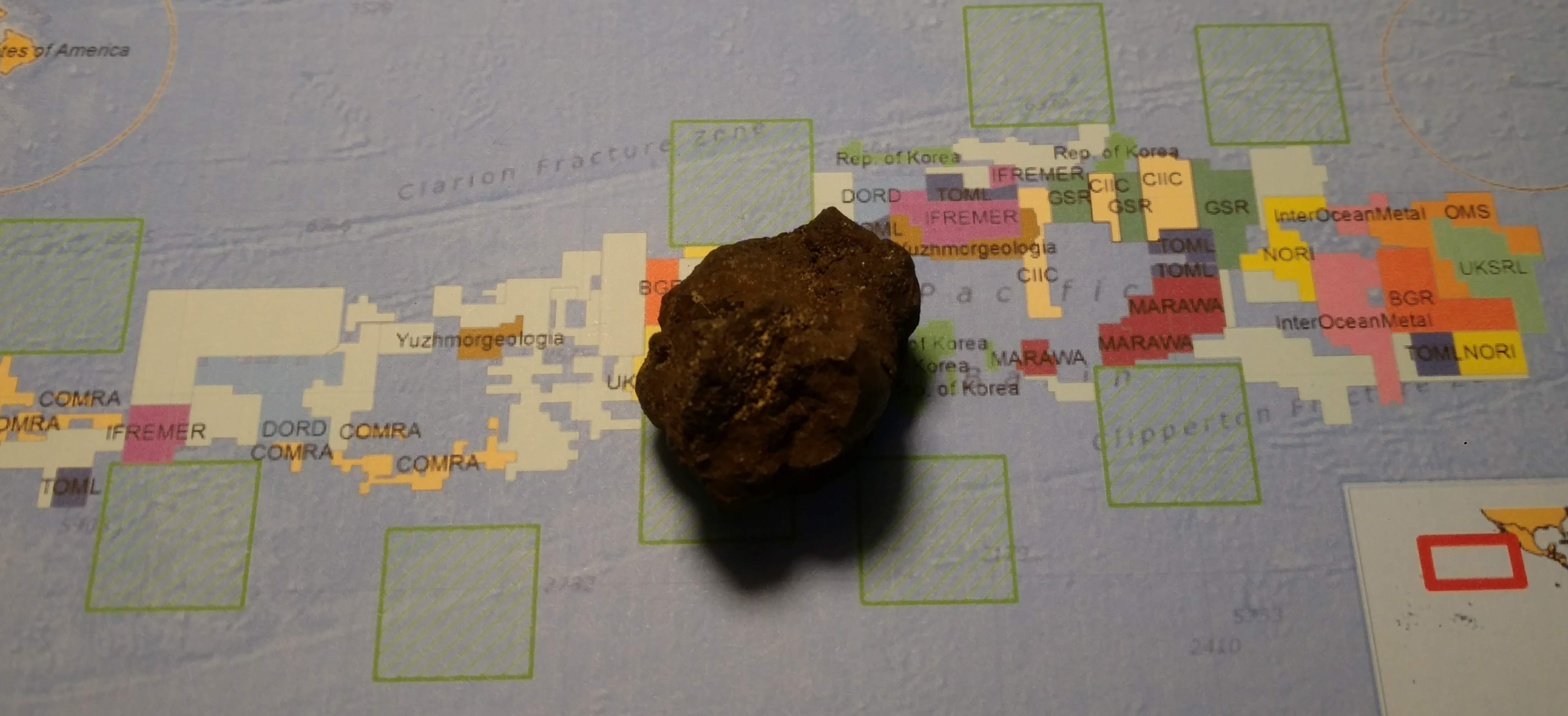
Three decades ago, the deep-sea mining industry coalesced around a hydrothermal vent prospect in Papua New Guinea. At the time one of the largest known seafloor massive sulfides, its proximity to shore, as well as its location within the territorial seas of a single nation, made it the ideal spot to launch the first deep-sea mining operation. A decade later the first mining tools touched down on the seafloor.
This is not that story. The rise and fall and fall and rise and fall and rise of deep-sea mining is a tale almost a century old (and one which we have blogged about quite a bit). Like the tide itself, the industry is entirely dependent on the ebb and flow of commodities prices. When copper and gold are down, exploiting the seafloor is prohibitively expensive. When the price eventually rises, the upfront cost and long tail of mobilization means that initial profit projections are woefully obsolete by the time production begins. The Persistent Technology movement managed to handily tank the commodities market for most of the 20’s.
Of course, while the underlying resource proved to be too risky in a volatile commodities market, the technology developed for those first mines went on to be enormously profitable in other sub-sea ventures. Biomining and Rare-Earth Element Shunting wouldn’t exist if it weren’t for these early pioneers. Nor, for that matter, would some non-exploitive industries, like deep aquaculture and thermogradient energy production.
As new and more pressing technologies have emerged to threaten the sea floor, it is useful to look back at those first efforts and ask the most important question: what happened to the ecosystem?
The first deep-sea mine site was leveled using a multi-machine process that reduced the topology then gradually lifted the ore the the surface. Tailings were then redeposited at the mine site. Nearby set-asides were used to monitor the extended impact and act as biological refugia. All told, it was about as environmentally conscientious as a deep-sea mine could be, not perfect, but far from the catastrophic strip-mining some groups were proposing. It was slow, and that was almost certainly the saving grace for the ecosystem.
Make no mistake, that first mining site was almost completely extirpated. The ore is the ecosystem. Hydrothermal vents support their own unique communities, and those communities were destroyed.
The communities came back. It wasn’t a quick process by any means, but decades later, the contemporary communities are indistinguishable from those that were there before the purge. Sure, there are some important genetic differences that help us think more critically about refuge placement, time scale for recovery, and intensity of production, as well as help us place each vent site into a global biogeographic context, but functionally, the ecosystem has returned. That shouldn’t be a surprise in this era. Ecosystems like hydrothermal vents have evolved to deal with intense disturbance.
What we didn’t expect, that now, in hindsight, seems obvious, is how profoundly the surrounding non-vent communities were impacted. Halo fauna, all those wonderful species that hang out around vents for the abundant food supply, can stretch out across the abyssal plain. They include the charismatic macro-fauna like squat lobsters and redback crabs, but also the infauna that lives in the muck, drinking deeply of the nutrient-rich sediment. These communities, the ring of calm around the roiling vents, were decimated.
Even today, there are few who actually care about halo fauna. In many minds, they are the “background”–ubiquitous, cosmopolitan organisms whose populations span basins. Local extirpation should be a trivial matter. Except, thanks to the Infinite Biodiversity Model of the deep seafloor, we now know that that extirpation eradicated unique diversity that will never be seen on this world (or any other) again.
Maybe it doesn’t matter that the halo communities that grew around previously mined vent sites shared no commonalities with the previous occupants. The background fauna is opportunistic. They are not dependent on vents, so it’s a crapshoot which colonists arrive first. Biomining is already a much more destructive practice, and we accept the inevitable diversity loss mandated by continuous exploitation. After all, the unique, iconic ecosystems that typify hydrothermal vents endured.
Thankfully, for now the great deep-sea gold rush of the early 21st century was a one-time deal. Rather than playing catch-up with a rapidly growing industry, we have a single long-term disturbance experiment to continuously monitor.
On January 1, 2016, the Southern Fried Science central server began uploading blog posts apparently circa 2041. Due to a related corruption of the contemporary database, we are, at this time, unable to remove these Field Notes from the Future or prevent the uploading of additional posts. Please enjoy this glimpse into the ocean future while we attempt to rectify the situation.