I am thrilled to announce that “Why Sustainable Seafood Matters,” my second book, is now available for preorder through my publisher Johns Hopkins University Press! Use code HWSSM for 30% off your preorder! Preorders are important because they help signal to booksellers how much interest there is in a book, so please consider ordering a copy. Another thing you could do to help is recommend that your local library order a copy. And if you’re a journalist or an expert in the field interested in getting an advance review copy, let me know, though we won’t start that until the end of the summer.
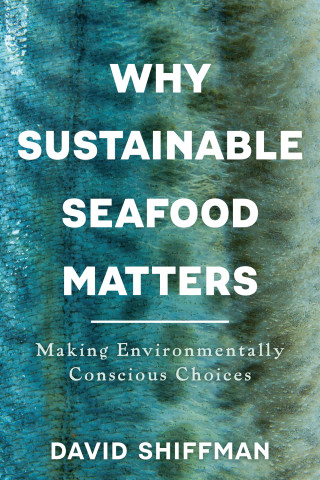
As you might expect from the title, “Why Sustainable Seafood Matters” is all about the world of sustainable seafood. It includes an in-depth discussion of the various environmental harms caused by unsustainable fishing practices, including overfishing, bycatch, habitat destruction, and more. Unsustainable fishing practices are a bigger threat to marine biodiversity and marine ecosystems than climate change, oil spills, and plastic pollution, though they get much less attention! While I don’t shy away from how serious these problems are, I stress throughout that the situation is not hopeless, because we know how to solve every one of those problems using science, evidence, and conservation policy.
And despite what you may hear from some extremists, we are absolutely not at the point where everyone has to give up eating seafood to save the ocean. In this book, I introduce readers to the world of sustainable seafood, a series of non-profit and industry organizations working to promote environmentally-friendly fishing and fish farming practices. I explain how each system of sustainable seafood recommendations or certifications work, and why you can trust them to help you make environmentally responsible decisions at the seafood counter or when eating at a seafood restaurant. It includes a handy shopping guide for some of the most common seafoods people eat, including salmon, shrimp, and tuna.
So why did I follow up “Why Sharks Matter” with a book about sustainable seafood? Here’s what I wrote in the preface:
“When I went on my international book tour for Why Sharks Matter, one of the most common questions I received from members of the public attending my talk was “I’m so sad to learn that all these sharks are dying, what can I do to help save sharks?” I would point out that the number one threat to sharks, by far, is unsustainable fishing practices, and therefore that the number one thing that people can do to help save sharks is to not support unsustainable fishing practices. I would also point out that this would have the benefit of not only helping sharks, but helping marine biodiversity as a whole, including marine mammals, sea turtles, and seabirds, as well as the fish we eat. And I’d point out that “don’t support unsustainable seafood” absolutely does not mean we all need to stop eating fish and become vegan or else the ocean is doomed, because sustainable seafood options exist. A follow up question was usually “that sounds great, how do I know if a piece of seafood is sustainable or not?” It was around the 10th time that I was asked that question that the idea for this book was born. I wrote Why Sharks Matter because while there are a lot of great books about sharks, none of them thoroughly explained the science and law of shark conservation at a level that a shark enthusiast without a Ph.D. or a law degree can follow. And I’m writing this book for a similar reason. More people than ever before care about the environmental impact of their day-to-day choices, including the foods they eat, but navigating the world of sustainable seafood is complicated.”
Who is Why Sustainable Seafood Matters for? Here’s what I wrote in the preface:
“My ideal reader, the one for whom this book is targeted and the one who will get the most out of it, is someone who is vaguely aware that some seafood harvesting practices are bad for marine life, is vaguely aware that there are some solutions for reducing the impact of harmful fisheries practices, wants to make sustainable choices, but doesn’t have time to read a 300 page stock assessment every time they’re trying to figure out what’s for dinner. If your next question is “if I won’t read a stock assessment, why would I read this book,” my answer is that you only have to read this book once, and it will help simplify the complex world of sustainable seafood so such a reader can make an informed and responsible choice. You can also just read the sections that most interest you. Also, this book is written by an award-winning explainer of science at a level that anyone can follow, unlike a stock assessment, which is some of the densest and most technical writing you’ll ever read.
Part 1 explains the science behind many of the biggest harms caused by poorly managed fisheries, including overfishing, bycatch, habitat loss, and a variety of other issues. I hope that it will open your eyes to the massive environmental impact caused by some of your favorite foods, and make you consider buying sustainable seafood. And if you keep reading, you’ll learn just how to do that. Please note that I am stressing the bad not because these are unsolvable problems, but because you’ll care more about how to solve them if you know how big of a problem they are! If you saw SeaSpiracy and wrongly assume that there’s no such thing as sustainable seafood, you can get a lot out of this book. Part 2 goes into detail on policy solutions and fishing practices that can reduce or eliminate some of these harmful environmental impacts, and the evidence that lets us know that these solutions work. (For such a reader, I’d still recommend reading part 1 to make sure that you’re using accurate facts and figures when pointing out the very real harms that can be caused by fishing practices.) If you’re already convinced that these problems are real but solvable, but you are a little confused about the nuances of the sustainable seafood movement—what does it mean if something is rated Yellow vs. Green, what is the difference between recommended and certified, and what statistics and claims are valid—then part 3 of this book is for you. Part 3 will introduce some of the key players in the sustainable fisheries management and sustainable seafood world, and how to use their various guides and advice. And if you just want a quick and easy guide to making environmentally friendly choices at the grocery store when you’re trying to decide what to feed your family for dinner, Part 4 is for you, synthesizing specific recommendations about specific types of seafood to buy or avoid. I hope you’ll still check out the rest of the book so you understand what goes into these specific choices!
Overall, by the end of part 1 of this book, I hope that everyone will be convinced that unsustainable fishing practices have massive and harmful environmental impacts, and that something should be done. By the end of part 2 of this book, I hope that everyone will be convinced that something can be done, that we know how to solve these problems. By the end of part 3 of this book, which focuses on the groups working to solve this problem, I hope that everyone will be informed about some of the great groups tackling different sides of this problem using different approaches. And I hope you’ll be convinced that we have a better chance of solving these problems by supporting these groups rather than attacking them with pseudoscience and extremism! And by the end of part 4, I hope you’ll be equipped with some specific choices you can make to help support sustainable seafood at the grocery store.”
So there you have it folks. Please consider pre-ordering Why Sustainable Seafood Matters, asking your local library to order a copy, and spreading the word to interested friends, family, and colleagues. If you’re interested in obtaining a review copy and writing a review, or if you’re interested in bringing me to speak about sustainable seafood to your group, please don’t hesitate to reach out to me directly at WhySharksMatter @ Gmail.