It’s the moment we’ve all been waiting for, the single most misunderstood marine creature that calls our oceans its home: the rare, elusive, often smelly, occasionally employable, Marine Biologist!
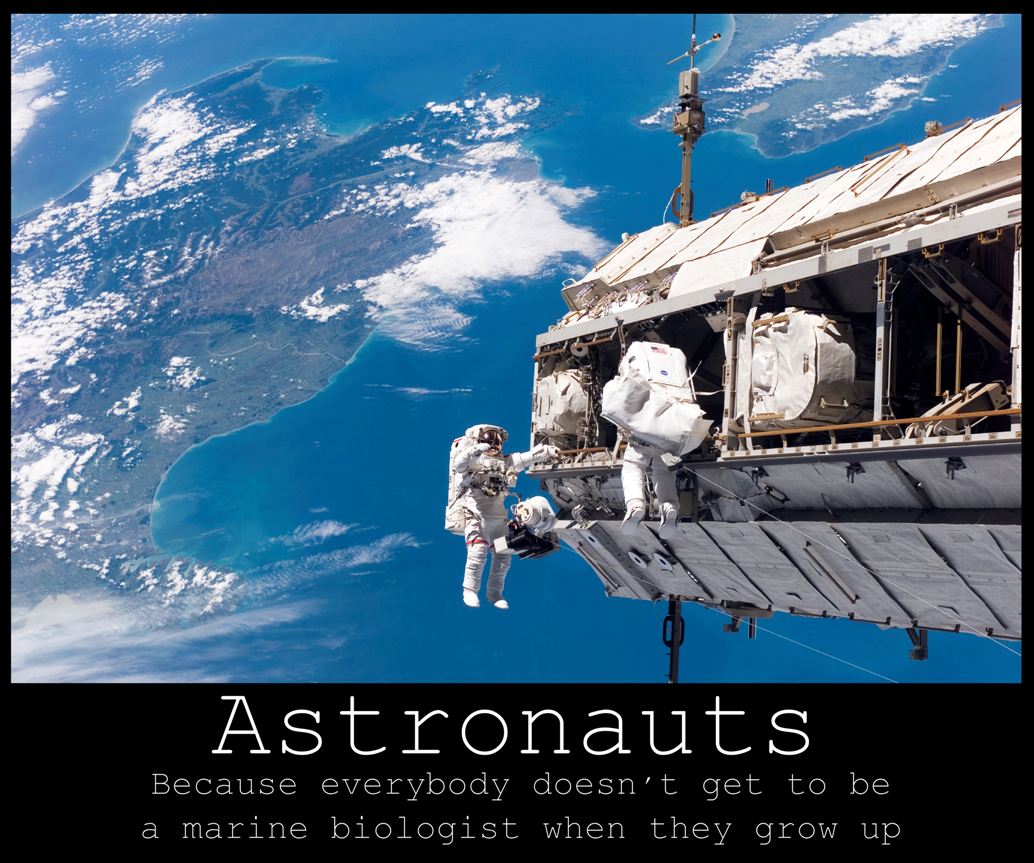
For something so incredibly popular, articulate, good-looking, and revered, there sure are a lot of misconceptions about who marine biologists are and what they do.
Myth # 1 – All Marine Biologists have beards.
Yes, if you look through a history of marine scientists, you’ll find many pictures of old, bearded men. But that’s true if you look through the history of any science and reflects a long cultural history of gender discrimination and outright misogyny. Couple that with a long standing tradition among maritime cultures that women don’t belong on boats, and you might be led to believe that most marine biologists are men. That fact becomes futhur from the truth every day. Among the pioneers in marine science are Mary Rathburn, Julia Platt, and Rachel Carson, while modern barrier breakers range from Ruth Turner, the first woman to use the DSV Alvin for research, to Cindy Lee Van Dover, the first to pilot it (incidentally, no one has a beard on the Alvin, since it would interfere with the emergency respirator should the oxygen system fail).
The website Women Oceanographers (http://www.womenoceanographers.org/) has a spectacular series highlighting the contribution of women to marine sciences.
Myth # 2 – Marine Biologists all study whales and dolphins.
No, we don’t. Some of us don’t even particularly like whales or dolphins. For that matter, we don’t want to work at Sea World.
Myth # 3 – Marine Biologists hate fishermen.
Perhaps one of the most insidious rumors is that we have it out for fishermen. In retrospect, it’s not hard to see where this would come from. Any catch limit, fishery closure, or fishing regulation is going to track back somehow to the work of a marine biologist. And there are some marine biologists who are opposed to fishing, just like there are members of the general public opposed to fishing. But Marine Biologist and fishermen have the same goals – we both want a healthy, productive ocean (that both our livelihoods depend on). Most marine biologist that I know fish, eat fish, and support our local fishermen. In fact, if I didn’t screw up the schedule, I’ll be out fishing when this post is published. Unfortunately, as overfishing is one of the biggest problems facing the ocean, conflicts are unavoidable and we’re going to butt heads on important issues.
Even so, most Marine Biologists would love to see the ocean return to a state of abundance where fishermen can harvest without regulations. Dare to dream.
Myth # 4 – Marine Biologists spend their lives on the water.
This myth is more prevalent among aspiring Marine Biologists. The job looks glamorous, with trips to tropical islands, extended cruises, and life on the beach. While I hate to burst the bubble of the next generation, Marine Biology is mostly lab work and sitting in front of your computer. If I’m lucky, I’ll get maybe 3 months of field work every 2 years. The rest is endlessly freezing and thawing samples, pipetting clear liquids into other clear liquids, and typing, typing, typing. Don’t get me wrong, I love (almost) every minute of it, but it’s a far different lifestyle from what Jacques Cousteau led me to believe.
Myth # 5 – Marine Biologist are all just like Jacques Cousteau.
Milton Love said it best when he wrote “We really like Jacques Cousteau, too. But, drinking thousands of gallons of red wine while scuba diving around the world does not make you a marine biologist. It makes you a wonderful and effective spokesperson for the sea, and gives you a liver with the consistency of a chocolate necco wafer, but it does not make you a marine biologist.” Most research cruises are more akin to the Life Aquatic, anyway, but with more disasters and less research turtles surviving. A personal submarine would be nice, though.
Regarding #1 – Though I tend to grow out a nice gnarly field work beard, I often can’t wait to shave it at the end of the trip because there aren’t enough showers in the world to get all the fish slime, blood, and shark puke out. And that’s assuming I have shower access while out in the field…
I want that poster! Where do we get one?
Myth #6: All marine biologist have scuba diving license.
Unfortunately, there are those who do have the fear of water and may have health implications that would prevent them from diving.
1) but do most men in marine science have beards? i know every guy in my lab does
2) count me in the dont particularly like dolphin group
3) i love fishermen, in fact, they are exceptional sources of knowledge, and for me, a source of critters for my experiments, so yes, there is head-butting at times, but we do all want the same thing
4) not all their lives, but some of us lucky to do field studies in local, coastal bays can go out almost every day from may through september (and my field season is actually march-december), so count me as one of the few lucky ones… that is until i graduate…
5) i love steve zissou!
Sadly, since it’s a NASA image, I don’t think we can sell it. But I’d be happy to e-mail you a high-res copy.
As a marine-biology-flavored prof, I always loved talking to parents of prospective marine biology students. They commonly had at least two of these misconceptions . . . as well as a lot of panic (“My gawd, Leroy/Lu Ann is going to be one of those scruffy people on the beach: surfing, getting smelly, and not making any money. Why don’t they want to be pre-med, like we tell them?!!”). And as for the narrative for #1, I’ve known a few female marine biologists with . . . um . . . how do I put this . . . some quite active mandibular follicles. Things haven’t really changed in the field since I started studying it in college in the mid-60s, as much as people might think otherwise. Thank goodness!!!