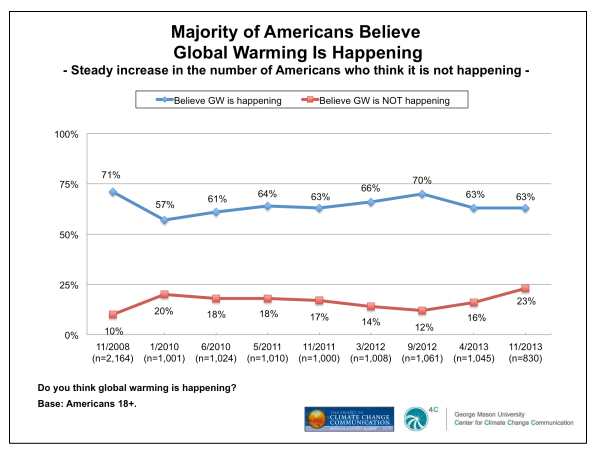
The Polar Vortex, a mass of cold air usually centered around points within the Arctic Circle, made a visit south for the second time in 2014. The Vortex brings freezing weather, snow, and ice to regions that are unaccustomed to such extreme conditions. It also brings with it a new spate of “so much for global warming” talking-points, fresh on the heals of a recent report revealing that Climate Change Denial is at an all time high.
Unfortunately for the climate change denial industry, Polar Vortices are well-understood atmospheric phenomena. They were documented as early as 1853 as currents of cold air that essentially circle the poles. High-altitude observations in the 1950’s revealed the occurrence of sudden stratospheric warming (SSW) in the Arctic Polar Vortex. These SSW’s can cause a the vortex to weaken or reverse directions, allowing it to drift off axis or split into several smaller vortices. When weakened vortices contact the jet stream, cold arctic air is forced south, resulting in anomalously cold temperatures.
The obvious next question is: Is the weakened polar vortex caused by climate change?
There’s certainly a compelling argument to be made that climate change does influence the Arctic Polar Vortex. The Vortex is regulated by the heat balance of the arctic, a region that is being disproportionately affected by climate change. Not only is the arctic warming, but the transition from ice-covered to open sea changes the absorptive and reflective properties of the planet’s surface, further altering the arctic’s energy balance. Warming events drive weakening within the vortex, so it would seem like a warmer arctic would experience more variability in the Polar Vortex. Climate scientists are still working on establishing the extent to which global warming will affect Polar Vortices.
There is a common refrain in the climate change community that “you can’t blame any singular weather event on Climate Change”, because climate refers to long-term patterns in weather, not specific events. I reject this interpretation. Climate Change affects weather in complex and subtle ways that are exceedingly difficult to quantify. While it is impossible to determine precisely how much impact Climate Change has on a single weather anomaly, the reality is that all weather is influenced, to some extent, by global warming.
Two other, distinctly human, phenomena are driving climate change discussions about the Polar Vortex. The first is our tendency to extrapolate personal experiences to global generalities. Yes, the United States are colder than average, with parts of Florida dropping to a chilly 39°F, but much of the rest of the world is experiencing record heat waves. Parts of Australia peaked at a whopping 125°F while even the Arctic is experiencing a warmer than average year. 2013 was the fourth warmest year on record. Even more telling, while most “warmest years” get a boost in temperature from El Niño, 2012 and 2013 are the only years in the top ten that didn’t occur in conjunction with an El Niño Southern Oscillation.
The second phenomena is something we refer to in ocean conservation as Shifting Baselines Syndrome:
Essentially, this syndrome has arisen because each generation of fisheries scientists accepts as a baseline the stock size and species composition that occurred at the beginning of their careers, and uses this to evaluate changes. When the next generation starts its career, the stocks have further declined, but it is the stocks at that time that serve as a new baseline. The result obviously is a gradual shift of the baseline, a gradual accommodation of the creeping disappearance of resource species, and inappropriate reference points for evaluating economic losses resulting from overfishing, or for identifying targets for rehabilitation measures.
I attempted to capture the concept of shifting baselines in the prologue to to my climate change science fiction novel, Fleet: Shift – an adventure in marine science from the not-too-distant future. Shifting baselines syndrome is clearly not limited to fisheries issue, as the webcomic XKCD expertly pointed out:
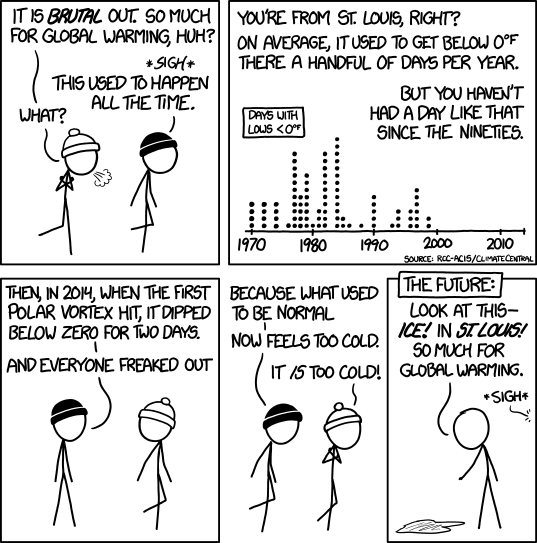
Over the last several decades, we’ve experienced a major shifting baseline in how we interpret the weather. Winters in northern cities have been getting warmer, making the freezing days more pronounced. We see these freezing event as anomalous today, whereas as 50 years ago, they would be the norm.
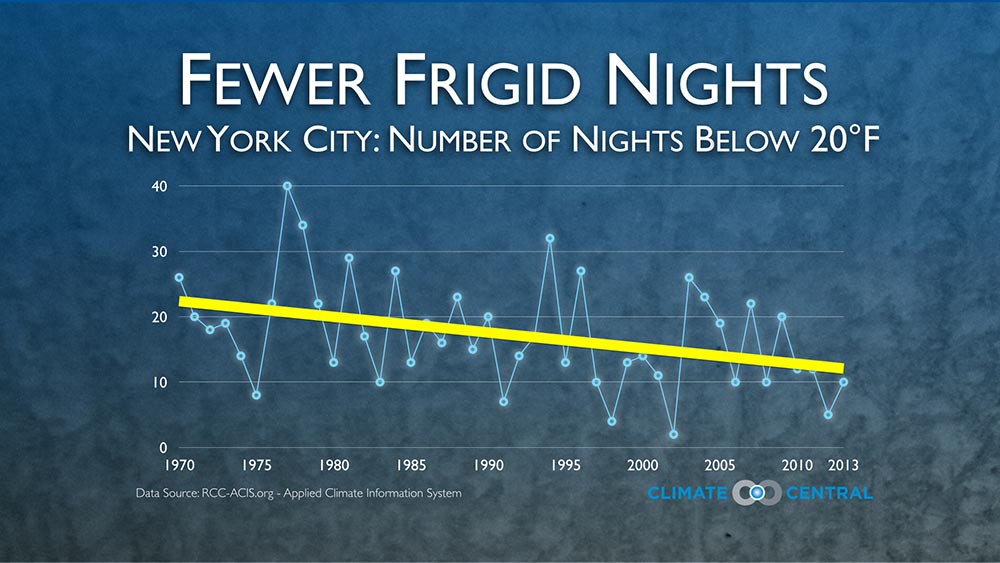
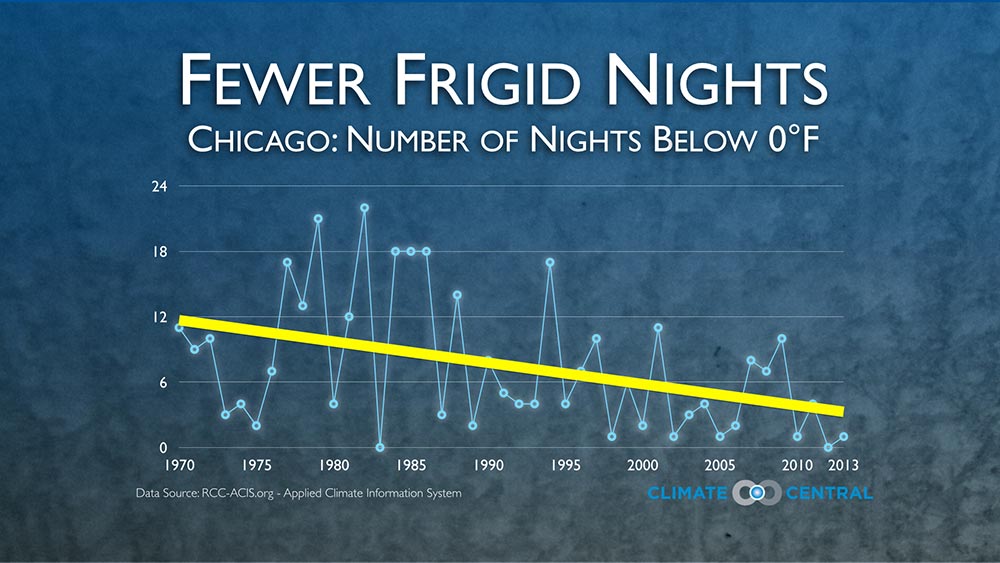
For almost four decades, our climate has been abnormal. If you were born after 1976, you have never experienced a “normal” year. For 37 years, the annual global temperature has been above the long-term average temperature. Our baseline for what constitutes a normal climate has shifted.
No, the dramatic cold brought on by a weakening Polar Vortex is not evidence against Climate Change anymore than the rising stern of the Titanic is evidence that the ship isn’t sinking. It is evidence that our perceptions regarding what constitutes “normal weather” has so shifted that something we would have considered an annoying cold snap in the 1950’s is treated as a major departure from normal weather in 2014. Abnormal is the new normal.
Wow. If all that cold air is here, what’s there? Maybe warmer air systems that don’t belong. Hmmm