This week, I and a team of marine ecologist, explorers, and ocean technologists published Robots as vectors for marine invasions: best practices for minimizing transmission of invasive species via observation-class ROVs. This paper, conceived and largely produced during the ROV2PNG Marine Science Short Course in Papua New Guinea, represent the current best practices for minimizing or eliminating the spread of invasive species via portable, low-cost underwater robots.
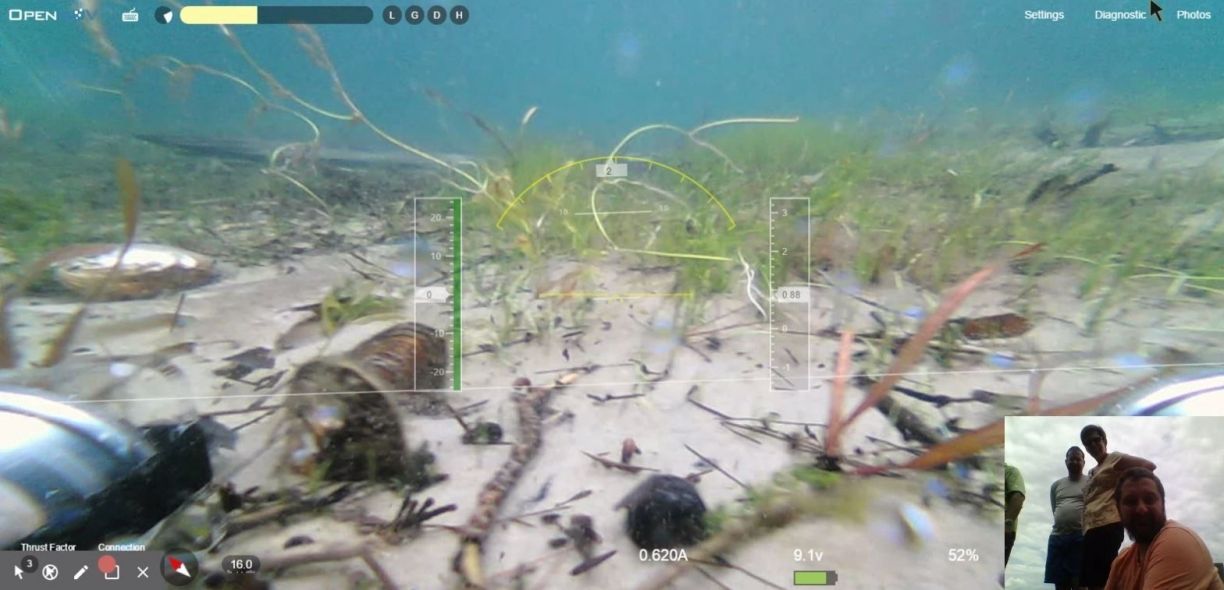
Species invasion, particularly in the ocean, is a huge problem. Invasive species are ruthlessly good at out-competing native fauna. Without any natural predators, they can flourish, causing massive, irreparable damage to marine ecosystems. As scientists, explorers, and conservationist, we have to be proactive in ensuring that our actions don’t negatively impact the ecosystems we’re trying to save. Our guidelines are simple, but effective, and, most importantly, easy to follow.
- Educate yourself about species invasions generally and specifically about current issues in the area you’re working.
- Inspect your gear.
- Soak your gear in freshwater between dives.
- Soak your gear in weak bleach between expeditions.
- Avoid moving your equipment between geographic regions, when possible.
Technology can be a powerful tool in the aid of conservation. Around the world, people are using low-cost robotics to count elephants, detect poachers, protect tortoises, even seek-and-destroy invasive sea stars. As I discuss over at Motherboard, these robots are a transformative component of 21st century marine science and conservation, they fundamentally reshape the way we interact with the ocean. And with the explosive success of the latest OpenROV launch, there are about to be a lot more robots in the water. This is a good thing. The more eyes we have in the sea, the more people that actively contribute to ocean exploration, the more people with access to the tools necessary to explore, study, and understand our oceans and how they are changing, the better off we will all be.
Technology comes at a cost, and it is often an environmental one. We pull rare and precious metals from the earth in order to fabricate these amazing machines. We burn ancient carbon to power this world. We fabricate more and more plastic, a material designed to last forever that is often used once, then discarded. More directly, we create great chains of social connective tissue that link the world together, both physically and electronically.
I want to connect humans to the ocean through underwater robots that are cheap, capable, and easy to use. Every new connection creates a new vector for species invasion.
Robots as vectors for marine invasions is the first peer-reviewed scientific publication to use the OpenROV as its foundation. This is important. In the increasingly technology-driven conservation initiative of the 21st century, we need to take an anticipatory, rather than reactionary approach to the potential impacts of new technology. If the story of the last century of conservation is about reacting to the damage caused by human advancement, the next century must be about harnessing our collective experience to anticipate the potential impacts that new methods, new technologies, and even entirely new industries will have on the environment. We should prepare for, rather than react to, environmental harm.
We recognized early on that the one of the greatest assets of the OpenROV, it’s portability, is also it’s greatest potential for environmental harm. A carelessly packed ROV could carry invasive species around the world. So we present these guidelines, not as a response to any incident, but in anticipation of this potential, and an attempt to minimize that possibility. It is my hope that, by setting the precedent early, we can more fully harness the vast capabilities that these robots offer while minimizing the potential for environmental harm.
Call to Action
If you’re a microROV user, whether OpenROV, Fathom, VideoRay, or any of myriad observation-class options, follow these guidelines, incorporate them into your training, add them to your pre- and post-dive checklists.
If you’re an NGO, government agency, academic institution, or other organization using microROVs in any capacity, require your employees to adhere to these guidelines.
If you’re a reviewer, editor, or publisher of scientific manuscripts, require that any papers that use microROV explicitly state that they have adhered to these guidelines.
If you’re a manufacture of microROVs, include these guidelines in information packets shipped out with new microROVs.