Skip to content

Southern Fried Science

Over 15 years of ocean science and conservation online

  • Home
  • About SFS
  • Authors
  • Support SFS

Dive the Wreck of the Steamship Tahoe with OpenROV!

Posted on June 6, 2016 By Andrew Thaler
Education, Oceanography for Everyone

OpenROVOne-hundred-fifty meters hardly seems like anything at all.

Standing in the parking lot of OpenROV, I pace out 150 meters. The small sign, hanging against the wall of the battered warehouse, pointing visitors towards the entrance, is clear.

One-hundred fifty meters is less than half a lap around a standard running track. It’s the height of Old St. Paul’s Cathedral, the tallest building in the world, 700 years ago. The fastest man in the world could cover 150 meters in 14 seconds.

On land, 150 meters is barely noteworthy. Plunge into the sea and 150 meters is the wine dark deep. It is the edge of the photic zone, a world of eternal twilight. It is three times deeper than most SCUBA divers will ever venture. At 150 meters, the water pushes down with the weight of 16 atmospheres.

And, if you climb high into the Sierra Mountains and descend into the frigid alpine waters of Lake Tahoe, just off the coast of Glenbrook, Nevada, lying on a steep glacial slope at 150 meters depth is the wreck of the Steamship Tahoe.

Launched on June 24, 1896, Tahoe sailed across the eponymous lake for four decades, carrying passengers, cargo, and mail, until the expanding US highway system rendered her obsolete. Tahoe was scuttled in 1940. She landed on a slope and slid down into the depths of Lake Tahoe, lost for 60 years. SS Tahoe laid on the bottom undisturbed until 2002, when the first divers surveyed the wreck. They returned in 2009 and 2010.

And then, in 2012, the OpenROV team made the trek up to Lake Tahoe, to explore the wreck not with divers, but with small, open-source underwater robots. It was my first adventure with OpenROV, but would be far from my last.

Whether through shipwrecks, sunken relics, or evolutionary biology, the future of underwater exploration has always been linked, inextricably to our past. There’s something important and profound about maintaining the connection to history as we push every forward into the ocean future.

OpenROV may be a young company, but it already has a history of it’s own. The back wall of headquarters proudly displays the evolution of the robot, from a rough high school PVC beast named Mr. Pinchy to the sleek, powerful Trident.
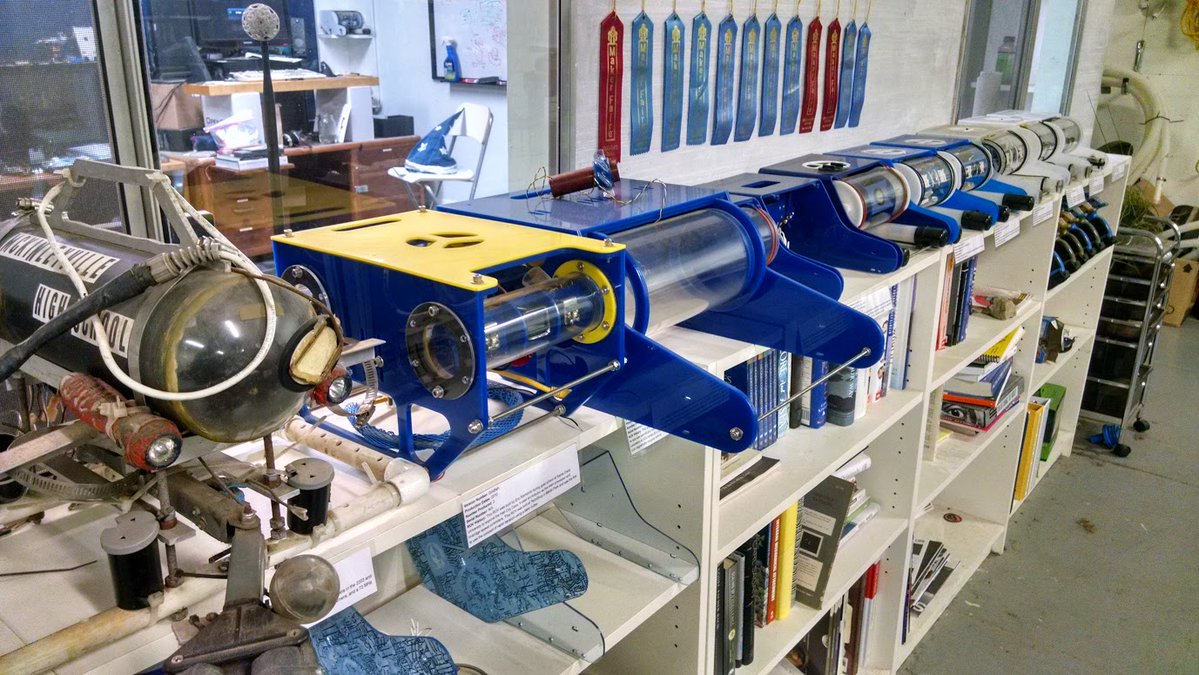
OpenROV history wall.

This week, we return to Lake Tahoe and the wreck of her largest steamship to once again push the limits of open exploration. The OpenROV team, led by Eric Stackpole and David Lang, will spend the next few days diving on the wreck, in coordination with NOAA and local preservation groups, to survey the condition of this historic site. Along the way, we’ll be testing the next generation of OpenROV equipment, including the much anticipated OpenROV Trident. Trident will join a host of experimental platforms, including specially modified deep-diving ROVs, a dropcam observation system, and Stackpole’s research-vessel-in-a-minivan system, complete with USBL tracking and dynamic positioning.

A few dozen members of the OpenROV community will gather on the shores of Lake Tahoe for the next great adventure. As with past OpenROV expeditions, you’re invited to come along. Updates will flow freely from the Return to the SS Tahoe OpenExplorer page, assorted social medias, and the OpenROV twitch stream.


Share this:

  • Share on Bluesky (Opens in new window) Bluesky
  • Share on Facebook (Opens in new window) Facebook
  • Share on Reddit (Opens in new window) Reddit
  • Share on Threads (Opens in new window) Threads
  • Share on WhatsApp (Opens in new window) WhatsApp
  • Share on Mastodon (Opens in new window) Mastodon

Related

Tags: open source OpenROV Tahoe

Post navigation

❮ Previous Post: The Importance of Scientific Discovery and Communication for a General Science Audience
Next Post: Trading blue collars for scarlet robes, my working-class experience of academic life ❯

You may also like

Weekly Salvage
See a Great White Shark from the inside with OpenROV, Vaquita, Narwhals, and more! Monday Morning Salvage: November 6, 2017
November 6, 2017
Oceanography for Everyone
Fun Science FRIEDay – Open-Acess Science for the Masses
July 15, 2016
Education
The next OpenCTD is here!
June 22, 2026
Conservation
Big ideas and little robots: Using the OpenROV in interdisciplinary STEM projects
May 4, 2016

Popular Posts

At least 74 practicing shark researchers: How a silly thing I said online raised thousands for conservationAt least 74 practicing shark researchers: How a silly thing I said online raised thousands for conservationFebruary 26, 2025David Shiffman
Why the new Trump order to shoot wolves is both illegal and a dreadful precedent for endangered speciesWhy the new Trump order to shoot wolves is both illegal and a dreadful precedent for endangered speciesSeptember 5, 2026Ali Gaster
Severely injured great white shark found, are scientists responsible?Severely injured great white shark found, are scientists responsible?March 29, 2011David Shiffman
5 things I learned helping to reassess the global conservation status of every species of tuna and billfish5 things I learned helping to reassess the global conservation status of every species of tuna and billfishSeptember 15, 2026David Shiffman
That's not a blobfish: Deep Sea Social Media is Flooded by AI SlopThat's not a blobfish: Deep Sea Social Media is Flooded by AI SlopDecember 19, 2025Andrew Thaler
Getting a sense of porpoiseJanuary 20, 2009Andrew Thaler
How to build a canoe from scratch on a graduate student stipendHow to build a canoe from scratch on a graduate student stipendApril 17, 2010Andrew Thaler
What is a Sand Shark?What is a Sand Shark?November 12, 2017Chuck Bangley
The Trump Administration’s latest attack on endangered speciesThe Trump Administration’s latest attack on endangered speciesSeptember 17, 2026Ali Gaster
What Ocean Ramsey does is not shark science or conservation: some brief thoughts on "the Shark Whisperer" documentaryWhat Ocean Ramsey does is not shark science or conservation: some brief thoughts on "the Shark Whisperer" documentaryJuly 2, 2025David Shiffman
Subscribe to our RSS Feed for updates whenever new articles are published.

We recommend Feedly for RSS management. It's like Google Reader, except it still exists.

Southern Fried Science

  • Home
  • About SFS
  • Authors
  • Support SFS


If you enjoy Southern Fried Science, consider contributing to our Patreon campaign.

Copyright © 2026 Southern Fried Science.

Theme: Oceanly Premium by ScriptsTown