Skip to content

Southern Fried Science

Over 15 years of ocean science and conservation online

  • Home
  • About SFS
  • Authors
  • Support SFS

Biodiversity Wednesday: The Skeleton Coast

Posted on March 9, 2011November 7, 2011 By Andrew Thaler
Uncategorized

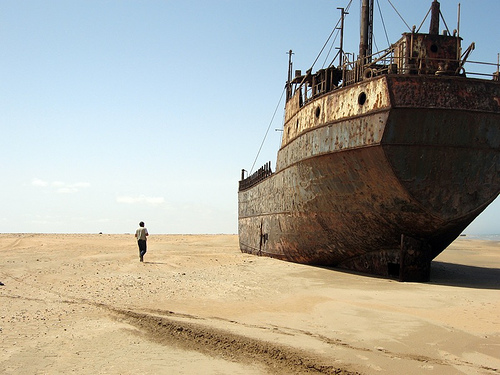
Image from http://www.safari-namibia.co.uk/

A 900-mile coastline runs perpendicular to the border of Angola and Namibia. The cold water carried up from the antarctic by the Benguela Current meets the warm, dry air of the Namib Desert and the resulting depression forms a cold, dense fog that extends out into the sea. The currents and wind combine to produce a force pushing inexorably towards shore. These conditions led mariners to christen this seemingly desolate and inhospitable stretch of sand the Skeleton Coast.
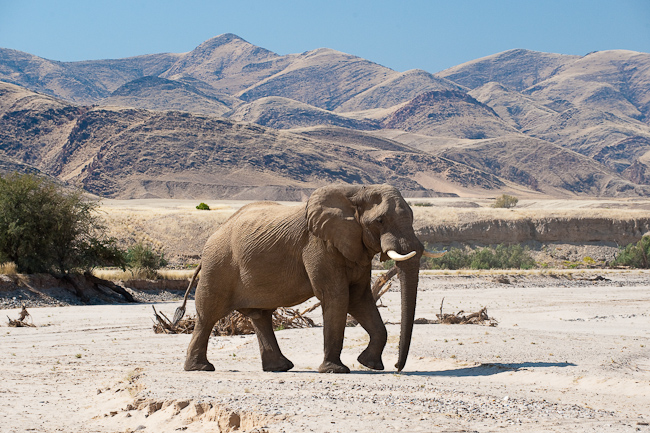
image from http://www.eyesonafrica.net/african-safari-namibia/skeleton-coast.htm

The Skeleton Coast National Park, arguably the least visited national park in the world, is part of the Iona – Skeleton Coast Transfrontier Conservation Area. Despite its barren image, the Skeleton Coast is rich in wildlife. Elephants, Giraffes, and Lions roam the interior, while the coast itself boast an impressive colony of Cape Fur seal. The nutrient rich waters support a productive fishery. Although whaling has been illegal for several decades, massive skeletal remains remind visitors of a now depleted heritage. The Skeleton Coast hosts Africa’s largest population of Black Rhino. Among the parks many endemic species is the Desert Plated Lizard (Gerrhosaurus skoogi).

Far from the beaten path and inhospitable to all but the hardiest people, the Skeleton Coast is not facing imminent threats. Big game hunters are attracted to some of the larger wildlife species, but their scarcity is their best protection. Many populations endangered elsewhere in Africa have maintained their numbers on the Skeleton Coast. Still, the future is never certain and it is as important to protect areas not under threat as those that are.

The Skeleton Coast Naional Park, arguably the least visited national park in the world, is part of the Iona – Skeleton Coast Transfrontier Conservation Area.

Share this:

  • Share on Bluesky (Opens in new window) Bluesky
  • Share on Facebook (Opens in new window) Facebook
  • Share on Reddit (Opens in new window) Reddit
  • Share on Threads (Opens in new window) Threads
  • Share on WhatsApp (Opens in new window) WhatsApp
  • Share on Mastodon (Opens in new window) Mastodon

Related

Tags: Angola Namib Desert Namibia Skeleton Coast

Post navigation

❮ Previous Post: State of the Field: Playing with Policy
Next Post: Help protect sharks in the Bahamas ❯

You may also like

Conservation
Namibian Government Announces 18-month Moratorium on Seabed Mining
September 24, 2013

Popular Posts

Here are some ocean conservation technologies that I'm excited aboutHere are some ocean conservation technologies that I'm excited aboutFebruary 19, 2026David Shiffman
What Ocean Ramsey does is not shark science or conservation: some brief thoughts on "the Shark Whisperer" documentaryWhat Ocean Ramsey does is not shark science or conservation: some brief thoughts on "the Shark Whisperer" documentaryJuly 2, 2025David Shiffman
That's not a blobfish: Deep Sea Social Media is Flooded by AI SlopThat's not a blobfish: Deep Sea Social Media is Flooded by AI SlopDecember 19, 2025Andrew Thaler
Bipartisan Concern Expressed Over Deep Sea Mining at Congressional HearingBipartisan Concern Expressed Over Deep Sea Mining at Congressional HearingJanuary 23, 2026Angelo Villagomez
Shark of Darkness: Wrath of Submarine is a fake documentaryShark of Darkness: Wrath of Submarine is a fake documentaryAugust 10, 2014Michelle Jewell
The horrifying physiological and psychological consequences of being AquamanThe horrifying physiological and psychological consequences of being AquamanJuly 18, 2012Andrew Thaler
The story of the pride flag made from NASA imagery: Bluesky's most-liked imageThe story of the pride flag made from NASA imagery: Bluesky's most-liked imageSeptember 27, 2024David Shiffman
What is a Sand Shark?What is a Sand Shark?November 12, 2017Chuck Bangley
Marine Biology Career AdviceMarine Biology Career AdviceMay 30, 2025David Shiffman
Cascading planetary-wide ecosystem effects of the extirpation of apex predatory Krayt dragons on TatooineCascading planetary-wide ecosystem effects of the extirpation of apex predatory Krayt dragons on TatooineJuly 22, 2014David Shiffman
Subscribe to our RSS Feed for updates whenever new articles are published.

We recommend Feedly for RSS management. It's like Google Reader, except it still exists.

Southern Fried Science

  • Home
  • About SFS
  • Authors
  • Support SFS


If you enjoy Southern Fried Science, consider contributing to our Patreon campaign.

Copyright © 2026 Southern Fried Science.

Theme: Oceanly Premium by ScriptsTown