Skip to content

Southern Fried Science

Over 15 years of ocean science and conservation online

  • Home
  • About SFS
  • Authors
  • Support SFS

Author: Andrew Thaler

Marine science and conservation. Deep-sea ecology. Population genetics. Underwater robots. Open-source instrumentation. The deep sea is Earth's last great wilderness.

Everything about hagfish is the best thing about hagfish, the battle for the deep-sea heats up, parasitic butt snails, and more! Monday Morning Salvage: December 17, 2017

Posted on December 18, 2017December 18, 2017 By Andrew Thaler
Weekly Salvage

Fog Horn (A Call to Action)

  • The CDC was given a list of seven banned words for their upcoming budgets. Among the censored words are “science-based” and “evidence-based”, which, of course, are concepts central to the CDC’s mission. I have some thoughts about why this list has appeared at this time. If you think the CDC shouldn’t be censored in their mission to safeguard public health, call your representatives.

Flotsam (what we’re obsessed with right now)

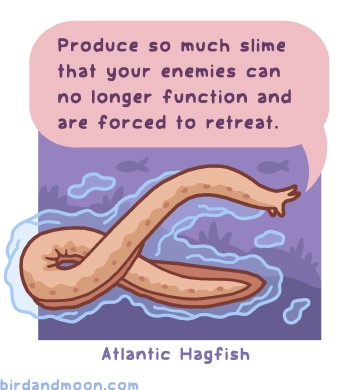
  • Bird and Moon author Rosemary Mosco is this week’s Hagfish Lover of note: Feeling Sick and Snotty?

  • Underwater robots reveal the all-you-can-eat-buffet of the deep sea.

Read More “Everything about hagfish is the best thing about hagfish, the battle for the deep-sea heats up, parasitic butt snails, and more! Monday Morning Salvage: December 17, 2017” »

Deep-sea mining goes to court, a year in climate reporting, oyster-adorned singers, and more! The Monday Morning Salvage: December 11, 2017.

Posted on December 11, 2017 By Andrew Thaler
Weekly Salvage

Flotsam (what we’re obsessed with right now)

  • 2017 Year in Climate. It’s been a wild, woolly years of climate highs and policy lows.
    • How Americans Think About Climate Change, in Six Maps.
    • Climate Change Is Complex. We’ve Got Answers to Your Questions.
    • As Climate Changes, Southern States Will Suffer More Than Others.
    • Miles of Ice Collapsing Into the Sea.
  • Fossils of Congress, featuring real, non-elected fossils, found around DC, might be my new favorite thing.
https://fossilsofcongress.tumblr.com/post/168190045787/the-discs-are-pieces-of-crinoid-stem-crinoid-a

Read More “Deep-sea mining goes to court, a year in climate reporting, oyster-adorned singers, and more! The Monday Morning Salvage: December 11, 2017.” »

Customer Service for Science.

Posted on December 6, 2017December 1, 2017 By Andrew Thaler
Academic life

Travis Nielsen is the founder and CEO of Azurigen Management and Consulting Solutions Inc. A STEM project management firm that specializes in linking conservation based science to business and government. He is a published scientist specializing in Marine Biology with 10 years experience in STEM, and 10 years of experience in management and leadership. He has been responsible for projects with budgets up to $500,000, working with multiple stakeholders, large public engagement mandates, and with staffs up to 100 people in locations all across the globe.

Walking into the airport one morning, my mind was still addled by the fog of waking up at 4am. I was heading to a conference for work and as I get to my ticket counter to check-in for my flight I am politely told by the counter staff that the flight had been cancelled. Confused, and curious as to why the flight was shut down, I enquired around until I found a friend that was on shift as a TSA agent, I asked what she knew, and it turns out that the flight was cancelled because one of the flight crew didn’t show up for work. The rumor was the crew member had a little too much fun at the pub and was nursing off a self-inflicted illness… I sighed and laughed to myself about how it was just my luck. This led to a magic adventure of cancellations and bookings for multiple flights and waiting for hours, just to leave the airport.  The reason that this cancellation is now a funny story and not a vivid nightmare – the airline that cancelled the flight went out of its way to help me when things went sideways, giving me vouchers for food and hotel stays, helping me as best they could to get where I needed to go, and generally doing all it could to help.  This help is what the business world calls ‘customer service’ and it is a critical part of every business out there, and for many small businesses, it can be the difference between success and failure.

In science, even though we deal with businesses daily, we rarely realize that we engage in customer service constantly! From professors dealing with the students they teach to the post-docs searching for in-kind services and grant money. To restate the cliché – Science is not done in a vacuum. Scientists should consider themselves an unconventional type of business entity that doesn’t sell a product or service, but instead deals in data and discovery – this is an invaluable product and service that keeps many industries going. As a result, customer service is an integral part of how we do science, and it should be obvious we need to keep our customer service skills sharp.

Read More “Customer Service for Science.” »

A year of brutal hurricanes, the wonderful resilience of limpets, talking about meat consumption, and more! The Monday Morning Salvage: December 4, 2017.

Posted on December 4, 2017December 4, 2017 By Andrew Thaler
Weekly Salvage

Flotsam (what we’re obsessed with right now)

  • ‘Extremely Active’ 2017 Atlantic Hurricane Comes to a Close – Here’s the Full Season in One Four-Minute Video:
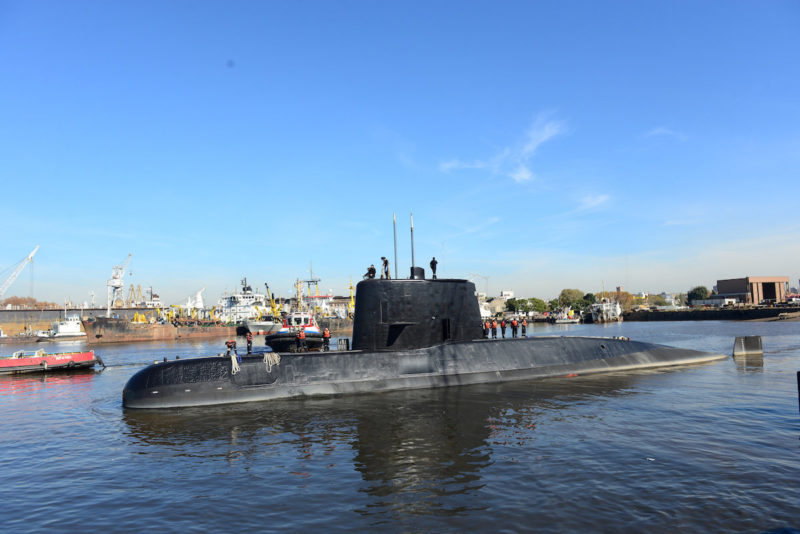
  • The final news, for now, from the missing Argentinian submarine: Argentine Navy: Water Entered Missing Sub’s Snorkel and Argentina Abandons Rescue Mission for Missing Sub.
The Argentine military submarine ARA San Juan and crew are seen leaving the port of Buenos Aires, Argentina June 2, 2014. Picture taken on June 2, 2014. Armada Argentina/Handout via REUTERS

Read More “A year of brutal hurricanes, the wonderful resilience of limpets, talking about meat consumption, and more! The Monday Morning Salvage: December 4, 2017.” »

Beware the walrus, explosion detected near missing submarine, diamond mining, and more! Monday Morning Salvage: November 27, 2017

Posted on November 27, 2017 By Andrew Thaler
Weekly Salvage

Fog Horn (A Call to Action)

  • In Port Moresby this Wednesday? The University of Papua New Guinea is hosting a public lecture and panel on experimental seabed mining in the Bismark Sea.

Flotsam (what we’re obsessed with right now)

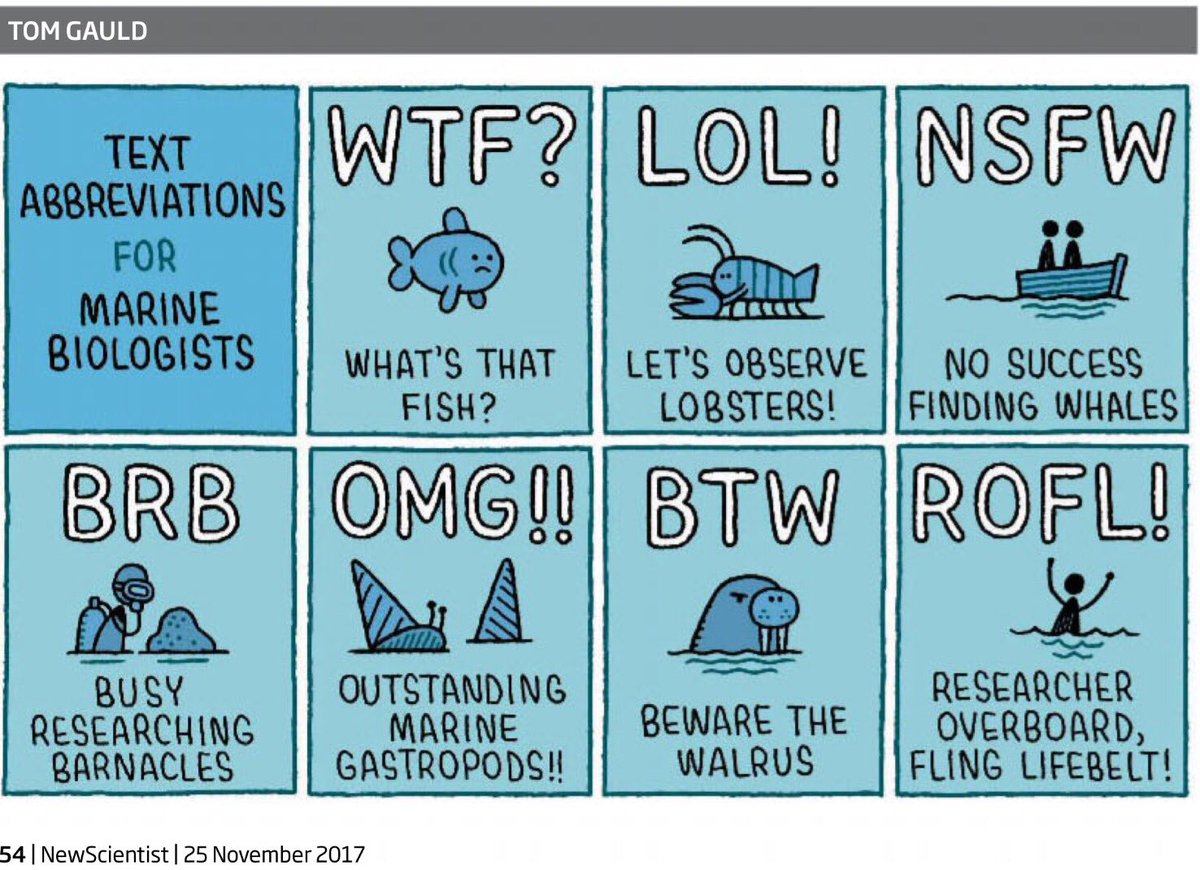
  • Text abbreviations for marine biologists. Courtesy of New Scientist. via Francis Villatoro.

Read More “Beware the walrus, explosion detected near missing submarine, diamond mining, and more! Monday Morning Salvage: November 27, 2017” »

Announcing oceansocial.us, a Mastodon instance for marine professionals!

Posted on November 23, 2017 By Andrew Thaler
Uncategorized

Mastodon is a new(ish), decentralized Twitter-like social network that’s grown quite a bit in the last few months. Mastodon allows individuals to host their own “instances” (i.e. run a full suite of the software on a private server in order to distribute the network), which connect to the larger universe of open-source social networks. This means that, unlike Twitter and Facebook and pretty much every major social networking platform, there’s no one person in control of Mastodon (though the largest instance is run by Mastodon’s creator). Accounts from any Mastodon instance can follow any account from any public instance.

So what, there’s another social network we have to check now?

This is Southern Fried Science. We like to push forward into new digital ecosystems and create places for marine science and conservation. In that spirit, I’ve created oceansocial.us, a Mastodon instance specifically for marine professionals working in science, education, conservation, policy, and management. Craig McClain’s latest science communication paper, Practices and promises of Facebook for science outreach: Becoming a “Nerd of Trust”., I want to see if there’s value in having an instance that makes it easy to find experts talking about the ocean. For the moment, anyone with an oceansocial.us Mastodon handle is immediately identifiable on the network, making is easier for journalist and the public to find ocean experts.

This, of course, is contingent on Mastodon actually taking off. It could still totally crash and burn and be dead as Google+ in 3 months. Mastodon is still growing, and my experience watching new social networks form (and often fail) is that’s there’s a tremendous first-mover advantage in getting something new and novel running right out the gate.

Read More “Announcing oceansocial.us, a Mastodon instance for marine professionals!” »

Farting oysters, bombing sea lions, and a new trash island? It must be the Monday Morning Salvage! November 20, 2017

Posted on November 20, 2017 By Andrew Thaler
Weekly Salvage

Fog Horn (A Call to Action)

  • It’s Native American History Month. Southern Fried Science recognizes that our servers are housed on the occupied land of the Timpanogos people while the majority of our writers live on unceded Powhatan territory. This November, Try Something New: Decolonize Your Mind.

Flotsam (what we’re obsessed with right now)

  • Boaters stumble on massive Caribbean “gyre” of plastic garbage. “Gyre is in quotes because I’m almost certain that this is debris from the 2017 Atlantic Hurricane season, rather than an accumulation of decades of plastic is a circulating ocean current. It’s still shocking to see.

https://www.youtube.com/watch?v=GSMGKwZBaWM

  • The ARA San Juan, one or Argentina’s two diesel-electric submarines, is missing. Search and rescue is mobilizing and there’s hints that the sailors tried to send out a signal Saturday.
  • Without a Treaty to Share the Arctic, Greedy Countries Will Destroy It. Cosign.

Read More “Farting oysters, bombing sea lions, and a new trash island? It must be the Monday Morning Salvage! November 20, 2017” »

Twitter Ocean Chess, lessons from the Vaquita, awe of the deep, and more! Monday Morning Salvage: November 13, 2017

Posted on November 13, 2017November 13, 2017 By Andrew Thaler
Weekly Salvage

Fog Horn (A Call to Action)

  • Ocean policy news breaking this week. We’ll have a comment template ready to go when it does. Please check back. We can’t announce until we know exactly what we’re dealing with.
  • Still time to register for OceanDotComm! Science Communication folks! Are you ready for OceanDotComm? Register now!

Flotsam (what we’re obsessed with right now)

  • This is an amazing piece about the importance of awe in deep-sea conservation. Unless we regain our historic awe of the deep ocean, it will be plundered.
Wine bottle found in the deep North Atlantic. Laura Robinson, University of Bristol, and the Natural Environment Research Council. Expedition JC094 was funded by the European Research Council.
  • The Vaquita are going extinct and with them comes an importance lesson on the value of social science to conservation research:

My wife, on the other hand, is a social scientist who works on development here in Mexico. When we first started dating, I used to tease her for being a soft little scientist in her soft little science. I now understand that helping a community pull itself out of poverty is more complex than brain surgery or quantum physics.

There is no magic equation for community organizing but she begins by understanding that “the community” isn’t some monolithic creature that thinks as a unit. There are complex politics and power dynamics at work that can either aid or destroy all her efforts.

I now understand why the vaquita is going extinct. They sent too many people like me into the region and not enough like her.

source.

  • Would you like to play a game? Last week David and I unleashed Twitter Ocean Chess upon the internet and the results are in: it’s the only valid use of 280 characters.
    • Marine biology nerd chess is the only decent justification for 280-character tweets
    • Here’s what happened when two marine scientists played emoji chess on Twitter
    • Emojis + Marine biology triva = OCEAN CHESS 🐬🦀♞

Read More “Twitter Ocean Chess, lessons from the Vaquita, awe of the deep, and more! Monday Morning Salvage: November 13, 2017” »

One weird trick for improving the outcome of your PhD defense.

Posted on November 6, 2017November 6, 2017 By Andrew Thaler 1 Comment on One weird trick for improving the outcome of your PhD defense.
Academic life

Feed your committee.

At the very least, make sure your committee is fed. A hungry committee is a grumpy committee. A grumpy committee is just a little bit less likely to let you pass your defense. Sure, you can prep, polish your thesis to perfection, run through a half-dozen practice defenses. You can even invest in some serious snake-fighting lessons. But all of those solutions are practical, pragmatic, and belie a commitment to success that suggests a work ethic, expertise, and discipline. All of which you need, but don’t ignore the obvious, easy stuff, either.

Wait, Andrew, you’re serious?

If you’ve learned anything from reading this blog for the last 9 years, it’s that I am always serious. Humor is anathema to me. Let’s talk about the science.

In a 2011 paper, Danziger and friends looked at extraneous factors in judicial decisions. In short, they looked at how often judges granted parole to inmates as a function of when the decision was made. Parole judges often hear dozens of cases in a day with few breaks. What Danziger and friends found was that, immediately after a judge had eaten, favorable parole outcomes were much more frequent and that, as parolees got further and further from mealtime, their chance of getting out plummeted. Those whose hearings fell right before a meal break had a 0% chance of parole. The pattern was clear: never appear before a hungry judge.

Proportion of rulings in favor of the prisoners by ordinal position. Circled points indicate the first decision in each of the three decision sessions; tick marks on x axis denote every third case; dotted line denotes food break. Because unequal session lengths resulted in a low number of cases for some of the later ordinal positions, the graph is based on the first 95% of the data from each session. Danziger and friends, 2011.

Simple.

Well, not quite.

Read More “One weird trick for improving the outcome of your PhD defense.” »

See a Great White Shark from the inside with OpenROV, Vaquita, Narwhals, and more! Monday Morning Salvage: November 6, 2017

Posted on November 6, 2017November 6, 2017 By Andrew Thaler
Weekly Salvage

Fog Horn (A Call to Action)

  • Science Communication folks! Are you ready for OceanDotComm? Register now!

Flotsam (what we’re obsessed with right now)

  • Go shark diving with OpenROV Trident and maybe get a bit too close an personal with a great white shark.
  • Yes, that is the esophagus of a great white shark, in the wild. No, you should not attempt to replicate this experience.

Read More “See a Great White Shark from the inside with OpenROV, Vaquita, Narwhals, and more! Monday Morning Salvage: November 6, 2017” »

Posts pagination

Previous 1 … 30 31 32 … 149 Next

Popular Posts

The story of the pride flag made from NASA imagery: Bluesky's most-liked imageThe story of the pride flag made from NASA imagery: Bluesky's most-liked imageSeptember 27, 2024David Shiffman
"Why Sustainable Seafood Matters" is now available for preorder! Here's what it's about, and why I decided to write it."Why Sustainable Seafood Matters" is now available for preorder! Here's what it's about, and why I decided to write it.June 8, 2026David Shiffman
What Ocean Ramsey does is not shark science or conservation: some brief thoughts on "the Shark Whisperer" documentaryWhat Ocean Ramsey does is not shark science or conservation: some brief thoughts on "the Shark Whisperer" documentaryJuly 2, 2025David Shiffman
Tackling the least important debate in deep-sea mining: the desultory hyphenTackling the least important debate in deep-sea mining: the desultory hyphenJune 8, 2026Andrew Thaler
Deep-sea Mining, Domestic Cats, Star Trek, and Ocean Exploration: Andrew's mid-year podcast round-up.Deep-sea Mining, Domestic Cats, Star Trek, and Ocean Exploration: Andrew's mid-year podcast round-up.June 6, 2026Andrew Thaler
Shark of Darkness: Wrath of Submarine is a fake documentaryShark of Darkness: Wrath of Submarine is a fake documentaryAugust 10, 2014Michelle Jewell
What is a Sand Shark?What is a Sand Shark?November 12, 2017Chuck Bangley
I just told 850 shark scientists a hard truth: We’re not communicating shark conservation correctly.I just told 850 shark scientists a hard truth: We’re not communicating shark conservation correctly.June 1, 2026David Shiffman
That's not a blobfish: Deep Sea Social Media is Flooded by AI SlopThat's not a blobfish: Deep Sea Social Media is Flooded by AI SlopDecember 19, 2025Andrew Thaler
Isn’t ironic, don’t you think: dismantling the Ocean Observatories Initiative on World Oceans DayIsn’t ironic, don’t you think: dismantling the Ocean Observatories Initiative on World Oceans DayJune 9, 2026Southern Fried Science
Subscribe to our RSS Feed for updates whenever new articles are published.

We recommend Feedly for RSS management. It's like Google Reader, except it still exists.

Southern Fried Science

  • Home
  • About SFS
  • Authors
  • Support SFS


If you enjoy Southern Fried Science, consider contributing to our Patreon campaign.

Copyright © 2026 Southern Fried Science.

Theme: Oceanly Premium by ScriptsTown