Skip to content

Southern Fried Science

Over 15 years of ocean science and conservation online

  • Home
  • About SFS
  • Authors
  • Support SFS

Author: Andrew Thaler

Marine science and conservation. Deep-sea ecology. Population genetics. Underwater robots. Open-source instrumentation. The deep sea is Earth's last great wilderness.

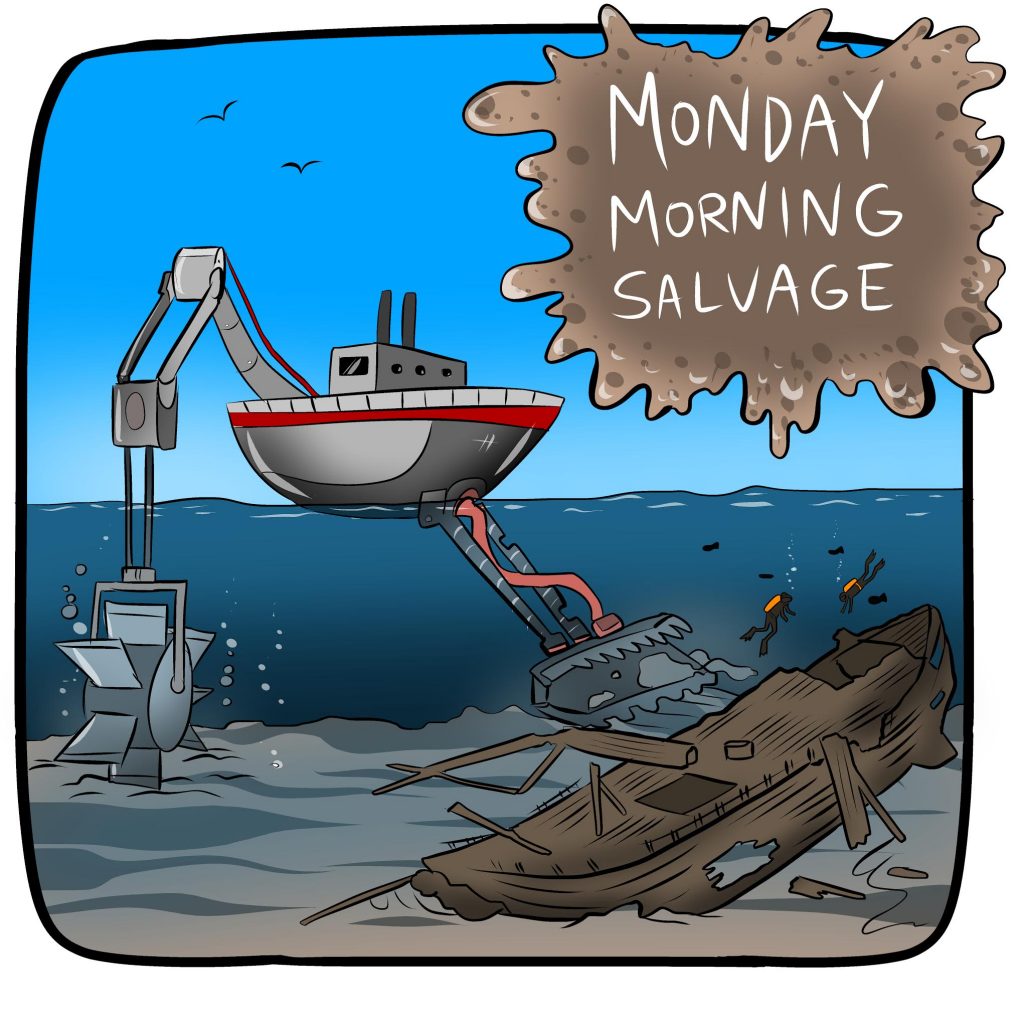
A new Gulf oil spill, opposition to deep-sea mining, DIY drop cameras, and more! Massive Monday Morning Salvage: October 30, 2017

Posted on October 30, 2017October 29, 2017 By Andrew Thaler
Weekly Salvage

I’ve been away for 2 weeks, so it’s a super-massive edition of the Monday Morning Salvage!

Fog Horn (A Call to Action)

  • There’s still an unimaginable amount of work to do in Dominica and across the Caribbean. Support the Rebuild Dominica Hurricane Relief fund or any of the other funds from our list: How to help our island colleagues in the wake of total devastation.

Flotsam (what we’re obsessed with right now)

  • This is such a cool story: A Trail of Rocks Traces Historical Steamship Routes. We can track old steamship routes from rocks scraped out of the furnaces and tossed overboard.
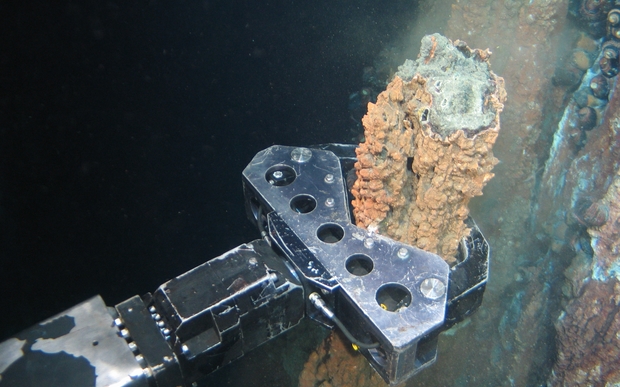
  • Former Papua New Guinea Attorney General attacks deep sea mining project. They always pick pictures for these articles that don’t show how much life is right around the vents.
Sampling SMS under the sea Photo: Nautilus Minerals
  • Whose ecological footprint is bigger: Medics, economists, or environmentalists? Spoilers: conservationists still have an impact, but they sure ain’t number 1.

Jetsam (what we’re enjoying from around the web)

  • There’s a fresh oil spill in the Gulf of Mexico, and it’s pretty darn huge:
    • Coast Guard Responding to 300,000 Gallon Crude Oil Spill in Gulf of Mexico.
    • Gulf of Mexico Oil Spill May Be Biggest Since 2010.
    • New Estimate Doubles the Size of Last Week’s Oil Spill in the Gulf of Mexico.
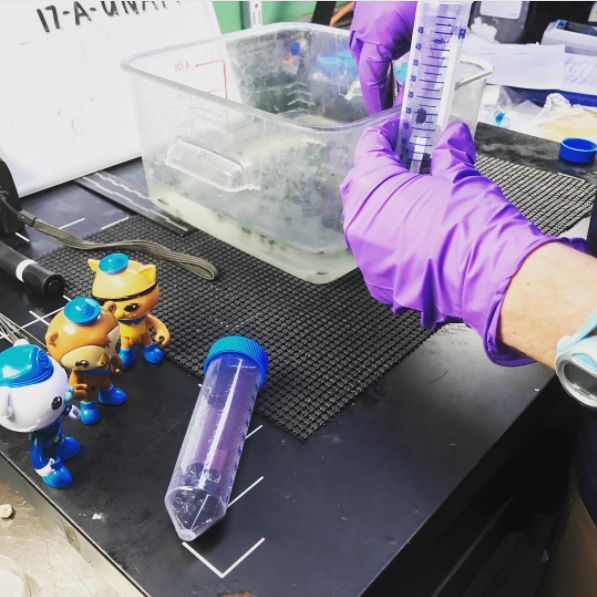
  • Some fun from Deep Sea News: When real-life marine biologist and mom goes to sea, she takes the octonauts with her.

  • This is fine: Report on U.S. Marine Sanctuary Oil Drilling Sent to White House, Not Released to Public. This is totally fine: Trump Administration Proposes Largest Oil and Gas Lease Sale in U.S. History.
  • Alaska’s Oyster Farmers Are Filling an Acidification-Driven Void. The state’s oyster farming industry is gaining ground as growers elsewhere struggle. From Hakai Magazine, which is great.
  • Nature is one of the most under-appreciated tools for reigning in carbon. From Anthropocene, which is fast becoming my favorite environmental print magazine. Sorry, Orion.
  • Thousands of penguin chicks starve in Antarctica.

Hey, Andrew, how about you give us at least *some* good news today? Ok, fine.

Read More “A new Gulf oil spill, opposition to deep-sea mining, DIY drop cameras, and more! Massive Monday Morning Salvage: October 30, 2017” »

The importance of being Aquaman, or how to save the Atlantean from his briny fate

Posted on October 26, 2017 By Andrew Thaler
Popular Culture

This is an update and repost of our follow-up article on the science of Aquaman, revised and expanded. 


Aquaman has an unpleasant lunch. From New 52 Aquaman #1
Aquaman has an unpleasant lunch. From New 52 Aquaman #1 DC Comics.

Yesterday, I challenged you to consider how the greatest hero in the DC Universe would fair if forced to survive in the real world. The result was a hypothermic, brain-dead lump of jerky with brittle bones, forced to suffer through constant screams of agony even as he consumes sea life at a rate that would impress Galactus. In short, the ocean is a rough place, even for Aquaman.

But this is Southern Fried Science, and we’re not here to trash the greatest comic book hero of all time without offering some solutions, too. I went back to my comic books and my textbooks to assemble an Aquaman with a suite of evolutionary adaptations that would allow a largely humanoid organism to rule the waves, trident triumphantly raised.

Essential assumptions

Many people commented that Aquaman is not human, he is Atlantean, and thus is not bound by human limitations. This is wrong on at least two counts. First, in most iterations, Aquaman is half-human, which means that Atlanteans must be similar enough to humans, both physiologically and evolutionarily, to produce a viable hybrid. While there may be some minor differences between us and the children of Atlantis, functionally speaking, we’re the same. Second, these are not issues that plague only humans. Whales get the bends, amphibians freeze to death, fish need to regulate their internal osmolality. These are the problems inherent in being alive in the ocean, Atlantean or otherwise.

Read More “The importance of being Aquaman, or how to save the Atlantean from his briny fate” »

The horrifying physiological and psychological consequences of being Aquaman

Posted on October 25, 2017 By Andrew Thaler
Popular Culture

This is an update and repost of our seminal article on the science of Aquaman, revised and expanded. 


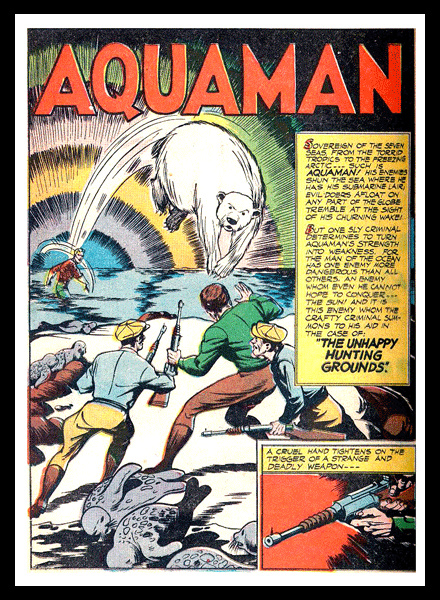
Aquaman. DC Comics.
Aquaman. DC Comics. A rational response to seal poaching is to lob a polar bear at the aggressors.

Aquaman may not be everybody’s favorite superhero, but since his creation in 1941, he has been among DC’s most enduring icons. During the Golden Age of comics, he held his own against Superman, Batman, and Wonder Woman. Silver Age Aquaman was a founding member and eventually leader of the Justice League. His powers, tied to the ocean, forced writers to create a compelling, complex hero with explicit limitations. In the early days, when Superman’s strength was practically infinite, and Batman’s brilliance was unmatched, Aquaman had to become more than just a superhero, he had to be a person.

If Superman existed to show us how high the human spirit could fly, and Batman to show us the darkness within even our most noble, Aquaman is here to show us the world that triumphs in our absence. The ocean is not ours, and no matter how great our technology, we will never master it as we have mastered land. Aquaman has. Through this lonely ocean wanderer, we can experience a world that we can never truly command. In many ways, Aquaman was stronger than the Man of Steel and darker than the Dark Knight. He knew loneliness that the orphan and the alien exile never could.

Even though Aquaman had to fight harder, endure the jokes of other, less interesting heroes, and find relevance in an ecosystem hostile to the humans that had to empathize with him, Aquaman was never forced to confront the truly horrifying consequences of life in the ocean.

The penetrating cold

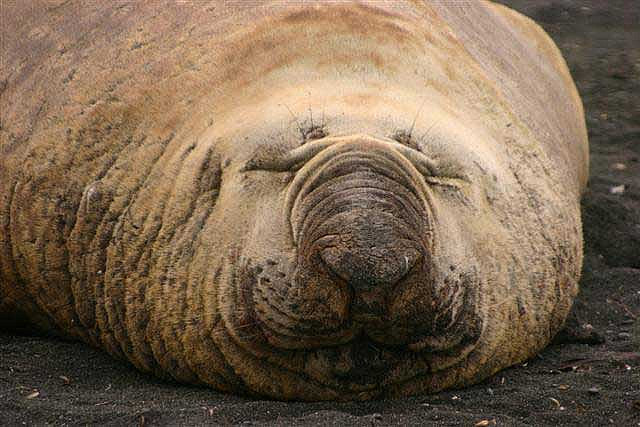
Aquaman is, for all intents and purposes, a marine mammal. With the exception of a healthy mane in later incarnations, he is effectively hairless. As a human, we would expect his internal body temperature to hover around 99°F, or about 37°C. Even at its warmest points, the surface temperature of the ocean around the equator is only about 80°F/27°C. At the poles, ocean temperature can actually drop a few degrees below freezing. In the deep sea, ambient temperature levels out around 2 to 4°C. The ocean is cold, and water is a much better thermal conductor than air. Warm blooded species have evolved many different systems to manage these gradients, including countercurrent heat exchangers, insulating fur, and heavy layers of blubber. This is what a marine mammal that can handle cold waters look like:

Elephant Seal. NSF, photo by Mike Usher

Aquaman is not just a human, he is an atypically uninsulated human. If the man has more than 2% body fat, I’d be shocked. In contrast, warm-water bottlenose dolphins have at least 18 to 20% body fat. Anyone who SCUBA dives knows that, even with a 12 millimeter neoprene wet suit, after a few hours in 80°F water, you get cold. Aquaman, lacking any visible insulation, should have slipped into hypothermia sometime early in More Fun Comics #73. He is built for the beach rather than the frigid deep.

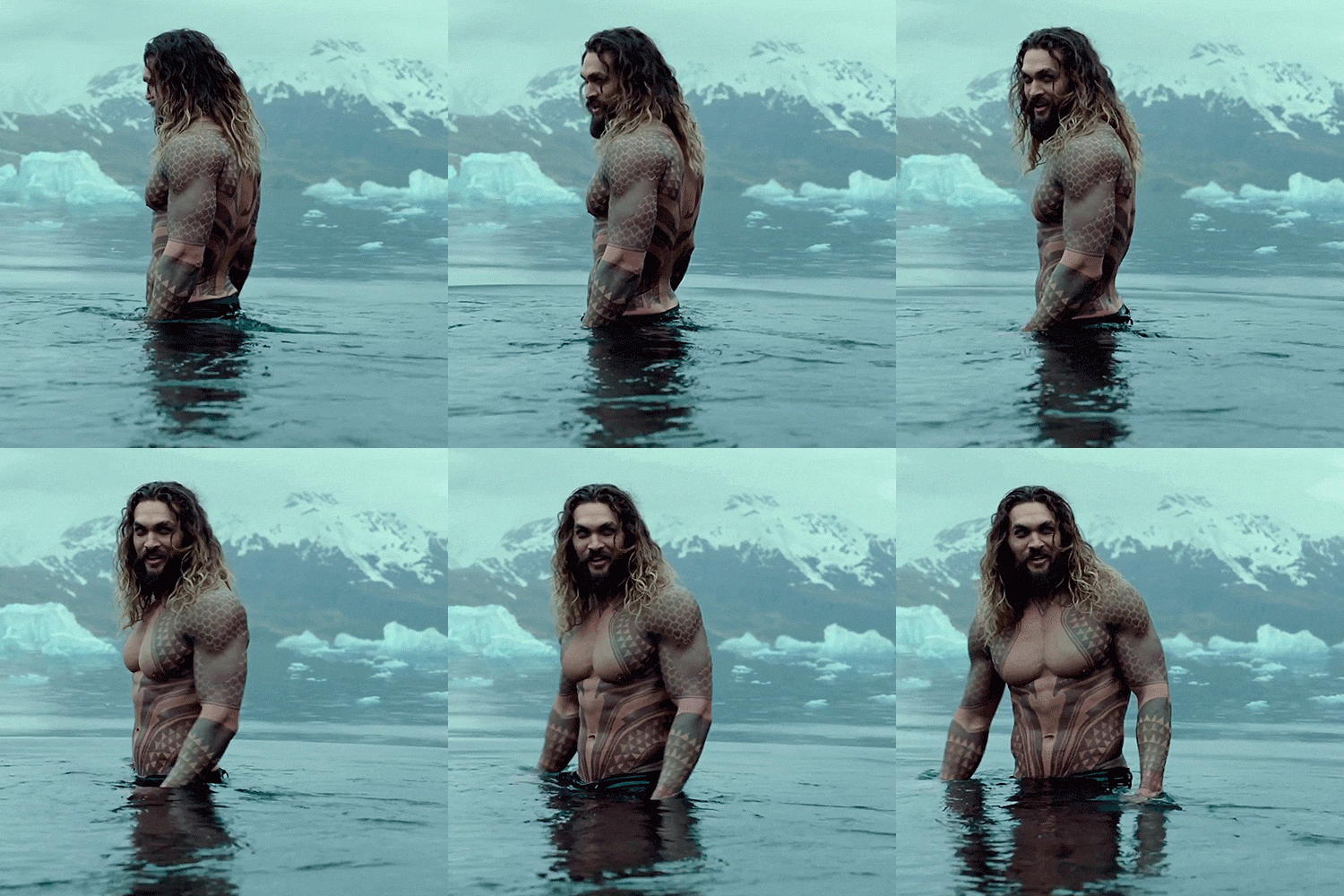
Jason Momoa is not a man blessed with an over-abundance of “bioprene”.

Read More “The horrifying physiological and psychological consequences of being Aquaman” »

Lessons from Puerto Rico, mutant starfish, pictures of ships, and more! Monday Morning Salvage: October 9, 2017.

Posted on October 9, 2017 By Andrew Thaler
Weekly Salvage

Flotsam (what we’re obsessed with right now)

  • A fish scientist’s 10 tips for surviving a hurricane: Lessons learned from Puerto Rico from our friends at the Fisheries Blog.
  • Commentary: For Hurricane-Hit Puerto Rico, an Insider’s Guide to Disaster Management by gCaptain.
The Military Sealift Command hospital ship USNS Comfort (T-AH 20) arrives in San Juan, Puerto Rico, Oct. 3, 2017. U.S. Navy Photo

Read More “Lessons from Puerto Rico, mutant starfish, pictures of ships, and more! Monday Morning Salvage: October 9, 2017.” »

Documentation is the beating heart of open-science hardware: Help make ours better!

Posted on October 6, 2017 By Andrew Thaler
Oceanography for Everyone

The OpenCTD and Oceanography for Everyone has been a five year journey from inception to first field-ready model and we’re just getting started. Building a community-driven project like this requires not just expertise (that we didn’t have when we started), passion, resources, it requires documentation. Extensive, detailed, thorough documentation. Documentation is what sets an open-science … Read More “Documentation is the beating heart of open-science hardware: Help make ours better!” »

The most shocking, insightful ocean conservation solutions, as presented by a poorly-built Twitter bot.

Posted on October 4, 2017 By Andrew Thaler
Uncategorized

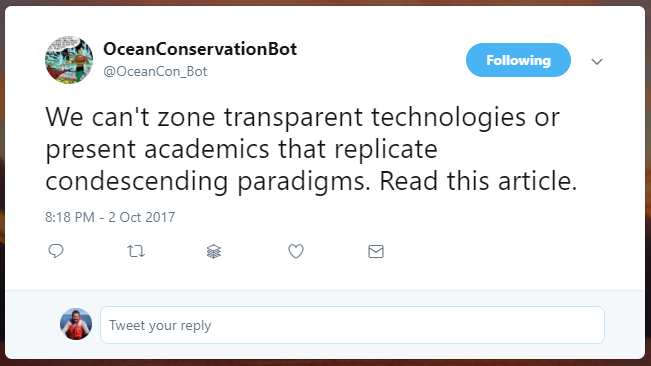
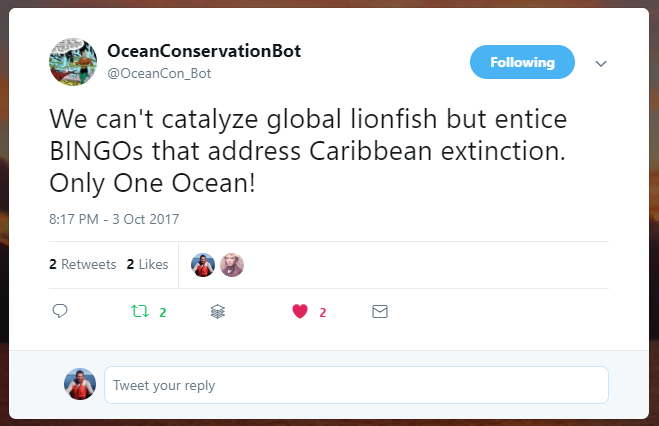
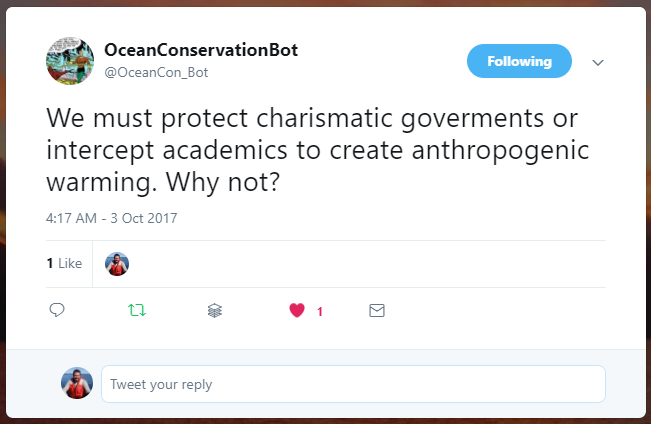
We made a bot. It’s not a very good bot but it does prognosticate on novel ocean conservation solutions. @OceanCon_Bot has been running for almost a month and it’s produced some real gems. Solid, salt-of-the-earth, diamond-in-the-rough, gabbro-in-your-lab, bro, solutions. And these are among my favorites.

We definitely need to stop presenting those condescending academics, but why so down on transparency, @OceanCon_Bot?

Catalyze lionfish and address Caribbean extinction? I guess you can’t really do both.

Ok, it’s possible we created an evil ocean bot.

Read More “The most shocking, insightful ocean conservation solutions, as presented by a poorly-built Twitter bot.” »

Deep-sea mining, octopus cities, a world without ozone, and more! Monday Morning Salvage: October 2, 2017

Posted on October 2, 2017October 1, 2017 By Andrew Thaler
Weekly Salvage

Fog Horn (A Call to Action)

  • Islands and nations across the Caribbean are hurting from multiple hurricanes. We’ve curated a short list of various charities and fundraisers for each island: How to help our island colleagues in the wake of total devastation.

Flotsam (what we’re obsessed with right now)

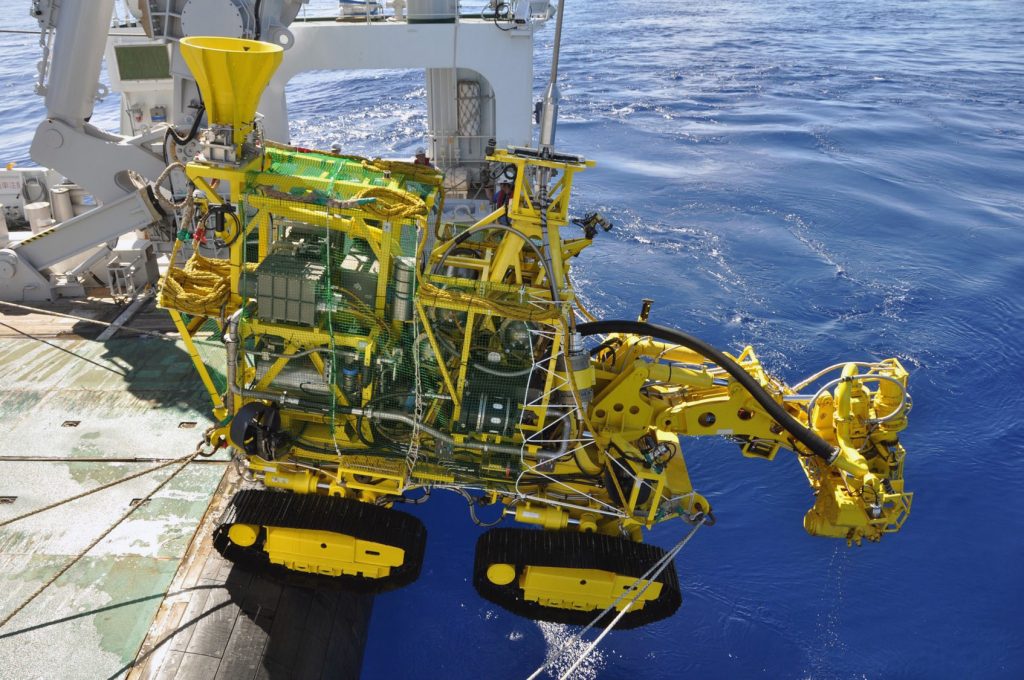
  • The race to the bottom begins! Japan successfully undertakes large-scale deep-sea mineral extraction and Japan becomes the first nation to mine a deep-sea hydrothermal vent.
The first successful mining tool.
  • Scientists spent a month terrifying guppies to prove that fish have personalities. Worth it just for the headline.

Read More “Deep-sea mining, octopus cities, a world without ozone, and more! Monday Morning Salvage: October 2, 2017” »

Japan becomes the first nation to mine a deep-sea hydrothermal vent

Posted on September 27, 2017 By Andrew Thaler 1 Comment on Japan becomes the first nation to mine a deep-sea hydrothermal vent
Uncategorized

Sixteen hundred meters deep, off the coast of Okinawa, a new kind of mining just cut it’s teeth.

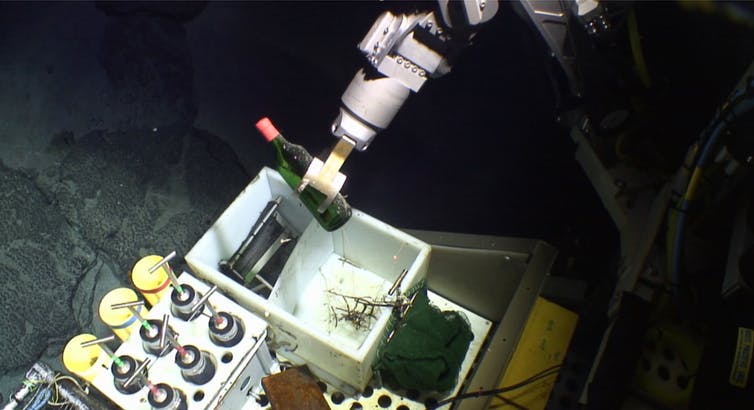
Earlier today, the Japan Times reported that a mining tool has successfully extracted zinc and other metals from a hydrothermal vent on the seafloor. There’s not much to go on yet. We don’t know if these were active or dormant vents (though dormant doesn’t mean biologically dead). We don’t know the specific location of the experimental mine site. And we don’t know the footprint of the ore prospect. But we do know that Japan has identified at least 6 potential mining sites within its exclusive economic zone and that plans are moving forward for a commercial mining venture in mid-2020. I’ve only found one report in English and from the look of things, there’s only a press release circulating right now, but I’m certain we’ll be hearing much more about this in the coming weeks.

Japan Agency for Natural resources and Energy

We’re still watching to see what Nautilus Minerals does at Solwara 1 and how manganese nodule mining proposals in the Clarion Clipperton fracture zone are progressing but Japan’s mining efforts present a sea change in how to anticipate future deep-sea mining efforts. Private commercial ventures are dependent on the whims of the global commodities market and subject to national and international regulation. National efforts are driven by the need for resource independence. I was aware of Japan’s efforts, but didn’t realize that they were as close as they are to being ready for production.

For the last 10 years, we’ve been saying that deep-sea mining of hydrothermal vents is imminent. Well, it’s here.

Read More “Japan becomes the first nation to mine a deep-sea hydrothermal vent” »

How to help our island colleagues in the wake of total devastation.

Posted on September 27, 2017September 27, 2017 By Andrew Thaler 1 Comment on How to help our island colleagues in the wake of total devastation.
Blogging

After three brutal hurricanes, the islands of the Caribbean are hurting. It can be hard, in the wake of catastrophe, to know where your donations can be best spent. We’ve contacted several of our colleagues on the ground to find out who’s doing the work and which aid organizations and groups need help now. Puerto … Read More “How to help our island colleagues in the wake of total devastation.” »

The many, many ways I screwed up my first science crowdfunding campaign.

Posted on September 26, 2017October 1, 2017 By Andrew Thaler
Blogging
Four generations of field hardened OpenCTDs.

It’s been over five years since Kersey Sturdivant and I launched Oceanography for Everyone – The OpenCTD, my first attempt at crowdfunding science. Over the years, that initial effort has grown into Oceanography for Everyone, a community of researchers, educators, and citizen scientists, and has created new open-source tools for open-source, open-science hardware. The OpenCTD is the finest oceanographic instrument that you can build in your own home for less than $300.

The crowdfunding campaign was a total disaster.

Since then, I’ve written several articles on how scientists can launch and managed crowdfunding campaigns:

  • Can Crowdfunding Fill the Science Funding Gap?
  • Setting Up Your Crowdfunding Campaign
  • Managing a Successful Crowdfunding Campaign

…but I’ve never written explicitly about what we did wrong during that campaign and how it impacted our success. Now that the final reward from that campaign has been delivered (yes, five years later, talk about the eternally delayed crowdfunding campaign), it’s the right moment to look back and think about how everything went so wrong.

I went with lesser-known platforms. We launched the OpenCTD on RocketHub. At the time, RocketHub was hosting the #SciFund Challenge, a campaign to encourage scientists to launch science crowdfunding campaigns. Both the #SciFundChallenge and RocketHub were relatively small players in the nascent crowdfunding world. RocketHub doesn’t even appear to do crowdfunding anymore, they’ve pivoted to a “social network for entrepreneurs”. The old OpenCTD campaign page is long deprecated. #SciFund Challenge’s website hasn’t been updated in almost half a year.

Here’s the thing with crowdfunding, and especially crowdfunding in the early days: There are two dominant communities that you can rely on. There’s the community of people who want to support what you’re doing and there’s the community of people enamored with the idea of crowdfunding. Being a crowdfunding “investor” is a hobby in and of itself and many of the biggest donors are people who support dozens of different campaigns. So the larger and more popular the platform, the more crowdfunding enthusiasts you’ll attract. Heck, since backing the very first OpenROV, I’ve backed 23 other projects on Kickstarter, most recently Public Lab’s Balloon Mapping kits.

By going with RocketHub, I committed our campaign to a smaller potential audience. Considering Kickstarter was garnering huge press at the time, this was a near-fatal mistake.

Read More “The many, many ways I screwed up my first science crowdfunding campaign.” »

Posts pagination

Previous 1 … 31 32 33 … 149 Next

Popular Posts

The story of the pride flag made from NASA imagery: Bluesky's most-liked imageThe story of the pride flag made from NASA imagery: Bluesky's most-liked imageSeptember 27, 2024David Shiffman
"Why Sustainable Seafood Matters" is now available for preorder! Here's what it's about, and why I decided to write it."Why Sustainable Seafood Matters" is now available for preorder! Here's what it's about, and why I decided to write it.June 8, 2026David Shiffman
What Ocean Ramsey does is not shark science or conservation: some brief thoughts on "the Shark Whisperer" documentaryWhat Ocean Ramsey does is not shark science or conservation: some brief thoughts on "the Shark Whisperer" documentaryJuly 2, 2025David Shiffman
Tackling the least important debate in deep-sea mining: the desultory hyphenTackling the least important debate in deep-sea mining: the desultory hyphenJune 8, 2026Andrew Thaler
Deep-sea Mining, Domestic Cats, Star Trek, and Ocean Exploration: Andrew's mid-year podcast round-up.Deep-sea Mining, Domestic Cats, Star Trek, and Ocean Exploration: Andrew's mid-year podcast round-up.June 6, 2026Andrew Thaler
Shark of Darkness: Wrath of Submarine is a fake documentaryShark of Darkness: Wrath of Submarine is a fake documentaryAugust 10, 2014Michelle Jewell
What is a Sand Shark?What is a Sand Shark?November 12, 2017Chuck Bangley
I just told 850 shark scientists a hard truth: We’re not communicating shark conservation correctly.I just told 850 shark scientists a hard truth: We’re not communicating shark conservation correctly.June 1, 2026David Shiffman
That's not a blobfish: Deep Sea Social Media is Flooded by AI SlopThat's not a blobfish: Deep Sea Social Media is Flooded by AI SlopDecember 19, 2025Andrew Thaler
Isn’t ironic, don’t you think: dismantling the Ocean Observatories Initiative on World Oceans DayIsn’t ironic, don’t you think: dismantling the Ocean Observatories Initiative on World Oceans DayJune 9, 2026Southern Fried Science
Subscribe to our RSS Feed for updates whenever new articles are published.

We recommend Feedly for RSS management. It's like Google Reader, except it still exists.

Southern Fried Science

  • Home
  • About SFS
  • Authors
  • Support SFS


If you enjoy Southern Fried Science, consider contributing to our Patreon campaign.

Copyright © 2026 Southern Fried Science.

Theme: Oceanly Premium by ScriptsTown