Skip to content

Southern Fried Science

Over 15 years of ocean science and conservation online

  • Home
  • About SFS
  • Authors
  • Support SFS

Author: Andrew Thaler

Marine science and conservation. Deep-sea ecology. Population genetics. Underwater robots. Open-source instrumentation. The deep sea is Earth's last great wilderness.

Jellyfish sleep, shark-sucking bots, mole crab parasites, and more! Monday Morning Salvage: September 25, 2017

Posted on September 25, 2017September 25, 2017 By Andrew Thaler
Weekly Salvage

Fog Horn (A Call to Action)

  • The fight for our Marine National Monuments isn’t over. We now know of the contents of Zincke’s monument review memo, and it is not good. The DOI wants to see commercial fishing return to the Pacific Remote Islands and Rose Atoll Marine National Monuments. Longline fishing in these regions has historically been conducted by foreign fishing fleets which have been documented using slave labor. Many ecologists believe that maintaining these protected zones serve as a refuge that boost populations of many important commercial fish and improve the overall health of the fishery. Any change to monuments created under the Antiquities Act must be approved by congress. You’ve got a lot of reason to call you representatives this week, so why not add “I opposed the reintroduction of ecologically and economically destructive commercial fishing to the Pacific Remote Islands and Rose Atoll Marine National Monument.” to your script?

Flotsam (what we’re obsessed with right now)

  • Jellyfish sleep. Mind. Blown.
  • Our Pacific Monuments are also extremely important scientific sites. Commercial fishing could jeopardize decades of research efforts in the remote Pacific. Scientists pan proposal to open pristine Pacific islands to fishing.
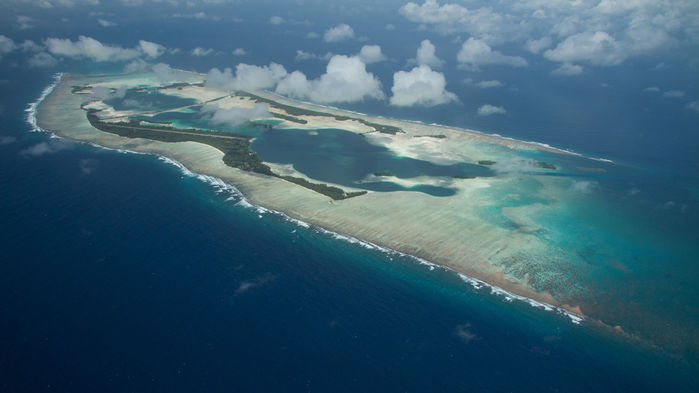
Palmyra Atoll. Erik Oberg/Island Conservation/Flickr

Read More “Jellyfish sleep, shark-sucking bots, mole crab parasites, and more! Monday Morning Salvage: September 25, 2017” »

A shark for all floods, Crowdfunding scams, old fish, bold fish, and more! Monday Morning Salvage: September 18, 2017

Posted on September 18, 2017September 18, 2017 By Andrew Thaler
Weekly Salvage

Fog Horn (A Call to Action)

  • The fight for our Marine National Monuments isn’t over. We finally know *some* of the contents of Zincke’s monument review memo, and it’s not great. The DOI wants to see commercial fishing return to the Pacific Remote Islands and Rose Atoll Marine National Monuments. Longline fishing in these regions has historically been conducted by foreign fishing fleets which have been documented using slave labor. Many ecologists believe that maintaining these protected zones serve as a refuge that boost populations of many important commercial fish and improve the overall health of the fishery.
  • Here’s the good news: Any change to monuments created under the Antiquities Act must be approved by congress. You’ve got a lot of reason to call you representatives this week, so why not add “I opposed the reintroduction of ecologically and economically destructive commercial fishing to the Pacific Remote Islands and Rose Atoll Marine National Monument.” to your script?

Flotsam (what we’re obsessed with right now)

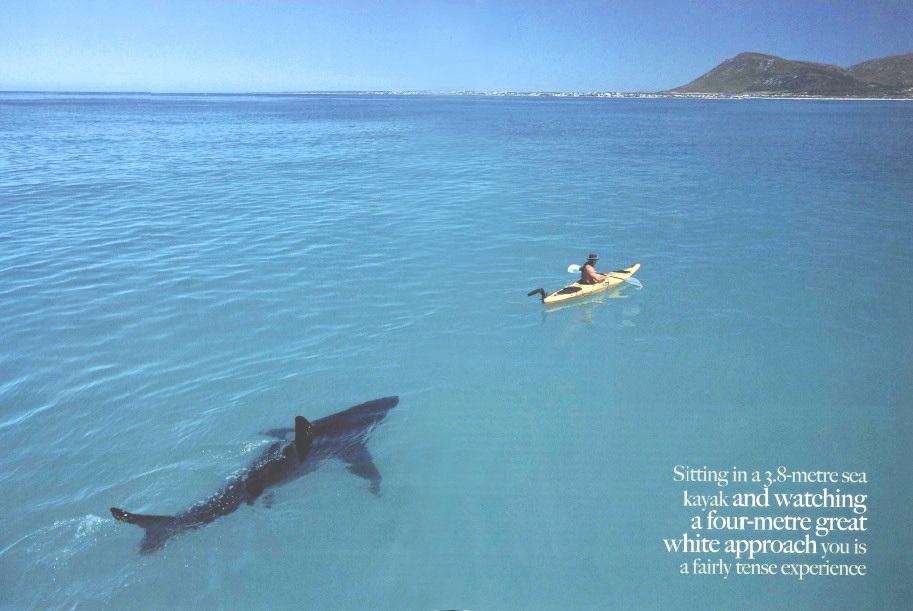
  • Hero Shark, the shark who shows up to every flood, ostensibly to save us all from our own hubris, has a long a fascinating history. “Shark in flooded street” wasn’t even the first time that photo was used for fake news.
Photo by Thomas P. Peschak.
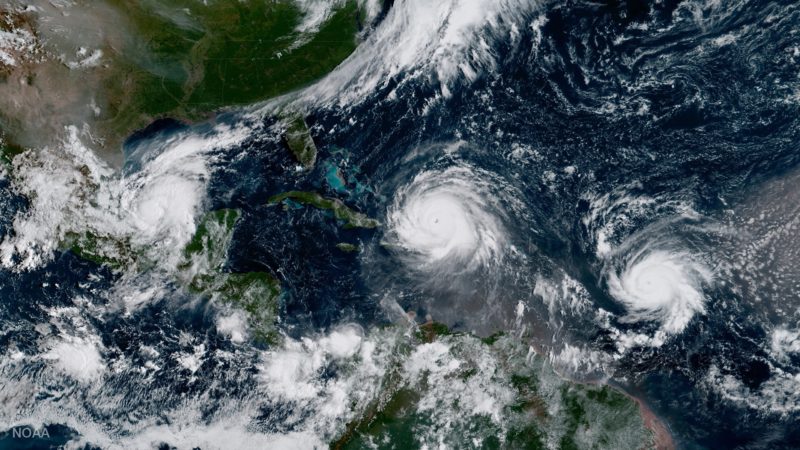
  • NOAA’s New Weather Satellite Captured Stunning Images of Hurricanes Harvey and Irma. These are amazing and terrifying.
GOES-16.
  • Rick MacPherson and I made a bot that generates random ocean conservation solutions from a massive archive of policy jargon. Follow @OceanCon_Bot. It is good.

Read More “A shark for all floods, Crowdfunding scams, old fish, bold fish, and more! Monday Morning Salvage: September 18, 2017” »

A new kind of robot to save the ocean!

Posted on September 15, 2017 By Andrew Thaler
Uncategorized

It’s the Ocean Conservation Bot! @OceanCon_Bot creates new an novel ocean conservation solutions by drawing from a vast and deep archive of randomly generate ocean jargon. @OceanCon_Bot is currently capable of generating 3.2 quadrillion potential ocean conservation solutions. @OceanCon_Bot is incapable of determining whether a solution is good, bad, gibberish, or really, really gibberish. @OceanCon_Bot … Read More “A new kind of robot to save the ocean!” »

Lions, Whales, and the Web: Transforming Moment Inertia into Conservation Action

Posted on September 14, 2017 By Andrew Thaler
Uncategorized

I have a new paper out today with an incredible team of co-authors: Naomi Rose, Mel Cosentino, and Andrew Wright.

Thaler and friends (2017) Lions, Whales, and the Web: Transforming Moment Inertia into Conservation Action. DOI: 10.3389/fmars.2017.00292.

In it, we look at three case-studies of online and offline reactions to the deaths of specific, charismatic animals, and discuss how preparation, planning, and tactical thinking can be used to promote effective conservation messaging in the wake of these haphazard events. We talk about how outrage, empathy, and curiosity play a role in the global conversation and how to effectively mobilize this attention into conservation action.

Conservation activism following moment inertia is a balancing act between strategic planning and a quick, tactical response. When the catalyst is moral outrage, it is important to allow people to be angry, rather than to try and curb such responses. In these circumstances, it is possible to leverage predictable moral signaling into tangible conservation gains.

Regardless of the emotional reaction—outrage, curiosity, or empathy—the general guidelines for conservationists leveraging moment inertia are the same. First, planning for pseudorandom events is essential to produce meaningful outcomes. Second, understanding the limitations of campaigning on an inertial moment will help establish and achieve concrete, realistic goals. Third, the call to action must be informed by the local context, address local cultural values, and be delivered by those who can connect with the public. Finally, it is critical to maintain a factual basis while acknowledging the emotions involved.

With foresight, a focus on concrete goals, and an understanding of the strengths and limitations inherent in moment inertia, these events can be harnessed to help achieve lasting conservation successes.

Thaler and friends (2017)

What is Moment Inertia: Moment Inertia is a phenomenon that arises from focus of attention around a single, clarifying event, or moment, which propagates, undirected, through media unless acted upon by outside forces.

Read More “Lions, Whales, and the Web: Transforming Moment Inertia into Conservation Action” »

Hurricane Irma, the Manatee Sheriff, climate change, and more! Monday Morning Salvage: September 11, 2017

Posted on September 11, 2017 By Andrew Thaler
Weekly Salvage

Fog Horn (A Call to Action)

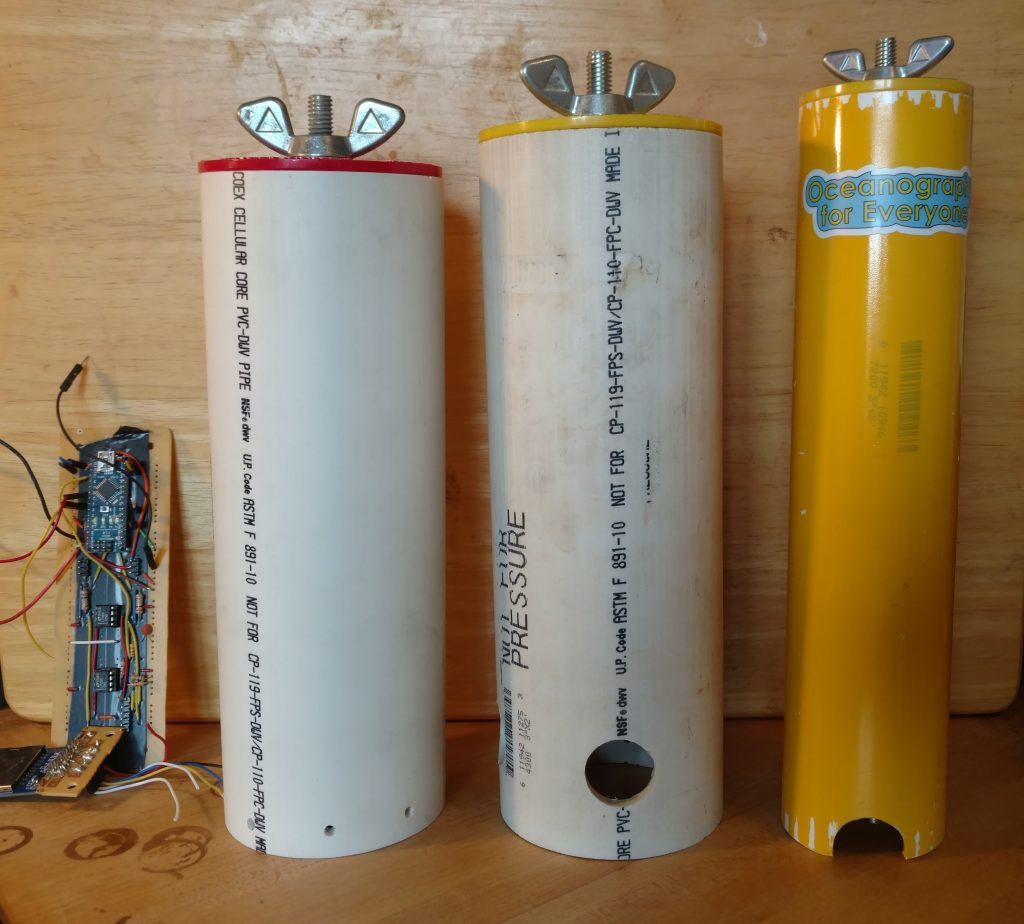
  • One week left! The OpenCTD and Oceanography for Everyone has been selected as a finalist in National Geographic’s Chasing Genius Challenge! Please help me win the People’s Choice award by voting for the OpenCTD. Visit http://www.natgeochasinggenius.com/video/776, create or sign into your Chasing Genius account, and click the yellow star to vote on my video. You can vote once per day until September 15.
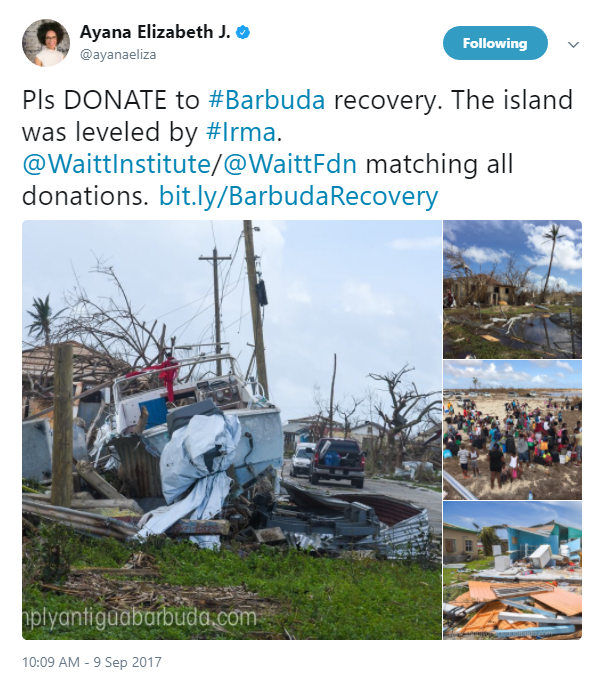
  • “Everyone is homeless. We can’t help each other because everyone needs help.” Ayana Johnson is working to raise funds (and the Waitt Foundation is matching donations, to help the people of Barbuda, where almost every structure on the island was leveled.

Flotsam (what we’re obsessed with right now)

  • Yes, I would like to pet a giant isopod, thank you.
  • We have a new expedition planned to the Commonwealth of the Northern Mariana Islands. Join us: Marine Ecology and Underwater Robotics in the Commonwealth of the Northern Mariana Islands.
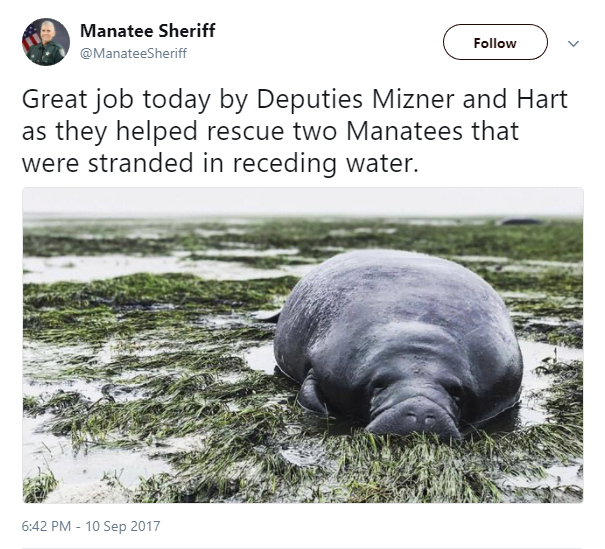
  • The Manatee Sheriff sends Manatee officers to rescue stranded manatees in Manatee County. 

Read More “Hurricane Irma, the Manatee Sheriff, climate change, and more! Monday Morning Salvage: September 11, 2017” »

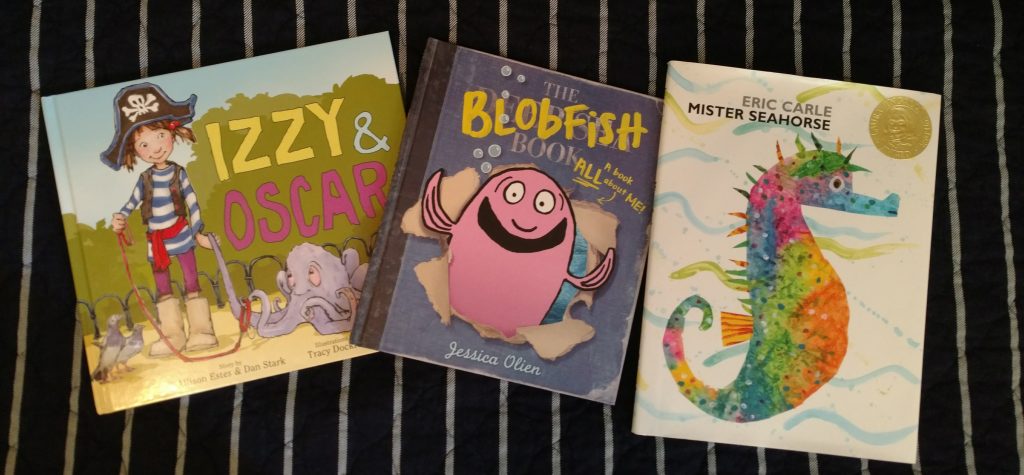
The 3 best ocean books for toddlers, as selected by a very ocean-savvy toddler

Posted on September 7, 2017 By Andrew Thaler
Reviews and Interviews

It’s been almost exactly a year since I selected the 5 best baby books to launch your child’s ocean education. Since then, our expert judge has gotten a bit more discerning and a lot more opinionated. As a family of marine scientists, our massive library of ocean-themed children’s books, some amazing, some not-so-amazing, seems to grow exponentially.

After critical review by two PhDs in Marine Science and Conservation and one very perspicacious toddler, for both scientific accuracy and pure delightfulness, here are our top 3 children’s books to get your toddler thinking about the ocean.

Read More “The 3 best ocean books for toddlers, as selected by a very ocean-savvy toddler” »

Chasing Genius, aquatic brain blobs, hurricanes, bats, and more! Monday Morning Salvage: September 4, 2017

Posted on September 4, 2017September 3, 2017 By Andrew Thaler
Weekly Salvage

Fog Horn (A Call to Action)

  • Hurricane Harvey has passed, but its impacts will continue to be felt for years to come. There’s lots of great organizations to donate to, but in the immediate aftermath,it’s often best to donate to local relief programs that already have a ground team in place, rather than national groups that will take weeks to build up their infrastructure. I’m a fan of the Texas Diaper Bank and Portlight Inclusive Disaster Strategies, both of which serve communities that tend to be particularly vulnerable during natural disasters.
  • Gratuitous self promotion! The OpenCTD and Oceanography for Everyone has been selected as a finalist in National Geographic’s Chasing Genius Challenge! Please help me win the People’s Choice award by voting for the OpenCTD. Visit http://www.natgeochasinggenius.com/video/776, create or sign into your Chasing Genius account, and click the yellow star to vote on my video. Thank you!

Flotsam (what we’re obsessed with right now)

  • It will take months, if not years, to fully understand the impacts of Hurricane Harvey, which already looks to be the costliest storm in US history. These drone videos give you some idea of the sheer scale of the damage. The Washington Post has an interactive map to help visualize what the equivalent deluge would look like around the world: What the Harvey deluge would look like where you live.

Read More “Chasing Genius, aquatic brain blobs, hurricanes, bats, and more! Monday Morning Salvage: September 4, 2017” »

How to help Houston, GameBoy SONAR, buy a lighthouse, and more! Monday Morning Salvage: August 28, 2017

Posted on August 28, 2017August 28, 2017 By Andrew Thaler
Weekly Salvage

Fog Horn (A Call to Action)

  • Hurricane Harvey is sitting over the city of Houston, dumping biblical amounts of rain and flooding nearly the entire metropolitan area. There’s lots of great organizations to donate to, but in the immediate aftermath, it’s often best to donate to local relief programs that already have a ground team in place, rather than national groups that will take weeks to build up their infrastructure. I’m a fan of the Texas Diaper Bank and Portlight Inclusive Disaster Strategies, both of which serve communities that tend to be particularly vulnerable during natural disasters.

Flotsam (what we’re obsessed with right now)

  • Dr. Katharine Hayhoe has become one of the most important voices in Climate Change over the last few years. Her latest, I was an Exxon-funded climate scientist, is a sober look at who where the money really goes and who pulls the strings in the climate change denial industry.
  • Bandai and Nintendo once made a SONAR that runs on a GameBoy Pocket, and I want one. Has anyone ever encountered one of these rare and wondrous techno chimeras?

Read More “How to help Houston, GameBoy SONAR, buy a lighthouse, and more! Monday Morning Salvage: August 28, 2017” »

Protecting the ocean means lots of rigorous, mundane science.

Posted on August 21, 2017 By Andrew Thaler
Science
Bathymodiolus manusensis. Photo courtesy Nautilus Minerals.

I have a new paper out today: Population structure of Bathymodiolus manusensis, a deep-sea hydrothermal vent-dependent mussel from Manus Basin, Papua New Guinea.

We sampled two sites in Papua New Guinea where these deep-sea mussels aggregate and looked at their genes to determine if there was any population structure across this relatively small spatial scale (~40 km). We found one homogeneous population. We also looked at representatives from other ocean basins and determined that mussel populations within Manus Basin are younger than those in neighboring basins. This is a pattern we’ve observed in several other studies as well.

This is not, by any stretch, a ground-breaking, paradigm-shifting study. But studies like this, baseline, foundation-building studies, are absolutely essential for conservation biology.

Read More “Protecting the ocean means lots of rigorous, mundane science.” »

Unflappable Mola Molas, a Cousteau biopic, sharkcats, and more! Monday Morning Salvage: August 21, 2017

Posted on August 21, 2017August 21, 2017 By Andrew Thaler
Weekly Salvage

Fog Horn (A Call to Action)

  • Gratuitous self-plug alert! There’s still a few chance left to get your own Unflappable Mola Mola sticker, but they’re going fast. For this and the rest of the Jaunty Ocean Critter series, subscribe to my Patreon campaign and help keep Southern Fried Science and Oceanography for Everyone running!

Flotsam (what we’re obsessed with right now)

  • Happy Eclipse Day! If you’ve ever wondered what happens in the sea during an eclipse, Rebecca Helm at Deep Sea News has you covered!
  • This is an utterly amazing video of Blue Whale feeding behavior. Kudos to Slate, who went with the headline “Krill Joy“.
  • “Thirty years ago, I discovered a new world. I wanted to conquer it when I should have protected it. It’s not too late.” An uncompromising Jacques Cousteau biopic starring Lambert Wilson? Yes, please!

Jetsam (what we’re enjoying from around the web)

Read More “Unflappable Mola Molas, a Cousteau biopic, sharkcats, and more! Monday Morning Salvage: August 21, 2017” »

Posts pagination

Previous 1 … 32 33 34 … 149 Next

Popular Posts

The story of the pride flag made from NASA imagery: Bluesky's most-liked imageThe story of the pride flag made from NASA imagery: Bluesky's most-liked imageSeptember 27, 2024David Shiffman
"Why Sustainable Seafood Matters" is now available for preorder! Here's what it's about, and why I decided to write it."Why Sustainable Seafood Matters" is now available for preorder! Here's what it's about, and why I decided to write it.June 8, 2026David Shiffman
What Ocean Ramsey does is not shark science or conservation: some brief thoughts on "the Shark Whisperer" documentaryWhat Ocean Ramsey does is not shark science or conservation: some brief thoughts on "the Shark Whisperer" documentaryJuly 2, 2025David Shiffman
Tackling the least important debate in deep-sea mining: the desultory hyphenTackling the least important debate in deep-sea mining: the desultory hyphenJune 8, 2026Andrew Thaler
Deep-sea Mining, Domestic Cats, Star Trek, and Ocean Exploration: Andrew's mid-year podcast round-up.Deep-sea Mining, Domestic Cats, Star Trek, and Ocean Exploration: Andrew's mid-year podcast round-up.June 6, 2026Andrew Thaler
Shark of Darkness: Wrath of Submarine is a fake documentaryShark of Darkness: Wrath of Submarine is a fake documentaryAugust 10, 2014Michelle Jewell
What is a Sand Shark?What is a Sand Shark?November 12, 2017Chuck Bangley
I just told 850 shark scientists a hard truth: We’re not communicating shark conservation correctly.I just told 850 shark scientists a hard truth: We’re not communicating shark conservation correctly.June 1, 2026David Shiffman
That's not a blobfish: Deep Sea Social Media is Flooded by AI SlopThat's not a blobfish: Deep Sea Social Media is Flooded by AI SlopDecember 19, 2025Andrew Thaler
Isn’t ironic, don’t you think: dismantling the Ocean Observatories Initiative on World Oceans DayIsn’t ironic, don’t you think: dismantling the Ocean Observatories Initiative on World Oceans DayJune 9, 2026Southern Fried Science
Subscribe to our RSS Feed for updates whenever new articles are published.

We recommend Feedly for RSS management. It's like Google Reader, except it still exists.

Southern Fried Science

  • Home
  • About SFS
  • Authors
  • Support SFS


If you enjoy Southern Fried Science, consider contributing to our Patreon campaign.

Copyright © 2026 Southern Fried Science.

Theme: Oceanly Premium by ScriptsTown