Skip to content

Southern Fried Science

Over 15 years of ocean science and conservation online

  • Home
  • About SFS
  • Authors
  • Support SFS

Author: Andrew Thaler

Marine science and conservation. Deep-sea ecology. Population genetics. Underwater robots. Open-source instrumentation. The deep sea is Earth's last great wilderness.

Newly-build robots face many sea trials: an update from #ROV2PNG

Posted on November 10, 2014 By Andrew Thaler
Science

Note: we’re home after an exceptional 3 weeks of work in Papua New Guinea. Sadly, the course was so intense that we weren’t able to produce updates during the program. Instead, please accept these time-shifted updates from #ROV2PNG.

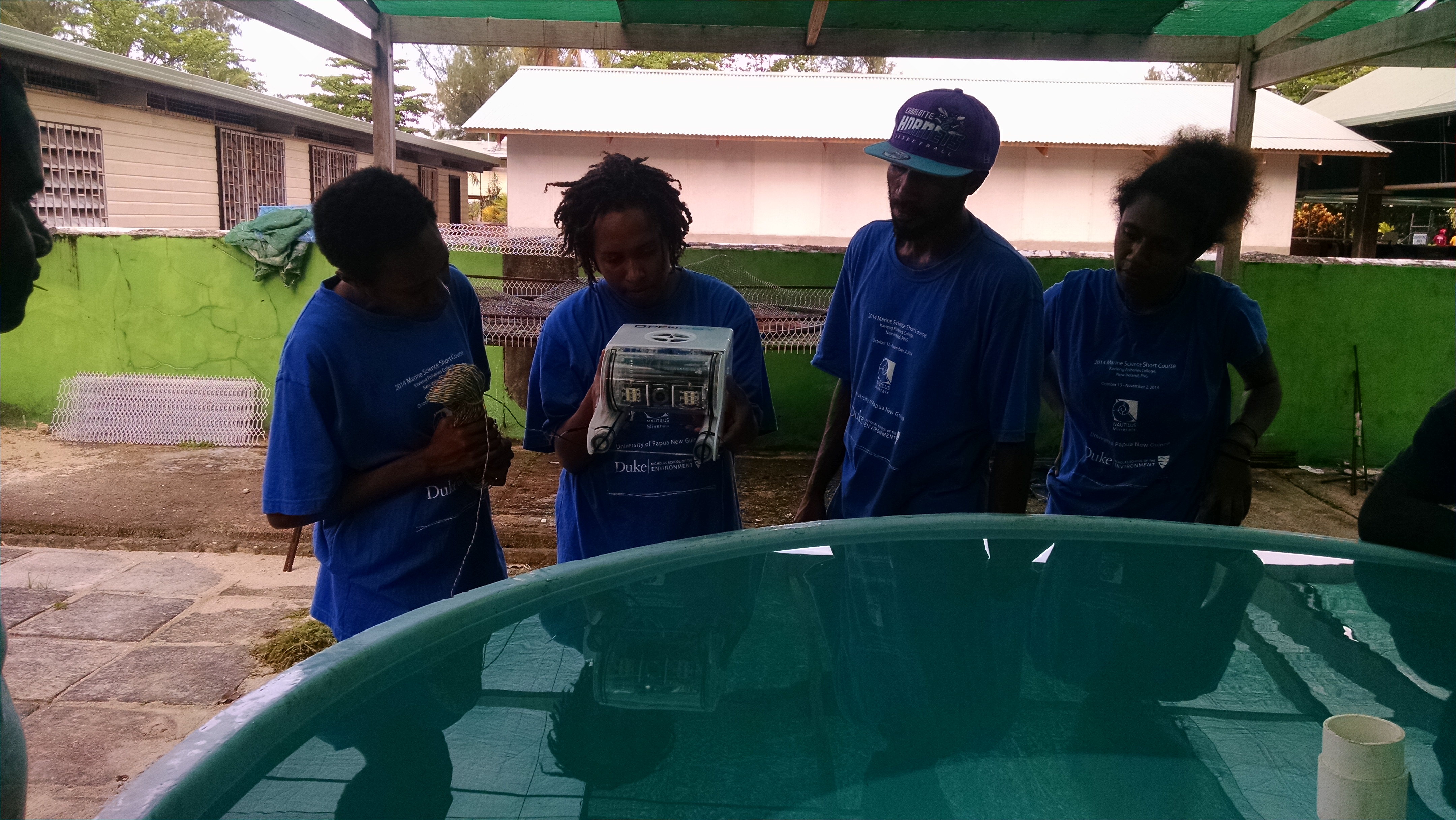
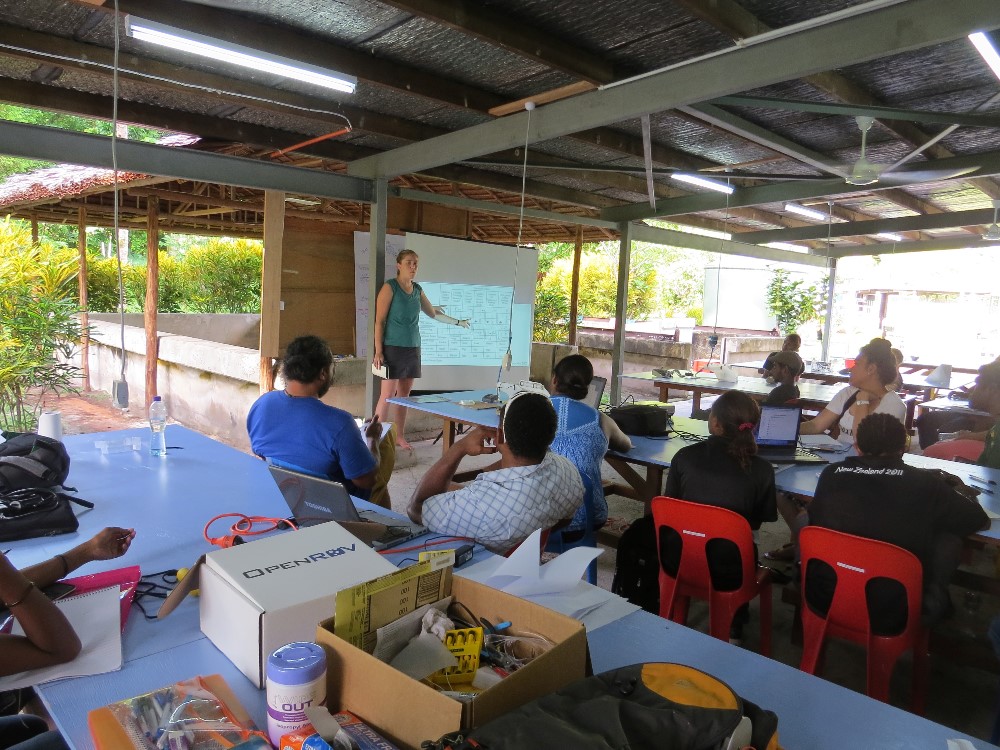
Students prepare for Pilot Academy.

With a week of robot building behind us, it’s time to put our robots, and our newly minted robot pilots to the test. Monday began with a day of tether management and pilot training. The OpenROV does not come with its own, pre-built tether management system; operators must design their own and adapt it to the unique challenges of their field environment. So we set the team off to develop their own tether management systems and the results were astounding, artistic, and clever.

One of several innovative tether management systems.

With tethers securely managed, it was time for Erika’s Pilot Academy. As some teams continued to perform maintenance and troubleshooting, and some worked on their ecology projects, others were led, group by group, to the test tank, where Erika and Dominik had built a challenge course for them to fly. Without looking at the tank or robot, each student had to pilot an ROV around the tank, collect a weighted target, and bring it to the surface. Even for veteran OpenROV pilots, this exercise can be challenging. We closed out the first day of pilot training with 23 skilled pilots.

Read More “Newly-build robots face many sea trials: an update from #ROV2PNG” »

Six new robots join Papua New Guinea’s marine science assets: an update from #ROV2PNG

Posted on November 7, 2014November 6, 2014 By Andrew Thaler 1 Comment on Six new robots join Papua New Guinea’s marine science assets: an update from #ROV2PNG
Science

Note: we’re home after an exceptional 3 weeks of work in Papua New Guinea. Sadly, the course was so intense that we weren’t able to produce updates during the program. Instead, please accept these time-shifted updates from #ROV2PNG.


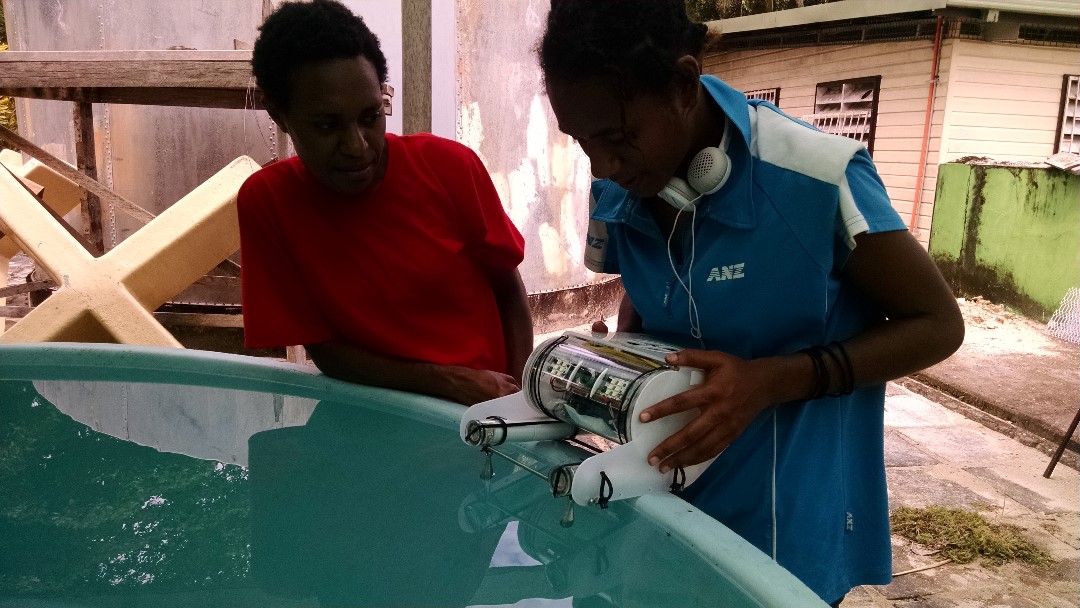
Students prepare to soak test their ROV.

After a long week of intensive robot building, six brand new OpenROVs went into the water on Friday. Our student’s hard work paid off as their robots dove into the freshwater test tank. There are few things more rewarding than watching students, who’ve sweated over a difficult build while learning challenging new skills for 12 hours or more every day, launch their completed robots drive them around the test tank for the first time.

Of course, failure is part of our pedagogy, and two robots will require another day of troubleshooting before they can be released into the sea.

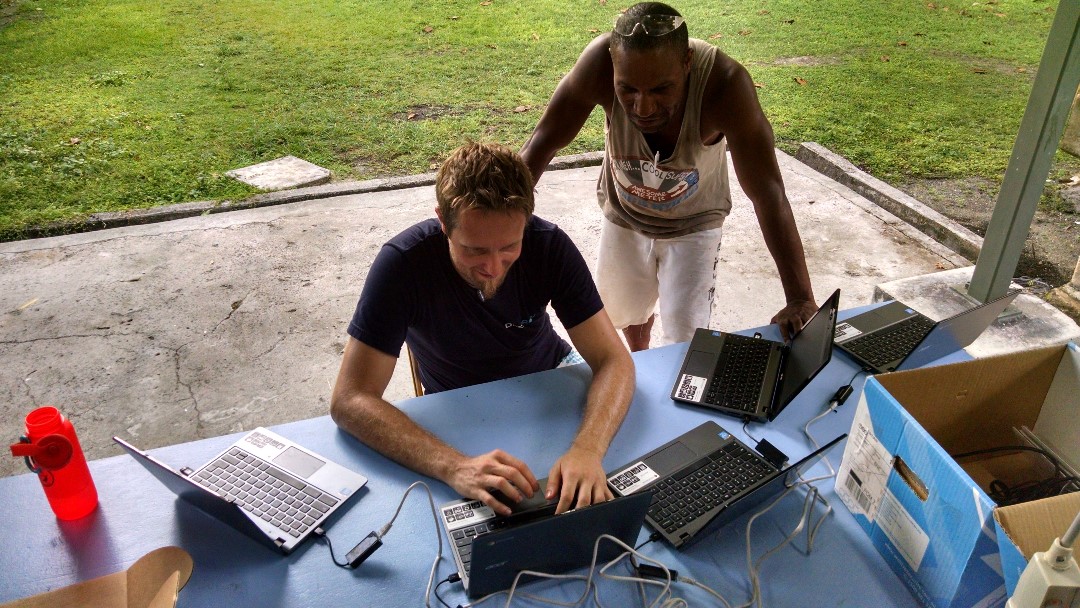
Dominik sets up the Chromebooks for their first flight.
Amy delivers a talk on Human Ecology.

Read More “Six new robots join Papua New Guinea’s marine science assets: an update from #ROV2PNG” »

Building robots in Papua New Guinea: update from #ROV2PNG

Posted on October 24, 2014 By Andrew Thaler
Science
The view from our morning commute between Nusa and Nago.

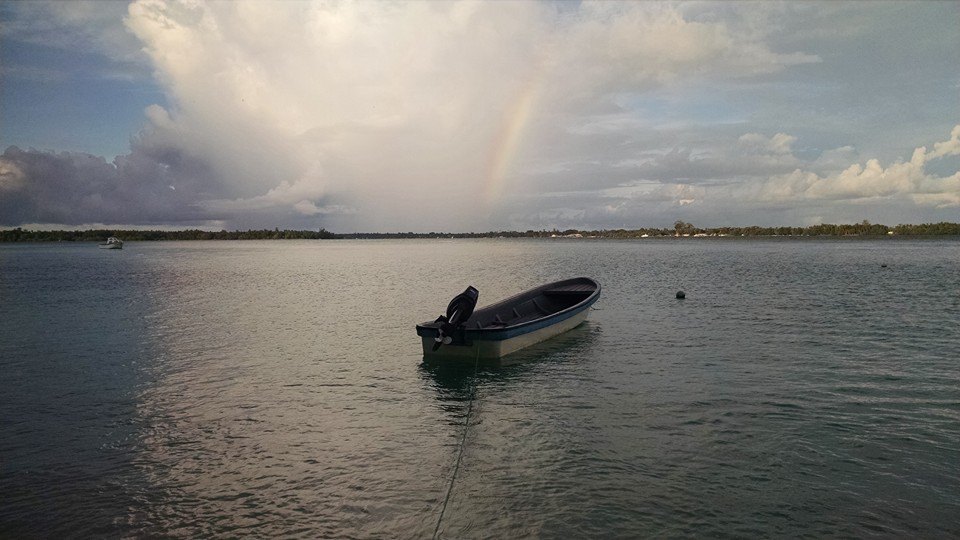
Hello from the warm, sunny island of Nago, home of the National Fisheries College field station and staging ground for Marine Ecology via Remote Observation, part of the Marine Science Short Course. My team and I arrived in Port Morseby on Friday, where we met with Jamie on her way home and and caught up with my former student, now lecturer at UPNG, Freddie Alei, who joins us for the next week of class. Another day of travel brought us to the shores of Nusa Island. We had our first chance to meet the students on Sunday, during a walk around the local beach, followed by an afternoon flying Independent Lee, one of our demonstration robots, from the Fisheries’ jetty. It was a nice warm up for an intensive week of robotics and marine ecology.

There are two major components to the #ROV2PNG portion of the Marine Science Short Course. The first, and most visible, is the construction and operation of the OpenROV, an open-source underwater robot that is incredibly adaptable and expandable. Over the last three days, students have learned how to solder, weld acrylic, test electronics, use epoxy resins, and work together to assemble the chassis, endcaps, battery tubes, motors, and brain of the robot. Excitement is mounting as we approach the moment when we can power up the ROVs for the first time.

Read More “Building robots in Papua New Guinea: update from #ROV2PNG” »

The next era of ocean exploration begins in Papua New Guinea

Posted on September 22, 2014September 22, 2014 By Andrew Thaler
Blogging, Science
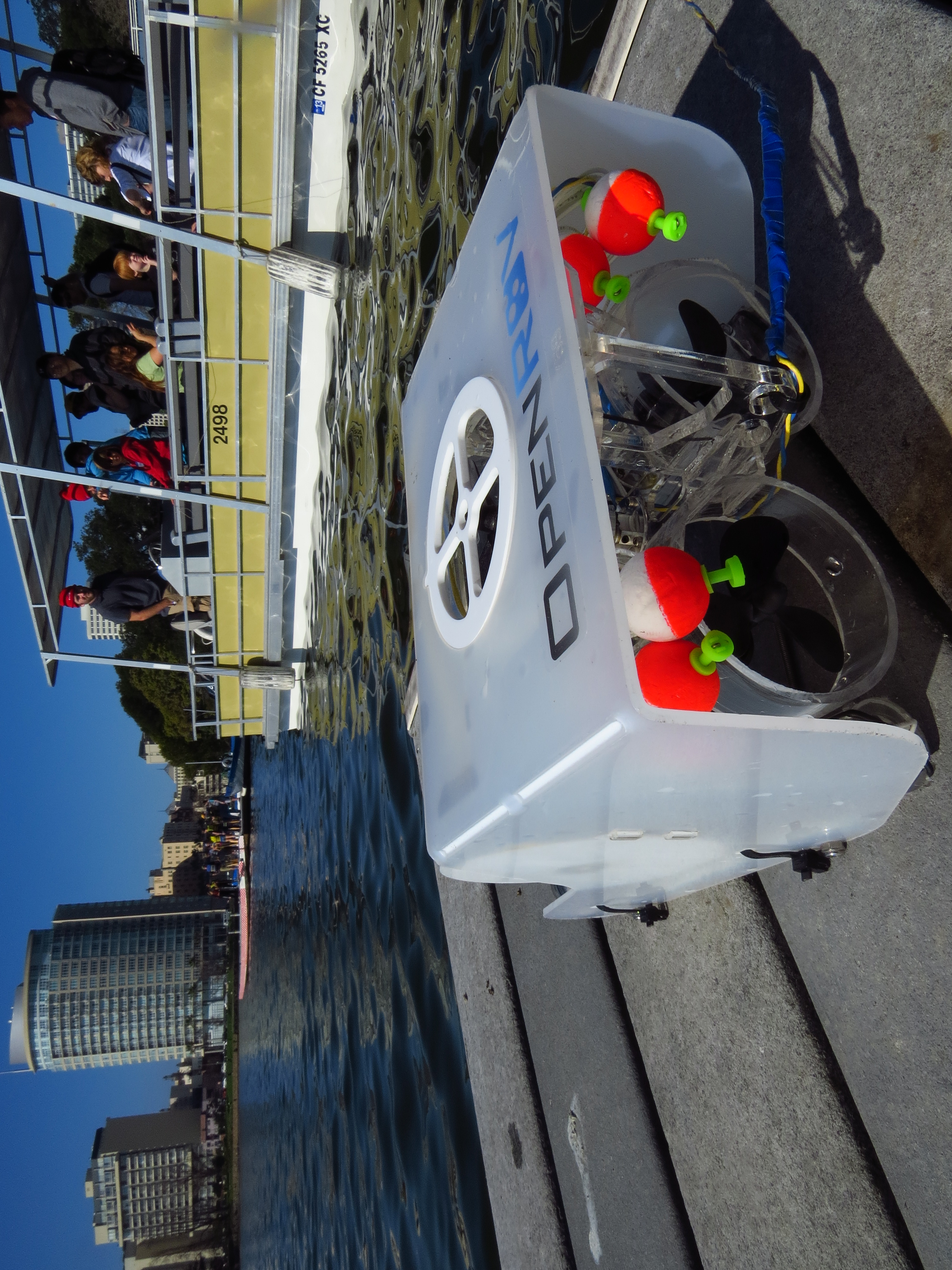
An OpenROV at Lake Merrit.
An OpenROV at Lake Merritt. Photo by author.

In 1946, Jacques Yves Cousteau and Émile Gagnan released the Aqualung, forever changing the way humans interact with the oceans. No longer tethered to the surface, entombed in thick, restrictive helmets, we could dive deeper, stay down longer, and explore the dark places snorkelers and free divers feared to fin. The Aqualung opened up the ocean to an entirely new cohort. Ocean exploration, once the domain of well-resourced scientists, career explorers, and the wealthy elite, was now within the reach of the global middle class.

Buoyed by the Aqualung, Marine Science exploded. Marine life could be studied alive and in situ. Behavior could be observed rather than inferred from the stressed and shredded samples of a trawl. The ranks of marine biologists, oceanographers, and explores swelled to numbers that began to gradually approach the relative significance of the ocean to the living world.

We’re just getting started.

Marine science is on the brink of the greatest sea change since JYC and Gagnan introduced the Aqualung to the world.

Read More “The next era of ocean exploration begins in Papua New Guinea” »

Natural history needs more .gifs

Posted on September 15, 2014July 5, 2015 By Andrew Thaler 1 Comment on Natural history needs more .gifs
Science

There’s something glorious about .gifs, the short video clips that proliferate across the internet. Not quite as demanding of commitment as a full video, slightly more than a still image. These mighty little loops of endless wonder can express joy, surprise, or disdain far better than their static counterpart. They are an artform unique to the web.

Yet, somehow, the humble .gif has never garnered the same level of prestige as a carefully crafted photograph or a lovingly edited documentary. Heck, some science communicators think we should to away with .gifs completely. This is, of course, misguided.

Read More “Natural history needs more .gifs” »

How you can help support Southern Fried Science

Posted on September 10, 2014 By Andrew Thaler
Blogging
Image courtesy of the Love Lab.

Earlier this summer, we switched funding models from an ad hoc Paypal-based donation system to Patreon, a crowdfunding style service for authors, musicians, writers, and, thanks to us, scientists. Thanks to our wonderful Patrons, Southern Fried Science is, for the first time in history, financially sustainable.

We’re still growing. As many of you witnessed during the last Shark Week, our servers are spinning at full capacity and our bandwidth is consistently maxed out. We need to upgrade to a bigger, dedicated server. That costs money.

Southern Fried Science is, and always will be, free and ad free. With the exception of the rare Amazon affiliate links that appears if we mention specific products, we don’t post ads. There are no awkward pitches for weight loss supplements; no pop-ups encouraging enticing you to check your car insurance; no dehumanizing images of Walmart shoppers. Just pure, safe, wholesome marine science and conservation.

Read More “How you can help support Southern Fried Science” »

Breaching Blue Chapter 5: The Hunters

Posted on September 5, 2014 By Andrew Thaler
Popular Culture

breakingblueAll week I’m posting the first five chapters from my absurd work-in-progress, Breaching Blue. Check out Chapters 1, 2, 3, and 4. This concludes our week long mermaid adventure. Enjoy. And, if you don’t enjoy, blame Shiffman.


The reef made them strong. Janthina no longer hesitated to swim above the sunbreak, to explore the illuminated waters above. Each morning, as the sunlight penetrated the twilight waters of the reef, Janthina would rise into the realm of light. The animals that lived in the sun were new. They were active, vibrant, powerful. They moved as if the whole ocean was theirs to command.

Janthina spied Tornus below. The arch of her back was unmistakable. She had grown into a powerful, confident mermaid, broad across the shoulders and strong. Resting on the seafloor, she look like nothing so much as a massive boulder. Tornus sat in a circle with Simnia, Luidia, and several others, fashioning spearheads from a pile of discarded stingray carcasses, their meal from the previous day. The long, jagged barbs were perfect for hunting. They could puncture the toughest scales and would remain lodged until their prey went limp.

The barbs were cheap. The spears, though, required great effort to prepare. The instructions for their manufacture were scattered across the reef. It took nearly a full lunar cycle for Tornus and her compatriots to find enough driftwood, another cycle to grind them down into long, sturdy shafts.  They were solid and  stout. There were none to spare.

Janthina swam down to greet her sisters.

Read More “Breaching Blue Chapter 5: The Hunters” »

Breaching Blue Chapter 4: Over the Edge

Posted on September 4, 2014 By Andrew Thaler
Popular Culture

breakingblueAll week I’m posting the first five chapters from my absurd work-in-progress, Breaching Blue. Check out Chapters 1, 2, and 3. Enjoy. And, if you don’t enjoy, blame Shiffman.


Clymene swam just below the sunbreak, testing the limits of her own courage. The reef was behind her, its unexplored pinnacles rising into sunlit waters. She cut a lazy circle around the coralline towers as she drifted upwards with each circuit. Luidia watched from a distance.

Clymene cast an elegant profile as Luidia looked up from her sentry. Her tail was long and graceful, slimmer than Janthina’s, with a broader fluke. Her arms were long and limber; her fingers reached nearly to her peduncle, where there powerful muscles of her tail met the wide blades of her fluke. Luidia admired her sister. Her own stumpy hands barely reached past her waist, and hers was a bulkier build. Luidia had one advantage over her more streamlined sister. The massive pelvic fins that sprung from the base of her tail were fantastically versatile, she could to pivot and turn with exceptional precision. Where Clymene was constantly frustrated by the tight narrow corridors they continued to discover within the reef, Luidia could traverse them with ease.

Read More “Breaching Blue Chapter 4: Over the Edge” »

Breaching Blue Chapter 3: In the Heart of the Reef

Posted on September 3, 2014 By Andrew Thaler
Popular Culture

All week I’m posting the first five chapters from my absurd work-in-progress, Breaching Blue. Check out Chapter 1 and Chapter 2. Enjoy. And, if you don’t enjoy, blame Shiffman.


The mermaids listened intently as Tornus described the mysterious chamber.

“We have to go inside.” Amphisamytha declared.

Read More “Breaching Blue Chapter 3: In the Heart of the Reef” »

Breaching Blue Chapter 2: Sisters of the Reef

Posted on September 2, 2014September 2, 2014 By Andrew Thaler
Popular Culture

breakingblueSo, after thinking about it for the last 24 hours, I’ve decided to release the a chapter of Breaching Blue every day this week. Enjoy. And, if you don’t enjoy, blame Shiffman.


Tornus examined her new home. She had claimed the highest vantage, the last cavern below the sunbreak, so she could watch her sisters moving across the reef. The mountainous coral atoll continued, transecting the sunbreak and climbing into the illuminated ocean. She could see traces of even more caverns extending towards the surface, caverns that opened into the sunlit waters. She felt dizzy, staring up at the radiant corals above. Her eyes prefered the darkness. The reef offered protection, but only so much. The darkness, where she could sense danger as a wave through her body, where her massive eyes could see what others could not,  where she could darken the pigments of her skin until she vanished into the abyssal backdrop, those offered her the greater protection. The fiercest hunters–blackfish, pilot whales, and beast much larger–waited beyond the sunbreak.

Read More “Breaching Blue Chapter 2: Sisters of the Reef” »

Posts pagination

Previous 1 … 53 54 55 … 149 Next

Popular Posts

The story of the pride flag made from NASA imagery: Bluesky's most-liked imageThe story of the pride flag made from NASA imagery: Bluesky's most-liked imageSeptember 27, 2024David Shiffman
"Why Sustainable Seafood Matters" is now available for preorder! Here's what it's about, and why I decided to write it."Why Sustainable Seafood Matters" is now available for preorder! Here's what it's about, and why I decided to write it.June 8, 2026David Shiffman
Tackling the least important debate in deep-sea mining: the desultory hyphenTackling the least important debate in deep-sea mining: the desultory hyphenJune 8, 2026Andrew Thaler
The evolution of the International Whaling Commission – from  whaling quotas to whale conservationThe evolution of the International Whaling Commission – from  whaling quotas to whale conservationJune 10, 2026Chris Parsons
What Ocean Ramsey does is not shark science or conservation: some brief thoughts on "the Shark Whisperer" documentaryWhat Ocean Ramsey does is not shark science or conservation: some brief thoughts on "the Shark Whisperer" documentaryJuly 2, 2025David Shiffman
Deep-sea Mining, Domestic Cats, Star Trek, and Ocean Exploration: Andrew's mid-year podcast round-up.Deep-sea Mining, Domestic Cats, Star Trek, and Ocean Exploration: Andrew's mid-year podcast round-up.June 6, 2026Andrew Thaler
Shark of Darkness: Wrath of Submarine is a fake documentaryShark of Darkness: Wrath of Submarine is a fake documentaryAugust 10, 2014Michelle Jewell
Isn’t ironic, don’t you think: dismantling the Ocean Observatories Initiative on World Oceans DayIsn’t ironic, don’t you think: dismantling the Ocean Observatories Initiative on World Oceans DayJune 9, 2026Southern Fried Science
What is a Sand Shark?What is a Sand Shark?November 12, 2017Chuck Bangley
That's not a blobfish: Deep Sea Social Media is Flooded by AI SlopThat's not a blobfish: Deep Sea Social Media is Flooded by AI SlopDecember 19, 2025Andrew Thaler
Subscribe to our RSS Feed for updates whenever new articles are published.

We recommend Feedly for RSS management. It's like Google Reader, except it still exists.

Southern Fried Science

  • Home
  • About SFS
  • Authors
  • Support SFS


If you enjoy Southern Fried Science, consider contributing to our Patreon campaign.

Copyright © 2026 Southern Fried Science.

Theme: Oceanly Premium by ScriptsTown