Skip to content

Southern Fried Science

Over 15 years of ocean science and conservation online

  • Home
  • About SFS
  • Authors
  • Support SFS

Author: Andrew Thaler

Marine science and conservation. Deep-sea ecology. Population genetics. Underwater robots. Open-source instrumentation. The deep sea is Earth's last great wilderness.

Wednesday Morning Open Thread – we’re gonna need a bigger boat

Posted on June 20, 2012June 19, 2012 By Andrew Thaler 1 Comment on Wednesday Morning Open Thread – we’re gonna need a bigger boat
Uncategorized

It’s that time of the week again. Please use this space to ask questions, share links, start a discussion, or just say hi. Today’s thread brought to you by the boarding ladder on the Scripps research pier. What was your most eventful boat launch?

Understanding Sea Level Rise: Why a linear extrapolation is the least reasonable predictor of future changes

Posted on June 14, 2012June 18, 2012 By Andrew Thaler 2 Comments on Understanding Sea Level Rise: Why a linear extrapolation is the least reasonable predictor of future changes
Conservation, Science

The Division of Coastal Management shall be the only State agency authorized to develop rates of sea-level rise and shall do so only at the request of the Commission. These rates shall only be determined using historical data, and these data shall be limited to the time period following the year 1900. Rates of sea-level rise may be extrapolated linearly to estimate future rates of rise but shall not include scenarios of accelerated rates of sea-level rise.

source (emphasis mine)

This is the text of the notorious, anti-science, anti-coastal community bill that was originally floated in the North Carolina state senate. A revised version of that bill is now under review, with new language that now mandates that:

The Commission and the Division of Coastal Management may collaborate with other State agencies, boards, commissions, other public entities, or institutions when defining sea-level rise or developing rates of sea-level rise. These rates shall be determined using statistically significant, peer-reviewed historical data generated using generally accepted scientific and statistical techniques. Historic rates of sea-level rise  may be extrapolated to estimate future rates of rise but shall not include scenarios of accelerated rates of sea-level rise unless such rates are from statistically significant, peer-reviewed data and are consistent with historic trends.

source (emphasis mine)

While this new language is almost certainly an improvement over the old bill, which was heavily supported by a lobbying group for coastal developers and heavily opposed by organizations that actually care what happens to the Carolina coastline and its historic communities, it is still problematic. By problematic, I mean wrong. And by wrong I mean that by refusing to allow accelerated estimates of sea level rise, it explicitly ignores all the best available science and contradicts 130 millenia of historic precedent.

Read More “Understanding Sea Level Rise: Why a linear extrapolation is the least reasonable predictor of future changes” »

Wednesday Morning Open Thread – skeptical chicken

Posted on June 13, 2012June 12, 2012 By Andrew Thaler 4 Comments on Wednesday Morning Open Thread – skeptical chicken
Uncategorized

Another week and another open thread. Here is a space where you can ask questions, share links, or just say hi. This week’s open thread sponsored by Polymerase Chain Reaction, our very skeptical chicken. A couple weeks ago, lots of people were talking about Rayfish, a hoax website claiming to produce genetically modified stingray sneakers. … Read More “Wednesday Morning Open Thread – skeptical chicken” »

Carnivorous plants respond to increased soil nitrogen, eco-news websites completely miss the point

Posted on June 10, 2012 By Andrew Thaler 1 Comment on Carnivorous plants respond to increased soil nitrogen, eco-news websites completely miss the point
Science

Flowers of a venus flytrap. Photo by Andrew David Thaler.

Late last week, inspired by our newly flowering Venus Flytraps, I posted pictures of Amy and my carnivorous plant collection on twitter and on the Southern Fried Science Facebook page. After David’s recent post on a nurse shark that underwent major dietary changes following traumatic surgery and captivity, our wonderful readers must have been on high alert for trophic shifts following anthropogenic disturbance-type articles (or, more casually, “stuff that eats stuff now eats different stuff”), because this morning my inbox was filled with links to variations on the following article: Pollution makes carnivorous plants go vegetarian. Whenever human activity alters trophic interactions, there is potential for major ecological changes in an ecosystem. While ecosystems are dynamic, shape by continuous variation in community structure and resource and habitat variability, rapid changes can result in total collapse or permanent shifts to functional states.

Unfortunately, these “eating different stuff” articles rarely reflect the deep and nuance ecologic reality of trophic interactions and instead capitalize on the narrative of “even animals are going veggie to save the planet!” Allow me to revel in my cultural roots with a hearty “Oy vey!”

Read More “Carnivorous plants respond to increased soil nitrogen, eco-news websites completely miss the point” »

Climbing Mount Chernobyl: a repost for World Ocean Day

Posted on June 8, 2012June 10, 2012 By Andrew Thaler 2 Comments on Climbing Mount Chernobyl: a repost for World Ocean Day
Conservation, Science

Originally published on August 30th, 2011, Climbing Mount Chernobyl is one of my personal favorite posts. It feels appropriate to re-post it today for World Ocean Day.

Read More “Climbing Mount Chernobyl: a repost for World Ocean Day” »

Wednesday Morning Open Thread – an experiment

Posted on June 6, 2012 By Andrew Thaler 4 Comments on Wednesday Morning Open Thread – an experiment
Uncategorized

I’m going to try something new this summer. Every Wednesday we’ll post an open thread where you can ask questions, start discussions, post links to interesting articles, or just say “Hi”. Today’s open thread sponsored by Luna, the Nigerian Dwarf Goat.

North Carolina’s attempted ban on sea level rise is a boon for Global Draining researchers

Posted on May 31, 2012May 31, 2012 By Andrew Thaler 4 Comments on North Carolina’s attempted ban on sea level rise is a boon for Global Draining researchers
Science

News broke yesterday that NC-20, a lobbying group for coastal development that, among other things, thinks property owners should be allowed to dump chemical waste directly into our watersheds, is sponsoring legislation that would outlaw outlaw sea level rise. Ignoring the fact that you can’t actually sue the ocean, what they’re actually promoting is a law that would prevent the state from using any sea surface model that extrapolates future ocean trends using anything but a linear regression. Essentially, they’re making it illegal for the state to anticipate future changes to the coastline, plan and prepare for potential flooding, or restrict development on transient barrier islands.

Read More “North Carolina’s attempted ban on sea level rise is a boon for Global Draining researchers” »

The Ocean Adventure: mud, robots, and ecosystems

Posted on May 24, 2012May 29, 2012 By Andrew Thaler 2 Comments on The Ocean Adventure: mud, robots, and ecosystems
Science

We traveled to Cape Lookout Bight aboard the R/V Susan Hudson to sample sediment and test our homemade ROV. Along the way, we asked the research team to talk about their favorite marine ecosystems. httpv://www.youtube.com/watch?v=_vpX4XGNjf8 Let us know what your favorite marine ecosystems are in the comments below.

#SciFund Returns: Where have all the coral reef fish gone?

Posted on May 22, 2012 By Andrew Thaler 1 Comment on #SciFund Returns: Where have all the coral reef fish gone?
Science

#SciFund, a month long initiative to raise funds for a variety of scientific research projects, is once again upon us. Project leaders post a project description and an appeal for funds, and members of the public are invited to make small donations to projects that they deem worthy. Donations come with rewards such as access to … Read More “#SciFund Returns: Where have all the coral reef fish gone?” »

False Fish, Pink Slime, and Dactylopius frappucoccus: food supply, food choices, and establishing a personal food ethic

Posted on May 21, 2012May 21, 2012 By Andrew Thaler 5 Comments on False Fish, Pink Slime, and Dactylopius frappucoccus: food supply, food choices, and establishing a personal food ethic
Uncategorized

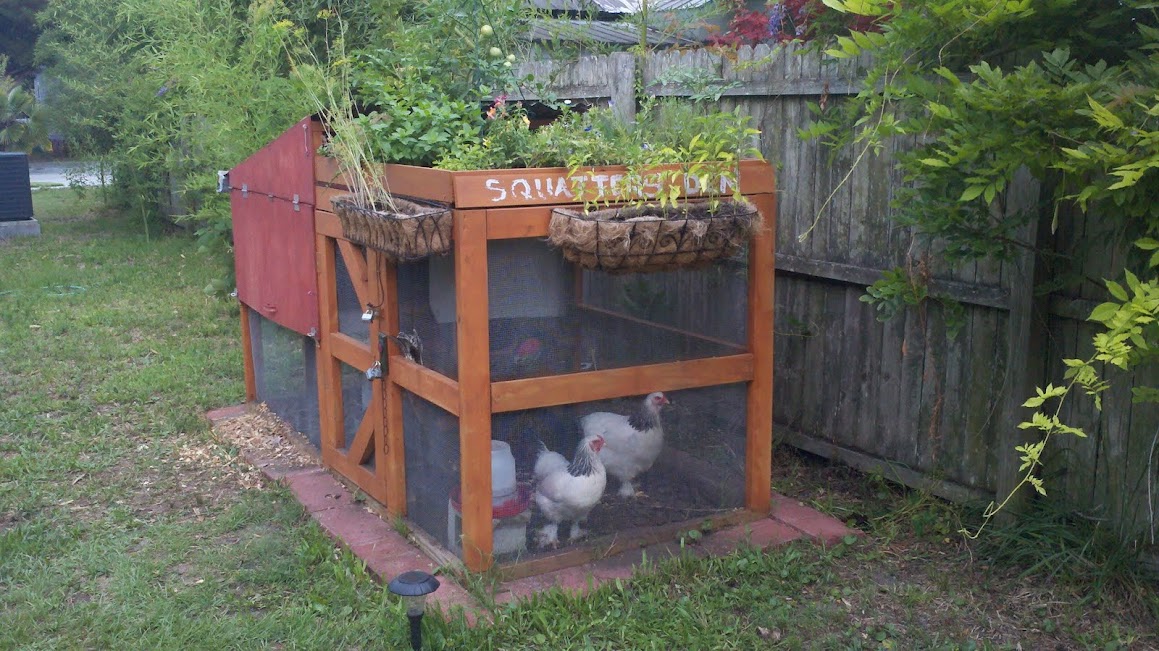
One solution, though not everyone can raise their own chickens.
A significant source of food for me. Of course not everyone can raise their own chickens.

Food is a tricky. For some people, food choice is an essential component of cultural heritage and national identity. For others, food choice is a statement of philosophical or moral principles. For many, being able to reject food is an unobtainable luxury. One thing is certain: food is so central to the human experience that when we question our food choices, when we are forced (or force others) to change them, when we discover that the choices we make are not what we think they are, it is impossible to separate our food ethics from our social structure. Which is why seemingly trivial revelations–bugs in your coffee, meat made slime, or a fish by any other name–often result in major outrage and structural changes. Eating is simultaneously a deeply personal experience and one in which, for much of the developed world, we are completely detached from the source.

Read More “False Fish, Pink Slime, and Dactylopius frappucoccus: food supply, food choices, and establishing a personal food ethic” »

Posts pagination

Previous 1 … 73 74 75 … 149 Next

Popular Posts

What Ocean Ramsey does is not shark science or conservation: some brief thoughts on "the Shark Whisperer" documentaryWhat Ocean Ramsey does is not shark science or conservation: some brief thoughts on "the Shark Whisperer" documentaryJuly 2, 2025David Shiffman
What is a Sand Shark?What is a Sand Shark?November 12, 2017Chuck Bangley
Zombie ideas in conservation: trophy hunting and conservationZombie ideas in conservation: trophy hunting and conservationAugust 6, 2026Ali Gaster
Jumping the shark: New study reviews the breaching behavior of sharks and raysJumping the shark: New study reviews the breaching behavior of sharks and raysSeptember 19, 2024David Shiffman
Please Help This Little Dumbo Octopus Travel Across AmericaPlease Help This Little Dumbo Octopus Travel Across AmericaAugust 3, 2026Angelo Villagomez
Shark of Darkness: Wrath of Submarine is a fake documentaryShark of Darkness: Wrath of Submarine is a fake documentaryAugust 10, 2014Michelle Jewell
That's not a blobfish: Deep Sea Social Media is Flooded by AI SlopThat's not a blobfish: Deep Sea Social Media is Flooded by AI SlopDecember 19, 2025Andrew Thaler
Considering writing a popular science book? Here's my adviceConsidering writing a popular science book? Here's my adviceJuly 7, 2025David Shiffman
Fun facts and FAQs about Megalodon, Maryland's new (and definitely extinct) official state sharkFun facts and FAQs about Megalodon, Maryland's new (and definitely extinct) official state sharkApril 15, 2026David Shiffman
Is Academic Publishing is breaking conservation science?Is Academic Publishing is breaking conservation science?August 10, 2026Chris Parsons
Subscribe to our RSS Feed for updates whenever new articles are published.

We recommend Feedly for RSS management. It's like Google Reader, except it still exists.

Southern Fried Science

  • Home
  • About SFS
  • Authors
  • Support SFS


If you enjoy Southern Fried Science, consider contributing to our Patreon campaign.

Copyright © 2026 Southern Fried Science.

Theme: Oceanly Premium by ScriptsTown