Skip to content

Southern Fried Science

Over 15 years of ocean science and conservation online

  • Home
  • About SFS
  • Authors
  • Support SFS

Author: Andrew Thaler

Marine science and conservation. Deep-sea ecology. Population genetics. Underwater robots. Open-source instrumentation. The deep sea is Earth's last great wilderness.

The indelible stamp – Scientists and their tattoos

Posted on November 1, 2011December 9, 2011 By Andrew Thaler 5 Comments on The indelible stamp – Scientists and their tattoos
Popular Culture, Science

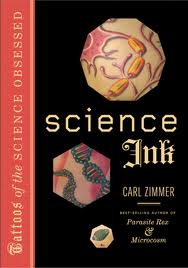
How do you declare your undying love for science? How do you immortalize your doctoral dissertation? How can you let the world know about your eternal love affair with tardigrades, Euler’s Identity, caffeine, or the voyager spacecraft? If you answered any of these with “get a tattoo!” than you’ve probably already heard about Science Ink: Tattoo’s of the Science Obsessed, by Carl Zimmer.

Over the last several years, Zimmer has been compiling scientists’ tattoos at the Science Tattoo Emporium, which now contains 255 pieces of ink. In Science Ink, Zimmer has selected the best looking,  most memorable tattoos from his online collection and published them in a beautiful book featuring both artwork and insight into each piece.

Zimmer is among the best of the “science communicators”, those who distill the essence of important concepts into comprehensible units. Each tattoo come with either a description of the story behind its origin, its meaning to the canvas, or the fundamentals of the concept it represents. The book covers an extensive range of topics, from mathematics to natural history to physics and astronomy. When I first heard about this project, I was expecting a coffee-table style book of tattoo photographs, but it is much more than that. The tattoos are simply prompts for a deeper exploration into the meaning of science to society, as well as a delightful collection of (very) short stories about individuals experience in science.

Read More “The indelible stamp – Scientists and their tattoos” »

The historical origins of ‘whales as people’

Posted on October 30, 2011December 9, 2011 By Andrew Thaler 7 Comments on The historical origins of ‘whales as people’
Conservation, Popular Culture, Science

In an attempt to garner attention and raise awareness regarding the problematic use of orcas and other marine mammals in captivity for entertainment, PETA, an animal rights group, has sued Sea World, a corporation that builds and manages aquariums and marine parks. Opposition  to Sea World’s brand of entertainment-driven aquariums is nothing new, but this fresh lawsuit adds a novel twist to the boilerplate “intelligent animals don’t belong in captivity” – PETA is suing Sea World for violating these oceanic dolphin’s constitutional rights under the 13th amendment.

The 13th amendment to the United States Constitution explicitly outlaws slavery or involuntary captivity:

Read More “The historical origins of ‘whales as people’” »

Salmon, aquaculture, and the spread of Infectious Salmon Anemia

Posted on October 27, 2011October 28, 2011 By Andrew Thaler 3 Comments on Salmon, aquaculture, and the spread of Infectious Salmon Anemia
Science

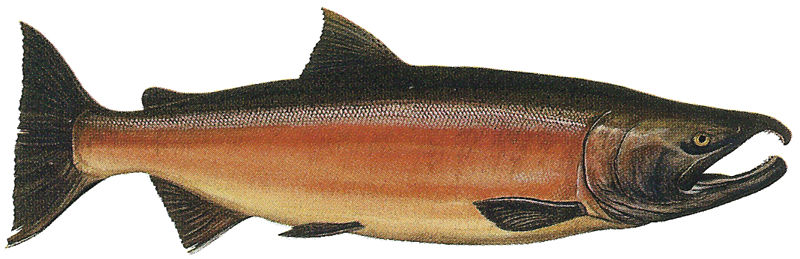
Coho salmon - public domain image

In 2008, a deadly virus decimated Chilean aquaculture facilities, causing $2 billion in damage and crippling an industry. This week, preliminary reports suggest that this same disease may have infected wild salmon in the north Pacific. The internet has been blowing up with news reports of Infectious Salmon Anemia (ISA) detected in wild salmon populations. Reports range from balanced – Deadly Fish Farm Virus Found in Wild Pacific Salmon – to hyperbolic – B.C.’s salmon feedlots need to be closed – but all hinge on the fact that ISA, a lethal salmon-infecting virus previously resigned to aquaculture facilities, has been detected in wild salmon populations in British Columbia. This has the potential to be a very big deal. ISA is 90% lethal and mortality occurs in 10 days or less. The virus is waterborn, but can also be transmitted through handling with contaminated equipment. There is no treatment once a fish is infected.

Before I go on, a couple points need to be clarified:

  1. ISA does not infect humans, though as it threatens a fishery and a major agricultural industry, it most certainly affects humans.
  2. ISA was isolated from 2 wild sockeye salmon. It has not been confirmed from independent test yet, although one statement indicates that the current infection is from a non-infectious strain of ISA (which raises some interesting questions about who currently knows what about this outbreak).

Read More “Salmon, aquaculture, and the spread of Infectious Salmon Anemia” »

A slimehead by any other name should never be on your plate

Posted on October 26, 2011 By Andrew Thaler 6 Comments on A slimehead by any other name should never be on your plate
Science

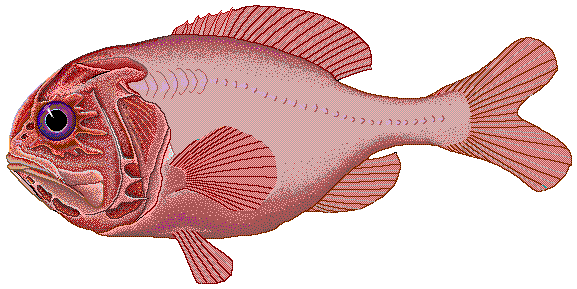
Orange Roughy - image by FishBase artist Robbie Cada

Slimehead is not a word you would expect to find on the menu of a fancy restaurant. Like dolphin*, toothfish*, goosefish*, mudbug*, hog*, and gizzard fish*, slimeheads have undergone a bit re-branding over the last few decades to make their name as palatable as their fillets. Enter the Orange Roughy, a dull, uninspired name that captures nothing of the grandeur of Hoplostethus atlanticus and ignores the defining characteristic of these deep-sea fishes.

What does Orange Roughy mean to you? Well, it’s probably orange, and I guess roughy means it might be rough, or something. The name is pretty uninformative. But slimehead! Slimehead tells you quite a bit about this creature, and leads to some interesting ecological questions. Why is it’s head covered in slime? What does the slime do? How is the slime contained in its head?

Read More “A slimehead by any other name should never be on your plate” »

Climate change deniers continue to be wrong, science words with friends, and support science in the classroom

Posted on October 21, 2011October 21, 2011 By Andrew Thaler 4 Comments on Climate change deniers continue to be wrong, science words with friends, and support science in the classroom
Science

The bliggityblogsphere has been abuzz with recent finding by the Berkeley Earth Project that independently confirm that global climate change is real. From the BBC:

The Earth’s surface really is getting warmer, a new analysis by a US scientific group set up in the wake of the “Climategate” affair has concluded.

The Berkeley Earth Project has used new methods and some new data, but finds the same warming trend seen by groups such as the UK Met Office and Nasa.

source

Phil Plait, the Bad Astronomer, has a nice, in depth write-up, that provides some caveats missing from most of the press releases: New independent climate study confirms global warming is real.

Read More “Climate change deniers continue to be wrong, science words with friends, and support science in the classroom” »

Happy Hagfish Day!

Posted on October 19, 2011 By Andrew Thaler
Uncategorized

It’s finally here, that momentous day where, once a year, we come together to celebrate the strange, weird, gross, and outright ugly in the animal kingdom. It’s Hagfish Day! Check out WhaleTimes for some outstanding educational material on the beauty of the ugly, including an interview with yours truly on a pair of exceptionally cool … Read More “Happy Hagfish Day!” »

The Importance of Word Choice: Terms with multiple meanings for scientists and the public

Posted on October 18, 2011January 10, 2024 By Andrew Thaler 18 Comments on The Importance of Word Choice: Terms with multiple meanings for scientists and the public
The Importance of Word Choice: Terms with multiple meanings for scientists and the public
Uncategorized

If you haven’t seen the excellent post on Mountain Beltway – Words matter – you should head over there and take a look. The post brought up some interesting ideas about word choice, and how the common definition of a word may convey a different meaning than the scientific definition. For science communicators, this may lead to confusion … Read More “The Importance of Word Choice: Terms with multiple meanings for scientists and the public” »

Are you ready for Hagfish Day?

Posted on October 17, 2011October 17, 2011 By Andrew Thaler 1 Comment on Are you ready for Hagfish Day?
Popular Culture

Ratty would be proud.

Just enough about “Certainly More Than You Want to Know About The Fishes of The Pacific Coast” to pique your curiosity

Posted on October 14, 2011October 17, 2011 By Andrew Thaler 2 Comments on Just enough about “Certainly More Than You Want to Know About The Fishes of The Pacific Coast” to pique your curiosity
Science

There is a website floating around the interwebs entitled “So you want to be a marine biologist?” that most future marine biologists who came of age in the early 21st century have encountered. The sage page of advice is followed up with “So you want to be a marine biologist, the revenge“. Reading through these two essays, one might come to the conclusion that their author, Dr. Milton Love of the University of California, Santa Barbara, should compose a voluminous tome to the fishes of the Pacific coast. Which is exactly what he’s done. Welcome to Certainly More Than You Want to Know About The Fishes of The Pacific Coast: a postmodern experience.

Despite it’s self-aware title, this book is far more than just an exhaustive guide to the fishes of the Pacific, though it certainly is that. The highly detailed taxonomic descriptions are rich with humor and insight into the ecology, behavior, and physiology of, if not each species, than each genus or species complex. Interspersed among the taxa are descriptions of prominent Pacific researchers, anecdotes from a lifetime of work on the water, stories by people who lived, worked, and fished these species, and the occasional poem, song, or limerick. Somehow, these disparate units manage to complement each other in a way that makes you want to read what is essential a taxonomy textbook cover-to-cover.

Read More “Just enough about “Certainly More Than You Want to Know About The Fishes of The Pacific Coast” to pique your curiosity” »

Misunderstood Marine Life # 1 – The five biggest myths about Marine Biologists

Posted on October 7, 2011November 10, 2011 By Andrew Thaler 6 Comments on Misunderstood Marine Life # 1 – The five biggest myths about Marine Biologists
Popular Culture, Science

It’s the moment we’ve all been waiting for, the single most misunderstood marine creature that calls our oceans its home: the rare, elusive, often smelly, occasionally employable, Marine Biologist! For something so incredibly popular, articulate, good-looking, and revered, there sure are a lot of misconceptions about who marine biologists are and what they do. Myth … Read More “Misunderstood Marine Life # 1 – The five biggest myths about Marine Biologists” »

Posts pagination

Previous 1 … 80 81 82 … 149 Next

Popular Posts

That's not a blobfish: Deep Sea Social Media is Flooded by AI SlopThat's not a blobfish: Deep Sea Social Media is Flooded by AI SlopDecember 19, 2025Andrew Thaler
What Ocean Ramsey does is not shark science or conservation: some brief thoughts on "the Shark Whisperer" documentaryWhat Ocean Ramsey does is not shark science or conservation: some brief thoughts on "the Shark Whisperer" documentaryJuly 2, 2025David Shiffman
The story of the pride flag made from NASA imagery: Bluesky's most-liked imageThe story of the pride flag made from NASA imagery: Bluesky's most-liked imageSeptember 27, 2024David Shiffman
The evolution of the International Whaling Commission – from  whaling quotas to whale conservationThe evolution of the International Whaling Commission – from  whaling quotas to whale conservationJune 10, 2026Chris Parsons
Shark of Darkness: Wrath of Submarine is a fake documentaryShark of Darkness: Wrath of Submarine is a fake documentaryAugust 10, 2014Michelle Jewell
Tackling the least important debate in deep-sea mining: the desultory hyphenTackling the least important debate in deep-sea mining: the desultory hyphenJune 8, 2026Andrew Thaler
What is a Sand Shark?What is a Sand Shark?November 12, 2017Chuck Bangley
"Why Sustainable Seafood Matters" is now available for preorder! Here's what it's about, and why I decided to write it."Why Sustainable Seafood Matters" is now available for preorder! Here's what it's about, and why I decided to write it.June 8, 2026David Shiffman
Fun facts and FAQs about Megalodon, Maryland's new (and definitely extinct) official state sharkFun facts and FAQs about Megalodon, Maryland's new (and definitely extinct) official state sharkApril 15, 2026David Shiffman
Our favorite sea monsters – Ningen (#4)Our favorite sea monsters – Ningen (#4)September 7, 2010Andrew Thaler
Subscribe to our RSS Feed for updates whenever new articles are published.

We recommend Feedly for RSS management. It's like Google Reader, except it still exists.

Southern Fried Science

  • Home
  • About SFS
  • Authors
  • Support SFS


If you enjoy Southern Fried Science, consider contributing to our Patreon campaign.

Copyright © 2026 Southern Fried Science.

Theme: Oceanly Premium by ScriptsTown