Skip to content

Southern Fried Science

Over 15 years of ocean science and conservation online

  • Home
  • About SFS
  • Authors
  • Support SFS

Author: David Shiffman

10 Tips for grad students to make the most of a scientific conference

Posted on August 21, 2013October 27, 2013 By David Shiffman 22 Comments on 10 Tips for grad students to make the most of a scientific conference
Science

davesquare

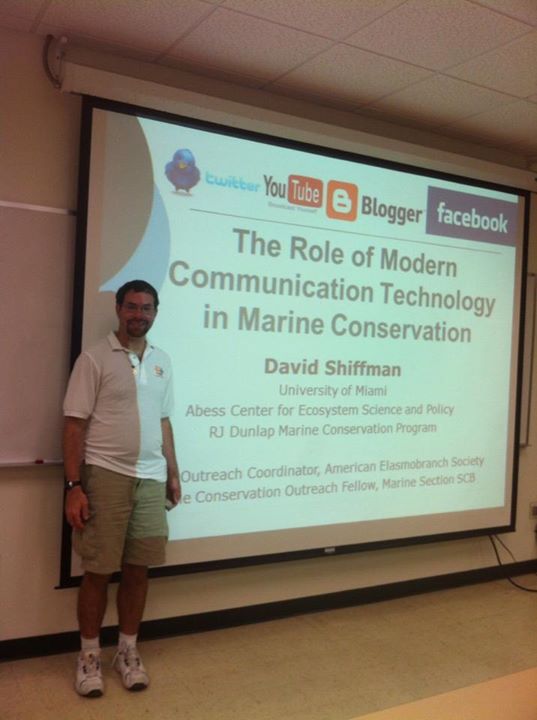
Presenting research at the International Marine Conservation Congress in Victoria, BC.
Presenting research at the International Marine Conservation Congress in Victoria, BC (2011).

I just returned from the Society for Conservation Biology’s International Congress for Conservation Biology. It was a great meeting, and I learned a lot. It also marked a milestone for me, as although I am just starting the 3rd year of my Ph.D.,  the ICCB was the 20th scientific conference I’ve attended. Inspired by this milestone, by Josh Drew’s recent post on the subject, and by the excellent graduate student networking workshop held at the ICCB, I wanted to share my tips and tricks for graduate students to get the most out of a conference

Please note that while these tips have served me well and are generally applicable to professional meetings in the sciences, they may not be appropriate for every field or every person’s goals for a conference.  Additionally, some may be considered quite basic, but I assure you that I’ve met people (particularly graduate students attending a conference for a first time) who don’t know them. I welcome a discussion in the comments.

Read More “10 Tips for grad students to make the most of a scientific conference” »

A Shark Week 2013 retrospective…with memes!

Posted on August 12, 2013August 14, 2013 By David Shiffman 7 Comments on A Shark Week 2013 retrospective…with memes!
Conservation, Popular Culture, Science

davesquare

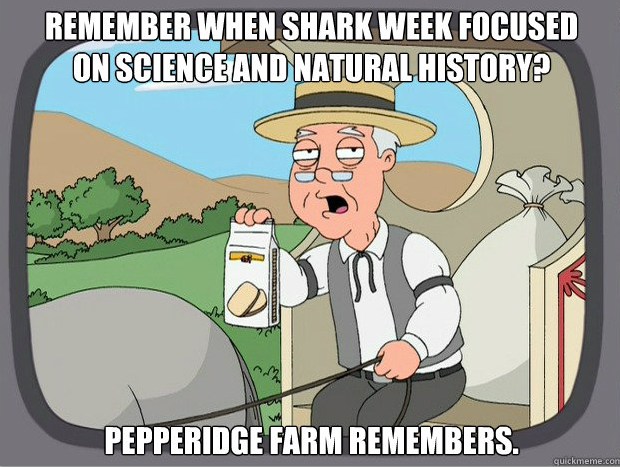
As Shark Week 2013 comes to a close, I wanted to take a look back at which part of my outreach strategy worked (and didn’t work), as well as what I liked and disliked about Shark Week as a whole. Ever since my “15 important shark conservation and management terms explained with memes” post, I’ve been looking for an opportunity to incorporate more internet humor into a blog post, so here goes…

While this Shark Week allowed scientists  like myself to reach the public on a large scale, most of the content was...troubling.
While this Shark Week allowed scientists like myself to reach the public on a large scale, most of the content was…troubling.

Read More “A Shark Week 2013 retrospective…with memes!” »

World’s largest group of shark scientists calls on AP and Reuters to resist using the phrase “shark attacks”

Posted on August 5, 2013 By David Shiffman 7 Comments on World’s largest group of shark scientists calls on AP and Reuters to resist using the phrase “shark attacks”
Conservation, Popular Culture

davesquare

The American Elasmobranch Society is the world's oldest and largest professional association of shark and ray scientists
The American Elasmobranch Society is the world’s oldest and largest professional association of shark and ray scientists

The American Elasmobranch Society, the world’s largest professional organization of shark and ray scientists, has issued a resolution calling on the Associated Press Stylebook and the Reuters Style Guide  to retire the phrase “shark attack” in favor of a more accurate (and less inflammatory) wording that is scaled to represent real risk and outcomes. The AP Stylebook and Reuters Style Guides are reference guides for journalists and editors which focus on, among other things, reducing the usage of inaccurate and outdated terminology. The latest AP Stylebook, for example, had more than 90 new or updated entries which include encouraging journalists and editors to a stop using terms like  “illegal immigrant“,  “ethnic cleansing” and “homophobia”.

“Shark scientists in the United States and around the world have great respect for the integrity and reporting of the Associated Press and Reuters. We hope they will act on this recommendation and update their style guides to ensure that the public gets the most accurate information in the reporting of these incidents,” said Lara Ferry, President of the American Elasmobranch Society, who sent a formal letter to the AP Stylebook and Reuters Style Guide.

Currently, although “shark attack” is associated with an image of a large shark and a human fatality, the phrase  is used by the media as a catch-all to describe any encounter between a human and a shark, even those that don’t result in any physical contact whatsoever. Fully 38% of reported “shark attacks” in New South Wales, Australia from 1970-2009 resulted in no injury whatsoever. This is misleading and facilitates a perception among the public that sharks are more dangerous than they really are, a perception which has negatively impacted shark conservation and management policy.

“The accuracy in media reporting of shark bites and different human-shark interactions is especially important during the kinds of tragic periods we have seen this summer. The public deserves the best information to make sure there is no confusion between very serious and fatal shark bites and minor incidents,” said Christopher Neff, a Ph.D. student at Sydney University.

In a recent paper,  Neff and Bob Hueter of Mote Marine Lab proposed a scaled labeling typology to describe human-shark interactions. This typology covers the full range of these interactions,  including:

Read More “World’s largest group of shark scientists calls on AP and Reuters to resist using the phrase “shark attacks”” »

Tweets from the Society for Conservation Biology: Very Large Marine Protected Areas Symposium

Posted on July 29, 2013 By David Shiffman 1 Comment on Tweets from the Society for Conservation Biology: Very Large Marine Protected Areas Symposium
Conservation

davesquare

SCB logo

The Society for Conservation Biology’s International Congress for Conservation Biology took place from July 21-25th in Baltimore, Maryland. Over 1,500 scientists and conservationists from more than 60 countries participated. Below are selected tweets from the symposium on very large marine protected areas.

Read More “Tweets from the Society for Conservation Biology: Very Large Marine Protected Areas Symposium” »

Tweets from the Society for Conservation Biology: Marine conservation sessions

Posted on July 29, 2013 By David Shiffman
Conservation

davesquare

SCB logoThe Society for Conservation Biology’s International Congress for Conservation Biology took place from July 21-25th in Baltimore, MD.  Over 1,500 scientists and conservationists from more than 60 countries participated. Below are selected tweets from marine conservation (and related) sessions. Talks are in no particular chronological order.

Read More “Tweets from the Society for Conservation Biology: Marine conservation sessions” »

Tweets from the Society for Conservation Biology: Student Networking Workshop

Posted on July 29, 2013 By David Shiffman
Science

davesquare

SCB logoThe Society for Conservation Biology’s International Congress for Conservation Biology took place July 21-25 in Baltimore, MD. Over 1,500 scientists and conservationists from more than 60 countries participated. Below are selected tweets from the student networking workshop, in which experienced professionals gave students their networking advice.

Read More “Tweets from the Society for Conservation Biology: Student Networking Workshop” »

Who read tweets from the American Elasmobranch Society? I asked, they answered!

Posted on July 17, 2013October 28, 2013 By David Shiffman

davesquareAESlogoAs those of you who follow me on twitter know, I’ve been live-tweeting the American Elasmobranch Society conference. The meeting is the largest gathering of shark, skate and ray scientists in the world, and provided lots of opportunities to share interesting shark science and conservation news to my followers. In case you missed it, all the sessions are now Storify-ed and stored here on the blog (Plenary address, Biology and Conservation of Rays Symposium, Ecology and Conservation, Best Student Presentation/Gruber Award talks , and Physiology Behavior and Genetics).

Mary Canady of Comprendia was kind enough to compile some technical statistics on the use of the conference hashtags (#AES2013 for the American Elasmobranch Society portion of the meeting, #JMIH13 for the overall Joint Meeting of Ichthyologists and Herpetologists). Thanks, Mary!

Between July 8th and today, there have been 1,568 unique #AES2013 tweets. Approximately half of the #AES2013 have been re-tweeted. There were 218 unique twitter users that tweeted at least one #AES2013 tweet (including RT-ing). There were approximately 10 AES members present at the meeting who tweeted at least once, including several who created a twitter account at the meeting. At least 6 AES members who were not present at the meeting followed along from home using twitter. We also took questions from twitter during the expert panel discussion at the ray symposium. For those of you not familiar with online altmetric speak, this can be summarized as “a very high level of audience engagement and interaction.”

In comparison, #JMIH13 had 1,602 unique tweets- only a handful more despite the fact that AES is a relatively small component of the overall JMIH. There were 88 unique twitter users who tweeted at least one #JMIH13 tweet, and about 1/3 of total tweets were RT-ed.

Finally, I asked the people following along on twitter to tell me a little about themselves. Here are their responses.

Read More “Who read tweets from the American Elasmobranch Society? I asked, they answered!” »

Tweets from the American Elasmobranch Society: Physiology, Behavior and Genetics

Posted on July 17, 2013October 28, 2013 By David Shiffman

davesquareAESlogoThe American Elasmobranch Society is a non-profit professional organization of shark, ray, skate, and chimaera scientists. Each year, AES holds an annual conference in a different North American city where members meet and present their research. The 2013 meeting took place in Albuquerque, New Mexico from July 10-15th. The full schedule of talks (including other societies participating in the Joint Meeting of Ichthyologists and Herpetologists) can be found here.

Presented below are selected tweets from the Physiology, Behavior, and Genetics sessions.

Read More “Tweets from the American Elasmobranch Society: Physiology, Behavior and Genetics” »

Tweets from the American Elasmobranch Society: Gruber Award (best student presentation) talks

Posted on July 17, 2013 By David Shiffman
Science

davesquare

AESlogoThe American Elasmobranch Society is a non-profit professional organization of shark, ray, skate, and chimaera scientists. Each year, AES holds an annual conference in a different North American city where members meet and present their research. The 2013 meeting took place in Albuquerque, New Mexico from July 10-15th. The full schedule of talks (including other societies participating in the Joint Meeting of Ichthyologists and Herpetologists) can be found here. 

Below are selected tweets from the Gruber Award (best student presentation) talks.

Read More “Tweets from the American Elasmobranch Society: Gruber Award (best student presentation) talks” »

Tweets from the American Elasmobranch Society: Dr. Gregor Cailliet’s plenary address

Posted on July 17, 2013October 28, 2013 By David Shiffman

davesquare

AESlogoThe American Elasmobranch SocietyAmerican Elasmobranch Society is a non-profit professional organization of shark, ray, skate, and chimaera scientists. Each year, AES holds an annual conference in a different North American city where members meet and present their research. The 2013 meeting took place in Albuquerque, New Mexico from July 10-15th. The full schedule of talks (including other societies participating in the Joint Meeting of Ichthyologists and Herpetologists) can be found here.

Here are selected tweets from Dr. Gregor Cailliet’s plenary address, “unraveling the secret lives of sharks and rays”.

Read More “Tweets from the American Elasmobranch Society: Dr. Gregor Cailliet’s plenary address” »

Posts pagination

Previous 1 … 28 29 30 … 68 Next

Popular Posts

The next OpenCTD is here!The next OpenCTD is here!June 22, 2026Andrew Thaler
What Ocean Ramsey does is not shark science or conservation: some brief thoughts on "the Shark Whisperer" documentaryWhat Ocean Ramsey does is not shark science or conservation: some brief thoughts on "the Shark Whisperer" documentaryJuly 2, 2025David Shiffman
Undermining the Law of the Sea. Some additional thoughts following my OpEd in the Hill.Undermining the Law of the Sea. Some additional thoughts following my OpEd in the Hill.June 22, 2026Andrew Thaler
What is a Sand Shark?What is a Sand Shark?November 12, 2017Chuck Bangley
The story of the pride flag made from NASA imagery: Bluesky's most-liked imageThe story of the pride flag made from NASA imagery: Bluesky's most-liked imageSeptember 27, 2024David Shiffman
Tagging Bull Sharks in the Neuse RiverTagging Bull Sharks in the Neuse RiverAugust 4, 2011Guest Writer
That's not a blobfish: Deep Sea Social Media is Flooded by AI SlopThat's not a blobfish: Deep Sea Social Media is Flooded by AI SlopDecember 19, 2025Andrew Thaler
Our favorite sea monsters – Ningen (#4)Our favorite sea monsters – Ningen (#4)September 7, 2010Andrew Thaler
Rice’s whale and the curious case of the disappearing species.Rice’s whale and the curious case of the disappearing species.June 25, 2026Southern Fried Science
Shark of Darkness: Wrath of Submarine is a fake documentaryShark of Darkness: Wrath of Submarine is a fake documentaryAugust 10, 2014Michelle Jewell
Subscribe to our RSS Feed for updates whenever new articles are published.

We recommend Feedly for RSS management. It's like Google Reader, except it still exists.

Southern Fried Science

  • Home
  • About SFS
  • Authors
  • Support SFS


If you enjoy Southern Fried Science, consider contributing to our Patreon campaign.

Copyright © 2026 Southern Fried Science.

Theme: Oceanly Premium by ScriptsTown