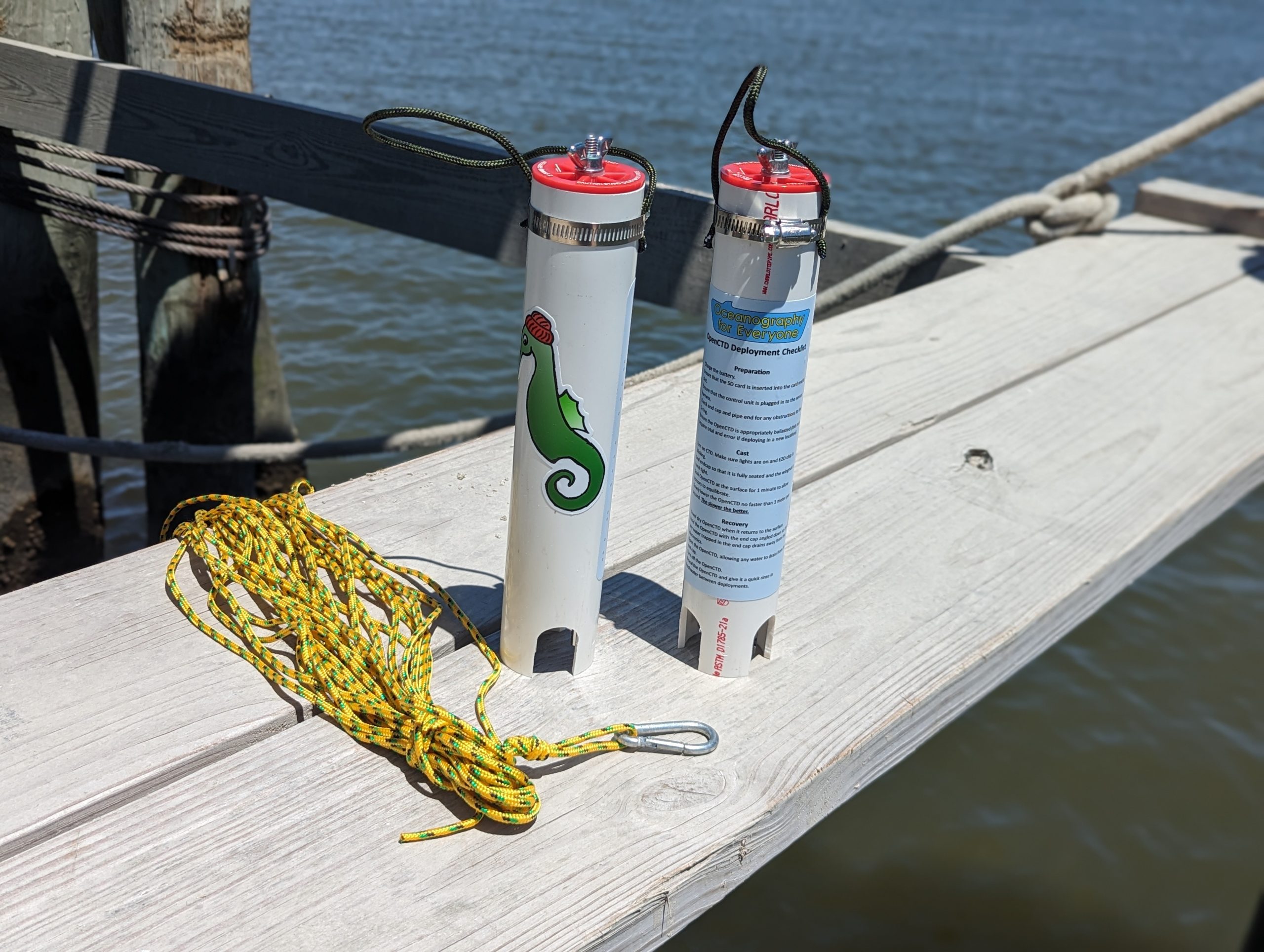
Thirteen years ago, Kersey, Russell, and I set out on a quixotic quest to create a low-cost, open-source CTD for marine scientist and ocean knowledge seekers. The premise was simple: if the Ocean Belongs to Everyone, then the tools to study the ocean should be available to anyone. The OpenCTD was born.
A CTD measures Salinity (Conductivity), Temperature, and Depth. These are the fundamental measurements need to undertake any marine scientific research. CTDs are not cheap. Small handheld commercial units can easily cost $7000 or more. And, like everything else, instrument manufactures are move to the hardware-as-a-service model, where maintaining these CTDs requires onerous support contracts a a proprietary software licenses. We saw this coming, and we decided to do something about it.
Here’s the beautiful thing about being a marine ecologist that does conservation technology, rather than an engineer: we knew just enough to know that it could be done, and not enough to know just how long and hard this voyage would be. Our goal, originally was to create a CTD that the user would build themselves, for a fraction of the cost of commercial instruments. A CTD that you maintained control over, that you calibrate and repair. A CTD that promotes data ownership and data sovereignty.
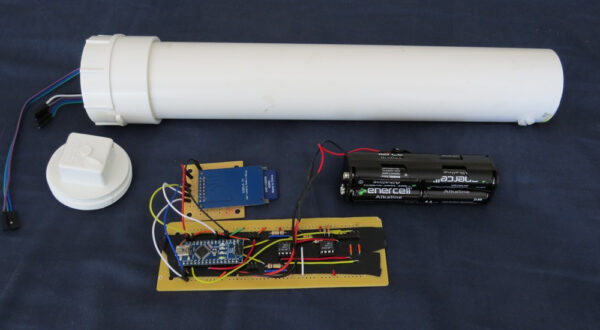
The OpenCTD Rev6, released in 2022, was the first to capture those ideals. Over the last three year, we have deployed hundreds of Rev6 (and Rev7) CTDs around the world, run workshops on three continents, taught middle, high school, college, and graduate students how to build their own oceanographic instruments, and never stopped improving on the design.
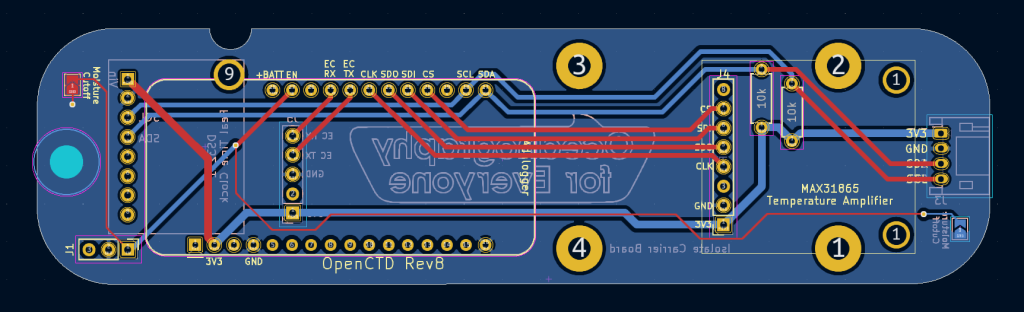
The OpenCTD Rev8, released today is the best, easiest to build OpenCTD, ever. Among the biggest and most requested improvements are:
- Replacing the battery of 3 DS18B20 temperature sensors with a precision PT1000 temperature probe and amplifier;
- Adding in-line noise isolation to the conductivity circuit;
- Retaining the BNC connector on the conductivity probe;
- Eliminating the onerous process of building a wiring harness for the sensor packages, the most common point of failure.
- Adding and an independent connection for each sensor;
- Adding a full, internal housing to the control unit to protect it from impacts and leaks.
- Swapping to a smaller, more manageable battery while retaining the ability to add whatever power solution you need;
- Creating more secure connections between the control board, real-time clock, and temperature amplifier;
- Adding moisture sensitive cut-off pads to the control board which power down the unit if seawater is detected;
- Including 3D-printable wrench to make opening and closing the housing kinder on cold, wet fingers.
Our long ago goal was a $200 CTD. While we were never able to meet that target, the OpenCTD Rev7 topped out at $350 in parts. The OpenCTD Rev8, with parts and price changes over the last few years, is currently sitting at about $400 in parts and consumables.
To learn more about the OpenCTD project, visit Oceanography for Everyone. All software, firmware, shapefiles, gerbers, and support documentation can be found in our GitHub Repository. And yes, we do finally have a store! You can buy a copy of the manual (full disclosure, you can always download it and all previous versions for free, but tossing few buck our way is a great way to support the project). We have a limited number OpenCTD Rev8 Kits available for pre-order. Pre-orders will help me build up inventory so that we can get as many kits as possible out to educators and ocean knowledge seekers in the fall. The pre-order kits are discounted $150.
Soon, we will also have the Rev8 control board and the new, in-house pressure sensor breakout board available for sale.
I am also beginning to book OpenCTD Workshops for 2027. If you want to host a 3-day intensive conservation technology workshop where your students will learn to build and calibrate a CTD, take water-quality measurements, and analyze the data, please get in touch through the Oceanography for Everyone contact form or email me.
Southern Fried Science is free and ad-free. Southern Fried Science and the OpenCTD project are supported by funding from our Patreon Subscribers. If you value these resources, please consider contributing a few dollars to help keep the servers running and the coffee flowing. We have stickers.